
DG News: October 2026
Hello and welcome to the October issue of the Discourse Graph newsletter. This spooky season, we're thrilling to graph-supported knowledge synthesis. Pace Michael Jackson and Vincent Price, the funk of forty thousand years is not nearly so chilling as an unsorted folder of partially-annotated pdfs.
New in the Obsidian plugin
Discourse graph plugin — now on mobile
Take your nodes on the road: the discourse graph plugin now works in the Obsidian mobile app.
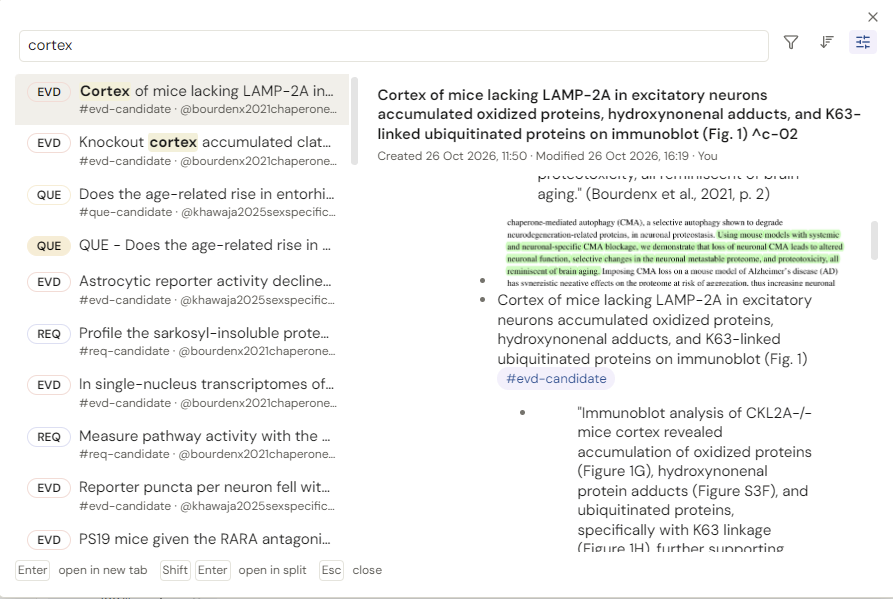
Candidate nodes in advanced node search
With "Show candidate nodes" on, lines tagged as a candidate node (e.g. #clm-candidate) appear in Advanced Node Search results.
Node card context menu
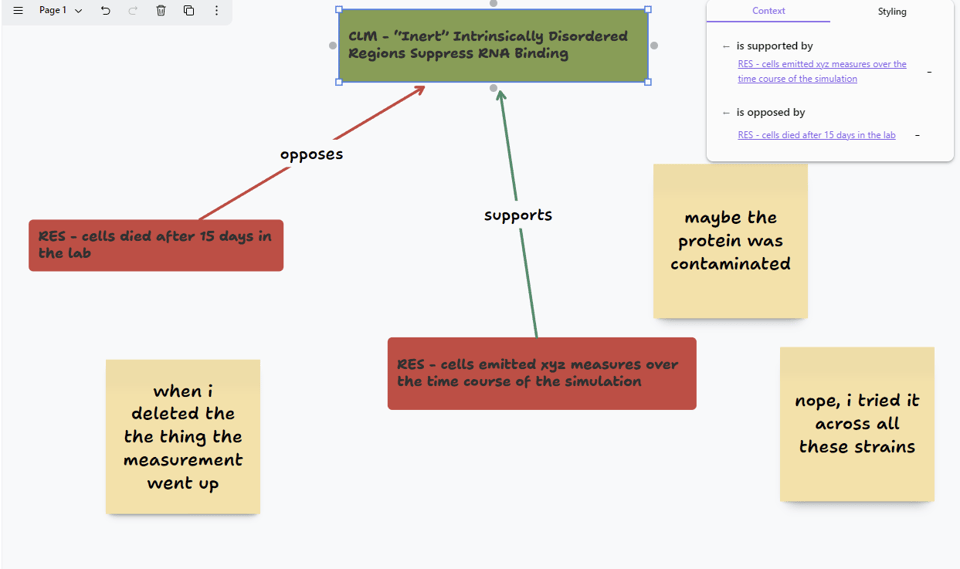
Selecting a node card on a canvas opens the tabbed context menu.
New in the Roam plugin
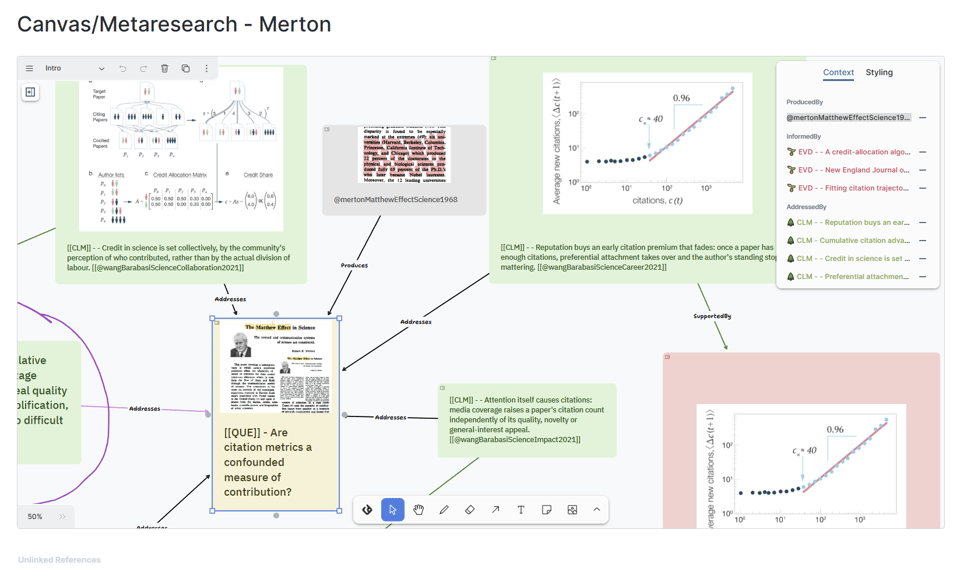
Canvas node context
Select a node cards to display its relations in a tabbed context menu, with controls to add or remove related nodes from the canvas.
Canvas node search
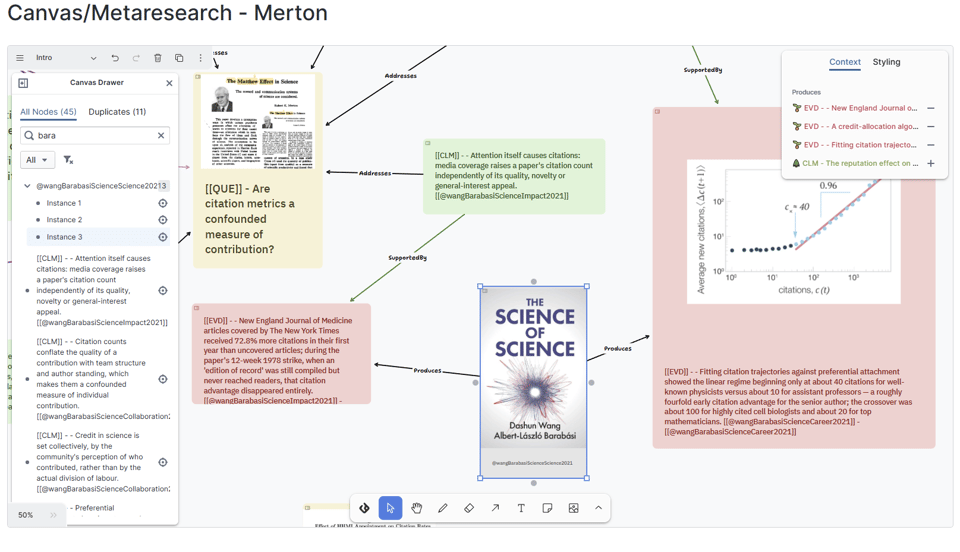
Search and filter the nodes on your discourse canvas directly from the canvas drawer.
Canvas tagging
Create candidate nodes directly on the canvas by tagging node cards.
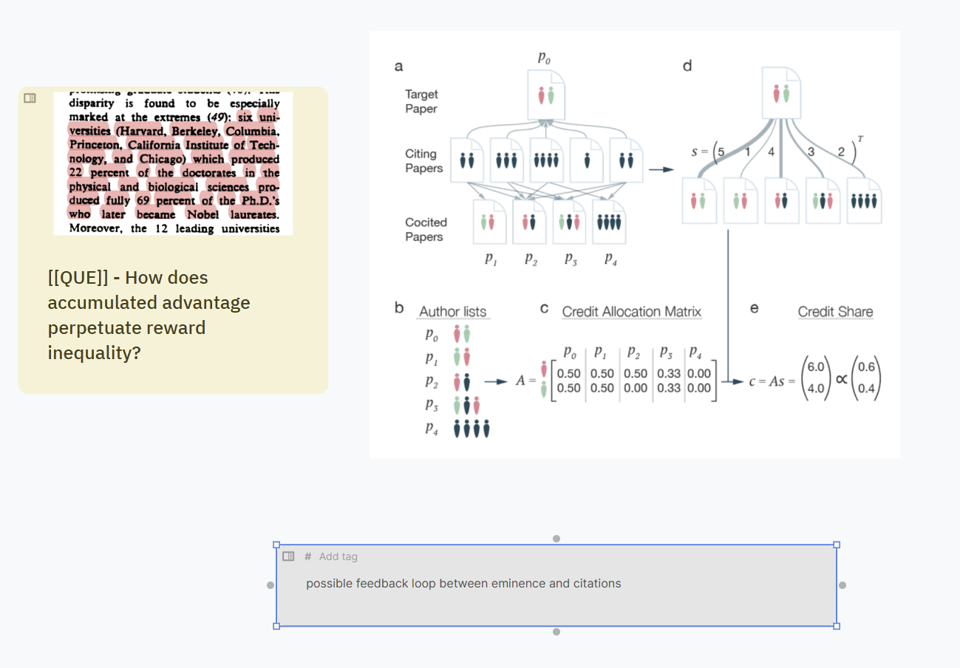
Ask the docs: using the canvas
Want to use the Roam or Obsidian discourse canvas to visually arrange your discourse nodes but don't know where to start? Follow this guide for the Roam Research plugin or this guide for Obsidian to begin working with the canvas.
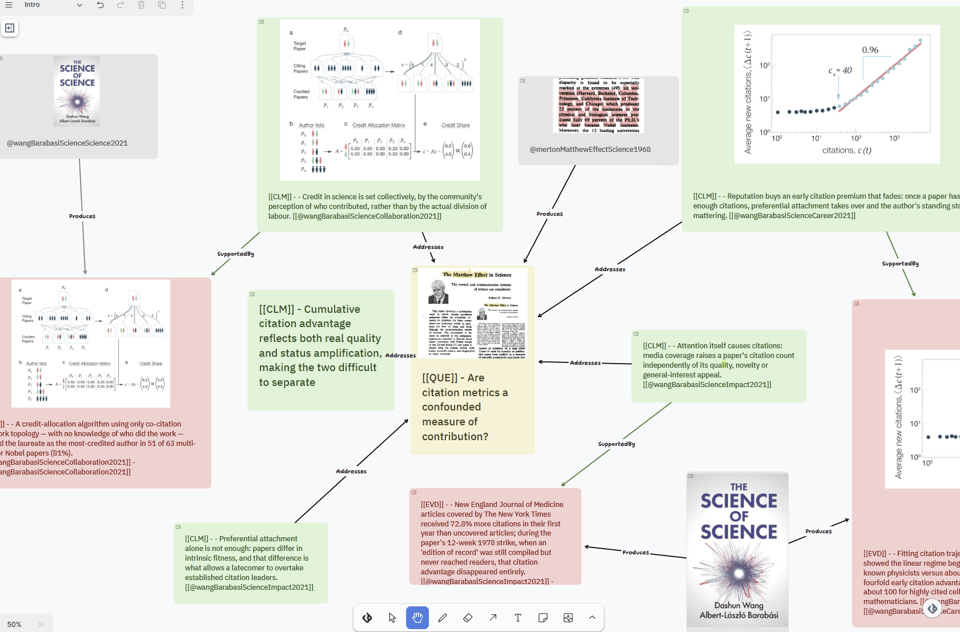
Dispatches from the frontier: a series on how discourse graphs are improving scientific research
We've deployed discourse graph tools in labs across cell biology, biophysics, and Human-Computer Interaction — more than six labs, including the OASIS Lab at the University of Maryland, the MATSULab at the University of Washington, the Holehouse Lab at Washington University School of Medicine, and the Allen Institute for Cell Science — as well as to individual researchers around the world. Our question: how can discourse graphs be used to accelerate research?
In our September issue we shared how discourse graphs can be used to bring newcomers to a lab up to speed on cutting-edge research.
This month, we'll look at how discourse graphs support more productive meetings and collaboration.
Better meetings with discourse graphs
CLAIM: The discourse graph structure anchors meetings on "live" questions, results, and hypotheses.
EVIDENCE: Two HCI PhD students at the University of Maryland used their graph to surface relevant questions during a research project meeting. The highlighted research questions informed their discussion of study design details.
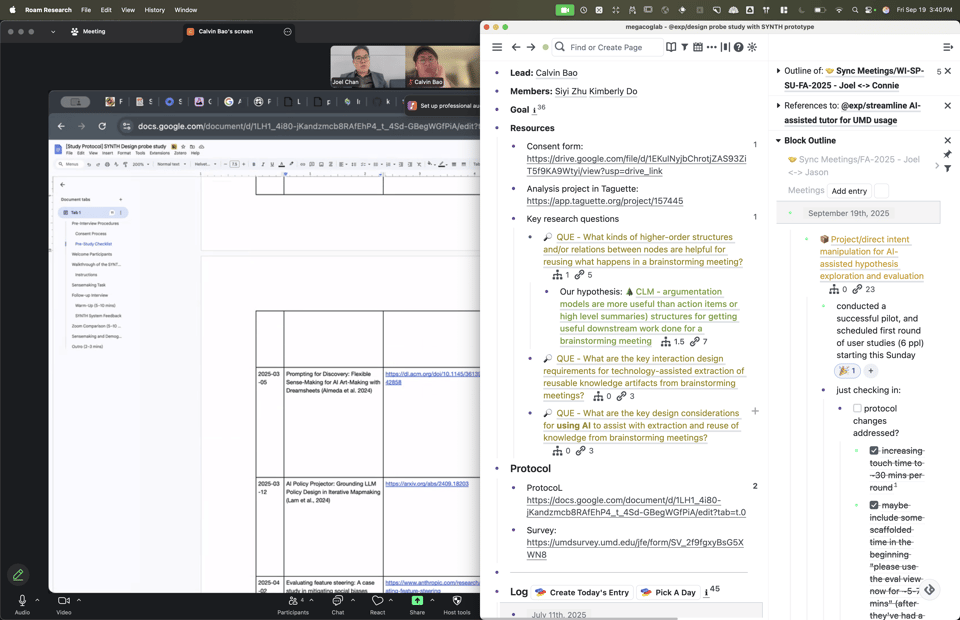
EVIDENCE: A cell biology PhD student found that she could use her discourse graph to speed up the preparation of update slides for a collaborator. Her PI could keep abreast of her progress in various projects by interacting with her graph, following the thread of connected experiments and results. This graph exploration could replace or augment a verbal summary.
EVIDENCE: A MATSULab PhD student noted that the "discourse graph way of thinking" helped him structure and target experiments in a new research collaboration. MATSULab members also shared granular results and linked experiment pages prior to external collaboration meetings to build shared context.
EVIDENCE: New team members at the Allen Institute for Cell Science reported having a "much clearer" understanding of their project's context after seeing issues and hypotheses relevant to the project represented in a discourse graph.
CLAIM: The shared structure of the discourse graph protocol provides labs with a common vocabulary for discussion.
Tune in next month when we explore how discourse graphs were used to support a researcher's project at NASA.
We'd love to hear from you about how you've been using discourse graphs to accelerate your research. Please contact us via email to share your experiences!
Discourse Graphs at the MIRA workshop
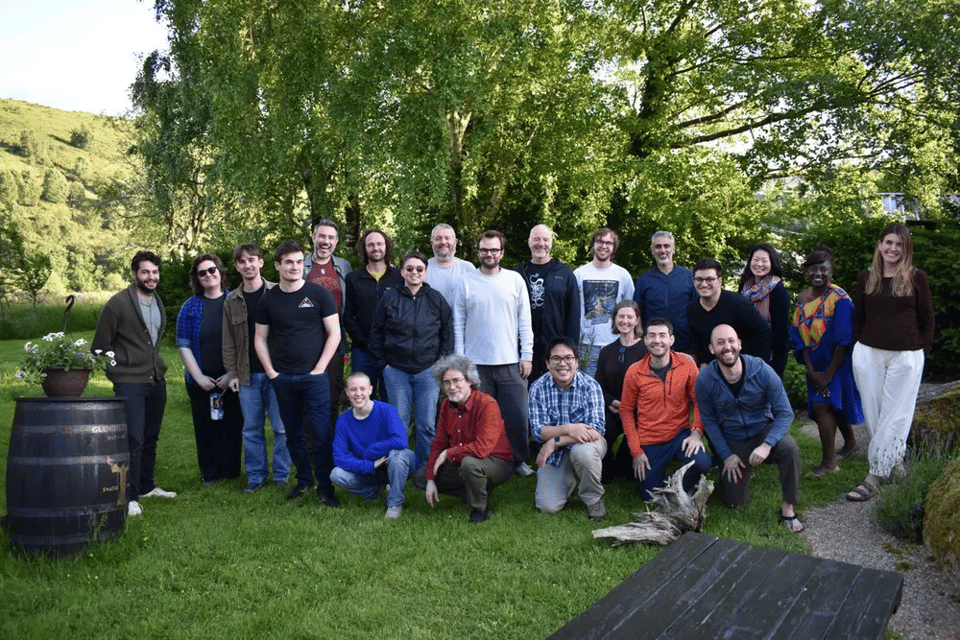
Members of the discourse graph team joined the researchers and builders designing and implementing a modular research ecosystem at the MIRA kickoff workshop in Ireland. Learn more about Modular Interoperable Research Attribution and the schema,demos,and prototypes created during the workshop in this blogpost by the MIRA team.
Contributions
We're always delighted to receive community contributions in the form of Issues and PRs in our GitHub repo. If you're interested in contributing to the project, please read our guide on GitHub for how to do so.
We’re also open to sponsors, collaborators, and grant opportunities. Please contact us via email if you’re interested in supporting us.
Join our Slack for quick updates, tips, and troubleshooting. And don't forget to follow us on Bluesky for all the news that's fit to skeet.
Thanks for reading and joining us on this journey to make research easier and more accessible for everyone. Until next time!


