When Pride Starts Drawing Lines Around Who Belongs
For many LGBTQ Jews, inclusion in queer spaces now feels conditional, unstable, and politically negotiable
There is a difference between inclusion as a principle and inclusion as a press release.
In 2026, too many Pride institutions are fluent in the language of the former while repeatedly governed by the behavior of the latter.
And for LGBTQ Jews, that gap has become the story.
Upgrade nowI am trans. I am Jewish. And I have watched a pattern harden over the last several years—accelerating sharply since October 7—that has little to do with abstract political debate and everything to do with how belonging is enforced in queer spaces when Jewish identity becomes inconvenient.
The pattern is consistent enough to be recognizable:
A Jewish or Israeli-linked participant is included in a Pride context. Objections emerge. They are not framed as interpersonal concerns but as moral incompatibility. Pressure builds. Institutional statements appear reaffirming inclusion, dignity, and belonging. Then the pressure intensifies. The language shifts: “community concern,” “safety,” “harm,” “distraction.” Then the reversal. Removal.
By the end, the message is clear without anyone needing to say it out loud.
Jewish participation is conditional.
The recent sequence involving the Kentuckiana Pride Foundation is not an outlier. It is a case study.
First statement: Pride as broad, intersectional belonging across identities, nationalities, and lived experience. Universal language. Familiar language. Safe language.
Second statement, hours later: “concerns,” “safety,” “community response,” and removal of the participant. The justification is procedural. The effect is structural.
What changed was not the mission. What changed was the pressure.
And pressure reveals governance more reliably than any mission statement ever will.
At no point in these cycles is there serious engagement with the distinction between political critique and identity-based exclusion. Jewish identity becomes the variable that turns inclusion on or off, depending on how comfortable it is in the room.
That distinction is everything.
Because without it, inclusion becomes conditional on invisibility.
Be Jewish, but not in a way that is legible under scrutiny. Be queer, but not in a way that disrupts prevailing ideological comfort. Participate, but only so long as your presence does not require anyone to hold contradiction.
That is not inclusion. It is managed tolerance.
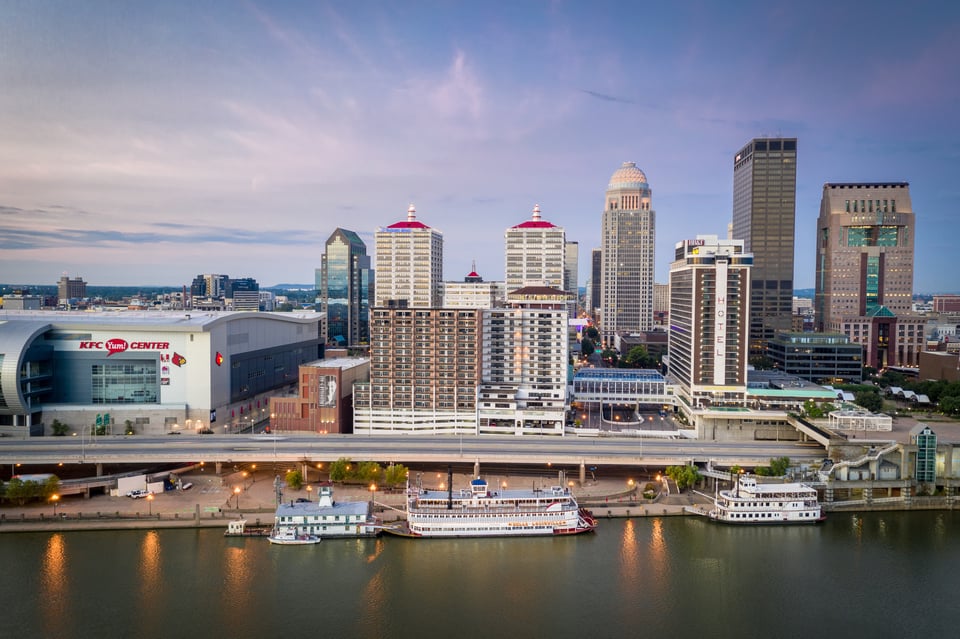
The response from the Louisville Pride Foundation reflects a different layer of the same ecosystem problem: institutional spillover management. When backlash spreads across similarly named organizations, the immediate need is boundary control—clarifying identity, separating governance, and preventing unrelated community infrastructure from being absorbed into a conflict it did not create.
That is not optional in the current environment. It is damage control as survival mechanism.
But it also reveals how quickly Pride ecosystems now blur into generalized pressure fields, where even administrative clarity becomes politically reactive.
And still, the core issue remains untouched.
LGBTQ Jews are being asked—quietly, repeatedly—to treat their visibility as conditional in moments of tension. Not because they are excluded outright, but because their inclusion is always revisable.
That is the hinge.
Because a community does not need explicit exclusion to fail at inclusion. It only needs instability in its commitments.
And instability, over time, becomes policy.
So the question Pride institutions are increasingly avoiding is also the one they are increasingly answering in practice:
Is Jewish inclusion in the wider LGBTQ community foundational—or negotiable?
Right now, too often, it behaves like the latter.
And that is not inclusion.
It is contingency dressed up as belonging.
