Making Trans People Disappear, One Form at a Time
The latest SAMHSA revisions are part of a broader effort to render transgender Americans invisible to the federal government.
No press conference announced this change. No prime-time address explained it to the American people. There was no triumphant signing ceremony with rows of applauding lawmakers standing behind the president.
Upgrade nowInstead, it appeared the way modern bureaucratic erasure often appears: quietly, procedurally, buried in the Federal Register.
This week, the Substance Abuse and Mental Health Services Administration—SAMHSA —published a notice about revisions to a reviewer application form. On paper, it looks painfully mundane. The kind of administrative housekeeping almost nobody outside Washington ever reads.
But buried in the bullet points was something revealing.
“Gender” changed to “Sex.”
“Transgender” removed as an option.
“Prefer not to Answer” removed as an option.
“LGBTQ” removed from areas of secondary expertise.
“Minorities (African American, Hispanic or Latino, etc.)” removed from secondary expertise.
And finally, the removal of the agency’s own “Values That Promote Positive Behavioral Health Statement.”
None of these edits, individually, will dominate a cable news segment. That is partly the point.
This administration understands something fundamental about how power works in modern America: you do not need to criminalize a community to make life harder for it. You can simply erase it from the paperwork.
Government forms are not neutral. Data collection is not neutral. Definitions are not neutral. Every checkbox on a federal document reflects a decision about who counts, who is visible, and whose experiences are considered worthy of study, funding, and institutional concern.
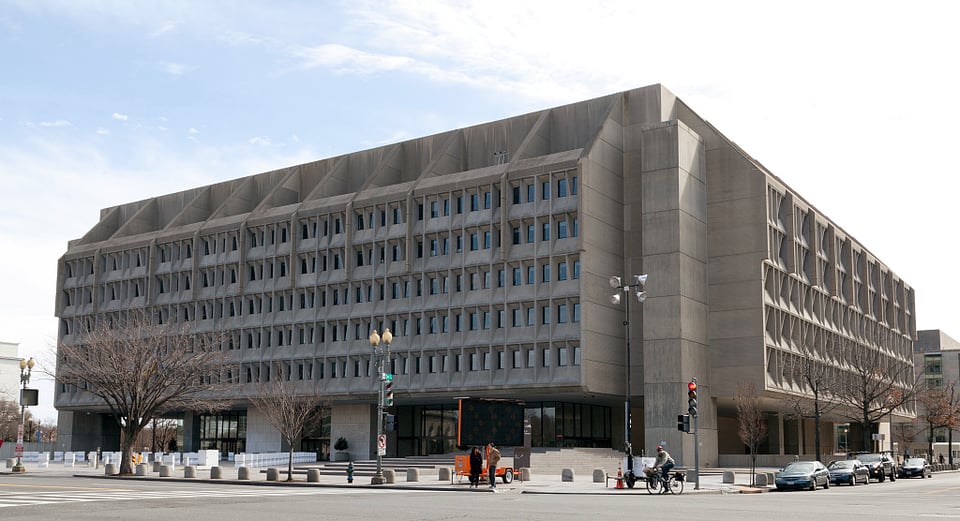
SAMHSA is not a random agency. This is the federal government’s central behavioral health authority. It oversees grants, treatment programs, research priorities, and mental health initiatives that affect millions of Americans. The peer reviewers being discussed here help evaluate discretionary grant applications related to mental health and substance use treatment across the country.
Which makes one particular deletion especially revealing: the removal of “LGBTQ” as an area of secondary expertise.
Think about what that actually means.
At a moment when LGBTQ Americans—especially transgender Americans like myself—continue to face elevated rates of depression, anxiety, suicidal ideation, homelessness, harassment, and political targeting, the federal government has decided that expertise in LGBTQ issues no longer merits explicit recognition on this form.
That is not bureaucratic neutrality. That is ideological signaling.
And the administration will undoubtedly insist otherwise. Officials will claim these are merely technical edits meant to streamline language or align forms across agencies. They will say critics are overreacting to wording changes.
But if language is so unimportant, why keep changing it?
Because bureaucracies understand that language shapes policy. Definitions shape research. Research shapes funding. Funding shapes services. And eventually, those services shape whether vulnerable people receive support or fall through the cracks entirely.
The most insidious part of this strategy is its plausible deniability.
No one at SAMHSA is explicitly stating that transgender Americans do not exist. The form simply behaves as though they do not. The category disappears. The terminology changes. The expertise is no longer named. The values statement quietly vanishes.
Then the administration can point to the absence it created and pretend the absence was always natural.
We have seen versions of this playbook before. Remove references from websites. Eliminate terminology from reports. Restrict the language agencies are encouraged to use. Redefine categories. Narrow definitions. Treat inclusion itself as political contamination rather than a basic function of public health governance.
And because each individual action appears small, defenders accuse critics of hysteria for noticing the pattern.
But patterns are precisely the point.
No single raindrop causes a flood. No single administrative edit erases a population. Yet over time, these decisions accumulate into a governing philosophy: if certain people are made statistically invisible often enough, institutions become less responsible for serving them.
That matters enormously in public health.
You cannot effectively study disparities affecting populations you refuse to identify. You cannot develop targeted interventions for communities your forms no longer acknowledge. You cannot claim to support evidence-based policymaking while simultaneously stripping demographic categories from the evidence-gathering process itself.
And perhaps most tellingly, this notice was not presented as a moral argument. The administration did not publicly defend these choices because doing so would require admitting what they are trying to accomplish.
Instead, it was buried in administrative procedure, where officials hoped nobody would notice.
But people did notice.
Because sometimes the clearest expression of an administration’s priorities is not found in the speeches it delivers loudly. It is found in the people it quietly deletes from the form.
