Lake Ontario Is Not Donald Trump’s to Rename
Donald Trump wants to rename Lake Ontario while escalating a destructive trade war with Canada. The Great Lakes aren’t his to rename—and neither are American consumers’ wallets.
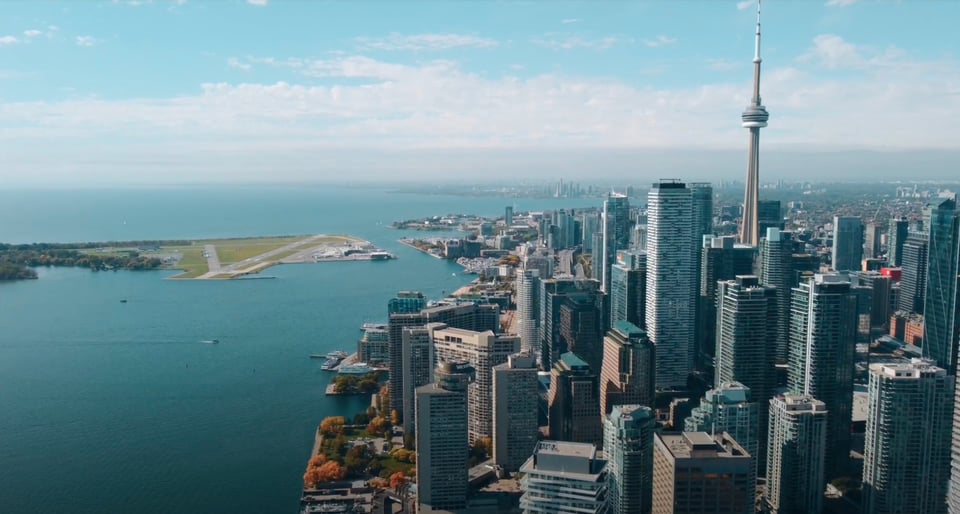
There was a time when a president threatening to rename a lake would have been the sort of absurdity that made for a funny paragraph in a political column. We have, unfortunately, reached the point where Donald Trump can look at one of the five Great Lakes, see a name that has existed for centuries, and apparently think, You know what this needs? My branding.
No.
Absolutely not.
Upgrade nowI do not acknowledge “Gulf of America,” and I will not acknowledge “Lake America.” The Gulf of Mexico is the Gulf of Mexico. Lake Ontario is Lake Ontario. You cannot simply slap your name on a body of water because you are angry at the neighboring country that shares it with you. At some point, somebody needs to take away the presidential label maker.
And while we’re at it, perhaps somebody could explain to the president that Ontario is not a corporation he can fire.
Ontario is Canada’s most populous province. It is home to a massive auto industry and deeply integrated supply chains that cross the U.S.-Canada border every day. The lake itself has been called Ontario since the seventeenth century, with the name appearing on European maps by the middle of the 1600s. But apparently several centuries of history are no match for a presidential temper tantrum posted to social media.
This is not diplomacy. This is not negotiation. This is not economic strategy. It is the foreign-policy equivalent of flipping over the Monopoly board because someone bought Boardwalk.
And the truly astonishing part is that this administration seems determined to turn America’s relationship with Canada into a blood feud over absolutely nothing.
Canada is not some hostile power on the other side of the world. Canada is our neighbor. Canadians are our allies. Our economies are intertwined. American manufacturers depend on Canadian materials, Canadian manufacturers depend on American markets, and millions of people on both sides of the border live in communities where the international boundary is less meaningful to daily commerce than the sign announcing that the next town is 20 miles away.
Detroit and Windsor are separated by an international border and connected by one of the busiest trade corridors in North America. But apparently the White House has decided that the best way to handle that relationship is to threaten Canada, slap enormous tariffs on Canadian goods, threaten even more tariffs on Canadian cars and steel, and then announce that perhaps Lake Ontario should be renamed because we aren’t going to do business with Ontario anymore.
This is the economic equivalent of setting your own house on fire because your neighbor’s dog barked.
And let’s talk about those tariffs, because apparently nobody in the administration has found the courage to explain the most basic concept of tariffs to the president.
Upgrade nowTariffs are taxes.
They are not magical little fees that Canada pays directly to Donald Trump. American importers pay the tariffs. Those costs then work their way through supply chains, businesses adjust their prices, and consumers ultimately wind up paying more. Maybe it is a higher price for a car. Maybe it is a higher price for furniture. Maybe it is a higher price for something that contains Canadian steel or aluminum somewhere in the production process.
The tariff fairy does not arrive at midnight and leave a sack of Canadian money underneath the American consumer’s pillow.
Businesses have already said these tariffs threaten their ability to operate, employ people, feed their families and contribute to their communities. They are telling us, plainly, that this policy hurts them. And the administration’s response appears to be: Have you considered renaming a lake?
This is what happens when economic nationalism is reduced to bumper-sticker economics.
Trump seems to believe that if America threatens everyone hard enough, everyone else will simply surrender. Canada is supposed to “fall in line.” Mexico is supposed to fall in line. Europe is supposed to fall in line. China is supposed to fall in line. Anyone who doesn’t is apparently going to discover that the United States has a very large tariff spreadsheet and an even larger social-media account.
That isn’t strength.
Strength is having allies who trust you. Strength is being able to sit across the negotiating table from another country’s leader without that leader wondering whether you are going to threaten his economy, his culture, his industries or the name of a lake before lunch.
Mark Carney’s refusal to treat Canada as an American subsidiary is not some outrageous act of Canadian insolence. It is the perfectly reasonable response of a sovereign country being told that its government should behave as though it isn’t sovereign.
And then there is the French-language issue, which somehow makes this even more ridiculous.
Canada has every right to protect its French-language culture. Quebec has every right to protect its French-language culture. Those protections are not American “irritants” simply because American negotiators would prefer that they weren’t there.
Trump’s response—“I love French Canadians!”—is almost breathtakingly beside the point. Nobody is asking whether Donald Trump loves French Canadians. This isn’t a kindergarten Valentine exchange. The question is whether the United States respects Canada’s right to determine its own cultural and economic policies.
Apparently the answer coming from Washington is increasingly: only when we agree with them.
And that brings us to the larger catastrophe. Donald Trump already spent his first term systematically damaging America’s relationships with allies and undermining the credibility that generations of American presidents had painstakingly built. Then he got a second term he should never have had in the first place. He was impeached twice, and the Senate had the opportunity to make clear that attempting to subvert American democracy carries consequences. It chose not to convict him. Then the Supreme Court decided that presidents enjoy sweeping immunity for official acts, creating yet another layer of protection around an office Trump has repeatedly demonstrated he is willing to abuse. And here we are.
The second Trump administration is taking a wrecking ball to America’s international relationships with a zeal that would almost be impressive if the consequences weren’t so serious. Allies are being treated as adversaries. Trade partners are being treated as enemies. Sovereign governments are being ordered to “fall in line.” Cultural protections are dismissed as “irritants.” American consumers are being told to absorb higher prices while the president pretends tariffs are somebody else’s bill. And now Lake Ontario apparently needs a presidential rebrand because the president is angry at Ontario.
At some point, we have to stop pretending this is normal. It isn’t normal for an American president to treat a centuries-old geographic name as a personal political prop. It isn’t normal to threaten one of America’s closest allies with economic warfare and then complain that the ally isn’t sufficiently obedient. It isn’t normal to impose tariffs that American businesses and consumers ultimately pay while insisting that somehow this is a gift to the American economy. And it certainly isn’t normal for the United States to spend its enormous diplomatic capital convincing the rest of the world that America cannot be trusted to behave like an adult.
The Great Lakes belong to the geography, history and people of the region. They do not belong to Donald Trump. Lake Ontario is Lake Ontario. It was Lake Ontario before Donald Trump was president, and it will be Lake Ontario after Donald Trump is gone. I didn’t acknowledge the administration’s attempt to rename the Gulf of Mexico, and I will not acknowledge an attempt to rename one of the Great Lakes either. You don’t get to erase centuries of history because you’re having a trade dispute with the province on the other side of the water.
And if the White House insists on renaming something, perhaps it could start with the trade policy. “Tariff America” has a certain ring to it. “Higher Prices America” is more descriptive. But my personal favorite is “Make America Pay More Again,” because at least that one would have the virtue of telling the truth.
Upgrade now