Facts Have an Annoying Tendency to Survive Executive Orders
A federal judge has ordered the Trump administration to restore exhibits on slavery, climate change, and civil rights removed from national parks. Facts, however, were not consulted before the removal.
There is something profoundly pathetic about a government so insecure in its own narrative that it feels threatened by a sign.
Not a protest. Not a riot. Not a political campaign.
A sign.
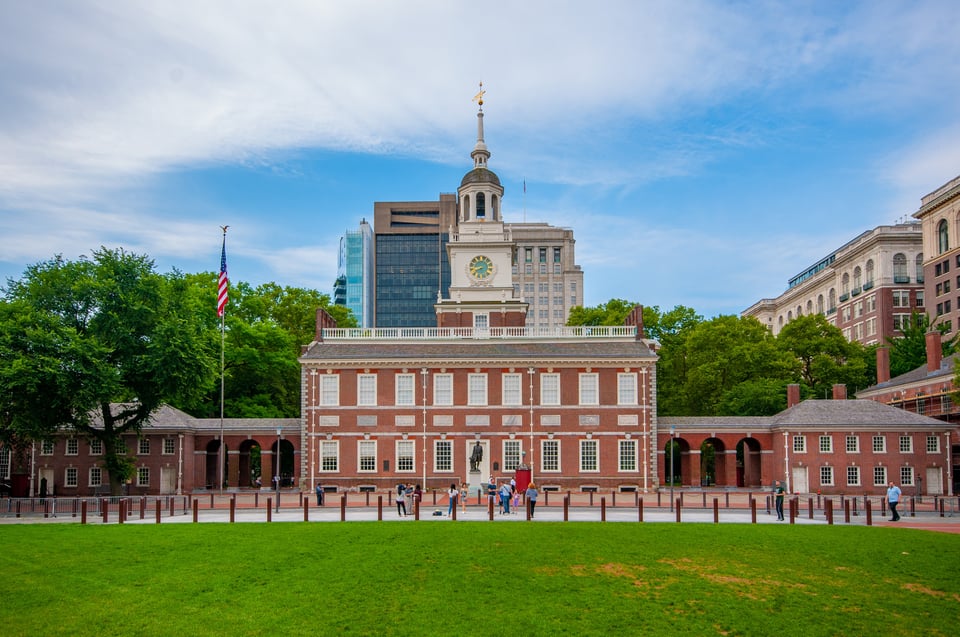
A display about slavery at Independence Hall. Information about climate change at Fort Sumter. Exhibits discussing civil rights, immigration, women’s suffrage, labor movements, and the complicated, often painful history that shaped the United States.
Apparently, that was too much for the Trump administration to handle.
Upgrade nowThis week, a federal judge ordered the administration to restore exhibits and displays that had been removed from National Park sites across the country under President Trump’s executive order targeting what he described as “revisionist” history. Judge Angel Kelley correctly recognized what was happening: an attempt to censor facts that did not fit a preferred political narrative.
The administration insists it merely wants parks to tell the “full and accurate story” of America.
If your definition of a “full story” involves deleting chapters, historians usually have another word for that.
You don’t tell the full story of America by deleting slavery from exhibits discussing the nation’s founding. You don’t tell the full story of the Civil War by pretending the institution that caused it wasn’t central to the conflict. You don’t tell the full story of a coastal fort by removing information about the environmental threats it currently faces.
That’s not history.
That’s editing. And not even subtle editing. This wasn’t a red pen. It was a black marker.
It’s the historical equivalent of ripping chapters out of a book and then insisting you’ve improved the reading experience.
The irony is impossible to miss. The same political movement that spent years accusing others of “rewriting history” has now been caught quite literally rewriting history—then demanding applause for the pen.
Apparently, diversity, equity, and inclusion have become such terrifying concepts that even museum exhibits are now treated like ideological contraband. The administration has spent so much time fighting wokeness that it now appears to regard historical context as a national security threat.
The administration’s war on DEI has always been based on a fundamental misunderstanding—or, more accurately, a deliberate refusal to understand—what diversity and inclusion actually mean. Acknowledging the experiences of Black Americans, immigrants, women, Native Americans, workers, and other groups does not diminish American history.
It is American history.
The United States did not spring into existence fully formed from a Norman Rockwell painting. It emerged through revolution, slavery, abolition, industrialization, immigration, expansion, discrimination, reform, civil rights struggles, and countless battles over who gets to participate in the American experiment.
That complexity isn’t a flaw.
It’s the point.
What makes this effort particularly absurd is the underlying belief that removing information somehow changes reality. Climate change does not disappear because a sign is taken down. Slavery does not cease to have existed because an exhibit is removed. Jim Crow laws, the Chinese Exclusion Act, women’s suffrage, labor movements, and the Civil Rights Movement remain historical fact regardless of how inconvenient they are to a political agenda.
Reality is stubborn that way. It does not amend itself to accommodate press releases. Facts have an annoying tendency to survive executive orders.
Of course, no discussion of this episode would be complete without acknowledging the administration’s contribution to political comedy.
After the ruling, an Interior Department spokesperson dismissed Judge Kelley as a “liberal activist judge” before informing the public that the department would consider its legal options while celebrating America’s 250th anniversary with “the greatest president in the history of our country.”
The greatest president in American history.
Donald Trump.
That’s quite a statement.
It would also come as news to George Washington, Abraham Lincoln, and Franklin Roosevelt, who somehow managed to preserve the republic without spending their weekends demanding credit for it.
Historians, however, are still very much here, and their consensus is considerably less enthusiastic. The American Political Science Association’s Presidential Greatness Project ranked Trump last in 2018 and again in 2024. Other major surveys consistently place him among the worst presidents in American history, alongside James Buchanan and Andrew Johnson—figures remembered primarily for presiding over national fracture and political failure. Achieving bipartisan agreement among historians is difficult. Donald Trump accomplished it by finishing at the bottom of the rankings.
When the Interior Department spokesperson casually declares him “the greatest president in history,” it raises a question: is this an assessment, or an audition for loyalty?
In healthy democracies, public officials praise presidents. In less healthy systems, they praise them this enthusiastically.
In fairness, if your governing philosophy requires defending the indefensible, you eventually stop attempting persuasion and start treating absurdity as a communications strategy.
The truly troubling part isn’t the hyperbole. It’s the mindset behind it.
Authoritarian movements have always understood that controlling history is a prerequisite for controlling the future. If citizens can be convinced that inconvenient facts never happened—or that they are unworthy of remembrance—then they become easier to manipulate in the present.
Authoritarians never begin by banning all history. They begin by editing the parts they find inconvenient.
That’s why they ban books.
That’s why they remove exhibits.
And that’s why this case matters.
National Parks are not propaganda centers. They are not campaign museums. They are not vehicles for whichever party happens to occupy the White House. Their mission is interpretation, not indoctrination.
They belong to the American people.
Their responsibility is not to flatter us. Their responsibility is to inform us.
America’s story is magnificent precisely because it is imperfect. The nation survived a Civil War. It expanded voting rights. It defeated fascism. It confronted segregation. It corrected injustices—sometimes painfully, sometimes incompletely, but repeatedly.
Those achievements mean less if we erase the struggles that made them necessary.
Patriotism is not pretending America has never failed.
Patriotism is understanding where America has failed—and recognizing how often Americans fought to make it better anyway.
The administration wanted visitors to receive a sanitized version of the nation’s past in time for America’s 250th anniversary.
Judge Kelley reached the correct conclusion: the best way to honor the United States is not by hiding its history.
History is not diminished by honesty. Democracies are diminished by its absence.
It’s by telling the truth.
All of it.
