Antisemitism, an American Tradition by Pamela S. Nadell
How antisemitism became embedded in American life—and why it still persists
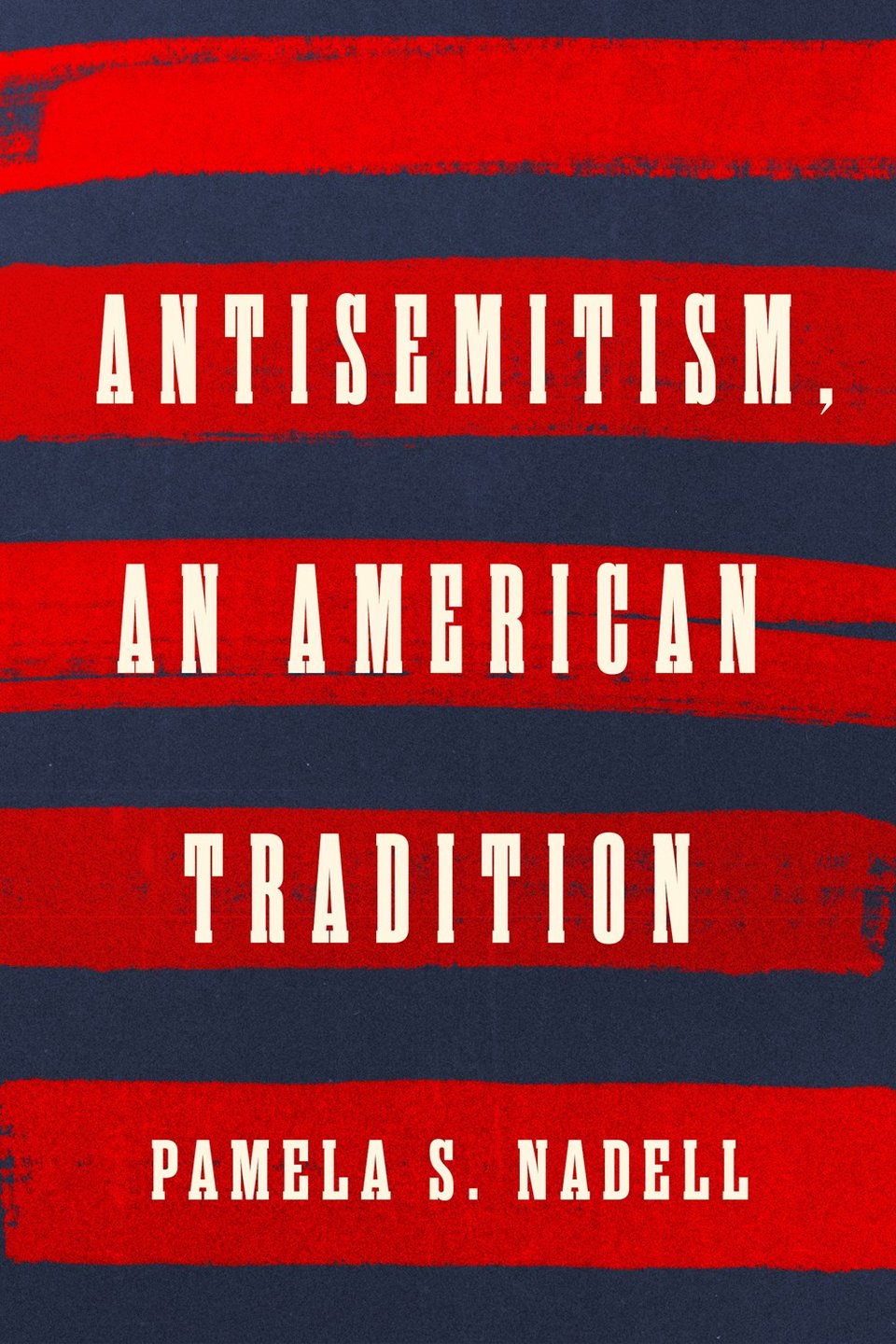
Pamela S. Nadell's Antisemitism, an American Tradition is the latest in a recent succession of books examining the history and persistence of antisemitism. Working as a complementary companion to How the West Became Antisemitic and Antisemitism in America: A Warning, Nadell's book traces nearly four centuries of antisemitism in the United States while demonstrating how prejudice against Jews has remained a recurring feature of American life from the colonial era to the present day.
Upgrade nowNadell argues that antisemitism was woven into American life almost from the moment Jews arrived in New Amsterdam in 1654. Beginning with Peter Stuyvesant’s failed effort to expel Jewish settlers and continuing through centuries of social, legal, and cultural discrimination, she demonstrates how antisemitic attitudes adapted to changing eras while remaining a persistent force in American society. Even as the United States developed differently from Europe—with its expulsions, ghettos, and ultimately the Holocaust—American Jews still encountered barriers in education, employment, public life, and religious practice.
The book also examines how these historical patterns continue to reverberate in the present, connecting earlier forms of exclusion to modern outbreaks of antisemitic rhetoric and violence. At the same time, Nadell highlights the ways Jewish communities responded, from building advocacy organizations and pursuing legal remedies to forging alliances in the broader struggle against hatred and discrimination.
I’m months late to working on my review but that’s because when it comes to a book like this, it really comes down to, what can I add to the conversation that hasn’t already been said? Will anything I actually write about this book make a difference for anyone? Let’s face it, it’s not like the amount of speaking out against antisemitism in the face of Jew-hatred over the past few years is actually making much of a difference. With the amount of Jews working in PR, you’d think we’d be winning the PR war, but nope. We’re losing and rather badly, I must say.
I marked the press sheet that accompanied my review copy with a number of pages that I wanted to touch on in my review. But no matter how many pages I touch on, it still won’t do the best justice to what Nadell has to say.
Mark Twain pointed out in a March 1898 article for Harper’s Monthly Magazine that those participating in an Austro-Hungarian Parliament debate hated the Jews. The next year, he wrote his essay, “Concerning the Jews.” On one hand, he praised Jews when it came to “industry, family life, and citizenship.” But even when praising Jews, Twain couldn’t help but repeat antisemitic canards, tracing their origins not to antisemites or even Christianity, but directly to Joseph. Twain even reached the following conclusion and addressed Jewish readers:
“You will always be by ways and habit and predilections substantially strangers—foreigners—wherever you are, and that will probably keep the prejudice against you alive.”
More than a century later, it's difficult to argue with Twain’s observation. If prejudice could be defeated through better messaging alone, the Jewish community would have solved the problem long ago.
It’s impossible to discuss early 20th century antisemitism without discussing Henry Ford. He had purchased The Dearborn Independent in the wake of World War I and in May 1920, the paper published The International Jew—The World’s Foremost Problem. This would be the first in a 91-week series. Two months later, the paper published its first reprinted section and analysis of The Protocols of the Elders of Zion. Jewish communal leaders and writers were outraged but it didn’t matter. The Dearborn Independent would publish so much antisemitism over the next three years.
At its peak in 1924-25, The Dearborn Independent had a circulation of 700,000. Editors mailed copies to
1,900 bank presidents
1,100 rotary clubs
4,200 women’s clubs
757 college presidents
Every Member of Congress
Worst of all, it managed to reach Adolf Hitler in Germany. But back in America, the newspaper united every denomination of the Jewish community—we rarely get united on anything so that’s saying something—in denouncing the slander. By 1927, the negative publicity was becoming a nightmare for Ford, to the point that he reached out to Louis Marshall of the American Jewish Committee. Ford wanted to end the “ill feelings.” An apology was printed with Ford’s signature, but the reality is that he couldn’t even write it himself—the text was from Marshall. But despite the apology—if that’s what you want to call it—the damage was done because it created a climate that established Jewish quotas at college and pushed the U.S. government to limit Jewish immigration in the years before the Holocaust started in Europe.
After World War II, Jews still faced employment discrimination. Jews weren’t able to acquire jobs at the “top corporations, public utilities, banks, insurance companies, law offices, brokerage houses, and even bush publishing, except for the firms Jews had founded, would not hire Jews.” In the late 1940s, much against the dismay of Jewish moguls, the non-Jewish Darryl F. Zanuck greenlit an adaptation of Gentleman’s Agreement, shining a light on the antisemitism that plagued Jews in housing, etc.
Nadell delves into the Nation of Islam and how Stokely Carmichael prevailed in steering the civil rights agenda toward Black Power, leading to civil rights organizations to purge Jewish allies and a collapse of the Black-Jewish alliance. Through the likes of Louis Farrakhan and Malcolm X, the Nation of Islam went all in on antisemitism. As antisemitism was worsening among the Black population, Nadell points out that “Black intellectuals were exploring why antisemitism remained prevalent in their community while it was declining elsewhere.” James Baldwin penned an essay in 1967 where he pointed to the real source of the problem: white supremacy.
Cut to the early 1990s and recently covered in the PBS limited documentary series Black and Jewish America, Dr. Henry Louis Gates Jr. saw that antisemitism was now coming from professors of African Studies and Nation of Islam leaders. He responded in a pair of essays especially after hearing how far the falsehoods had penetrated. This section of the book is expansive and it’s just another reason why I highly recommend reading it.
In the years that followed, antisemitism would worsen after Durban I and September 11. College students would experience worsening antisemitism on campus. But in 2016, things got worse and they’ve only continued getting worse. The pandemic didn’t help matters and then October 7 happened.
“If, before October 7, antisemitism was a slow-burning fire, it has now become a five-alarm emergency,” AJC CEO Ted Deutch said in The State of Antisemitism in America 2023.
We’re not even three complete years removed from October 7 and I don’t even think we’ve seen the end of books or documentaries that have covered just how badly antisemitism has surged. I know from my own lived experience as to just how bad things have gotten. I saw the antisemitic rot in the trans community back in June 2017, when the Trans Liberation Collective released a pro-BDS platform when they protested the Chicago Pride Parade. It wasn’t just that they were pro-BDS, but that they explicitly referred to Israel’s entire existence as being illegal.
The scariest part in all of this is how I’ve seen people I thought were friends and allies turn out to be among the most antisemitic bigots that I’ve ever experienced. I don’t know if it’s because they’re so gullible that they’ve bought into antisemitic conspiracy theories or that they didn’t bother listening to me whenever I’ve used my platform to speak out as a transgender Jew. It’s funny…people view right-wing antisemitism as being the worst because of how so much is violent, but I’d argue just the opposite. Left-wing antisemitism feels like a deeper betrayal because it comes from people who present themselves as allies.
We’re coming up on America’s 250th birthday. I’d like to hope that America’s next 250 years will be better for its Jewish citizens, but the reality is that it won’t. That antisemitism is worsening speaks to a larger problem in America. Will America’s political leaders even bother having the hard discussions that they need to have? Listen, anybody can form a task force but at the end of the day, what do they accomplish if an administration will just weaponize antisemitism for their own agenda? What good does it do when a presidential administration is seeking a list of Jewish students and faculty on a college campus?
The last paragraph really hits home as Nadell touches on Jewish cemeteries being vandalized in summer 2024, before recapping just an inkling of terrible events to betray the Jewish community in America. I could reprint all of it, but I think the last two sentences speak for themselves:
“The more things changed, the more they have stayed the same. Antisemitism remains now and for the foreseeable future an American tradition.”
In Antisemitism, an American Tradition, Nadell makes a compelling case that antisemitism in America is not an aberration but a recurring feature of the nation's history, reappearing in different forms across generations. The names, slogans, and circumstances change, but the underlying prejudice remains remarkably persistent. The tragedy, of course, is that many of the people who most need to read books like this probably never will. That does not make books like this any less essential.
Upgrade now