A Stone Broadside Is on Display in Chicago
The nearly 200-year-old engraving became the basis for virtually every modern reproduction of the Declaration of Independence.
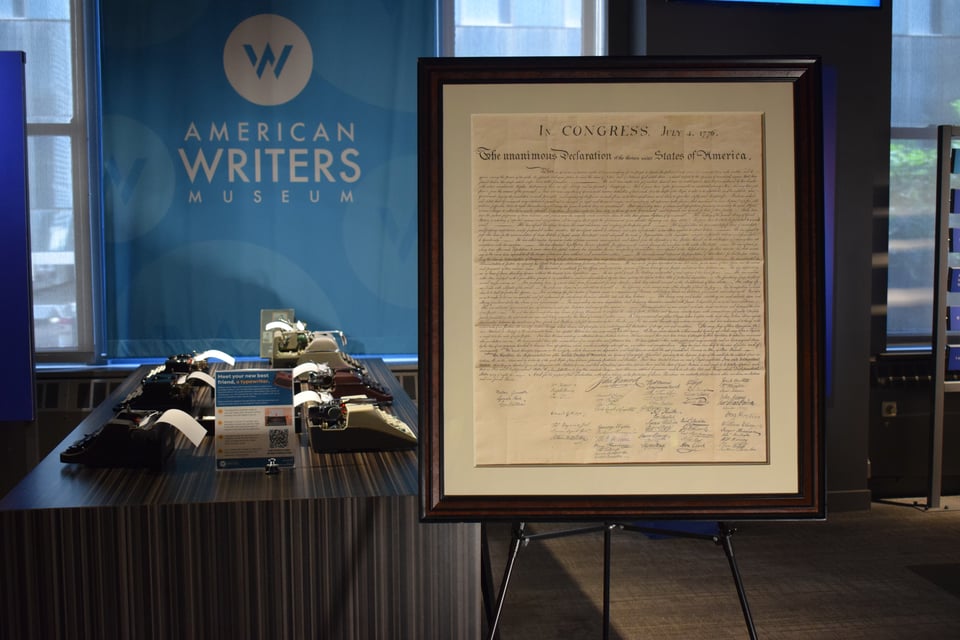
It’s not every day that I get to see a two-century-old copy of the Declaration of Independence.
Upgrade nowIt’s no secret that the ink was already fading on the original document signed in 1776 after America declared its independence from Britain. It’s not like they wrote it with a Sharpie! Then-Secretary of State John Quincy Adams commissioned William J. Stone to create an identical engraving of the Declaration. Stone used a wet-ink transfer process, and by the time he finished the copperplate engraving in 1823, Congress had ordered 200 parchment copies. Only 48 are known to still exist today. One is on display at the National Archives alongside the other founding documents. Even rarer are the Dunlap Broadsides that were circulated immediately after the Declaration of Independence was approved by the Second Continental Congress.
What most Americans probably don’t know is that Stone’s engraving, rather than the original engrossed parchment, has served as the basis for modern reproductions of the Declaration.
We know a lot more about preserving documents today than people did in the 1700s or 1800s. During the 20th century, the Declaration was encased in helium, which actually led to further deterioration. The National Archives eventually transferred the original to a new case in 2001, but the damage had already been done.
The Declaration is accompanied by colonial-era legal documents signed by John Adams, Benjamin Franklin, Thomas Jefferson, Philip Livingston, and Roger Sherman. If you’re in Chicago, you can visit the exhibit through September 7.
I wish I could tell you there’s a map on the back of this copy. Alas, they wouldn’t let me turn it over and check. I suppose you can always check beneath Parkington Lane at Trinity Church, but they probably made up his name for National Treasure.
In related news, historian and former presidential speechwriter Ted Widmer is the author of the recently released The Living Declaration: A Biography of America’s Founding Text. I’ll have more to say about the book very soon.
