The View From Phnom Penh
Cambodia's leaders want credit for shutting down scam compounds operating on their soil, but much work remains to be done.
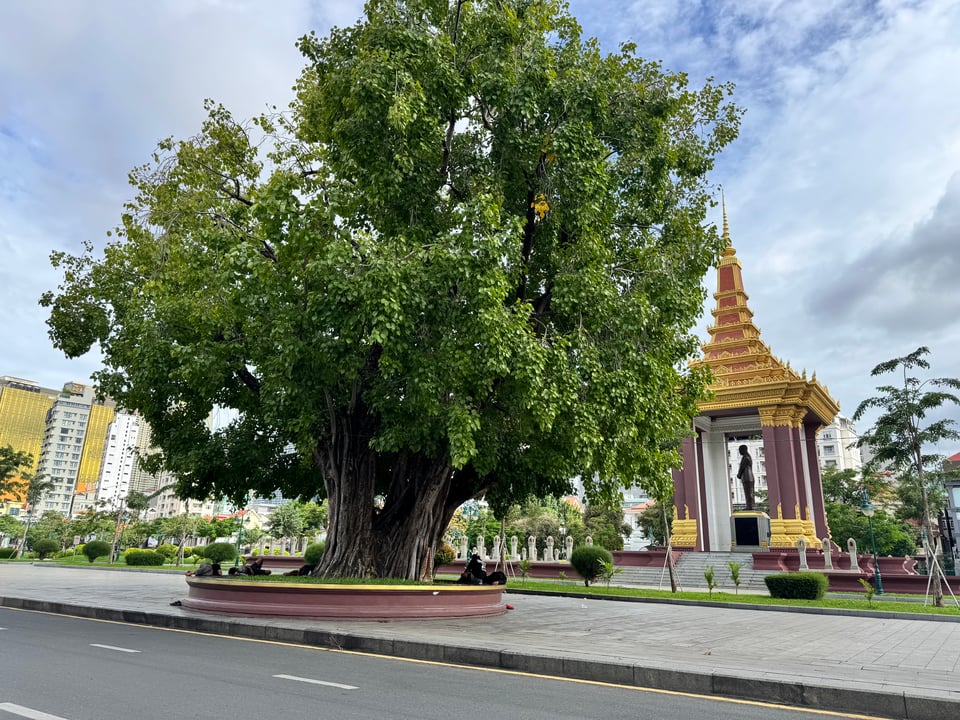
There weren’t any toys for her to play with, so the diaper-clad girl found one of her own. She grasped a cigarette lighter in her left hand and reached for the bench above her to hoist herself from the pavement where she’d been crawling. She then peeked up at her mom to figure out how to pass the time. Not with the lighter, of course. But what else was there?
Like the baby, her mother was bored. There wasn’t much to do outside of the Indonesian Embassy in Phnom Penh other than wait until she finally found a way to return home amid the exodus of former scam industry workers who got stranded in Cambodia after the country launched its crackdown on fraud factories last year.
Like the young Indonesians stranded in Phnom Penh, many of the workers who toiled inside such operations became victims of forced labor at some point during their stays in Cambodia, leaving them in limbo once their bosses opened up the gates to let them go free. “I was deceived by a scam agent and trafficked,” one of the Indonesians told me. But she can’t go home because the scam company that held her captive didn’t return her passport even as it freed its trafficked workers. Where does she sleep now? “In the streets,” she answered.
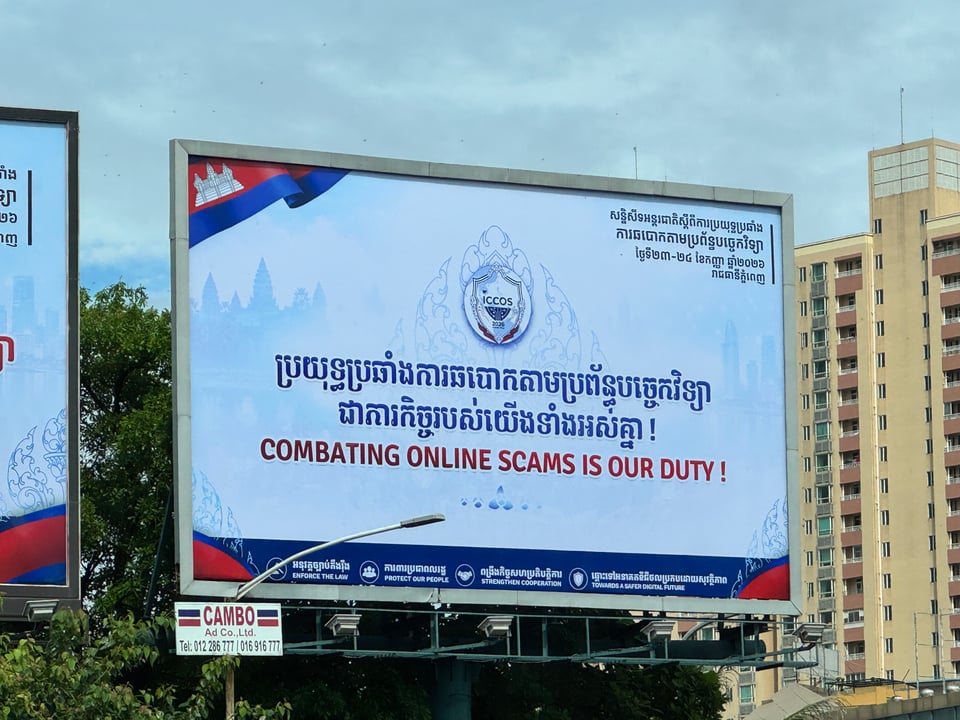
On another street corner south of the stranded Indonesians, a large billboard declared, in English and in Khmer, “COMBATING ONLINE SCAMS IS OUR DUTY!” It was a welcome sign of sorts for government ministers and law enforcement officials from Indonesia, Singapore, Australia, the U.S., China, Uganda, and over 20 other countries who gathered to participate in an international conference hosted by Cambodia on September 23-24 to showcase its efforts to shut industrial-scale scam compounds that have spread across the country in recent years.
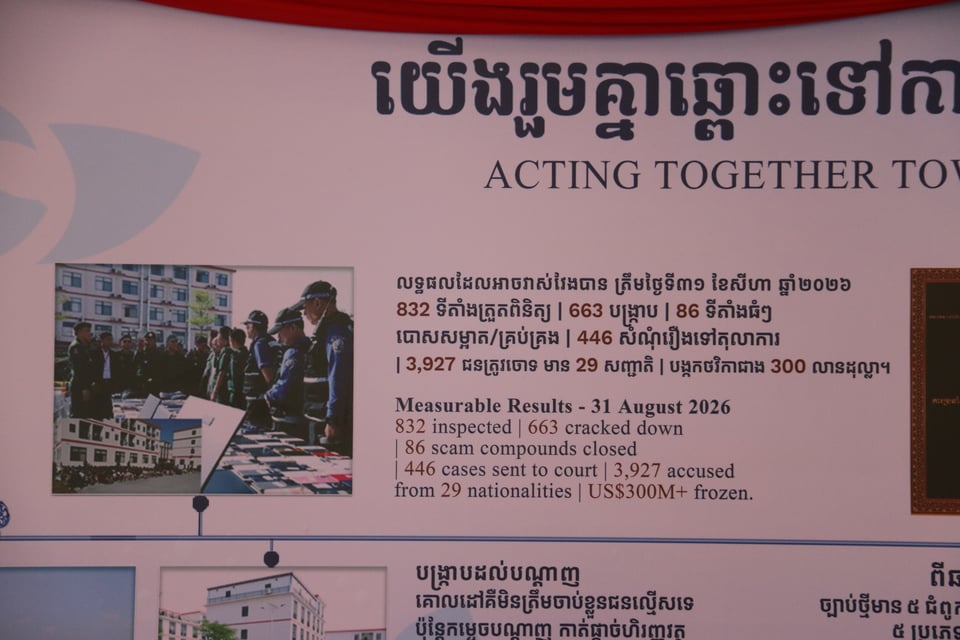
Since Cambodia’s crackdown was largely the result of intense international pressure to tackle a problem the country’s leaders once outright denied and dismissed, the conference was Phnom Penh’s effort to earn credit—and credibility—in the eyes of the international community. A museum-like display inside the Hotel Sofitel where the conference was held listed a timeline of the government’s actions to shut scam compounds and the results the crackdown has achieved thus far—such as the shuttering of 86 scam compounds. I arrived the Sofitel just as workers were draping the displays in Cambodia’s national colors ahead of the delegates’ arrival; an official in charge of putting the displays together punched his right fist into the palm of his left hand as he told me the scam industry was done in Cambodia—and these displays explained why.

A booklet outlining the country’s strategy for combating online scams cited the reason for the crackdown; it was, the document stated, as much about preserving Cambodia’s security and economy as much as protecting the country’s “reputation, national image and dignity.” Prime Minister Hun Manet made the point explicitly in his opening remarks. He welcomed the hundreds of international delegates packed into the Sofitel’s spacious ballroom by reminding them that, “Cambodian ancestors built the magnificent temples of Angkor Wat and left to humanity a civilization renowned for its greatness and enduring legacy. As their descendants, we have the solemn responsibility to safeguard Cambodia’s honour and ensure that our country continues to be known for heritage, resilience, peace and progress.”
The rapid construction of large industrial-scale industrial scam compounds across the country—many of which rivaled the famous Angkor Wat temple in size—has challenged those notions. Human rights watchdog Amnesty International has confirmed at least 86 scamming compounds where it documented abuses such as human trafficking, and Cyber Scam Monitor has identified many more suspected locations. Their spread was not a reflection of everyday Cambodian people but more so of their country’s political and business elites, who for years welcomed Chinese organized crime groups as investors and tenants in real estate developments hosting large-scale online scam operations. Nothing exemplified that contrast more than an image etched into my mind from my first trip to Cambodia, when I witnessed a couple of young Cambodian boys playing on the street as luxury cars passed them to enter a fortified scam compound near their family’s modest tin-roofed home in the coastal gambling hub of Sihanoukville. As I watched the young boys play, I couldn’t help but hope that they might inherit a better future free of industrial-scale scam compounds, forced scam labor, torture and human trafficking.
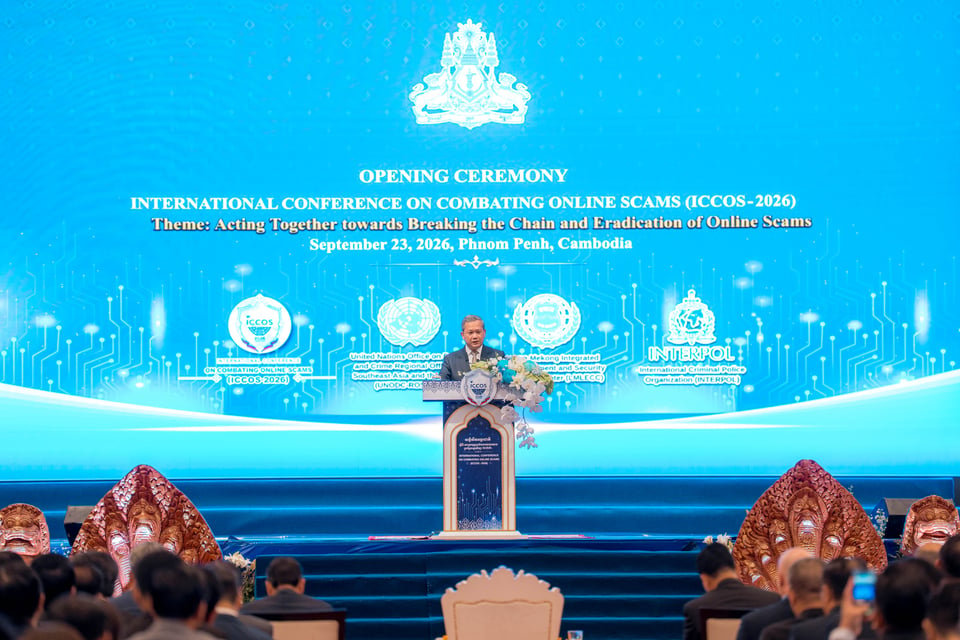
That was the future that Hun Manet was now promising in his speech: “Cambodia will never be a safe haven for online scams,” he pledged as he outlined the country’s “uncompromising internal actions” to shut down the scam industry. These included the creation of Cambodia’s Commission for Combating Online Scams to steer the government’s response—including its nationwide effort to close all scam compounds—and the country’s enactment of a new law criminalizing online scamming and related offenses. “As a result of our efforts, we have completely dismantled all large-scale scam compounds in the kingdom,” Hun Manet declared.
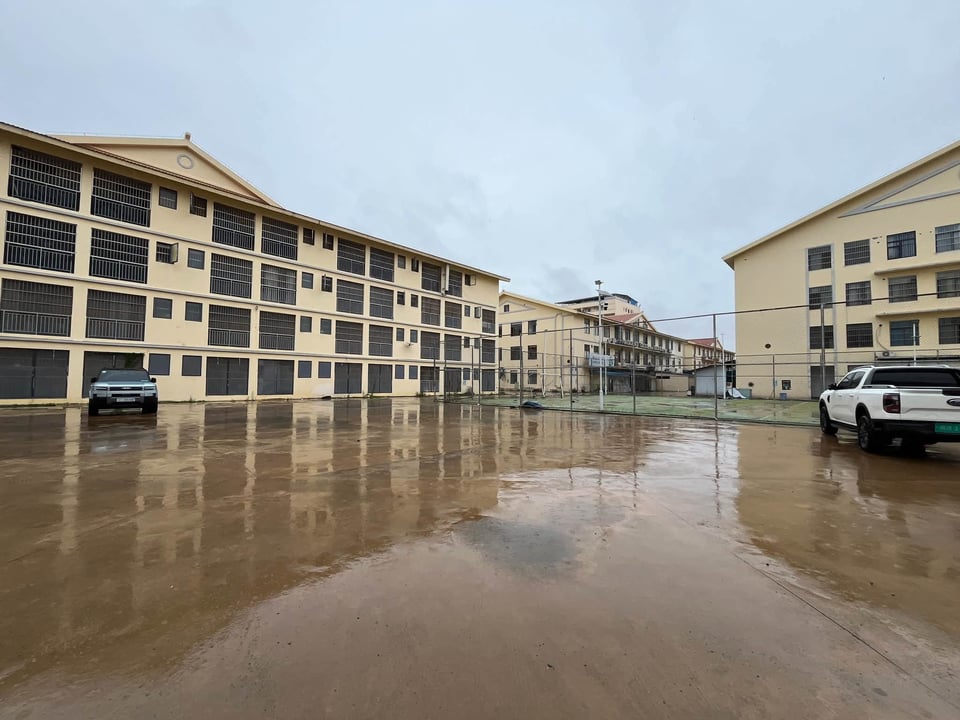
Cambodian officials organized tours of shuttered scam dens in the country’s Kandal and Prey Veng provinces to prove that they are now indeed empty and invited international media and diplomats to view former scam sites. Officials from numerous countries and international bodies praised Cambodia’s efforts, giving its leaders the recognition they felt they rightly deserved. “Cambodia has demonstrated and shown significant effort and significant advancements in its work to combat scams,” Nicholas Court, INTERPOL’s director of taskforce coordination, said when he took the conference stage. Hun Manet calmly nodded as Court spoke.

Still, the country’s past efforts to crack down on the scam industry leave plenty of room for skepticism. As I previously reported for ProPublica, in September 2022, authorities stepped up inspections of compounds alleged to house workers engaging in online fraud, seizing computers, phones and electric shock batons and freeing thousands of involuntary workers. The raids confirmed the worrying nexus of cybercrime and human trafficking that Cambodian officials had spent months denying or downplaying. An eerie silence then descended upon the large scam dens in Sihanoukville that had bustled with workers. But many scam operations simply relocated workers elsewhere, and once international pressure subsided, scam gangs moved back and even expanded into new ventures, like a malware attack that researchers from Infoblox and Chong Lua Dao tracked to a compound in Sihanoukville. By April 2026, the government admitted that the 2022 anti-scam campaign had failed: “We conducted a crackdown, but scams returned even bigger than before,” Cambodia’s Justice Minister, Koeut Rith, said at an April press conference.
The missing ingredient, then as now, was accountability. Will the government prosecute scam kingpins and hold accountable the elites who’ve enabled the industry by hosting large-scale cybercriminal enterprises on their properties? The crucial question got little air time during the conference, but it’s top of mind for transnational crime experts, who worry that without holding perpetrators and enablers accountable, the crackdown will amount to little more than a clearance operation that will once again temporarily displace the scam industry until it comes back once international pressure subsides. Reporters pressed the government on this point, and Senior Minister Chhay Sinarith, who heads Cambodia’s Commission for Combating Online Scams, told Nikkei Asia that scam sites linked to two senior Cambodian ruling party lawmakers are among those being investigated by the authorities. The compounds, linked to senators Ly Yong Phat and Kok An, have already made them targets of sanctions from the U.S. Treasury and prompted larger questions about the involvement of the country’s political elites in the scam industry.
The scourge of scam-linked human trafficking got more attention at the conference. The problem was acknowledged by Hun Manet and other Cambodian officials, but it earned little more than passing mentions in their speeches. “It’s rhetorical lip service on an international stage,” said Jacob Sims, former Cambodia country director for International Justice Mission, who recently authored a report analyzing the rise of Cambodia’s scam industry. A conference brochure claiming that the government’s nationwide crackdown “has demonstrated an active humanitarian initiative” to help human trafficking victims also drew skepticism. Experts like Sims have long warned that Cambodia isn’t screening ex-scam industry workers to identify victims of human trafficking and that those in need lack access to accommodation and assistance with repatriation. Instead, they’re detained and treated like criminals or left to fend for themselves, as evidenced by the homeless human trafficking victims who still remain stranded in the capital.
Perhaps the point most frequently mentioned at the conference, by both Cambodian and international speakers, was the need to strengthen cross-border cooperation because no country can effectively combat transnational crime alone. The favorite talking point was a prime example of the more sophisticated messaging coming out of Phnom Penh these days than the blanket denials and dismissals of previous years: Online scamming has gone from not being a problem to being everybody’s problem. The point was written into a joint declaration agreed by ministers at the end of the conference: “No single government, institution, or sector can effectively combat online scams alone.” Everyone must do their part, because the weakest link breaks the chain.
Which brings us to one more conference speech worth highlighting.
Myanmar
Cambodia’s nationwide campaign to shut fraud dens leaves Myanmar as the destination of choice for displaced scam syndicates since industrial-scale scam compounds—like this one or these two or dozens of others identified by researchers in recent months—are still actively being built on Burmese soil. So I was curious what General Ko Ko Oo, the official in charge of the country’s response to the scam industry, would say in front of an audience full of representatives of countries being targeted by Myanmar-based scammers—including the U.S.
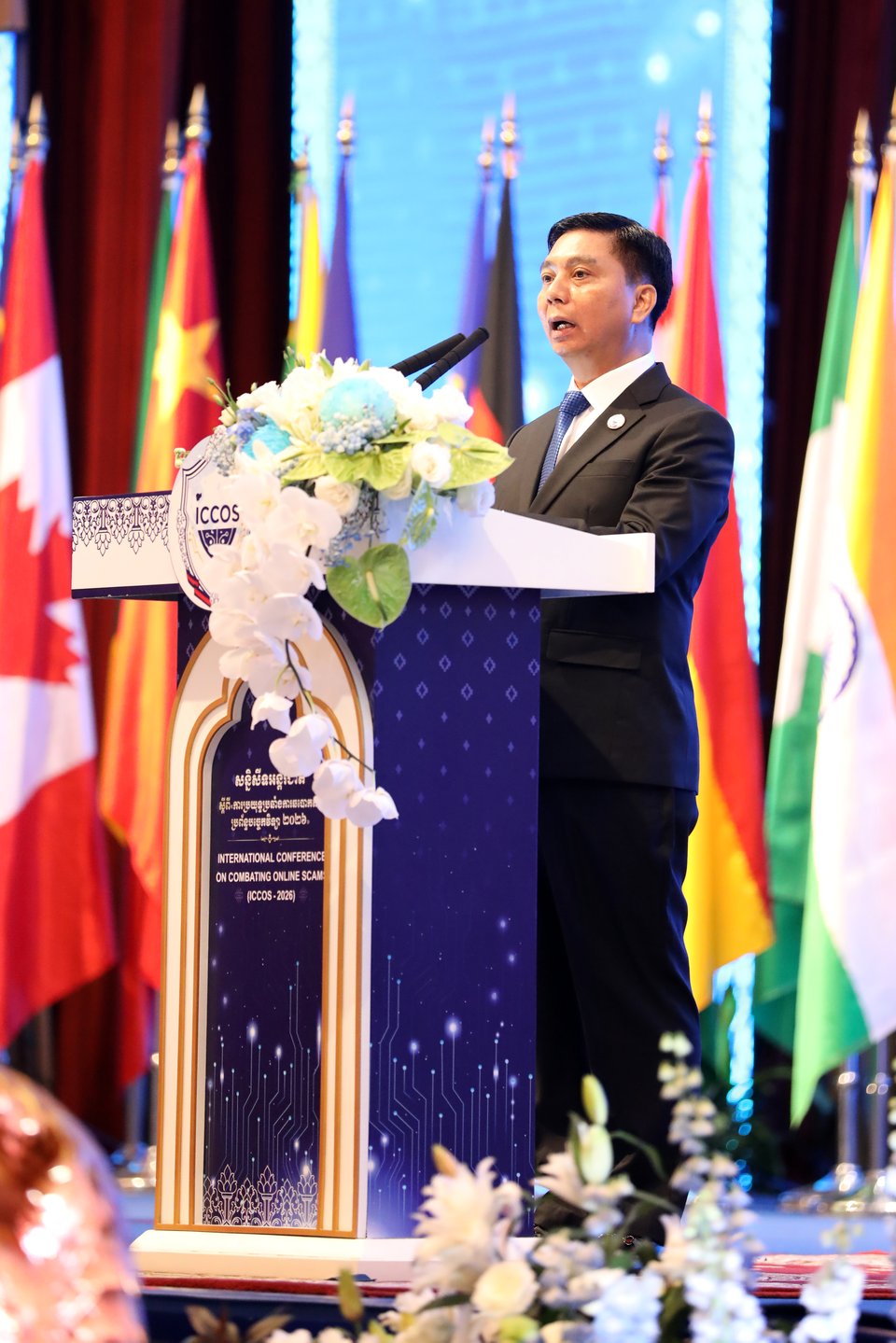
The preamble struck a familiar note. “Regardless of how these criminal chains are formed, an objective analysis makes it clear that they do not originate from a single country in isolation, nor can they be dismantled or eradicated through the efforts of any single nation alone,” Ko Ko Oo said. He claimed Myanmar was “geographically exploited” by scam syndicates who chose to make the country’s lawless border regions their home and said that “Myanmar is neither the source of these criminal activities nor a primary beneficiary of them.”
The truth is more complex. The border areas chosen by scam gangs—such as Myanmar’s northern Kokang region (prior to 2024) or pockets of southeastern Karen State—were controlled by border militias under the military’s command. By offering scam compounds protection, the militias enriched themselves and provided the military a vital source of revenue after the 2021 coup that displaced the country’s civilian-led government. That left Myanmar’s military leaders with little reason to shut down the scam centers. And the rapid new construction visible in satellite imagery of Karen State shows the incentives are still there to build new scam compounds, not to raid and dismantle them.
The general pointed to the recent demolition of one large scam compound, KK Park, as evidence that “the government of Myanmar is not merely standing by idly.” It was a good illustration of why the Myanmar military leveled KK Park in late 2025—to have a prominent example to point to on the world stage of the government’s efforts to shut down scam centers. Ko Ko Oo did not address the ongoing construction of new scam compounds elsewhere. And he claimed Myanmar does not supply internet to online scammers operating on its soil. But during a recent visit to the Thai-Myanmar border, I could clearly see telecommunications towers inside Shwe Kokko, a well-known scam hub in Myanmar’s Karen State.
“Thank you, your excellency, for your meaningful remarks,” the emcee said when the general finished speaking. The comment bookended every speech of the event, and after all the speeches concluded, international delegates departed Phnom Penh. They left in between rainstorms that cleared the stranded ex-scam industry workers from the park benches where they’d been sleeping.
The homeless Indonesians huddled under an awning to seek cover from the rain. It wasn’t their turn to go home yet.