In 2000: The hair evidence that couldn't stand up to DNA
Today in True Crime
by CaseBond · Source-backed daily true-crime history
July 5, 2026
Non-graphic · Sensitive events discussed without explicit detail.
In 2000: The hair evidence that couldn't stand up to DNA
On July 5, 2000, William Gregory walked out of a Kentucky prison after seven years of wrongful imprisonment. That day, he became the first person exonerated by DNA evidence in the state of Kentucky — and the first person anywhere in the world to be cleared through mitochondrial DNA testing alone.
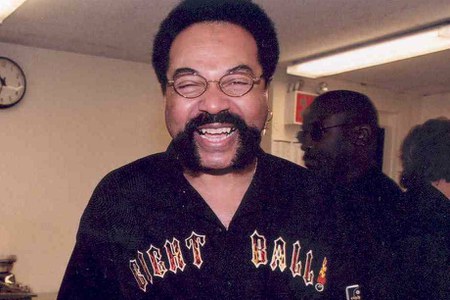
The crimes that sent him to prison dated back to the summer of 1992, at the Breckinridge Square Apartments in Louisville. On June 1, 1992, a 20-year-old woman identified in court records as K.V. was awakened at around 6 a.m. by an intruder wearing pantyhose over his head. She fought back, ripping the covering from his face and scratching him before he fled out the back door. Six weeks later, on July 19, 1992, a 71-year-old resident known as M.S. was awakened by a naked man holding a knife. M.S. described her attacker as a 5-foot-6 Black man between 30 and 40 years old, with a muscular build and greasy hair.
That same July morning — the same day as M.S.'s assault — K.V. encountered Gregory in the building and identified him as the man who had attacked her in June. It was a moment that would cost him nearly a decade of his life. Gregory maintained he had been home during K.V.'s attack and in a neighbor's apartment during M.S.'s assault. Those alibis weren't enough to stop the machinery of prosecution.
At trial in 1993, the case against Gregory rested on two pillars: K.V.'s eyewitness identification and forensic hair analysis. A stocking cap recovered as evidence contained hairs that an examiner testified were "more than likely" from Gregory. Jurors convicted him of rape, attempted rape, and burglary.
What the jury couldn't know — and what was barely understood even in the forensic community at the time — was that microscopic hair comparison couldn't reliably individualize evidence to a specific person. Hair characteristics visible under a microscope are shared by many people. "More than likely" wasn't science. It was testimony dressed up as science, and it sent an innocent man to prison.
For years, Gregory's appeals went nowhere. Then the Innocence Project took up his case, located the stocking cap hairs, and arranged for them to be retested using mitochondrial DNA analysis — a technique newer and more rigorous than what had been used at trial. The results were unambiguous: the DNA excluded Gregory as a contributor of those hairs. He could not have left them there.
On July 5, 2000, Gregory was released. The two records his exoneration set — first DNA exoneration in Kentucky, first worldwide exoneration by mitochondrial DNA testing alone — carried significance well beyond his case. His exoneration helped establish the legal credibility of mitochondrial DNA analysis at a moment when the technology was still finding its footing in American courts.
Gregory's wrongful conviction was the product of compounding failures that criminal justice researchers have since studied extensively. Eyewitness identification, especially when made under suggestible circumstances — as K.V.'s was, on the very day of a second assault at the same complex — is among the least reliable forms of evidence. Forensic testimony that overstates the discriminating power of physical evidence has driven a disproportionate share of wrongful convictions nationally. And alibi evidence, without independent corroboration, is easily set aside when investigators are already fixed on a suspect.
The true perpetrator of both assaults at Breckinridge Square Apartments was never publicly identified. Both victims were denied the justice of seeing their actual attacker face charges. And Gregory spent seven years in a cell for crimes he did not commit.
In 2007, the city of Louisville settled a lawsuit brought by Gregory for $3.9 million — a financial acknowledgment of a justice system failure that could never be fully undone.
Also on this day
-
John Wayne Gacy Murders Matthew Bowman, July 5, 1977 · Facebook (CodyEtter1991)Matthew Bowman, 19, was murdered by serial killer John Wayne Gacy on July 5, 1977, one of dozens of victims Gacy killed during a years-long killing spree in the Chicago area.
-
Eric Evans Pleads Guilty to First-Degree Sexual Abuse of a Child, July 5, 2022 · Schenectady County, New YorkOn July 5, 2022, Eric Evans of Schenectady, New York pled guilty to Sexual Abuse in the First Degree, admitting to touching a child under 11 years old on multiple occasions.
-
Teacher Maxwell Emerson Fatally Shot Near Catholic University in D.C., July 5, 2023 · pmg-ky1.com (Oldham Era)Maxwell Emerson, 25, a local teacher visiting Washington, D.C., was shot near the Catholic University of America on July 5, 2023; Jaime Macedo, 24, was charged with first-degree murder.
-
Mass Shooting Rocks Downtown Indianapolis After Fourth of July, July 5, 2025 · Fox 59A mass shooting broke out in downtown Indianapolis on July 5, 2025, as Fourth of July celebrations were winding down; four teenagers were criminally charged with gun offenses in connection with the shooting.
-
Jaime Macedo Charged with First-Degree Murder — 2024 · pmg-ky1.comMaxwell Emerson, 25, was shot near the Catholic University of America in Washington, D.C., on July 5, 2023. Jaime Macedo, 24, approached him,
Just hit reply. Tell me what grabbed you, what you'd want more of, or a case you can't stop thinking about. I read everything.
Sources used/checked for this issue
- William Gregory — Innocence Project Case Profile, Innocence Project — "William Gregory," Innocence Project. https://innocenceproject.org/cases/william-gregory
- William Gregory — Kentucky Innocence Project, Kentucky Innocence Project — "William Gregory," Kentucky Innocence Project. https://www.kentuckyinnocenceproject.org/william-gregory
- Louisville, Kentucky Settles with Wrongly Imprisoned Man for $3.9 Million, Prison Legal News — "Louisville, Kentucky Settles with Wrongly Imprisoned Man for $3.9 Million," Prison Legal News, July 15, 2007. https://www.prisonlegalnews.org/news/2007/jul/15/louisville-kentucky-settles-with-wrongly-imprisoned-man-for-39-million
Today in True Crime by CaseBond — 2026-07-05
