In 1978, TV's Colonel Hogan was beaten to death — the case is still open
Today in True Crime
by CaseBond · Source-backed daily true-crime history
June 29, 2026
Non-graphic · Sensitive events discussed without explicit detail.
In 1978, TV's Colonel Hogan was beaten to death — the case is still open
On the evening of June 29, 1978, the man who had played America's most charming prisoner of war was found beaten to death in a Scottsdale, Arizona apartment. Bob Crane — the easy-grinning Colonel Robert Hogan of "Hogan's Heroes" — was 49 years old. He had been struck repeatedly in the head while he slept, and an electrical cord had been knotted around his neck. The murder weapon was never recovered. Nearly five decades later, no one has ever been convicted of the crime, and the Scottsdale Police Department still carries it on the books as open.
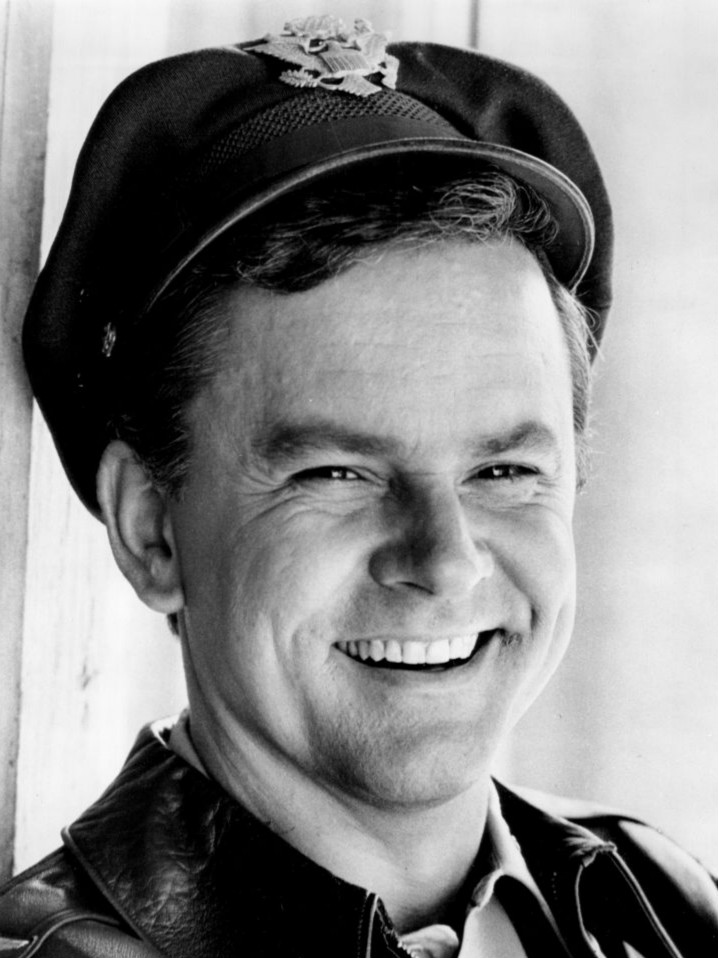

Crane had come to the desert the long way around. Born July 13, 1928, in Waterbury, Connecticut, he spent his early career as a fast-talking radio disc jockey before breaking into television. In 1965 he landed the role that would define him: Colonel Hogan, the wisecracking ringleader of Allied prisoners running circles around their captors in a German POW camp. "Hogan's Heroes" ran until 1971 and made Crane a household name, the very picture of wholesome, charismatic American television.
The work that followed never matched it. Like many actors whose signature series ends, Crane found the parts thinning out. By 1978 he had moved into theater, and it was a touring dinner-theater production of the comedy "Beginner's Luck" that brought him to Scottsdale, where he was staying in a modest apartment far from the Hollywood life he had once known. He was discovered there by a colleague from the production who had come to check on him — the beginning of an investigation that would stretch across decades and end with no resolution.
What investigators uncovered about Crane's private life stood in jarring contrast to his television image. Away from the cameras, Crane had been an obsessive amateur filmmaker of a very different kind, recording and carefully cataloguing his sexual encounters with numerous women. That hidden world widened the field of people who moved through his orbit, and it pointed police toward the man who would become their central suspect.
John Henry Carpenter, a video-equipment salesman from California, had befriended Crane through their shared interest in amateur filmmaking. The friendship placed Carpenter squarely inside Crane's private affairs, and investigators came to view him with suspicion. Carpenter had been in Scottsdale on the night of the murder and left quickly the next morning, a detail police found difficult to set aside. But suspicion was not proof, and in 1978 the physical evidence simply was not there. The trail went cold.
It was reopened years later by forensics. Re-examining crime-scene photographs taken inside Carpenter's rental car, an examiner identified a small biological stain that had gone unnoticed at the time. That stain became a central element of the prosecution's case, and in 1992 — roughly fourteen years after the killing — Carpenter was arrested and charged with murder.
The trial came in 1994. Prosecutors leaned on the forensic stain and on the circumstantial story of the two men's relationship, presenting Crane's secret life to a public that had never known it existed, while arguing that Carpenter's close involvement in that world established his access and motive. The defense pushed back hard on the evidence, questioning its reliability and the chain of custody after so many years had passed. The fundamental problem of a cold case — degraded evidence, faded memories, no recovered weapon — proved decisive. The jury acquitted Carpenter. He maintained his innocence for the rest of his life and died in 1998, carrying whatever he knew with him.
The case has never lost its grip on the public imagination. In 2002, director Paul Schrader dramatized Crane's double life and violent death in the film "Auto Focus," with Greg Kinnear in the title role, introducing the mystery to a new generation. But the film, like the trial, offered no answer. With Carpenter dead and acquitted, and with no new suspect ever charged, the question that opened on June 29, 1978 remains exactly where it started: who killed Bob Crane, and why?
For Crane's family, who have continued to press for renewed attention to the case, that absence of an answer is the lasting wound. An acquittal is not a finding of innocence, but neither is it a conviction — and the official record holds only that a beloved television actor was murdered in his bed, and that no one was ever held to account. As forensic methods advance, the hope persists that the Scottsdale case may someday give up its last secret. For now, it endures as one of Hollywood's most stubborn unsolved crimes.
Also on this day
-
Wanda Jean Allen - Wikipedia — 1981 · Wikipedia<strong>Wanda</strong> <strong>Jean</strong> Allen (August 17, 1959 – January 11, 2001) was sentenced to death in 1989 for the murder of Gloria <strong>Jean</strong> Leathers, <strong>29</strong>, her longtime girlfriend, in <strong>Oklahoma</strong> City. In 2001, Allen was the first black woman to
-
Thompson v. Oklahoma - Wikipedia — 1988 · Wikipedia[Footnote 29] When we confine our attention to the 18 States that have expressly established a minimum age in their death penalty statutes, we find that all of them require that the defendant have attained at least the age of 16 at the time of the capital offense. [Footnote 30] Page 487 U. S. 830 Th
-
Capital punishment in Connecticut - Wikipedia — 2012 · WikipediaSince the 1976 United States Supreme Court decision in Gregg v. Georgia until <strong>Connecticut</strong> <strong>repealed</strong> capital punishment in <strong>2012</strong>, <strong>Connecticut</strong> had only executed one person, Michael Bruce Ross in 2005. Initially, the <strong>2012</strong
-
Florida Judge Throws Out John Couey Confession — 2006 · nbcnews.comJune 30, 2006, 10:07 AM EDT / Source: ... Couey, a 47-year-old convicted sex offender, <strong>gave the confession to detectives, but also told them that he wanted to consult a lawyer</strong>.... June 30, 2006, 10:07 AM EDT / Source: The Associated Press · The confession of a man charged with kidna
-
Chris Benoit double-murder and suicide - Wikipedia — 2007 · WikipediaThe phrase "stemming from the <strong>death</strong> of his <strong>wife</strong> Nancy" was added at 4:01 a.m. EDT on <strong>June</strong> 25, whereas the Fayette County police reportedly discovered the bodies of the <strong>Benoit</strong> family at 2:30 p.m. EDT, 10 hours, <strong>29</
Just hit reply. Tell me what grabbed you, what you'd want more of, or a case you can't stop thinking about. I read everything.
Sources used/checked for this issue
- Bob Crane, Wikipedia — "Bob Crane," Wikipedia. https://en.wikipedia.org/wiki/Bob_Crane
- Hogan's Heroes star Bob Crane: Scottsdale murder 40 years later, azcentral.com — "Hogan's Heroes star Bob Crane: Scottsdale murder 40 years later," azcentral.com.
- Bob Crane's murder remains unsolved four decades later, FOX 10 Phoenix — "Bob Crane's murder remains unsolved four decades later," FOX 10 Phoenix.
- Old Time Crime: Hollywood star brutally murdered in Scottsdale apartment in 1978, ABC15 Arizona — "Old Time Crime: Hollywood star brutally murdered in Scottsdale apartment in 1978," ABC15 Arizona.
- Bob Crane — Cold Cases, Crime Museum — "Bob Crane — Cold Cases," Crime Museum. https://www.crimemuseum.org/crime-library/cold-cases/bob-crane/
- How Bob Crane Died And The Mystery That Surrounds His Murder, All That's Interesting — "How Bob Crane Died And The Mystery That Surrounds His Murder," All That's Interesting.
Today in True Crime by CaseBond — 2026-06-29
