In 1976: The Supreme Court ended America's execution moratorium
Today in True Crime
by CaseBond · Source-backed daily true-crime history
July 2, 2026
In 1976: The Supreme Court ended America's execution moratorium
Fifty years ago today, the United States Supreme Court handed down one of the most consequential rulings in modern criminal justice history, upholding Georgia's revised capital punishment statute and effectively lifting the de facto moratorium on executions that had gripped the country for four years. The 7-to-2 decision in Gregg v. Georgia, 428 U.S. 153, settled — for a generation at least — the question of whether the death penalty itself violated the Constitution.
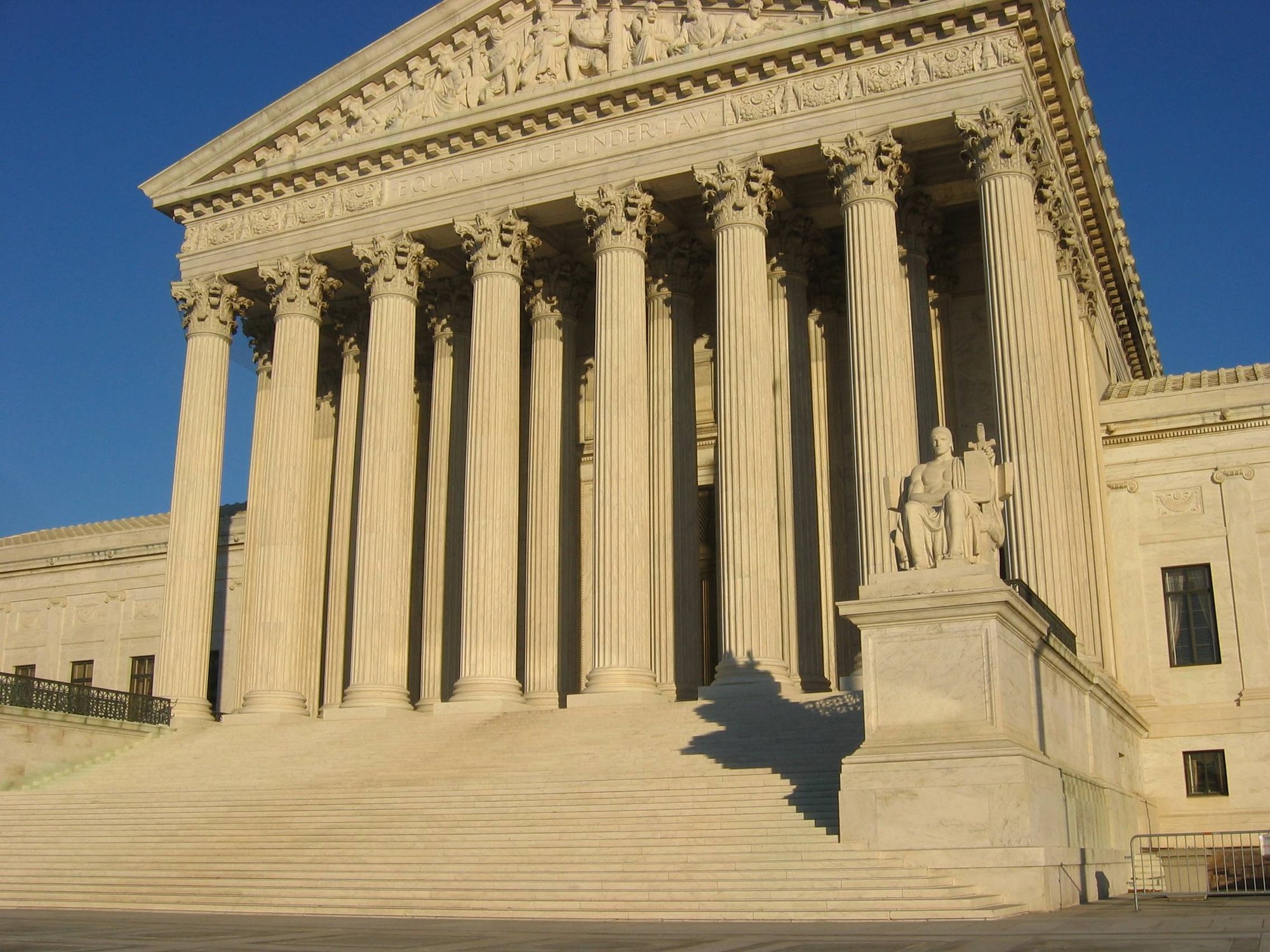
The case arose from the conviction of Troy Leon Gregg, who had been found guilty in Georgia on two counts of murder and one count of armed robbery. After a separate sentencing phase, the trial jury imposed the death penalty on the murder convictions. Georgia's Supreme Court, conducting the mandatory review required by the state's revised statute, affirmed the death sentences for murder but vacated the death sentence for robbery alone, concluding it was disproportionate under state law. Gregg challenged what remained, arguing to the Supreme Court that imposing death for murder violated the Eighth and Fourteenth Amendments.
To understand what the Court was deciding, you have to go back to 1972 and Furman v. Georgia, 408 U.S. 238, where a divided 5-to-4 majority had effectively invalidated every capital punishment statute in the country. Furman did not declare the death penalty unconstitutional in all circumstances; it held that the manner in which death sentences were being imposed — left entirely to the unfettered discretion of individual juries, with no guiding standards — amounted to cruel and unusual punishment. Justice Potter Stewart's concurrence captured the problem in terms that would be quoted for decades: the existing statutes permitted "the wanton and the freakish" imposition of death sentences (Furman v. Georgia, 408 U.S. 238, 310 (1972) (Stewart, J., concurring)), leaving those who received the death penalty as victims of what Stewart described as a system of organized randomness. Death rows across the country froze overnight.
State legislatures responded with urgency. Approximately thirty-five states enacted new capital punishment statutes in the four years after Furman, attempting to craft frameworks that would pass constitutional muster. Georgia's approach was among the most carefully structured: a bifurcated trial separating the guilt determination from the sentencing decision, a list of specific statutory aggravating circumstances the prosecution had to prove beyond a reasonable doubt before death could even be considered, and mandatory review by the state Supreme Court of every death sentence to check for arbitrariness, passion, or disproportionality.
Writing for the plurality, Justice Stewart — joined by Justices Lewis F. Powell Jr. and William H. Rehnquist — concluded that the death penalty was not categorically prohibited by the Constitution. The Eighth Amendment's meaning, the Court had established, evolved with "the evolving standards of decency that mark the progress of a maturing society." Looking at the post-Furman landscape — approximately thirty-five new statutes, continued public support — the plurality saw no evidence that American society had repudiated capital punishment for murder. The Court recognized two penological purposes that supported it: retribution, as a legitimate moral expression of society's condemnation of the most serious crimes, and deterrence, which, while not conclusively demonstrated, remained plausible enough to respect the legislature's judgment.
Georgia's revised framework, the plurality found, answered Furman's core objection. Enumerated aggravating circumstances gave juries meaningful guidance rather than unchecked discretion. The mandatory appellate review provided a check against arbitrary outcomes. The two-stage trial allowed a genuinely individualized determination at sentencing — not just a verdict on guilt, but a moral judgment about whether this particular defendant, with these circumstances, should die.
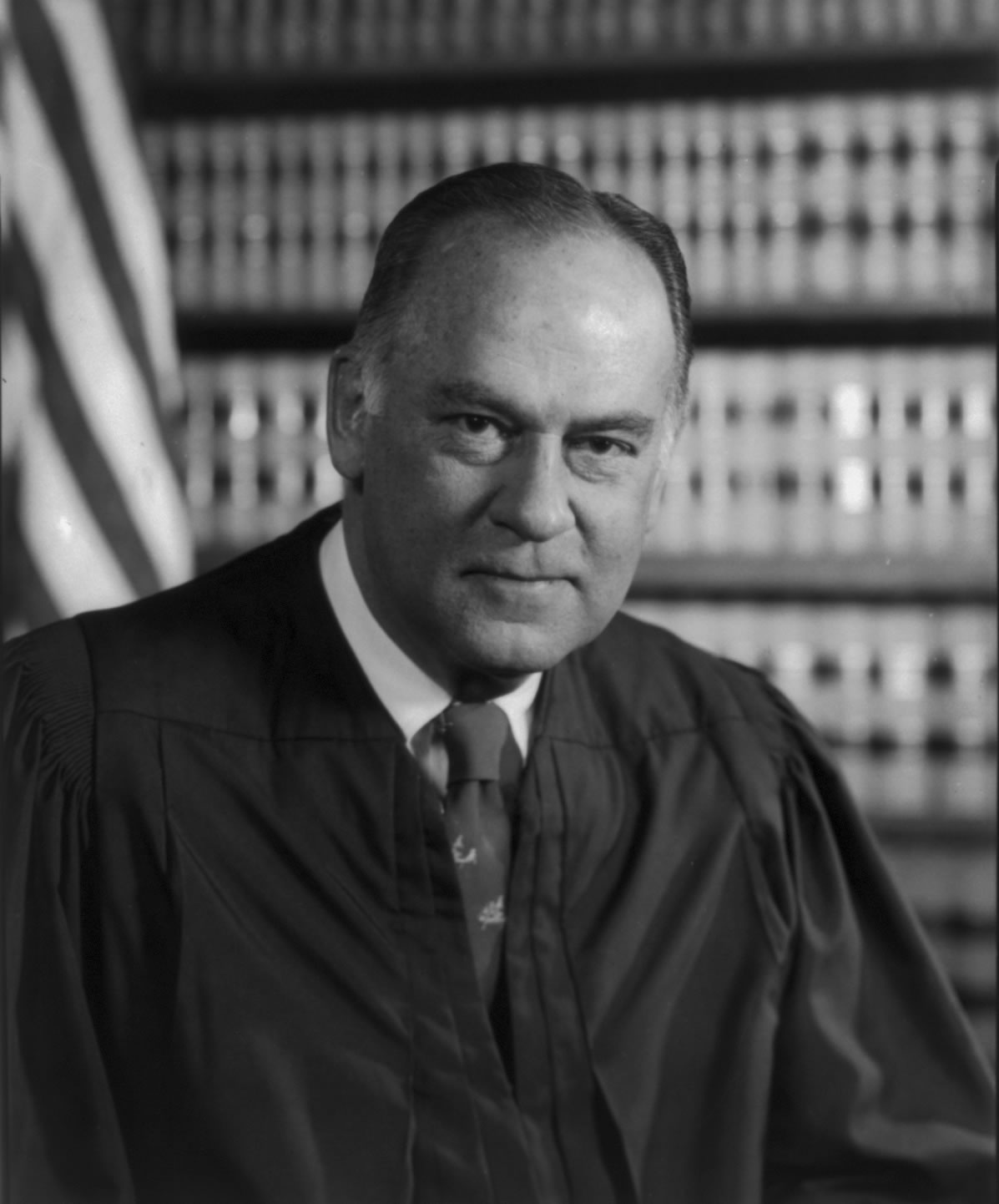
Justices William Brennan Jr. and Thurgood Marshall each wrote separately in dissent. Brennan argued that the death penalty was inherently cruel and unusual: so infrequently imposed that it lost any deterrent value, so uniquely cruel as to be degrading to society as a whole, and so irreversible that no error could ever be corrected. Marshall pressed harder on the empirical record, contending that the available evidence did not support deterrence and that capital punishment fell disproportionately on poor and minority defendants in a way that no procedural reform had ever cured. Both justices maintained those positions for the rest of their careers.
Announced the same day were four companion rulings. The Court upheld Florida's capital punishment statute in Proffitt v. Florida and Texas's in Jurek v. Texas, while striking down mandatory death penalty schemes in Woodson v. North Carolina and Roberts v. Louisiana — laws that imposed automatic death sentences for certain categories of murder without allowing any individualized consideration of mitigating circumstances. Guided discretion was constitutionally permissible. Mandatory death was not.
The decision cleared the legal path for executions to resume nationwide. In the years following Gregg, approximately thirty-seven states enacted new capital punishment laws consistent with the framework the Court had approved. The structure the justices built fifty years ago today — mandatory aggravating factors, individualized sentencing, and proportionality review — remains the constitutional foundation of American capital punishment, even as the debate over its fairness, its efficacy, and its moral legitimacy continues to divide the country.
Also on this day
-
Bryan Kohberger pleads guilty to Idaho student murders, July 2, 2025 · ABC NewsBryan Kohberger appeared at Ada County Courthouse in Boise, Idaho, and pleaded guilty to each of the five counts related to the November 2022 murders of four University of Idaho students. The plea resolved a case that had drawn international attention since the victims were found stabbed to death in an off-campus house.
-
DrinkOrDie piracy member sentenced to 41 months, July 2, 2002 · U.S. Department of JusticeSabuj Pattanayek, 21, of Nashville, Tennessee — a member of the notorious DrinkOrDie internet warez group — was sentenced to 41 months in federal prison for conspiring to violate criminal copyright laws. DrinkOrDie was one of the largest online software piracy networks of the era, and its takedown was a landmark early federal cybercrime prosecution.
-
MS-13 member Erick Umaña sentenced to death in Charlotte restaurant murders, July 2, 2010 · QCNewsErick Ayala Umaña, a veteran MS-13 gang member, was sentenced to death for the murders of two brothers at a Charlotte, North Carolina restaurant — victims who witnesses testified had disrespected his gang signs. While incarcerated pending trial, Umaña had also coordinated attempts to kill witnesses and informants.
-
Human remains found in Oklahoma farmer's field — cold case, July 2, 2006 · Oklahoma State Bureau of InvestigationHuman remains were discovered in a farmer's field in Bray, Oklahoma, in Stephens County. The condition of the remains prevented the medical examiner from determining the cause of death, and the case was added to the state's cold case registry as an unidentified homicide.
-
Joseph Young homicide — Anacostia Avenue, SE, Washington D.C., July 2, 1996 · Metropolitan Police Department (D.C.)Joseph Young was killed in the 300 block of Anacostia Avenue, SE, in Washington, D.C. The homicide remained unsolved and was listed among the Metropolitan Police Department's major unsolved cases from the 1990s.
-
Davon Holt and Michael Lucas shot in D.C. double homicide, July 2, 2006 · Metropolitan Police Department (D.C.)At approximately 4:30 a.m. in the 200 block of L Street, SW, in Washington, D.C., Davon Holt and Michael Lucas were shot. Holt died immediately; Lucas died from his injuries on July 8. The Metropolitan Police Department sought public assistance in identifying the shooter.
-
Anne Paetz found dead — Michigan cold case, July 2, 1999 · Western Michigan University Cold Case ProgramThe body of 23-year-old Anne Paetz, who had gone missing while driving from her Saginaw home to Montrose, Michigan, was found approximately 15 miles from her abandoned vehicle. DNA evidence and bloody handprints at her home were recovered, but her killer was never identified. The case remained open more than two decades later.
-
Alex Murdaugh defense files pre-trial motions, July 2, 2022 · WikipediaDefense attorneys for Alex Murdaugh, a prominent South Carolina attorney accused of murdering his wife and son in June 2021, filed pre-trial motions as the case drew intense national scrutiny. Murdaugh was later convicted on all counts in March 2023.
-
Zizian cult group linked to murders in Washington and Vermont, July 2, 2024 · PBS NewsHourInvestigators and journalists continued building the case linking the Zizian group — a fringe rationalist network — to a series of violent deaths across the United States in Washington state and Vermont. The group was later linked to six killings, and its leader was ordered held without bail.
-
Wade Wilson sentenced to death for Florida double murder, July 2, 2023 · WikipediaWade Wilson, a Florida man convicted of murdering two women in 2019, was sentenced to death after a jury recommended capital punishment. Wilson became one of Florida's most recent death row additions in a case that drew unusual public attention partly due to his sharing a name with the fictional Marvel character Deadpool.
Just hit reply. Tell me what grabbed you, what you'd want more of, or a case you can't stop thinking about. I read everything.
Sources used/checked for this issue
- Gregg v. Georgia, Wikipedia — "Gregg v. Georgia," Wikipedia. https://en.wikipedia.org/wiki/Gregg_v._Georgia
- Gregg v. Georgia, 428 U.S. 153 (1976), Justia — Gregg v. Georgia, 428 U.S. 153 (1976). https://supreme.justia.com/cases/federal/us/428/153/
- Gregg v. Georgia — Oyez, Oyez / Chicago-Kent College of Law — "Gregg v. Georgia," Oyez. https://www.oyez.org/cases/1975/74-6257
- Gregg v. Georgia (1976), Bill of Rights Institute — "Gregg v. Georgia (1976)," Bill of Rights Institute. https://billofrightsinstitute.org/e-lessons/gregg-v-georgia-1976/
- Gregg v. Georgia, 428 U.S. 153, FindLaw / Thomson Reuters — Gregg v. Georgia, 428 U.S. 153. https://caselaw.findlaw.com/court/us-supreme-court/428/153.html
- Gregg v. Georgia, Ashbrook Center / Teaching American History — "Gregg v. Georgia," Teaching American History. https://teachingamericanhistory.org/document/gregg-v-georgia/
Today in True Crime by CaseBond — 2026-07-02

