In 1964: three civil rights workers vanish in Mississippi
Today in True Crime
by CaseBond · Source-backed daily true-crime history
June 21, 2026
Non-graphic · Sensitive events discussed without explicit detail.
In 1964: three civil rights workers vanish in Mississippi
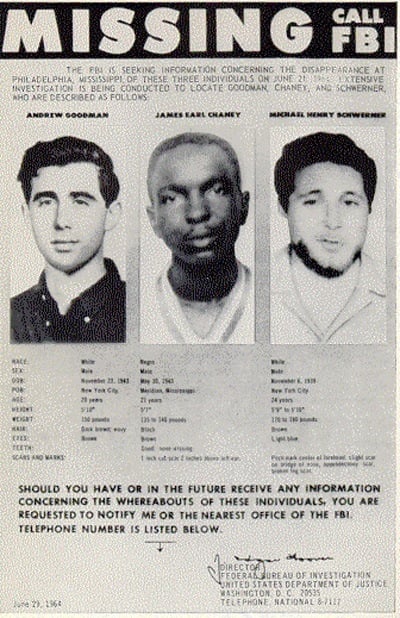
On the morning of June 21, 1964, three young men drove into Neshoba County, Mississippi, and never came back. Michael "Mickey" Schwerner, James Chaney, and Andrew Goodman were civil rights workers, and that day they had come to investigate the burning of the Mt. Zion Methodist Church in the Longdale community — a Black church that had agreed to host a Freedom School. By nightfall they had vanished. It would take 44 days, a federal manhunt, and an informant inside the Ku Klux Klan to learn what had happened to them, and more than four decades to put a single man behind bars for the killings in a state court.
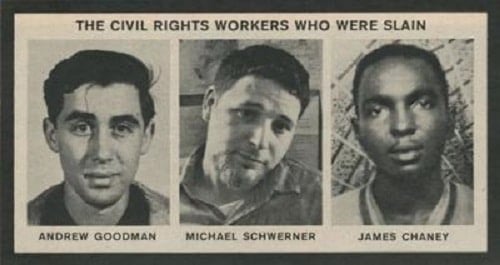
The three were part of the Mississippi Summer Project — Freedom Summer — a 1964 campaign organized by the Council of Federated Organizations (COFO), a coalition that included the Congress of Racial Equality (CORE), the Student Nonviolent Coordinating Committee (SNCC), the NAACP, and the Southern Christian Leadership Conference (SCLC), to register African American voters in a state that had spent generations keeping them from the ballot. James Chaney was 21, a Black CORE field worker who had grown up in nearby Meridian and knew firsthand the violence the work invited. Michael Schwerner was 24, a Jewish social worker from New York City who had moved south to organize for CORE and had become a marked man to local Klansmen. Andrew Goodman, 20 and also from New York, was the newcomer — he had finished his orientation in Ohio only days before, drawn by the same conviction that brought hundreds of volunteers to one of the most dangerous places in America.
The timing made the danger sharper. The U.S. Senate had passed the Civil Rights Act of 1964 just two days earlier; President Lyndon Johnson would sign it into law two weeks later. To Mississippi's segregationists, the movement looked like an existential threat, and they answered it with terror.
What happened to Chaney, Goodman, and Schwerner was not random roadside violence — it was organized, and it ran through the local sheriff's office. As the men drove back toward Meridian after examining the church ruins, they were stopped and arrested by Neshoba County deputy sheriff Cecil Price, ostensibly for a traffic violation. Price was a member of the White Knights of the Ku Klux Klan. The arrest held the three in jail long enough for a mob of Klansmen to gather. When the men were finally released that night, they were ambushed on the road, abducted, and murdered. Their bodies were buried beneath an earthen dam, where they stayed hidden through the long, hot summer.
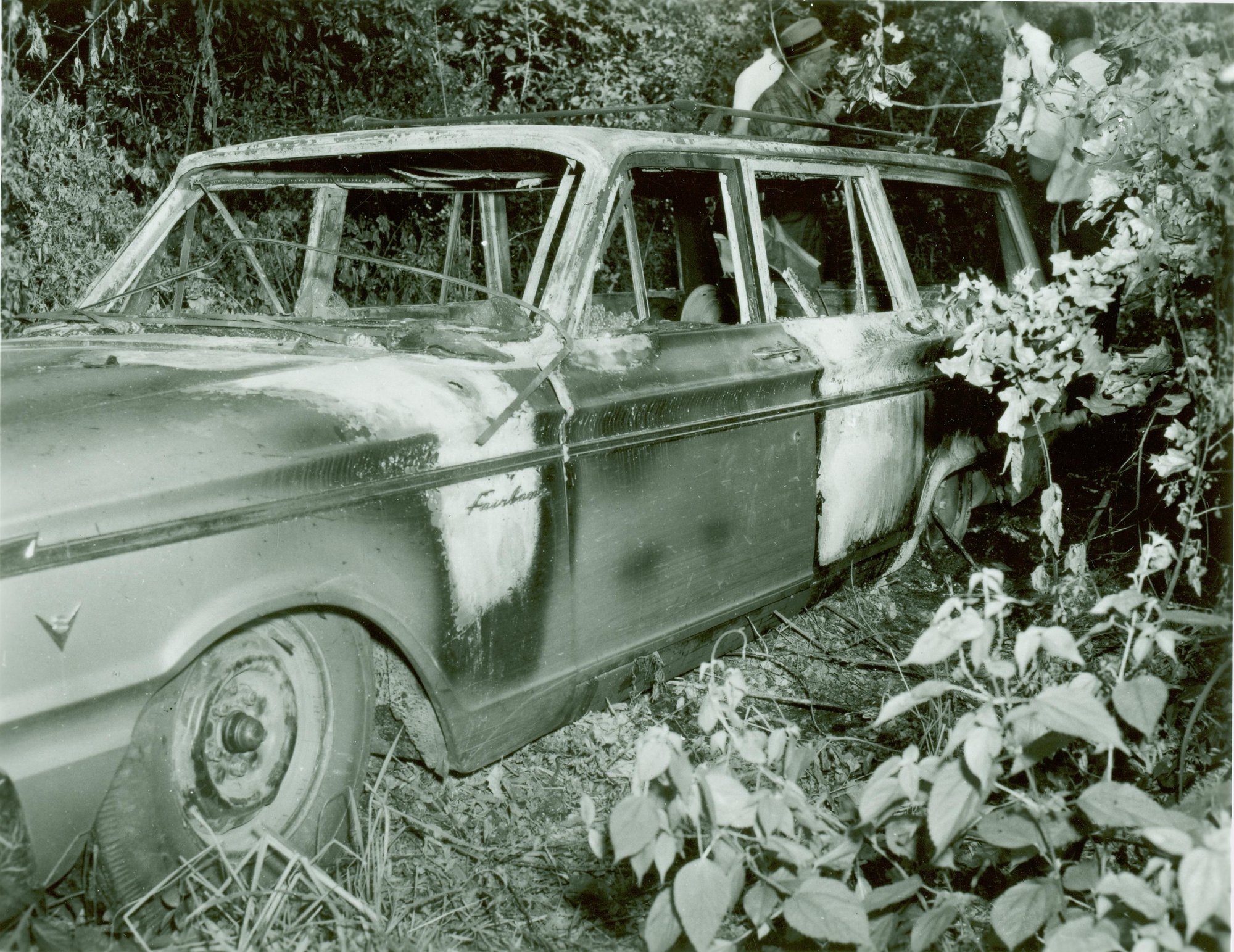
The disappearance forced Washington's hand. Under pressure from civil rights groups and the Kennedy and Johnson administrations, the FBI poured agents into Mississippi for an investigation it code-named MIBURN — "Mississippi Burning." Local authorities stonewalled, and the Klan's wall of silence held for weeks. The men's burned station wagon was found first; then, on August 4, 1964, acting on information from an informant, investigators uncovered the three bodies beneath the dam. The discovery shocked the nation and added fuel to the legislation already moving through Congress.
Justice came slowly, and at first only partway. Mississippi declined to bring murder charges, so the federal government stepped in. In 1967 it prosecuted 18 men — including Deputy Price — for conspiracy to violate the victims' civil rights. Seven were convicted, with sentences ranging from three to ten years. None was convicted of murder, and none served more than a decade. For the families, it was accountability without justice, and they kept pressing.
The answer finally came on the anniversary itself. On June 21, 2005 — 41 years to the day after the killings — a Mississippi jury convicted Edgar Ray Killen, a Baptist minister and Klan organizer identified as a ringleader of the murders, on three counts of manslaughter. The case had been revived by state Attorney General Jim Hood, and the verdict came from a jury of nine white and three Black citizens, a panel that the Mississippi of 1964 would never have allowed. Killen, 80 years old, was sentenced to 60 years in prison. He was the only person ever convicted in a state court for the crime, and several other participants had already died.
The case reshaped how America remembered Freedom Summer, gave the 1988 film "Mississippi Burning" its title, and became a fixture of how the era is taught. More than sixty years on, the names Chaney, Goodman, and Schwerner still mark both the cost of the fight for voting rights and the long, uneven road toward holding anyone to account for it.
Also on this day
-
2024 Fordyce shooting - Wikipedia — 2024 · Wikipedia# 2024 Fordyce shooting. | CCTV still of Posey shooting inside the store | |. On June 21, 2024, four people were killed and 10 others injured in a mass shooting at the Mad Butcher supermarket in Fordyce, Arkansas, United States. The perpetrator, 44-year-old Travis Eugene Posey of neighboring New Edi
-
Crosley Green parole denial — 2023 · crowell.com**Orlando, Fla.– June 22, 2023:** The Florida Commission on Offender Review has denied parole to Crosley Green, ruling that his tentative parole release date will be in 2054, when he will be 97 years old. At an administrative hearing in Tallahassee, Fla., Crowell & Moring counsel for Mr. Green argue
-
Angela Johnson federal death sentence recommendation — 2005 · law.justia.com§ 848(c), Angela Johnson intentionally killed and counseled, commanded, induced, procured, and caused and aided and abetted the intentional killing of Gregory
-
Eric Riddick wrongful conviction release — 2021 · prisonsandjustice.georgetown.edu# Eric Riddick Released from Prison 29 Years After Wrongful Conviction. *Riddick was the subject of a “Making an Exoneree” documentary by three Georgetown students*. More than 29 years after he was wrongfully convicted for murder, Eric Riddick walked through the doors of a Philadelphia courthouse a
-
Hirabayashi v. United States - Wikipedia — 1943 · WikipediaUnited States is a significant Supreme Court case that arose during World War II, highlighting the tensions between national security and civil liberties. In the aftermath of the attack on Pearl Harbor, the U.S. government, driven by fears of espionage and sabotage from Japanese Americans, implement
Just hit reply. Tell me what grabbed you, what you'd want more of, or a case you can't stop thinking about. I read everything.
Sources used/checked for this issue
- Schwerner, Goodman, and Chaney Deaths, EBSCO Research Starters — "Schwerner, Goodman, and Chaney Deaths," EBSCO Research Starters. https://www.ebsco.com/research-starters/history/schwerner-goodman-and-chaney-deaths
- Freedom Summer: Murder in Mississippi, PBS — "Freedom Summer: Murder in Mississippi," PBS American Experience. https://www.pbs.org/wgbh/americanexperience/features/freedomsummer-murder
- Murders of Chaney, Goodman, and Schwerner, Wikipedia — "Murders of Chaney, Goodman, and Schwerner," Wikipedia. https://en.wikipedia.org/wiki/Murders_of_Chaney,_Goodman,_and_Schwerner
- Chaney, Goodman, and Schwerner Murdered, Zinn Education Project — "Chaney, Goodman, and Schwerner Murdered," Zinn Education Project. https://www.zinnedproject.org/news/tdih/chaney-goodman-schwerner-murdered
- Mississippi Burning, Miller Center, University of Virginia — "Mississippi Burning," Miller Center, University of Virginia. https://millercenter.org/the-presidency/educational-resources/mississippi-burning
Today in True Crime by CaseBond — 2026-06-21
