In 1953: The execution the government knew was wrong
Today in True Crime
by CaseBond · Source-backed daily true-crime history
June 19, 2026
Non-graphic · Sensitive events discussed without explicit detail.
In 1953: The execution the government knew was wrong
At 8:00 p.m. on June 19, 1953, Julius Rosenberg walked into the execution chamber at Sing Sing Prison in Ossining, New York. Minutes later, his wife Ethel followed. Within the hour, both were dead — the first American civilians executed for espionage during peacetime, killed on the charge that they had delivered the secrets of the atomic bomb to the Soviet Union.
The path to that execution chamber had begun three years earlier, in a cascade of confessions triggered by Klaus Fuchs, a German-born physicist who had worked on the Manhattan Project and who told British authorities in 1950 that he had passed atomic research to Soviet handlers. Fuchs led investigators to David Greenglass, a U.S. Army sergeant who had worked on atomic research at Los Alamos and who implicated his brother-in-law Julius Rosenberg. Julius — an engineer who had worked for the U.S. Army Signal Corps — was arrested on July 17, 1950. Ethel Greenglass Rosenberg, David's sister and Julius's wife since 1939, was arrested shortly after.
Their trial opened in March 1951 before Judge Irving R. Kaufman in the U.S. District Court for the Southern District of New York. Federal prosecutors Irving H. Saypol and Roy Cohn built their case primarily on Greenglass's testimony. He claimed, among other things, that Ethel had typed notes containing classified atomic information — a detail that placed her squarely in the conspiracy, but one that Greenglass himself would later dispute. He received a reduced sentence in exchange for his cooperation. On March 29, 1951, the jury convicted both Rosenbergs of conspiring to commit espionage under the Espionage Act of 1917. Judge Kaufman sentenced them to death on April 5, 1951, declaring from the bench that their conduct had contributed to the Korean War — a contention that went considerably beyond the evidence presented at trial.
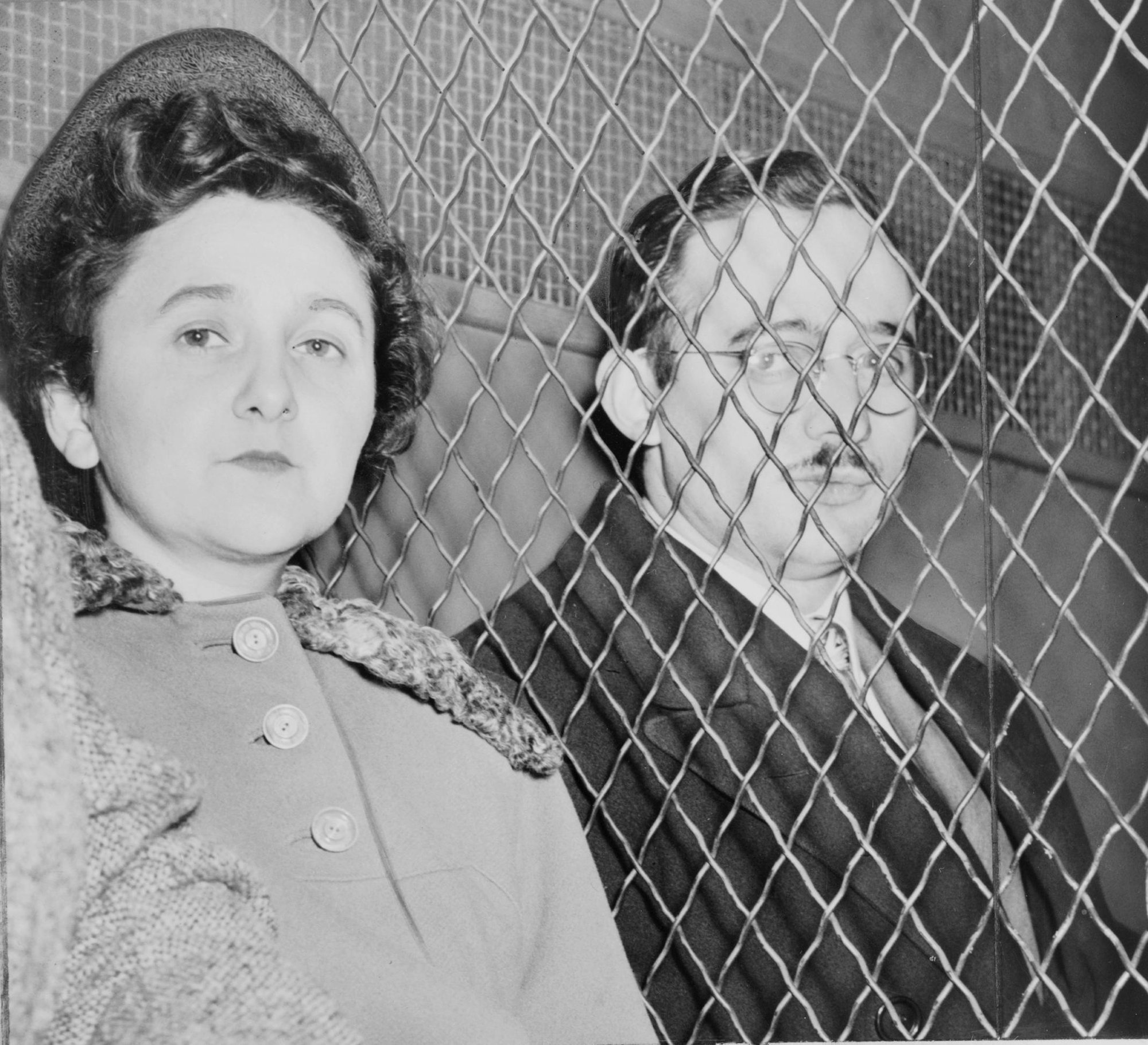
For two years the Rosenbergs sat on death row while their attorneys pursued appeals and their supporters mounted a global clemency campaign. Pope Pius XII issued a plea through diplomatic channels. Albert Einstein and Jean-Paul Sartre publicly urged President Dwight D. Eisenhower to commute the sentences. Eisenhower refused. He concluded that clemency would signal weakness in the face of Soviet Cold War pressure, and on the morning of June 19, 1953, he issued a statement declining to intervene.
One last maneuver nearly changed the outcome. On June 18, Supreme Court Justice William O. Douglas granted a stay of execution to allow consideration of a newly raised legal argument. The stay was announced deep into the night, briefly reviving hope that the couple might survive. The full Supreme Court convened the following morning and vacated Justice Douglas's stay by a vote of six to three. The announcement came at 1:43 a.m. on June 19, 1953. There were no more avenues left.
The Rosenbergs spent their final hours in separate cells, permitted brief meetings with their two sons, Robert and Michael, and with their attorneys. Both maintained their innocence. Julius was thirty-five; Ethel was thirty-seven. Julius entered the chamber first, followed minutes later by his wife. Multiple electrical charges were required to complete each execution, a process witnesses described as prolonged. Their bodies were released to family members for burial.
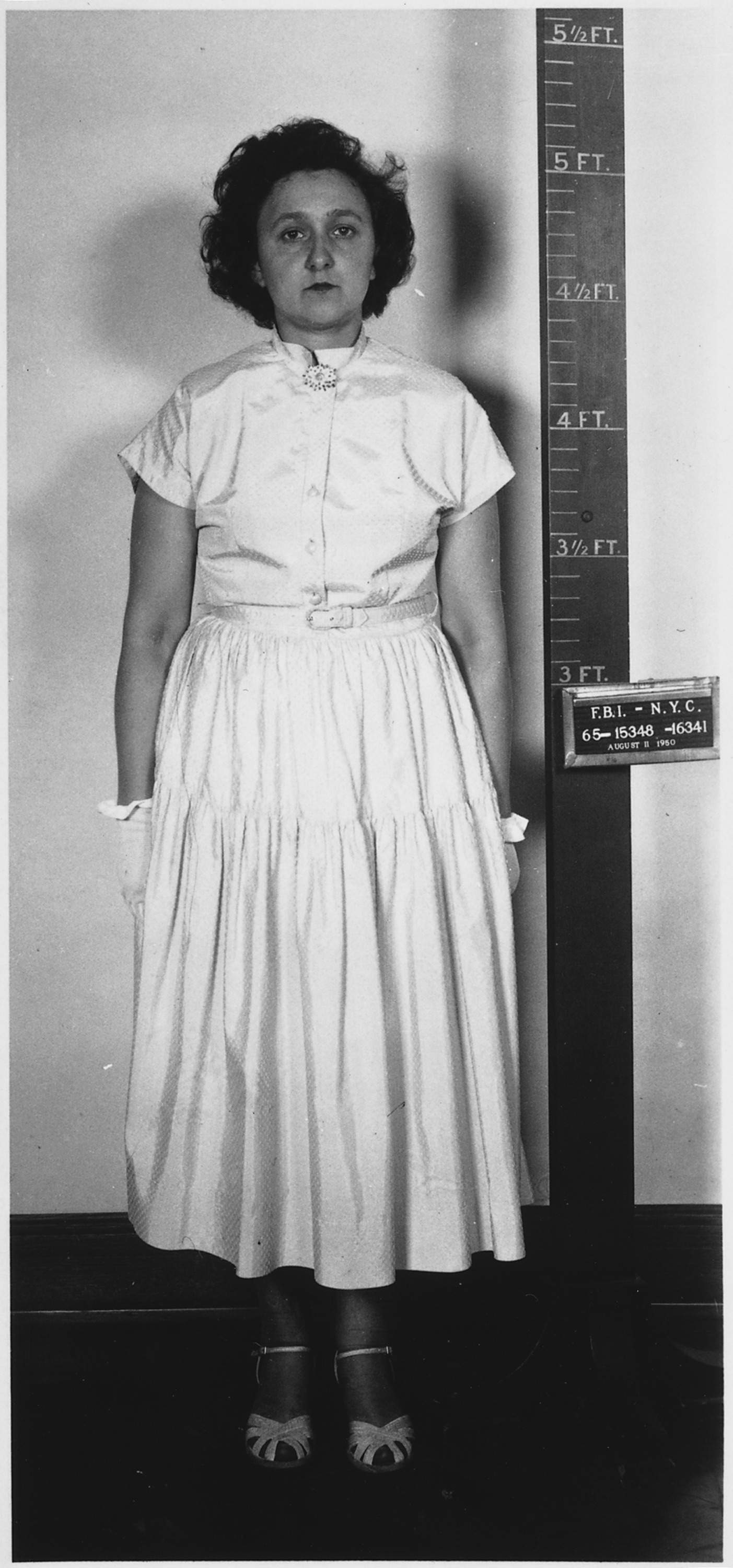
What exactly each of them had done — and whether the punishment fit it — remains contested. Soviet intelligence records opened after the Soviet Union's collapse confirmed that Julius had served as a Soviet intelligence source and had recruited Greenglass into the network. Ethel's direct role was murkier. Some historians concluded that her inclusion in the prosecution was intended primarily to pressure Julius into confessing and naming additional conspirators. Their sons, who later took the name Meeropol, spent decades campaigning for posthumous exoneration.
The Rosenberg case became one of the Cold War's most enduring symbols of contested justice — a case that simultaneously illustrated genuine fears about atomic espionage and the political climate in which those fears were prosecuted. What is not contested is what happened at Sing Sing Prison on the evening of June 19, 1953, and what it cost.
Also on this day
-
Ricky Kasso Stabs Gary Lauwers in Drug-Fueled Northport Woods Attack, June 19, 1984 · WikipediaIn Northport, New York, seventeen-year-old Richard Kasso stabbed his acquaintance Gary Lauwers during a drug-fueled encounter in Aztakea Woods, in what became known as the Acid King murder. Two other teenagers were present. Kasso was arrested days later and died by suicide in jail before trial; a co-defendant was acquitted of second-degree murder.
-
Oklahoma Board Denies Clemency for Death Row Inmate Kendrick Simpson, June 19, 2026 · Fox23 NewsThe Oklahoma Pardon and Parole Board denied clemency for death-row inmate Kendrick Simpson, clearing the way for his execution to proceed as scheduled.
-
Young Thug Pleads Guilty, Released After Georgia RICO Trial, June 19, 2026 · NBC NewsAtlanta rapper Young Thug (Jeffery Lamar Williams) changed his plea to guilty in Georgia's longest-running criminal trial, a RICO case built around YSL Records racketeering charges. He was released the same evening on probation, avoiding prison time after nearly two years in custody pending trial.
-
Supreme Court Denies Final Appeals for Death Row Inmate James Broadnax, June 19, 2026 · KERAN NewsThe U.S. Supreme Court denied two final appeals from Dallas County death row inmate James Broadnax days before his scheduled execution. Broadnax had challenged the use of rap lyrics as trial evidence and alleged racial discrimination in jury selection.
-
Robert DuBoise Exonerated After 37 Years — DNA Clears Tampa Murder Conviction, June 19, 2020 · WikipediaRobert DuBoise, wrongfully convicted in 1983 for the rape and murder of nineteen-year-old Barbara Grams in Tampa, Florida, was exonerated after DNA evidence obtained through the Innocence Project proved he had not committed the crime. He had spent nearly 37 years in prison, including three years on death row.
-
FBI Requests Public Help Identifying Victims of Suspected Serial Killer Israel Keyes, June 19, 2012 · Federal Bureau of InvestigationThe FBI publicly requested assistance identifying additional victims of suspected serial killer Israel Keyes, who had been arrested earlier that year for the murder of eighteen-year-old Samantha Koenig in Alaska. Investigators believed Keyes had killed across multiple states over a decade and feared the full body count remained unknown.
-
Eighth Victim of the Cleveland Torso Murderer Discovered, June 19, 1937 · Our Black GirlsThe skeletal remains of an unidentified woman were found in Cleveland, Ohio, becoming the eighth known victim of the Cleveland Torso Murderer, an unidentified serial killer who operated during the 1930s. The case was investigated by safety director Eliot Ness; no suspect was ever charged.
-
Chameleon Killer Terry Rasmussen Victim Identified Through Forensic Genealogy, June 19, 2017 · ABC NewsThrough forensic genealogy, authorities confirmed the identity of a victim long connected to suspected serial killer Terry Rasmussen, known as the Chameleon Killer for assuming numerous aliases while infiltrating and destroying multiple families across New Hampshire and California. Investigators feared additional unidentified victims remained.
Just hit reply. Tell me what grabbed you, what you'd want more of, or a case you can't stop thinking about. I read everything.
Sources used/checked for this issue
- Julius and Ethel Rosenberg, Wikipedia — "Julius and Ethel Rosenberg," Wikipedia. https://en.wikipedia.org/wiki/Julius_and_Ethel_Rosenberg
- Rosenbergs Executed, History.com — "Rosenbergs Executed," History.com. https://www.history.com/this-day-in-history/june-19/rosenbergs-executed
- Rosenberg Execution Dispatch — The Guardian, June 20, 1953, The Guardian — The Guardian archive dispatch, June 20, 1953. https://www.theguardian.com/world/1953/jun/20/usa.fromthearchive
- Ethel Rosenberg Executed, Jewish Women's Archive — "Ethel Rosenberg Executed," Jewish Women's Archive. https://jwa.org/thisweek/jun/19/1953/ethel-rosenberg
Today in True Crime by CaseBond — 2026-06-19
