Photography emerges from its walled garden
It’s a New Year, which people tend to start with resolutions. I usually don’t do this, but this year is different. There’s something I want to beat back, something that has been affecting what I do for many years.
When artists talk about risk, they often talk about failure. As an artist, you’ll have to fail (many times) in order to be able to succeed (very occasionally). If you don’t want failure in your process, you’re simply not going to grow. Even though I don’t particularly enjoy failure (who does?), I’ve got used to it. Now I embrace it.
Still, there’s something else that has held me back. I have the sneaking suspicion that other people deal with this as well. But I don’t actually know that. What I’m talking about is dealing with expectations: what to do and how to do it.
A lot of those expectations are communicated (silly examples: use archival materials, edition your prints), but the more insidious ones are not.
Especially on social media, you can see how this plays out, because a fair amount of communication by artists centers on this very aspect: what is expected from me? Or rather, what do I think is expected from me and how can I take care of that?
That’s not necessarily a particularly healthy way to go about one’s art making, even as for many people it appears to be working well. If you do what your gallerist or the curators you want to impress want you to do, then you’re likely to do well (with those people at least).
But expectations are the pest. They prevent you from making things that you might be making but that you then do not make because you think it’s not right, for whatever reason.
My New Year’s resolution is to try to eliminate my worries about expectations when I produce photographs — whatever they might be, whatever form they might take.
I already started something, mostly for myself: I think that this particular moment in time needs some form of response or at least reaction from me, even if, as seems likely, I will not share this with anyone. But I don’t want to be in the situation again where I look back later, only to find nothing I made with photographs to somehow address this situation.
(I think you all know what I mean by this situation.)
I remember the time when I was about to move from Pittsburgh back to Massachusetts. I didn’t really have any good pictures from Pittsburgh. Instead of photographing and making something, I had spent too much time trying to make something around photoland’s expectations. For all kinds of reasons, that didn’t work out. It’s not even that I enjoyed my time in Pittsburgh that much; but I would have loved to have something photographic from that time.
Anyway. Here is a really interesting short documentary about a Japanese art collective from the early 1960s. They called themselves the Hi-Red Center, and they used performance art to highlight some of the absurdities of contemporary Japanese society.
Meanwhile, here is an interview with Oluremi C. Onabanjo about the role photobooks have been playing in Africa.
Unrelated: In principle, I like the work of Anselm Kiefer. But I find its pomposity off-putting. And that pomposity appears to be getting worse and worse (or my patience is wearing thinner and thinner).
I mean, a lot of the man’s work centers on German history — you know, that history. It’s probably more than fair to describe the people behind that history as being very unsubtle regarding their motivations, and they expressed them in the most outlandish fashions. Hitler famously wanted to re-model Berlin into a city that would have been little more than a fever dream (he ended up remodeling the city, albeit in different ways). For art to address that part of history it can’t be pompous itself. That feels wrong to me; what is more, when seeing Kiefer’s work, I often feel that I am being manipulated for effect. Sure, all art does this, but Kiefer’s art mostly does this the wrong way.
Given the above, I was glad to come across this longer article about Kiefer and his work. I am not sure whether it succeeded in convincing me that my feelings about Kiefer were wrong; but it’s good nevertheless to read how and why someone else would enjoy Kiefer’s work.
At rare occasions, photography emerges from its walled garden, to be seen and discussed more widely. I am convinced that we’re largely having the exact same conversations about photography in that setting in part because beyond those little blips there are no other, meaningful discussions around what photography is and does — and that in a world saturated with images. But hey, newspapers first made art critics disappear, and now they’re disappearing themselves.
Anyway, here’s an article about the recent photographs taken by Christopher Anderson in the White House.
It’s depressing that photography often only gets discussed in the larger sphere when some photographs do not conform to what everybody appears to be expecting. We should be talking about that — instead about the photographs. Alas…
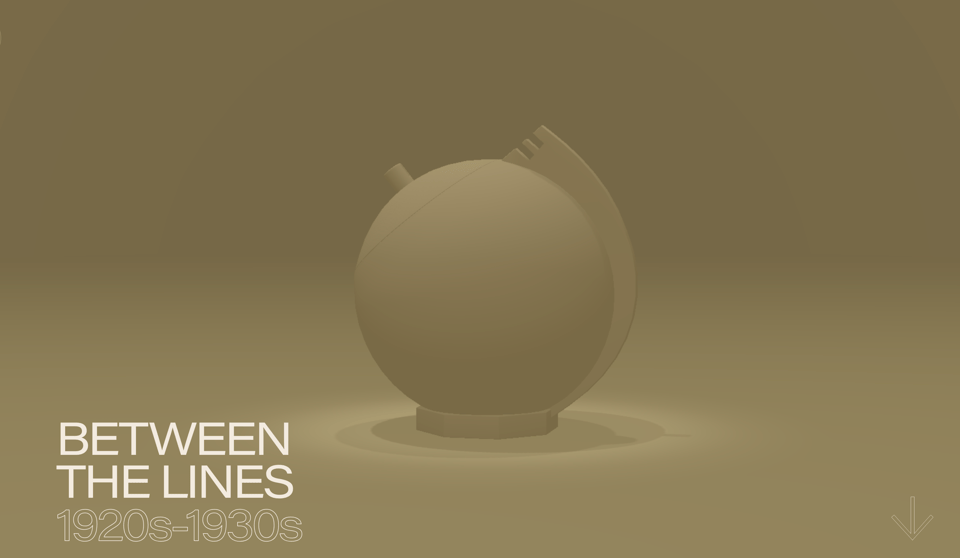
If you’re looking for something a little different, something gorgeous made around other gorgeous things, check out this Guide to Polish Design.
Just another reminder that websites can be beautiful and appealing. No pop ups, no sign-ups for accounts to continue, no ads for luxury items or something grotesque… Just the beauty of it all.
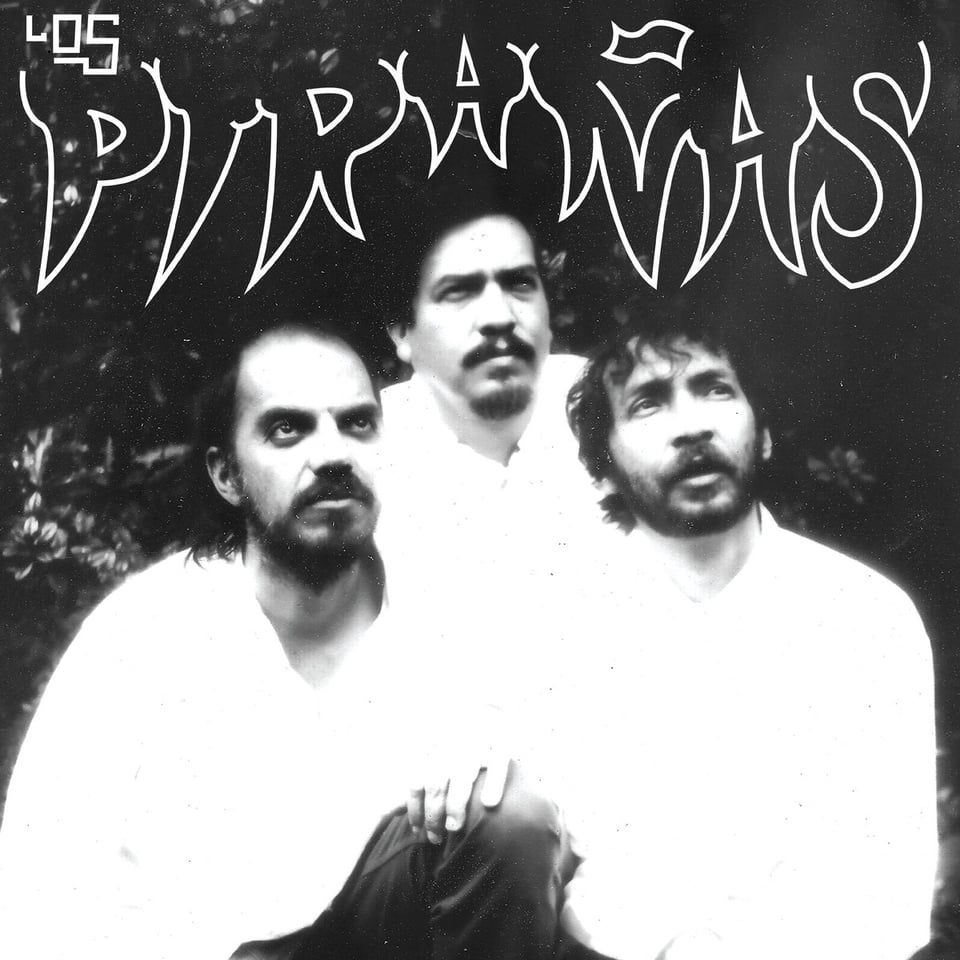
Speaking of beauty, Los Pirañas are a recent discovery. They’re from Colombia, apparently they’ve known each other since high school, and they make incredible music. It’s a guy playing guitar that’s fed into a laptop to loop it on top of a rhythm laid down by two other incredible musicians (bass and drums).
If you don’t know where to start, listen to track 6 first (Pateando culos).
It’s very difficult to be grumpy when listening to this music (I’ve tried it, it didn’t work).
Meanwhile, the people behind Instagram are so fucking lost.
“The Odyssey—the ancient Greek epic attributed to Homer—has been translated into English at least 60 times since the seventeenth century. But only one of those translations is by a woman.” To understand how and why this matters, read this interview with Emily Wilson (the translator in question).
Lastly, a long article about an artist that I used to like quite a bit but that I now see in a very critical fashion: Diane Arbus. Well worth your time (the article, not Arbus’ work).
And that’s the end of another email, written at the base of Mount Sugarloaf and sent out into the world with a couple of clicks. I hope you enjoyed it.
Thank you for reading!
Jörg