Meet Rocky
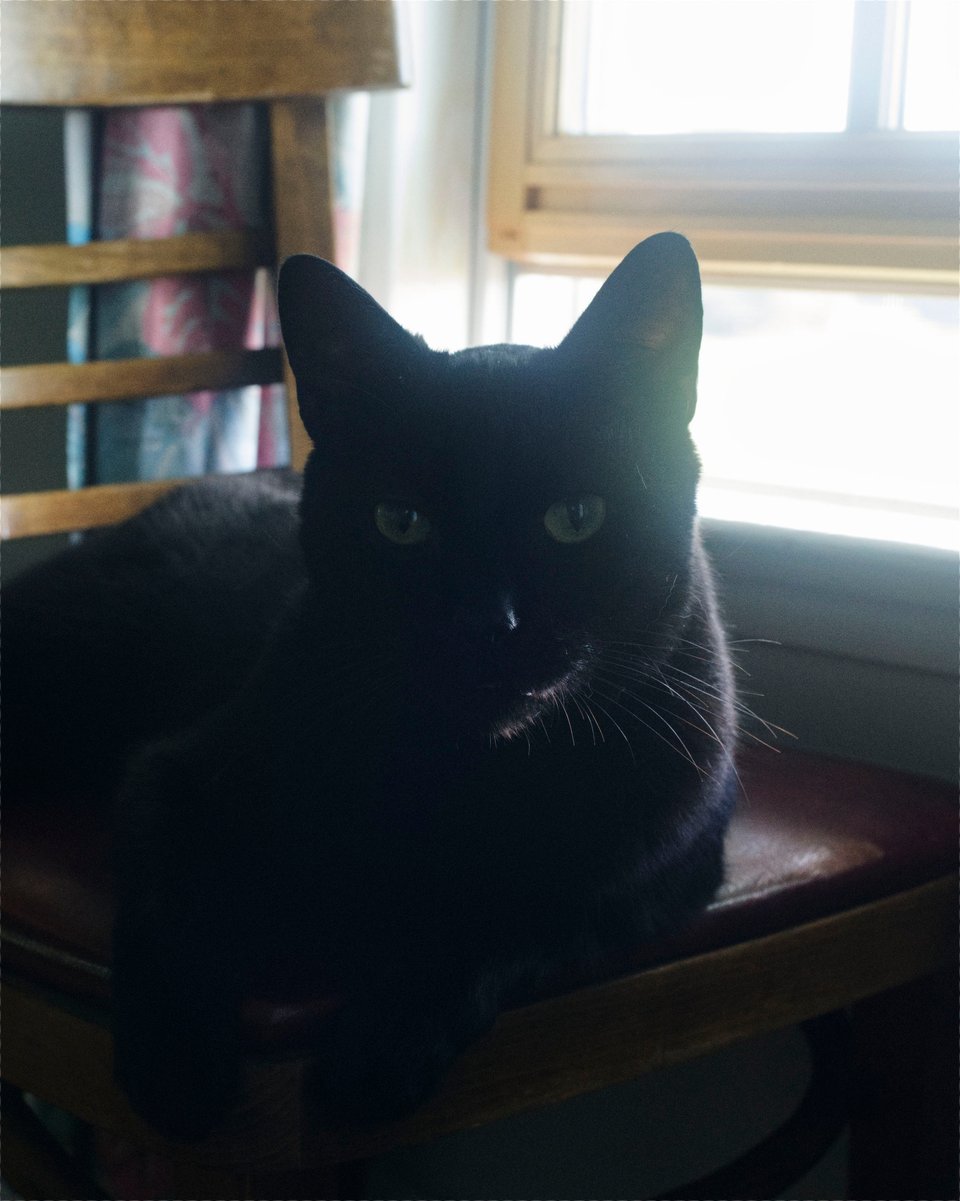
Meet Rocky, a senior kitty that we adopted at a local shelter last Saturday (exactly one week ago). If you have ever lived with a pet, you know the joy and eventual (inevitable) heartbreak that comes with them. And if you’ve had more than one cat you know that introducing a new one can be quite the adventure. But things went really well, and after only two days apart, the two boys — there was Tobey, an only cat after Zinni died last year — let us know that they wanted to meet. They’re not quite best friends, yet; but they may well be very soon.
For reasons that in retrospect aren’t so clear, last year I decided to get a subscription to New Yorker magazine. I had had a subscription in the past (more than 10 years ago), and I fondly remembered reading the magazine.
As it turned out, I’ve grown away from what this magazine has to offer. It’s impossible to compare these things across the flow of time. The magazine probably still offers exactly the same kind of material as before. It’s just that I now am looking for different things to read. I don’t know exactly what those “different things” are, but I can tell you that they’re not, say, in-depth profiles or far-right clowns such as Tucker Carlson.
Every once in a while, there is something that interests me, though. Two recent articles covered something I had mentioned in this series of newsletters before, both of them very much worthwhile a read:
Rebecca Mead wrote about Ana Mendieta. If you remember the long article from The Guardian, there is that problem of how to write about a great artist who was likely murdered without only making it about, well, the murder. Mead’s is a different approach with its two large blocks. I can’t say that I prefer one approach over the other; but even if you’ve read the first piece I sent earlier you might as well read this one as well.
Louis Menand wrote about the fight over Andres Serrano, Robert Mapplethorpe, and the National Endowment for the Arts. There are a number of details around Serrano included that I didn’t know; in any case, it’s a really good read as well.
Should the government fund offensive art? Isaac Butler, who wrote the book that’s the basis for Menand’s article, says that it should. “The truth is that the government should support art that people might find offensive”, Butler writes, “because transgression is an important artistic value, and provocation is an important role that art can play. It’s not the only thing that art can or should do, but it is an absolutely necessary part of culture and art writ large.”
Thinking about it now, maybe I had not shared this long conversation between Butler and Rosa Campbell before?
Nobody is asking me, but my own take would be that, yes, the government should be funding art, especially given that the sums involved would typically maybe get you one wheel (if even that) of an F-35 fighter plane.
What gets me about these debates, though, is that nobody wants to openly acknowledge that so much criticism around government funding of the arts starts out from a place of bad faith. Or, as Butler says in that conversation:
“Yeah, it’s the bad faith nature of it all that is so galling. […] Sometimes you just have to point out “actually this person is totally full of shit.” Especially since so many of the people claiming to be offended by the art in my book are also gleefully distributing it far and wide to get their mailing lists angry and engaged.”
Anyway, Steidl, the photobook publisher was briefly bankrupt. There were a few articles in German newspapers, the few I was able to access light on what exactly happened (the remaining ones were all behind their respective paywalls). Here is a no-paywall example (use machine translation if you are unable to read German).
There was a long take on all of this by Manfred Heiting (a collector), which you can access here (no paywall; use machine translation if you are unable to read German).
I am not sure that the various explanations offer enough to explain what was/is going on at Steidl. Given that I’m mostly operating on hunches here, I don’t need to chime in. My understanding is that Steidl is now looking for an investor (or maybe more than one) to continue the business (and eventual retirement of the mastermind behind it).
“Nolan’s Odyssey,” Emily Wilson writes, “lacks many of the elements that make the poem great.” Wilson is the translator of the version everybody has been talking about, the version that resulted in the movie by Christopher Nolan (I have not read the book, I have not seen the movie).
“It has nothing convincing to say about time, memory, history, war, or about the relationship between one warrior’s glorious return and the lives of his family, adversaries, comrades, friends and neighbours. It lacks psychological, emotional, political and ethical depth. Its narrative structure is gimmicky. The writing is abysmal. None of the characters has convincing motivation for their actions or words. There are no sex scenes, and all the food looks horrible.”
It’s a fantastic piece of criticism, and you absolutely want to read it.
Nolan’s movie has spawned so many discussions (if that’s even the word) that I have configured BlueSky to mute all discussions/posts around it.
From what I can tell, all of the boys are mad. The far-right ones are mad because Nolan used a few actors of colour for his movie (a criticism that is so ridiculous in so many ways that I can’t take it even remotely seriously). And the rest of the boys are mad because Wilson wrote what she wrote, ruining a grandiose spectacle around a man conflicted over his feelings (however poorly outlined they might be).
Now there is an actual scientific study, confirming what everybody has known (and many have denied):
“We find that 36.54% of the contemporary, active artists are women, a number often quoted as the evidence of gender imbalance in art. An additional gender disparity emerges if we inspect the opportunities offered to the practising artists, resulting in an exhibition gender ratio of 1.86, indicating that practising men artists are offered disproportionately more exhibition opportunities than practising women artists. The gender disparity is particularly dramatic in the secondary auction market (Table 1), indicating that art produced by men are seen as more valuable.”
Lastly, there were two recent articles published in Germany that left me with a very, very heavy heart. They are both in German only, so in both cases you will need machine translation if you are unable to read German.
Zara Rahman wrote why she is leaving Germany after 15 years of living there. It’s not the racism or the Nazis (as bad as they are). You definitely want to read it.
And Mohamed Ibrahim writes about his life story: coming to (West) Germany as a child with Palestinian parents, growing up and trying very hard to fit in and become a part of the reunited Germany — and then there was 7 October 2023, which triggered a wave of anti-Palestinian racism in Germany.
With that I will conclude for today. We’ve had a few very humid days here, which have severely depleted my batteries. Time to re-charge them.
As always thank you for reading!
— Jörg