Every picture is always the past
I bought myself a new camera.

It’s a Kodak Easyshare CX7430, and it was made in 2003. I paid $15 for it on eBay (it came with a 500MB SD card). Back in the day I used to hate what digital photographs looked like. But given that the oldest digital camera I own doesn’t work well any longer (it’s also a Kodak, roughly from the same time), I thought I needed to get another one.

There’s something about the digital artifice of those cameras that I’ve now come to appreciate. I don’t know whether I can put into words what it is; I don’t even know how often I will use the camera (and what for).
When the camera arrived, I had to set its internal date. Alas, the year would only go up to 2025. The year we’re all living in now is not in the camera’s future. Or maybe whoever configured the camera thought that by 2026, nobody in their right mind would still use this camera.

A camera all of whose photographs end in 2025. Taking pictures in a future that for the camera doesn’t exist.
And sure enough, I don’t think that in 2004 I had any idea how shitty the future that has now become our present would be.
Speaking of shitty, the talking about AI won’t stop. You know what gets me about all of this? It’s the fact that everything made with AI is so mind numbingly banal. The texts, the pictures — they’re all bad; but worst of all, they’re also so banal.
And not even good banal (think Ed Ruscha’s photography projects in the 1960s). Just stupid banal. By that I mean a banality that’s so bad that you regret that you can’t get the life time back that you spent on looking at something or reading something. Mostly, it’s not even worth it getting upset about how bad it is: it is just that banal.
So it feels like a colossal waste of everybody’s time to even talk about AI. As far as I’m concerned, what they should do is the equivalent of those labels on food that contains genetically engineered ingredients: slap a label on AI stuff (something like “Made with the help of AI” or maybe “Contains segments produced by AI”). If people want to engage with it, fine. I don’t care. But I want to at least have the option to know, so I can decide whether I want to engage or not.
I don’t know if you know comedian Ronny Chieng. He recently gave one of those speeches at Harvard that made the news. The speech made the news because he f-bombed AI. But that was really besides the point he wanted to make: “I know someone sitting out here right now who is saying, ‘What about the use of AI to pioneer breakthroughs in medicine and physics?’ […] If you’re using it for that purpose, you’re not the problem […] I’m talking about the accumulation of cognitive debt due to excessive use of large language models […] This is why you should be scared of AI.”
And: “Whatever your chosen profession is, please don’t let AI rob you of the fun part of it […] Our generation’s upcoming battle […] is going to be people with substance versus people with shallow knowledge, it’s going to be mastery versus faking it, it’s going to be people with good taste versus tacky.”
If you think about it that way, all of that AI stuff is actually good for everyone who is creative and who is willing to put in the work in the medium to long run. Being able to make something, to create something with deep meaning — as opposed to some randomized, banal stuff — is going to be a marker of people who will stand out for all the right reasons.
That’s why I found it so infinitely sad when Olga Tokarczuk recently announced she was working with AI (I read this in machine translation, which gets the broad points across). Ignoring her complaint that writing doesn’t pay well… I mean that is a bit rich coming from a writer who won the Nobel Prize in literature; and it’s hardly news to anyone who has ever tried making money from/with writing.
But the embrace of AI as a shortcut is just… Depressing. That’s the word. It’s depressing.
I mean fine, if that’s what Tokarczuk wants to do then that’s her decision. After all, I don’t have to read her new novels.
As I already noted there will always be people who will not go that route and who will create something wildly inventive on their own. And really, that’s what I will be looking for — it’s what I have been looking for ever since I first became aware of what culture has to offer.
I mean I get the point of Tokarczuk noting the immense work that went into her Books of Jakob. Then again, that was a choice, wasn’t it? On top of that, it’s absolutely not my favourite book of hers. In fact, I didn’t finish reading it. When I wanted to explain to a friend what I didn’t like about it, the best explanation I could think of was that it’s simply too baroque for my taste. Its endlessly meandering style didn’t appeal to me. Which is simply a question of taste.
But it’s like Ronnie Chieng said in his speech, you want to do something for the joy of it. If you need to shortcut that, then you’re skipping the best parts. And those best parts can actually be incredibly painful. Anyone who has ever tried to make something knows that. The pain isn’t caused so much by the tedium and the failures (as bad as they are), it’s the fact that what you gain mostly doesn’t register in the same fashion.
It’s very difficult to see yourself grow as a creative person when all you deal with on a daily basis are easily observable little failures and problems. It’s only when you step back much later that you realize what you’ve actually achieved.
When you grow up, your parents can put pencil marks on the door frame so you can stand next to them and see how much you’ve grown. When you make something, you can’t record and see those pencil marks.
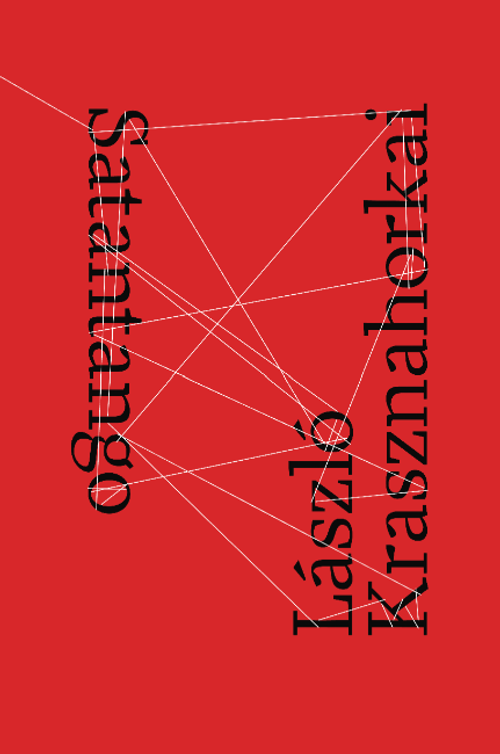
Speaking of Nobel Prize for Literature, László Krasznahorkai won it last year. I wasn’t familiar with his work, so I looked him up.
A little while ago, I thought I’d read one of his books and got Satantango. The first chapter had me worried I’d have another Books of Jakob on hand (yet another dilapidated Central European village). But the second chapter blew me away, and then the book took off.
I’m reading it slowly (one chapter at a time), because the book is so good that I don’t want it to end. But it’s also incredibly bleak (occasionally, the bleakness flips into a form of bitter comedy).
I think this might be the kind of book that you either absolutely love or absolutely hate. Either way, I think you will come across awed by the mind who put all of those words together.
There’s no way that any AI, present or future, could create anything like this book. Every writer has the option to make use of language any way they want — as long as they somehow manage to get their point across. As a writer, you need to be understood in some fashion. All that matters is that you get there in the end, regardless of how idiosyncratic your path might be. And Krasznahorkai definitely is on the extremely idiosyncratic side of things.
Maybe the second chapter blew me away so much because it ultimately centered on people being trapped in a completely bleak bureaucracy, a system that had taken on its own life and that was destroying those working with/in it and those being subjected to it. The way the language works really drove that point home.
If you’re a photographer, you want to remember this following point: what you’ll be making only has to work at the very end. Then, it absolutely has to work. Along the way… Some things will go sideways, other things will collapse, there will be short bursts of excitement and long periods of frustration. All of that matters greatly for you as long as you trust that working towards your goal will get you there. But remember, things only have to work out at the very end. It doesn’t matter when or how you get there.
As always thank you for reading!
— Jörg