
Hey there,
Last week was the launch of the 30th anniversary Pokémon Celebrations set. So on Wednesday morning I found myself, at 6am, in a queue with about 200 other people waiting to get some cards.
My son was with his grandparents since he had school, so my wife and I were the ones sitting outside a shop at a ridiculous time in the morning waiting for it to open.
It was actually quite a fun experience. I basically played videogames and ate snacks for three hours while we waited. Fortunately we were early enough to get some Pokémon as well, which was a huge relief after getting up that early.
I also finished and submitted my js13kGames entry, Unicorn Escape. It’s currently in the judging phase, but wherever it comes in the rankings, I’m glad I made it. It was a fascinating challenge to make a complete game in under 13kb.
So my week involved both squeezing an entire videogame into 13kb and spending three hours queuing for pieces of printed cardboard.
Papercrafting
I spend most of my working life making things that only exist on screens, so perhaps it’s not surprising that I’m increasingly drawn to making things I can actually hold.
I really like paper things. Physical things. Pokémon cards, beautifully designed books, papercraft models. There’s something satisfying about making or owning an object that actually exists outside a screen.
Papercrafting is a particularly nice way to do this. Whether it’s an origami crane or a complex cut-out model, you can turn a simple sheet of paper into something completely different. Better still, paper is cheap, easy to work with, and can be recycled when you’re done.
I’ve designed some papercraft models in the past, and I’ve made many more designed by other artists. I love finding this sort of thing online, so I thought I’d share some of the most impressive examples I’ve seen recently.
Rob Ives

Rob Ives is a papercraft designer who makes paper machinery. I remember learning about cams and gears in school, and they’ve always fascinated me. Seeing these simple mechanisms recreated with paper and paperclips is so impressive.
There’s something especially pleasing about being able to see exactly how everything works. Nothing is hidden away inside a plastic box. It’s just paper, wire and clever engineering.
Fold Up Toys
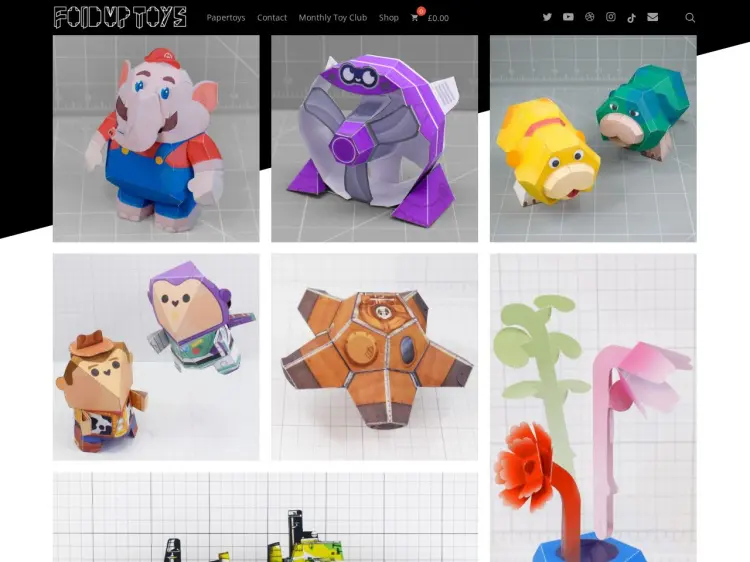
I’ve mentioned Fold Up Toys before when talking about Unfolder, but I think they’re worth mentioning again.
Fold Up Toys is the work of a single designer, and they’re the reason I started investigating making my own papercraft models. I’ve made loads of their designs over the years. I love the clever folds and the way they make everything fit onto a single sheet of paper.
I’ve been supporting them on Patreon for a while now, so I can get access to their new designs early.
James Lake

James is a sculptor making wonderful models out of cardboard. I actually found him because he was running a course local to me, but unfortunately I discovered it after it had already happened.
Often papercraft models are quite simple, at least the ones I make, but James’ work is much more realistic. He makes models of people and animals, as well as everyday objects like shoes and plants. He doesn’t paint or hide the materials in any way, so you can always tell they’re made from cardboard.
I particularly like how you can see the strips and layers he’s used to build each sculpture. It’s almost like sculpting with clay, except the structure remains visible in the finished piece.
I’m now keeping an eye on his Instagram in the hope that I can join a future course.
Popupology

This is so cool. Tiny laser-cut cards that fold out into intricate 3D models. The size, care and variety of these is amazing.
I’ve wanted a laser cutter for a while now, and seeing this only increases my desire to get one. Unfortunately I have so many things I want to do that I can’t justify the cost, space or time.
The models all use pop-up book-style techniques, and the designs are very clever. Given the materials and techniques, the artworks are mostly cityscapes, but there’s still a surprising amount of variety. There are lots of architectural styles represented, which really appeals to my love of brutalist architecture.
Maybe one day I will get to buy a laser cutter and attempt something like these. I’m half tempted to try it using a craft knife, but I don’t think I could get anywhere near that level of detail. For now I can admire these miniature works of art from afar.
Itoshi Ge Studio

Itoshi Ge Studio is a Japanese furniture maker who makes beautiful boxes, mini shelves and other useful things out of old cardboard boxes.
Even better, they sell the plans and instructions. So if you see something you like, you can make it yourself.
As much as I love crafting things simply because they’re fun to make, there’s something especially appealing about turning a cardboard box into something both beautiful AND useful. I’d love it if they designed a Pokémon deck box. Then I could make something practical that we’d actually use!
Miniature Books
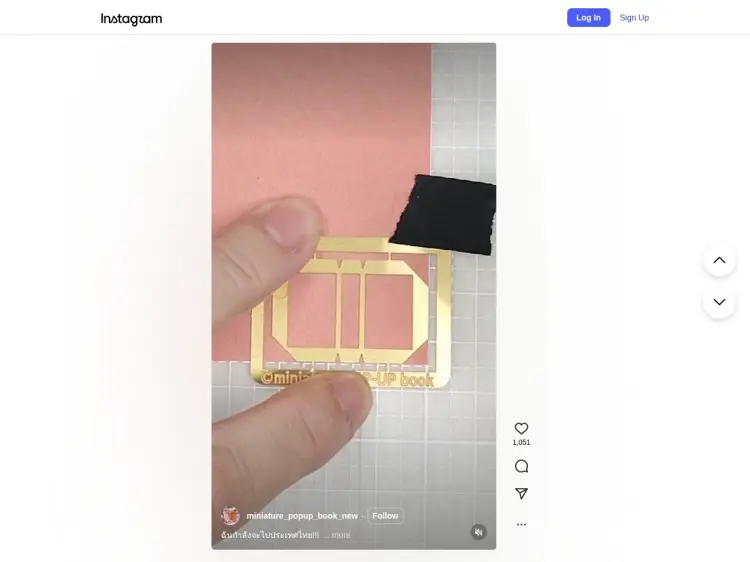
This is where looking at clever paper things starts becoming dangerous, because I could actually make these.
They’re miniature books that are fully functional, and I can totally get behind that. Everything is tiny, so I could buy the few things I need, and I already own most of the rest.
They have a cool little metal template that you can use to cut and score everything to size, making the process even easier. If you check out the other posts on their Instagram, they also have tiny stamps that let you design the books and print them yourself. Everything you need to make your own beautiful miniature books.
Making a Tiny Book
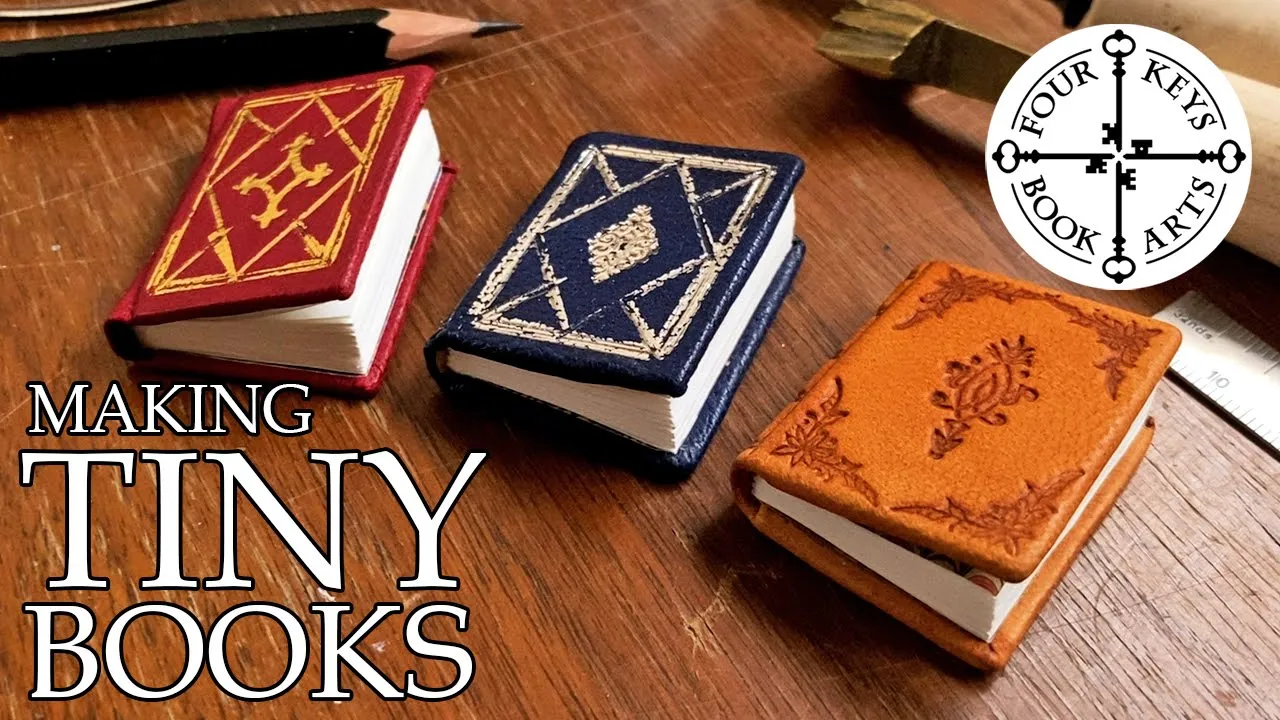
If you’re interested in making your own miniature books then this video shows you one possible way. It uses very traditional bookbinding techniques, on a much smaller scale. The result is a fully functional leatherbound sketchbook, just ridiculously tiny.
Currently…
I am currently struggling to find a good streaming service for music.
I used to use Spotify, but their CEO made some choices I disagreed with, and they have a reputation for not paying artists fairly. So I switched to Deezer. I like that they’re European, and their music selection is pretty similar, but the app just isn’t as good across all the devices we use.
We’ve now switched to Apple Music. The music is great, but again the apps don’t work perfectly across all our devices. Between Apple, Android and smart speakers, something always seems to be missing.
I’m almost tempted to go back to Spotify. Or perhaps I should go in the opposite direction and return to physical media?
I still have all my old CDs, so I could rip them and put everything on a NAS (Network Attached Storage). Of course, that’s another thing to manage, and it would make discovering new music considerably harder.
It’s funny that I’ve spent half this newsletter talking about how much I like physical things, only to end up wondering whether I should resurrect my CD collection.
I’m open to suggestions if anyone knows a good streaming service that works as well as Spotify across lots of different devices.
What's one thing you've enjoyed on the web recently that deserves more attention?
See you next time,
Ben
PS. My entire marketing strategy is "hope people tell their friends". Thanks for helping prove that it can work.
You just read issue #84 of Ninja Sparks. You can also browse the full archives of this newsletter.


