Tuesday, June 9, 2026. Annette's Roundup for Democracy.
We are fighting for Democracy and for Democracy in our country.
The story of news this weekend is all told in videos.
Scott Pelley with Lulu Garcia-Navarro, of the New York Times. Well worth your time.
The whole interview.
A clip from the Scott Pelley interview.
Hegseth, Trump's "Secretary of War," went to France to celebrate and attacked our allied nations for admitting immigrants.
A clip from Hegseth's speech.
French response to Hegseth's speech.
Residents of French village say US defense chief Hegseth not welcome for D-Day visit - France 24
US Defense Secretary Pete Hegseth on Saturday marked the 82nd anniversary of the World War II D-Day landings with a visit to Normandy, but did not attend the international ceremony hosted in Langrune-sur-Mer. Residents said his "warlike views" were unwelcome in their village and questioned his commitment to "democratic values".
US Defense Secretary Pete Hegseth on Saturday travelled to Normandy to commemorate the 82nd anniversary of the World War II D-Day landings.
But after making a speech at the American military cemetery in Colleville-sur-Mer, he conspicuously skipped afternoon’s main international ceremony marking the anniversary of the Allied landings, which helped herald the end of World War II.
His presence was not missed by some residents of the village hosting the ceremony, Langrune-sur-Mer, who said the US official was not welcome there.
"He has very warlike views and it seems to us that this man does not share our democratic values," Sylvie Lamy Thepaut, a member of the municipal association Langrune en commun, told BFM TV.
A message on the association’s website called for Hegseth’s visit to be cancelled on the grounds that the Pentagon chief “espouses values contrary to democracy, human rights and peace” and had made “numerous anti-European remarks”, “warlike statements” and “American supremacist pronouncements".
“The honor of Langrune, that of France, and the memory of the young Allied soldiers – American, British, Canadian – who died on our beaches in the name of democracy would dictate canceling this individual’s visit,” the statement concluded.
Langrune-sur-Mer Mayor Franck Jouy declined to comment on Hegseth's visit, underscoring that the event was a memorial.
“We are here for a commemmoration and I don’t want to make it political,” he told BFMTV. “I’m here to remember the people who came to make sure that France was liberated.”
Attendees of Saturday’s ceremony in Langrune-sur-Mer included veterans from the United States and British Defence Minister John Healey, who hailed the "resilience" of the UK during the war and US allies as "this great people, friends of liberty".
French Prime Minister Sébastien Lecornu paid tribute to the "3,000 men, barely 20 years old", who died on D-Day, offering "the breath of their youth and the sacrifice of their lives".
In his earlier speech at the American military cemetery, Hegseth utilised dehumanising anti-immigrant rhetoric, urging Europe to counter what he termed an "invasion" of its coastline by migrants.
Echoing the rhetoric of the US administration, he also called on European countries to do more to contribute to their own defence. European defence spending has been on the rise.
In an apparent reference to European defence initiatives, Lecornu said the continent had to meet "the challenge of our generation" to build "our autonomy, our capacity to defend ourselves" to face threats that are "getting closer, intensifying and multiplying".
The Normandy landings on June 6, 1944, were the largest amphibious operation in history.
An armada of 6,939 ships and 132,700 British, Canadian, American, Belgian, Norwegian and Polish troops stormed 80 kilometres (50 miles) of beaches in northern France.
The operation contributed decisively to the Allied victory over Nazi Germany, which was also being squeezed by USSR forces to the east.
(FRANCE 24 with AFP)
One more thing.
This man sits in the Oval Office.👇
May the gods help us please.
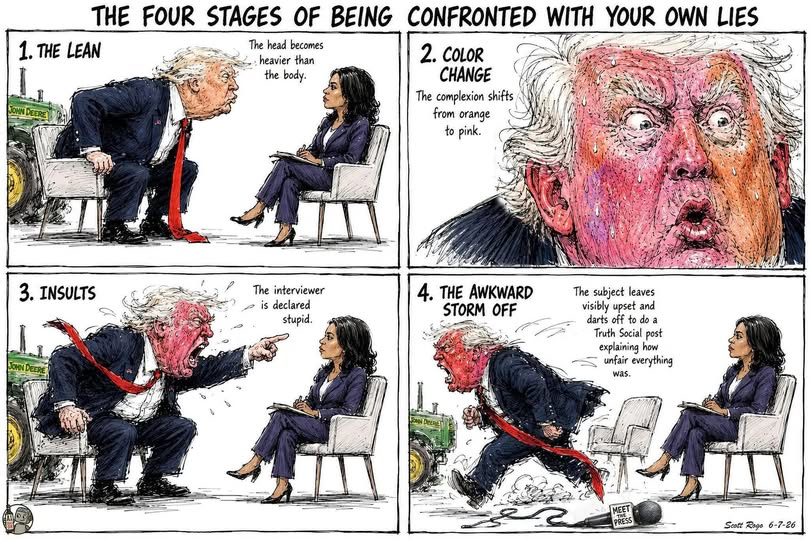
Trump's Melt-down on Meet the Press.
The whole Donald Trump-Kristen Welker interview on Meet the Press.
The short version of Trump-Welker interview on Meet the Press. Just the meltdown.
Trump clan is out in Albania.
The Obama Library opens to the public on Juneteenth.
The Men Who Don’t Want Women to Vote - Helen Lewis, The Atlantic.
A virulent form of misogyny has become the single most important force holding together the American right.
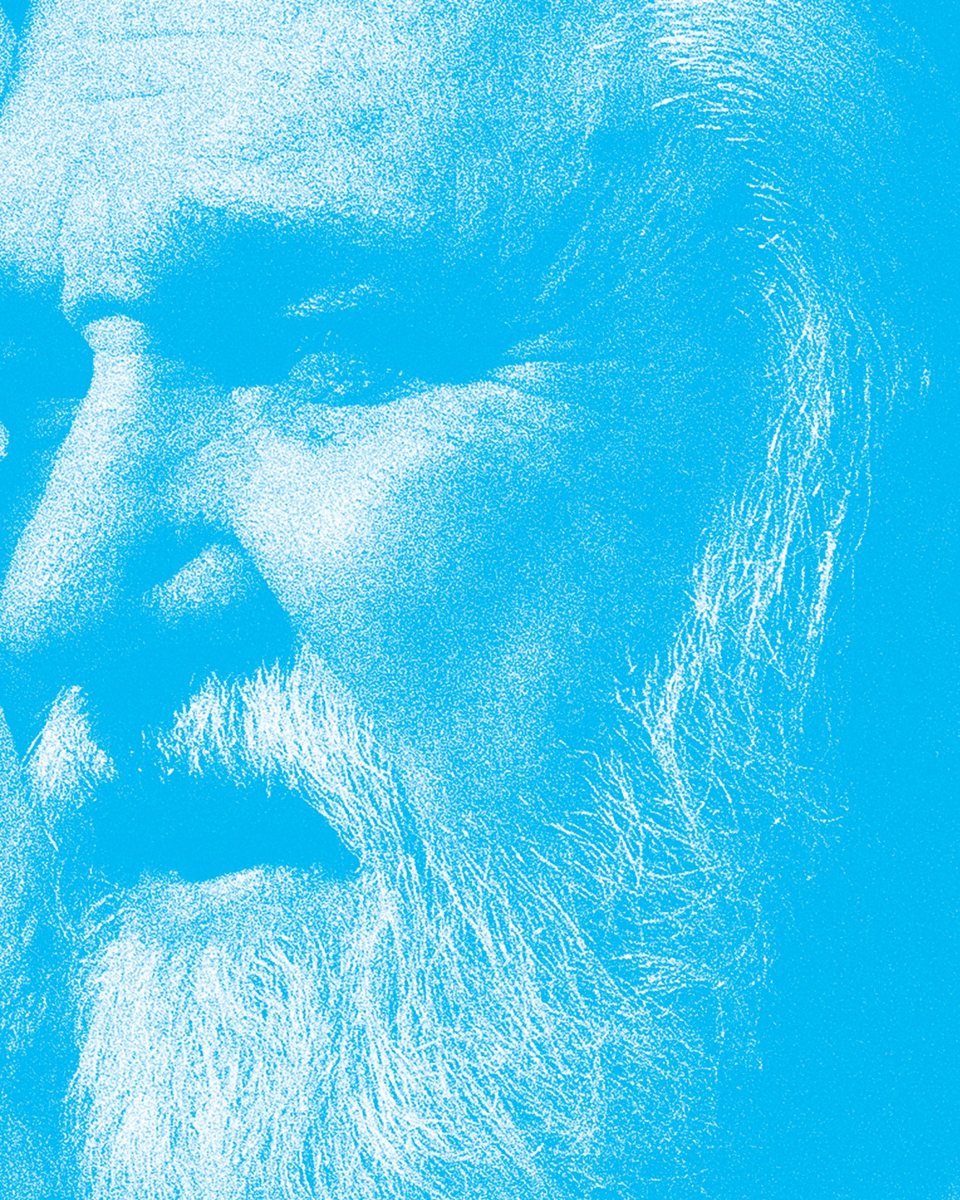
The influential pastor Douglas Wilson has advocated for the repeal of the Nineteenth Amendment.
Douglas wilson has a modest proposal to improve American life: He wants to repeal the Nineteenth Amendment, which gave women the vote. In his ideal system, “we would do it in our politics the same way we do it in our church structure,” he told me recently. “And that is, we vote by household.”
Wilson is a co-founder of the Communion of Reformed Evangelical Churches, based in Moscow, Idaho. Over the past five decades, he has built a small empire there, dedicated to disseminating his theocratic vision for the United States: a publishing house, a school, a liberal-arts college, and a video-streaming service. His denomination, which has about 170 affiliated churches, counts Defense Secretary Pete Hegseth as a member, and Wilson was invited to lead a prayer service at the Pentagon in February. So when the pastor casually suggests disenfranchising half of America, people listen.
When I asked him about this position, Wilson said it wasn’t his top priority—“We have bigger fish to fry”—but something he sees happening in perhaps 200 years’ time. I found this intellectual footsie maddening. “If I said to you, ‘I think all white men should be put in cages—but not now; it’s not my aspiration for now,’ ” I suggested, “then you wouldn’t be interested in a single other thing that I had to say at that point.”
Wilson chuckled. “Oh, I know you’d probably have all my attention.”
This is twinkly, avuncular Douglas Wilson, the guy who joined a hippie congregation fresh out of the Navy because he liked to play guitar, and ended up leading services once the regular pastor moved on. The same guy who once went on a multicity debating tour with the New Atheist Christopher Hitchens, and bonded with him over their shared love of P. G. Wodehouse. But the 72-year-old shows a different side on his website, Blog & Mablog. For more than two decades, Wilson has been airing piquant opinions on unruly women—or, as he calls them, “small-breasted biddies,” “harridans,” “lumberjack dykes,” and “Jezebels.” He once referred to Gloria Steinem and another feminist as “a couple of cunts.” And this is the polite version. Every year he celebrates “No Quarter November,” when he promises to tell readers what he really thinks.
Wilson believes that women should “not ordinarily” hold political office, and should never serve in combat roles in the military. Husbands should have dominion over misbehaving wives’ weight, spending habits, and choice of television programs. His uncompromising vision for America was once considered marginal, the conservative writer Karen Swallow Prior told me. Since his elevation by Hegseth, however, “no one can credibly say that Doug Wilson is fringe anymore.”
Wilson is a prominent voice in what is sometimes called “masculinism”: a movement to fight back against the advances of feminism and reassert the primacy of men. His version is religious, influenced by the notion of male “headship” of the family and Saint Paul’s belief that godly women should “be quiet.” There are also plenty of secular masculinists, as well as nominally Muslim ones, such as the streamer Sneako, the self-proclaimed pimp Andrew Tate, and the podcaster Myron Gaines. Woman-bashing plays well on social media and sells lots of ads for crypto, sports betting, and supplements. You can make good money telling men that they’re the truly oppressed sex.
But this isn’t just a movement of grifters exploiting a quirk of the algorithm. In the past decade, one of the New Right’s major challenges has been to retrofit a consistent ideology onto the electoral power of Donald Trump. Masculinism has been a great gift, because factions with different views on, say, protectionism or Israel or Big Tech can all agree on the overreach of feminism and the need for a return to traditional gender roles. Far from being a fringe belief system, masculinism has become the single most important force uniting the American right, bringing together an unlikely constellation of pastors, posters, senators, preachers, influencers, podcasters, and fanboys.
The MAGA movement is often framed as a reaction to the first Black president, and to a growing Latino population. But the multiracial appeal of the manosphere and Trump’s 2024 inroads with young minority men point in a different direction. “People ask me what the New Right is furious about,” the author Laura Field, whose book, Furious Minds, describes the intellectual underpinnings of Trumpism, told me. “And I think a good shorthand for that is they’re furious about their own loss of status in society over the last few years and the elites who made that happen, and I think that the pithiest short version of that is that it’s the women. It’s the women who took their status.”
Wilson’s approach to public life clearly has an element of what professional wrestlers call kayfabe—the winking, performative trollishness that now characterizes the online right. He wants feminists like me to get angry with his most outlandish proposals, making ourselves look like scolds or Chicken Littles in the process. But Wilson and a growing number of powerful allies are sincere in these beliefs, and would want to enact them if given the chance.
One of masculinism’s central claims is that no one is talking about men. So true! Men’s issues are not being discussed in Senator Josh Hawley’s 2023 book, Manhood: The Masculine Virtues America Needs. They aren’t being discussed in Tucker Carlson’s documentary The End of Men. They aren’t being discussed in the panoply of Christian books available on Amazon with titles such as Man for the Job, Masculine Christianity, and It’s Good to Be a Man, or in their secular counterparts, such as Why Women Deserve Less. They aren’t being talked about on social-media feeds (which can be highly segregated by sex) or on some of America’s most popular independent podcasts, such as Modern Wisdom, Huberman Lab, and The Diary of a CEO.
But this isn’t just a movement of grifters exploiting a quirk of the algorithm. In the past decade, one of the New Right’s major challenges has been to retrofit a consistent ideology onto the electoral power of Donald Trump. Masculinism has been a great gift, because factions with different views on, say, protectionism or Israel or Big Tech can all agree on the overreach of feminism and the need for a return to traditional gender roles. Far from being a fringe belief system, masculinism has become the single most important force uniting the American right, bringing together an unlikely constellation of pastors, posters, senators, preachers, influencers, podcasters, and fanboys.
The MAGA movement is often framed as a reaction to the first Black president, and to a growing Latino population. But the multiracial appeal of the manosphere and Trump’s 2024 inroads with young minority men point in a different direction. “People ask me what the New Right is furious about,” the author Laura Field, whose book, Furious Minds, describes the intellectual underpinnings of Trumpism, told me. “And I think a good shorthand for that is they’re furious about their own loss of status in society over the last few years and the elites who made that happen, and I think that the pithiest short version of that is that it’s the women. It’s the women who took their status.”
Wilson’s approach to public life clearly has an element of what professional wrestlers call kayfabe—the winking, performative trollishness that now characterizes the online right. He wants feminists like me to get angry with his most outlandish proposals, making ourselves look like scolds or Chicken Littles in the process. But Wilson and a growing number of powerful allies are sincere in these beliefs, and would want to enact them if given the chance.
One of masculinism’s central claims is that no one is talking about men. So true! Men’s issues are not being discussed in Senator Josh Hawley’s 2023 book, Manhood: The Masculine Virtues America Needs. They aren’t being discussed in Tucker Carlson’s documentary The End of Men. They aren’t being discussed in the panoply of Christian books available on Amazon with titles such as Man for the Job, Masculine Christianity, and It’s Good to Be a Man, or in their secular counterparts, such as Why Women Deserve Less. They aren’t being talked about on social-media feeds (which can be highly segregated by sex) or on some of America’s most popular independent podcasts, such as Modern Wisdom, Huberman Lab, and The Diary of a CEO.
For decades, each feminist advance in American public life has prompted an equally strong backlash. The first wave of women’s-rights activists won suffrage for women, against ferocious and sometimes violent opposition. After the second wave secured Title IX and other legal victories against sex discrimination, Phyllis Schlafly successfully fought back against the full ratification of the Equal Rights Amendment. By the identity-obsessed 2010s, the full weight of corporate America had swung behind glib slogans such as “The future is female.” This commercial blitzkrieg inevitably convinced some people that women’s advancement had come at men’s expense. A refrain I kept hearing over the past few years was that boys were being made to feel ashamed of themselves, as if they were stained by some kind of original sin. These years have seen a counterreaction, with the total abandonment of the #MeToo movement, conservative gloating over the fall of Roe v. Wade, and the return of straightforwardly sexist put-downs—“Quiet, piggy”—to public life.
Like most popular movements, masculinism has many entry points, and both defensible and alarming forms. At one end of the spectrum are legitimate concerns about male loneliness, the declining share of men in higher education, stagnant wages for non-college-educated men, and the deadening effects of day-trading, gaming, and porn. At the other end of masculinism are a misogynist vocabulary about AWFULs and the longhouse (terms that we’ll come back to) and a political agenda close to that in The Handmaid’s Tale, whereby women are denied the right to work, vote, and control their own bodies.
On the internet, masculinism is presented as a rebellion—a transgressive middle finger to the liberal establishment, expressed in all the words a corporate HR department would order you not to say. In the past few years, leaked group chats have shown Young Republicans and college conservatives using sexism, infused with racism, as a bonding mechanism. “If your pilot is a she and she looks ten shades darker than someone from Sicily, just end it there. Scream the no no word,” read a message in a Telegram thread used by the leaders of Young Republican chapters in New York, Kansas, Arizona, and Vermont. (Several members of the chat were women.) Richard Hanania, who describes himself as a former white nationalist, calls this kind of in-group signaling “the Based Ritual,” a way for younger MAGA enthusiasts to prove their bona fides to one another.
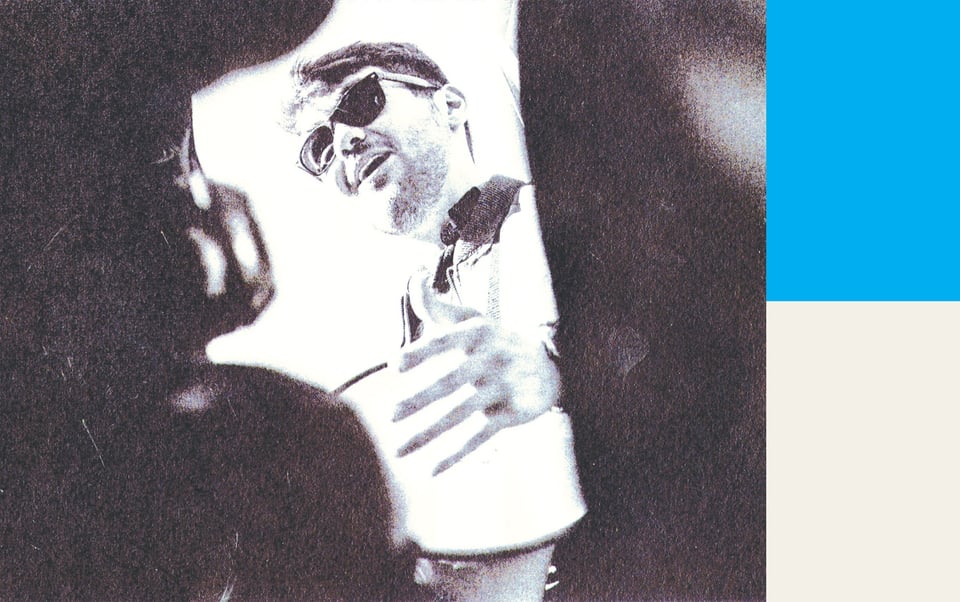
Nick Fuentes has suggested that women be sent to “breeding gulags.” (Photo-illustration by The Atlantic. Source: Jacquelyn Martin / AP.)
Among Gen Zers, Douglas Wilson’s intellectual heir is Nick Fuentes, who leads a loose collection of trolls known as Groypers. A self-professed Christian nationalist, anti-Semite, and virgin, Fuentes has built a fan base in part by deploying vividly misogynistic language. “Our No. 1 political enemy is women, because women constrain everything, every conversation, every man—everything,” Fuentes said on a livestream earlier this year. He added: “Just like Hitler imprisoned Gypsies, Jews, Communists—all of his political rivals—we have to do the same thing with women.” He suggested that they be sent to “breeding gulags. The good ones will be liberated. The bad ones will toil in the mines forever.”
Fuentes’s rhetoric shows how this gendered view of the world can easily be interlaced with other prejudices. Gay men? Effeminate, uninterested in sports, therefore unmanly. Jews? Clever rather than athletic; also unmanly. University lecturers? Pencil-necked postmodernists; also unmanly. Trans people? Inevitably degenerate. Muslims? An invasion force of rapists. Black men? Thugs from whom white women should be protected (if only they would submit to patriarchy). Almost every facet of contemporary online rightism can be refracted through the prism of gender. Multiple people affiliated with the Heritage Foundation, perhaps the most influential MAGA policy organization, cut ties with the group after its president refused to condemn Fuentes’s anti-Semitism last year. But his view that women belong in forced-breeding camps has produced no such fuss.
Wilson told me he considers this sort of rhetoric unforgivably gauche. “The Bible says that a godly woman is a husband’s crown,” he said. “I’ve never seen a king talk about his crown the way Fuentes talks about women. It’s absurd.” I wanted to ask whether “small-breasted biddies” came from the Gospel of Mark or Luke, but Wilson was on a roll. He thought Fuentes was so extreme that he might even be an undercover federal agent sent to discredit the movement. “He is, as far as I’m concerned, on the other team.”
In theological terms, that might be true. But both men benefit from a shock-and-awe rhetorical strategy. In 2014, it was a minor scandal when the megachurch pastor Mark Driscoll was revealed to be “William Wallace II,” the author of dozens of pages of message-board rants about how America was a “pussified nation” where men are “raised by bitter penis envying burned feministed single mothers who make sure that Johnny grows up to be a very nice woman who sits down to pee.” Now such language would barely raise an eyebrow.
Writers who used to hide their masculinist impulses behind a pen name now write and say outrageous things under their real name. Take the manosphere provocateur known as Raw Egg Nationalist, whose handle on X, where he has more than 300,000 followers, is @Babygravy9. He combines lifestyle and nutritional advice—“slonking” raw egg yolks—with hard-right, anti-immigration politics. He writes for Infowars, the conspiracy theorist Alex Jones’s media outlet. He posts about antiwhiteness and has his own line of microplastic-free herbal-tea bags, Kindred Harvest.
In 2024, a left-wing activist group outed him as Charles Cornish-Dale, a religious historian who has studied at both Oxford and Cambridge, and whose Ph.D. thesis was titled Migrations of the Holy: The Devotional Culture of Wimborne Minster, c.1400–1640. When his name became public, Cornish-Dale, now 38, concluded that being doxxed has “only made me stronger and more committed to what I’m doing.”
He did not use a pseudonym for his new book, The Last Men, in which he questions whether it is “possible to be men fully in a liberal democracy.” His political prescriptions, like Wilson’s, might be described as uncompromising. “Someone asked me the other day—I think it was a girl, actually—she was like: ‘So would you take away the vote from women?’” he told me. “I was like, ‘I would take away the vote from the vast majority of men as well.’ ”
His book, published by the venerable conservative imprint Regnery, suggests that men with high testosterone levels voted for Trump because high T is correlated with an acceptance of hierarchy, status, and inequality. Liberalism, by contrast, suppresses men’s life force: “Leftists have now openly embraced emasculation and having low testosterone as part of their identity.” He also revisits an argument he first made in an article titled “Ecce Homos,” that the left had robbed straight men of their heroes by recasting them as gay. He wants to reclaim the male bonding of “Julius Caesar or Alexander the Great, the Spartan last stand at Thermopylae, cowboys, pirates, gang members.”

Charles Cornish-Dale, trained as a religious historian, is also a manosphere provocateur known as Raw Egg Nationalist. (Photo-illustration by The Atlantic. Source: Courtesy of New Culture Forum.)
The Last Men is a confounding book because it seems equally perturbed by falling birth rates and Brokeback Mountain winning three Oscars. Cornish-Dale identifies potentially worrisome phenomena, such as a reported decline in sperm counts around the world, and gestures toward genuine feelings of ennui experienced by many young American men, who are stuck in unrewarding jobs, searching for greater meaning in their lives. He lays the blame at the feet of the elites: They are keeping you fat; they are unhappy with risk taking and hierarchy; they are calling masculinity toxic.
In conversation, Cornish-Dale is cocky but likable, with a languorous way of speaking that reminded me of Simon Cowell. Our Zoom took place at 6 a.m. his time, and he appeared to be talking to me from his bed, wearing striped pajamas. His current aesthetic is shaved head and swole, though back in 2012, he gave up doing fieldwork in a Buddhist monastery when he was asked to cut off his man bun. “I was going through a hipster phase,” he told me. “They wanted me to wear a robe instead of skinny jeans, and I just wouldn’t do it.”
Cornish-Dale is essentially an influencer—albeit one who knows a lot of $10 words. But masculinism is not merely an outgrowth of the attention economy. Other figures with similar ideas have strong connections to conservative policy circles.
One of these is Scott Yenor, who has declared that modern women are “medicated, meddlesome, and quarrelsome.” Since 2000, Yenor has taught political philosophy at Boise State University, in Idaho, 300 miles south of Douglas Wilson’s stronghold in Moscow. He has also worked with Florida Governor Ron DeSantis on rolling back DEI programs, which conservatives see as a de facto racial and gender quota system that is harmful to white men. “The core of what we oppose is ‘anti-discrimination,’ ” Yenor wrote in a 2021 email, released to The New York Times under a public-records request.
Yenor now fancies doing a little discrimination of his own. As he wrote in an essay for the Claremont Institute last fall, he believes that the law should change to allow businesses “to support traditional family life by hiring only male heads of households, or by paying a family wage”—that is, compensating men more so that their wives do not need to work. (Currently, this would be straightforwardly unconstitutional sex-based discrimination.) In 2021, he argued that colleges should not try to recruit more women to become engineers, but instead should “recruit and demand more of men who become engineers. Ditto for med school and the law and every trade.”
Like J. D. Vance, he reserves particular scorn for women who do not have children. Heaven help the “childless media scold” or “barren bureaucratic apparatchik”—Yenor’s terms—who decides she would prefer having a career to having babies. His rhetoric is unpleasant and extreme enough that he could not get confirmed to a university board in Florida. As for repealing the Nineteenth Amendment, Yenor told me via email that “when America had household voting or some rough equivalent, it was not a tyranny, the country was well governed, and the family was supported. The country is different today, and the same voting system would be uncongenial to our conditions.” (Although he responded to my question about the Nineteenth Amendment, Yenor did not make time for an interview with me.)
Yenor recently became the chair of the American Citizenship Initiative at the Heritage Foundation. A January report from the foundation called for a “culture-wide Manhattan Project” to promote family building through generous tax giveaways to married couples in which one parent is employed. At the same time, abortion, birth control, single-parent benefits, day care, dating apps, and no-fault divorce would be discouraged. The report contains one of the least romantic sentences I have ever read: “Marriage also opens unique retirement planning opportunities.”

Scott Yenor has declared that modern women are “medicated, meddlesome, and quarrelsome,” but says that denying them the vote would be “uncongenial to our conditions.” (Photo-illustration by The Atlantic. Source: Heritage Foundation.)
All of this is a continuation of themes found in Project 2025, the Heritage Foundation’s blueprint for Trump’s second term. The document, in the words of my colleague David Graham, offers a vision of America where “men are breadwinners and women are mothers.”
Yenor’s suggestion that feminism—with its attendant horrors of work outside the home, birth control, and financial independence—has made women neurotic and dependent on pharmaceuticals is now an article of faith on the right. Anonymous online posters frequently bring up data suggesting that liberal women are most likely to report suffering from anxiety. But to attribute female unhappiness to feminism seems wildly ahistorical. Have these people never read, say, The Feminine Mystique, which exhaustively cataloged the despair of mid-century stay-at-home mothers? (“Many suburban housewives were taking tranquilizers like cough drops,” the author, Betty Friedan, wrote.) Across the manosphere, however, young people are told that before feminism ruined everything, women used to be cherished and pampered by their husbands. Now women are supposedly subsidized by government handouts or earning six figures in pointless “email jobs.” In the masculinist paradigm, every woman does HR for cats and every man is a plumber or merchant seaman.
I asked Wilson about his allies’ nostalgic distortion of history. “Just a simple question,” he responded. “If you went back to 1850 and said: Out of all these women who had to get husbands’ permission to travel, to visit a sick cousin or whatever, how many—take 10,000 of those women—how many of them were on antidepressants? And how many of them today are on antidepressants?”
That wasn’t a fair comparison, I said, because today everyone is on antidepressants. Also, in the 1850s, SSRIs hadn’t been invented. You just got told to take some laudanum and go to the baths.
How popular are masculinist ideas? Last year, research by King’s College London and Ipsos found that Gen Z men in 30 nations were far more likely than male Baby Boomers to say that the fight for women’s equality had gone so far that men were now disadvantaged. They were also more than twice as likely to say that a father who stayed home with his children was “less of a man.” Meanwhile, 83 percent of Republican men younger than 50 think society is too feminized, according to a survey by the conservative Manhattan Institute. Intriguingly, this survey did not replicate the usual trope of working-class men revolting against snooty female elites: It found that “college-educated Republicans are more likely than their non-college counterparts to endorse the view that society has become too feminine.”
The most recent presidential election, pitting Trump against Kamala Harris, was a gift to masculinists. After all, the movement’s villains include female bosses, feminists, and women who don’t bear children—and Harris was the embodiment of all three. The male podcasters who got behind Trump in 2024 now host outright misogynists: Consider the career of the Christian debater Andrew Wilson, who in January appeared on arguably the most popular podcast in America, The Joe Rogan Experience—the manosphere-influencer equivalent of singing the national anthem at the Super Bowl.
Rogan’s choice of guests is a useful bellwether of the American political mood; he himself drifted from 2020 Bernie bro to 2024 Trump endorser via anti-wokeness, annoyance at COVID lockdowns, and a deep investment in conspiracy theories. He has lately begun to take an interest in Christianity, and has attended a nondenominational church.
Wilson, who appeared on Rogan’s show to promote his online debating courses, originally became famous for appearing repeatedly on Whatever, a dating podcast with 4.6 million YouTube subscribers. The show’s specialty is goading models and OnlyFans girls into delivering ragebait, such as one recent guest’s suggestion that she deserves a millionaire husband. Women are never supposed to win in the Whatever bear pit, but sometimes they do, just by remaining calm while the men try to trip them up.
In one episode, Wilson told a female fellow guest that she was too stupid to understand him, so she raised the fact that Wilson’s wife, Rachel, has children with three different men. He went thermonuclear. “You lick snizz,” he barked. “You’re a fucking dyke. Don’t talk shit about my wife, you stupid bitch.” He added, “I’m better than you.” It was an extraordinary display of uncontrolled aggression. In another clip, he mocked a female guest for being unable to open a pickle jar. She handed it to him, and he failed too. “Your hand greased the whole top of it,” he complained. Wilson has one of the most unpleasant internet personas I’ve ever encountered, and I’ve been on Bluesky. (He did not reply to my request for an interview, which was a relief.)
Unsurprisingly, Wilson treated Rogan, a high-status man, with far more respect than he showed the models of Whatever. In full bro-ing-out mode, he told Rogan that “feminists would immediately stop being feminist if they just had a taste of, like, well, you know, people actually did have to shut themselves up at night from wolves.” (How a chain-smoking middle-aged man who podcasts for a living would fare against a wolf is an open question.) The difference between this Andrew Wilson and the one from Whatever was remarkable—as was the fact that Rogan was prepared to host the benevolent version without any apparent concern for the malevolent one.
Wilson also took the opportunity to plug his wife’s book, Occult Feminism, which argues that feminism is “born of occult belief, because at its core, feminism seeks to make women gods over men, or at the very least to deify women.” I’ve read it (spoiler alert: The suffragists loved séances; Miley Cyrus’s tongue is pagan) and can say that the experience is eerily reminiscent of a friend recounting half a dozen Wikipedia pages that they read while drunk.
Wilson, however, promoted his wife so successfully that a few weeks later, Rachel Wilson made her own appearance on The Joe Rogan Experience. “I didn’t really have much of an opinion on feminism,” Rogan told her—except that he’d noticed that some feminists hated men. But listening to her book had made him realize that its origins were “bonkers.”
What followed was a greatest hits of anti-feminism—which, as Phyllis Schlafly learned, is the one subject where women’s contributions are always welcome. “Nobody wants to talk about this,” Rachel Wilson told Rogan. “This is the conversation no one’s ready for. Women’s access to higher education is the No. 1 correlate around the world—regardless of economics, race, culture, status, anything—to falling birth rates.”
In fact, observing a link between education and birth rates would be considered utterly banal in policy circles: The United Nations was publishing research on the phenomenon back in the 1990s. But everything in the manosphere has to be presented as allegedly forbidden knowledge. A few weeks later, the podcaster Katie Miller—wife of the Trump White House adviser Stephen—was making the exact same point to Fox News’s Laura Ingraham, also with the air of someone breaking a taboo. Feminism was destroying the family, she told Ingraham, because it “pushed women into the workplace.” As the writer Jill Filipovic noted, “These two women are having this conversation at their jobs.”
In fact, the challenge of falling birth rates is so well-known that many countries have implemented pronatalist policies in response: Singapore offers $11,000 “baby bonuses,” while Hungary exempts mothers of three or more children from income taxes. So far, though, none of the carrots has worked. The actually unspeakable bit is whether women’s access to education and the job market should be restricted, in the name of producing more babies and saving civilization. I wish people like Rachel Wilson would just come out and say that they favor this, so we can have a proper argument about it.
Instead they deploy a classic masculinist tactic: Tiptoe up to the edge of a policy that would poll as well as mandatory Ebola, then pirouette away at the last minute. Joel Webbon, a hard-right pastor based in Austin who has built a large social-media following by opposing feminism and the “LGBT Mafia,” is one of those prepared to say openly that he would like to restrict women’s participation in public life. “I know a lot of people, and I’m obviously not going to name them, but a lot of people and names that you would recognize are much further to the right than they are willing to publicly say,” he told me. However, he did not mind their bait-and-switch style, because the left has used it for decades. A small group of people argued that “love is love” to pass gay marriage, “and then, you know, it’s like: Oh, actually, Drag Queen Story Hour.” Masculinists were only turning lefties’ own strategy against them.
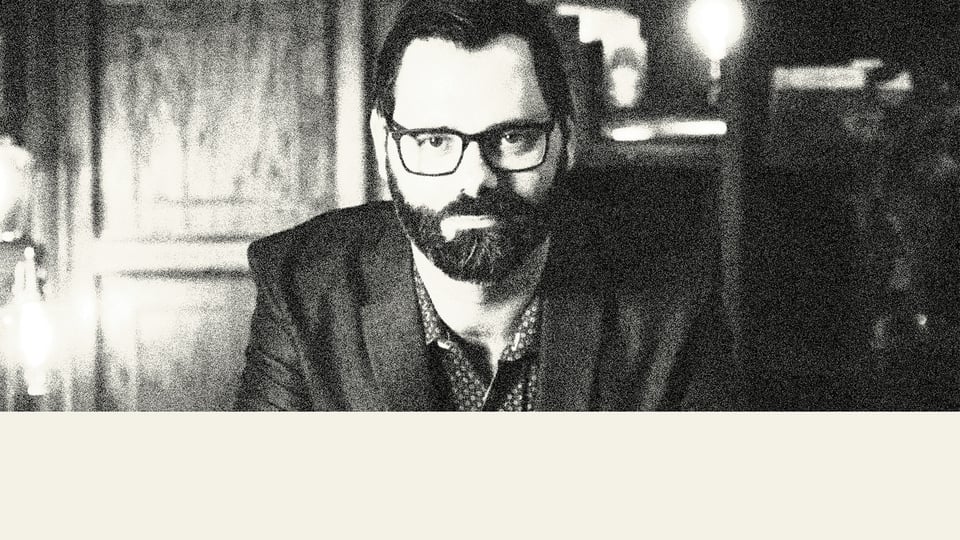
Joel Webbon, a hard-right pastor with a large social-media following, says openly that he would like to restrict women’s participation in public life. (Photo-illustration by The Atlantic. Source: Right Response Ministries.)
Like Douglas Wilson, Webbon is regularly described as a hate preacher; he told me that his services in Austin attract protesters who photograph his congregation. And as with Wilson, and Cornish-Dale, there is an enormous gulf between Webbon’s combative online persona and the person I interviewed. On his podcast, he talks trollishly about “the fake sin of raaaycism,” but one-on-one, he was scrupulously polite, calling me “ma’am” and listening without interruption as I told him that the system he advocates for is closer to Saudi Arabian guardianship than anything from the Christian tradition. He sees his internet presence, he told me, “like the Apostle Paul arguing and lecturing in the hall of Tyrannus,” an important period of evangelism for the early Church. When I checked his X feed later, he was talking about “Jewish sodomites” and reposting an account called @IfindRetards.
The phyllis schlafly of today is the writer Helen Andrews, with whom I am sometimes confused by liberals with Helen blindness. In a viral 2025 essay for Compact magazine called “The Great Feminization,” Andrews asked whether greater female participation in the workforce was “a threat to civilization.” (Honestly, women can be so overwrought.)
She was building on an influential thesis on the right known as “the longhouse,” which argues that modern, feminized society resembles the communal living halls of the past, which were dominated by “den mothers” who ruled by passive aggression, offense-taking, and ostracizing their enemies—all classically feminine modes of behavior. The most famous outlining of the longhouse thesis came from a writer calling himself L0m3z in the religious magazine First Things. He declined to cite any specific historical examples and added that one could not really define the longhouse, anyway, because “its definition must remain elastic, lest it lose its power to lampoon the vast constellation of social forces it reviles.” How convenient! Instead, the longhouse was “a metonym for the disequilibrium afflicting the contemporary social imaginary.” Let me shock you: L0m3z was eventually outed as a humanities academic.
Andrews took this thesis further, arguing that “everything you think of as ‘wokeness’ is simply an epiphenomenon of demographic feminization.” To translate that into English, the claim is that women don’t settle arguments like characters in a Guy Ritchie film, with fisticuffs outside the smoking shed and no hard feelings two hours later. Instead, Andrews writes, they “covertly undermine or ostracize their enemies.” Therefore, “all cancellations are feminine.” Again, a quick glance at the history books presents a few challenges: The backstabbing in the Roman Senate was both literal and figurative, and the Vatican has always been a nest of scheming cardinals. And who pressured ABC to take Jimmy Kimmel off the air after Charlie Kirk’s assassination? Brendan Carr, who is Trump’s Federal Communications Commission chair—and the possessor of a Y chromosome.
Later in the essay, Andrews offered a testable proposition: “If a business loses its swashbuckling spirit and becomes a feminized, inward-focused bureaucracy, will it not stagnate?” As it happens, the labor economist Revana Sharfuddin has crunched the data on factories in the Second World War—one of the greatest periods of “demographic feminization” in American history—and found no evidence that they became paralyzed by cancel culture and petty HR disputes. When I asked Andrews about this, she noted that wartime automobile and electrical factories were still essentially segregated by sex, and that even so, some managers hired counselors to help them deal with their new workforce. “For what it’s worth, the counterargument that most landed with me was the example of communism,” she wrote in an email. “Women were well represented in medicine and science in the Soviet Bloc, and their society didn’t collapse—well, it did, but probably not because of the women.”
Andrews’s essay comes to the defense of former Harvard President Larry Summers, who resigned under pressure in 2006 after arguing that women might be underrepresented in the hard sciences because of their innate lack of interest in those fields and their inability to perform at the highest levels. It later emerged in the Epstein files that this was a sanitized version of his private view, which was that women have lower IQs than men. (Out of curiosity, I hunted down the diversity stats for 2006, the year Summers resigned. At the time, four-fifths of Harvard’s tenured professors were men.) In retrospect, Summers’s ouster doesn’t look like the product of feminist hysteria; rather, his colleagues may have seen him as an embarrassing liability and seized on the opportunity to offload him.
To my surprise, when I put this to Andrews, she partially agreed. “Saying Larry Summers was fired because of the controversy is like saying America entered World War II because of Pearl Harbor,” she said. “It’s a simplification: good enough for the one-sentence version, but definitely omitting important factors.” In our communication, she was wry and self-deprecating, apologizing for any inconvenience I’d experienced by being mistaken for her—“the bad Helen.” I reflected that this version of Andrews wouldn’t have gone viral in the way that the one warning that working women are a “threat to civilization” did.
On the right, creeping feminization has become an all-purpose explanation for many recent events: Women pity the underdog, pander to self-proclaimed victims, and care about hurt feelings more than the truth—all of which are exploited by undocumented immigrants and violent criminals. In this analysis, Renee Good—the woman shot by an immigration-enforcement officer in Minneapolis—was killed because she’d adopted left-wing values. “An AWFUL (Affluent White Female Urban Liberal) is dead after running her car into an ICE agent who opened fire on her,” the right-wing pundit Erick Erickson posted immediately after her death. Women are childlike, naive, immature; they simply do not understand the real world.

Helen Andrews wrote a viral 2025 essay that questioned whether greater female participation in the workforce was a “threat to civilization.” (Photo-illustration by The Atlantic. Source: Jon Meadows.)
Many MAGA figures have identified the surfeit of feminine empathy as a political issue. The first episode of Douglas Wilson’s Man Rampant podcast was called “The Sin of Empathy.” The Canadian marketing professor Gad Saad issues regular condemnations of “suicidal empathy” between posts complaining that women “no longer wear any real clothes and instead are always in athleisure.”
This disdain for empathy often leads to the conclusion that women’s political participation is a problem, because the little ladies will insist on voting for the wrong candidates and policies. “The 1920s were the last decade in American history during which one could be genuinely optimistic about politics,” Peter Thiel, an early advocate for Trump in Silicon Valley, wrote in a 2009 essay for a Cato Institute journal. “Since 1920, the vast increase in welfare beneficiaries and the extension of the franchise to women—two constituencies that are notoriously tough for libertarians—have rendered the notion of ‘capitalist democracy’ into an oxymoron.” In this view, the gender split in American politics—55 percent of men but only 46 percent of women voted for Trump in 2024—is not merely a reflection of differing priorities but a problem to be solved.
At the same time that people like Wilson are saying out loud that they want to repeal the Nineteenth Amendment, the suggestion that anyone seriously wants to end female suffrage is often dismissed by mainstream conservatives as lib hysteria. After all, changing the Constitution would require the assent of three-quarters of the 50 states. “I’ll be concerned about the 19th thing the day a single state—just one out of 38—passes a repeal,” Inez Stepman, a former fellow at the Claremont Institute, posted in March. Liberals were “humorlessly chasing fumes of jokes and bar chatter, and dishonestly using it to silence real policy and cultural debate.” Personally, I would feel better about this line of argument had I not sat opposite the conservative intellectual Jordan Peterson in 2018 while he sneered at my suggestion that Trump-appointed justices would overturn Roe v. Wade. Or if the Trump administration had not taken the issue of birthright citizenship all the way to the Supreme Court. Or if Pete Hegseth had not already blocked the promotion of female (and Black) military officers, and frequently expressed his opposition to women serving in combat.
Masculinism is now approaching its imperial-overreach phase, like the Roman empire that many of its leaders so admire. For some of its most ardent adherents, if someone on the left is doing anything, regardless of their sex, it’s feminized and bad. Meanwhile, when Trump sends out a bitchy Truth Social post about a petty grievance, that is a display of manly vigor. Tucker Carlson’s perfectly buoyant coiffure? Rugged—butch, even. Ben Shapiro’s heartwarming enjoyment of musical theater? In the best tradition of the Vikings or Spartans, probably. This reductive view of the world—women things bad, men things good—is the mirror image of the worst excesses of 2010s Tumblr feminism, when introverted teenage girls posted hashtags like #KillAllMen and drank from mugs that read male tears.
In March, the anti-DEI activist Christopher Rufo had to fend off a horde of anonymous right-wing posters claiming, apparently seriously, that white men “are very easily the most oppressed group in history.” When he described this view as “brain damaged” and invoked a little-known American phenomenon called slavery, he was besieged with complaints.
For me, this episode gets to the core of MAGA masculinism. Which of its faces is the real one—the conservative think-tankers seeking to undo antidiscrimination laws, or the soap opera of influencers railing against “small-breasted biddies” and AWFULs, wallowing in self-pity, and labeling everything they dislike as feminine?
But of course, the sober thinkers and the shock troops feed off each other. Sometimes, as with Wilson, they coexist in a single person. This is a movement with real policy goals: the rollback of no-fault divorce. Tax breaks to reward male breadwinners and female homemakers. An end to anything with a whiff of DEI, even leadership programs for women in the military, like one cut by Hegseth. A return to the workplace culture of the 1970s, where sexual harassment was normalized. An open preference for male employees in hiring, promotion, and pay awards—in other words, affirmative action for men.
Yet masculinism also functions as a perpetual-motion machine of grievance, an inarticulate howl of anguish at the status quo—whatever that currently is. Masculinism is both serious and silly, sometimes camp and sometimes chilling, an attention-grabbing performance and a genuine proposition. No wonder it has become the cornerstone of Trumpism.
Los Angeles Mayoral
California Secretary of State Shirley Weber warned on June 2 - it would take weeks to know the final electoral results as the state prioritizes the right to vote and ballot security over speed.
“This is normal,” Weber said in a statement. “We have a process that by law ensures both voting rights and the integrity of elections, so I would call on all Californians to be patient.”
Why it takes so damn long
Los Angeles County is home to nearly 10 million people. That’s larger than the population of 42 of the 50 states. The county must process the ballots of every registered voter who chose to participate, and in California, almost all of them vote by mail. Statewide, there are 23 million registered voters. In the 2024 presidential election, roughly 13 million of the 16 million votes cast arrived by mail.
California automatically sends a ballot to every registered voter, a policy made permanent by Gov. Gavin Newsom in 2021. Under state law, those ballots are valid as long as they are postmarked by Election Day and arrive within seven days. For the June 2 primary, that receipt deadline is June 9. There is no good workaround for this; the law deliberately created this window to ensure that voters who mail their ballots on time are not disenfranchised by postal delays beyond their control.
Each of those mail ballots goes through a signature verification process. That means every envelope must be checked against the signature on file with the county registrar. When a signature doesn’t match—for example because an older voter’s handwriting has changed, or they signed in haste, or any number of other innocent reasons—election officials are required by law to contact that voter and give them an opportunity to confirm their identity and have their ballot counted. That time-consuming process, called ballot curing, exists specifically to protect voters from having their votes thrown out on technicalities.
California also offers same-day voter registration at any voting center. Those voters cast provisional ballots, which can only be counted after officials have verified the voter’s eligibility—a carefully conducted process that historically results in 85 to 90 percent of provisional ballots being counted.
Election experts have described the cumulative effect using a vivid analogy: a pig moving through a python. The processing systems in each county must absorb an enormous pile of late-arriving ballots, all legally mailed but at the last minute. These disproportionately come from Democratic voters. This cycle, millions waited especially long to make their choices in the wide-open governor’s primary race. County election officials technically have up to 30 days after the election to complete the count; final results from the June 2 primary must be certified by July 3.
One more thing.
Top two winners compete in November.In the case of the LA Mayoral contest, the top two are both Democrats.
The 2026 79th Tony Awards

Gitchi-gitchi, Liberation.
Gitchi-gitchi, Schmigadoon.
"2026 Tony Awards winners list" by Broadway News' Lee D'Amato - ""Arthur Miller’s “Death of a Salesman” took home the most Tonys of the evening with six, including Best Revival of a Play, Best Performance by an Actress in a Featured Role in a Play for Laurie Metcalf, and Best Direction of a Play for Joe Mantello. As for musicals, “Schmigadoon!,” “Ragtime” and “The Lost Boys” each took home four Tony Awards.
Best Musical
“Schmigadoon!” ...
Best Play
“Liberation” ...
Best Revival of a Play
“Death of a Salesman” ...
Best Revival of a Musical
“Ragtime” ... "
SEE THE FULL LIST OF WINNERS:
The 79th annual Tony Awards took place at Radio City Music Hall on June 7. Hosted by Grammy Award winner P!NK, the ceremony honored Broadway productions that opened between April 28, 2025, and April 26, 2026.
Arthur Miller’s “Death of a Salesman” took home the most Tonys of the evening with six, including Best Revival of a Play, Best Performance by an Actress in a Featured Role in a Play for Laurie Metcalf, and Best Direction of a Play for Joe Mantello. As for musicals, “Schmigadoon!,” “Ragtime” and “The Lost Boys” each took home four Tony Awards.
Following its recent win of the Pulitzer Prize for Drama, Bess Wohl’s “Liberation” won Best Play, making Wohl the second American woman to win in the category. The last American woman to win was Wendy Wasserstein who won for The Heidi Chronicles in 1989. A French woman, Yasmina Reza, won the best playwright category twice, for Art (1998)and for God of Carnage (2009).
Winners can be found below in bold.
Best Musical
“The Lost Boys”
“Schmigadoon!”
“Titaníque”
“Two Strangers (Carry a Cake Across New York)”
Best Play
“The Balusters”
“Giant”
“Liberation”
“Little Bear Ridge Road”
Best Revival of a Play
“Death of a Salesman”
“Becky Shaw”
“Every Brilliant Thing”
“Fallen Angels”
“Oedipus”
Best Revival of a Musical
“Cats: The Jellicle Ball”
“Ragtime”
“The Rocky Horror Show”
Best Performance by an Actor in a Leading Role in a Musical
Nicholas Christopher, “Chess”
Luke Evans, “The Rocky Horror Show”
Joshua Henry, “Ragtime”
Sam Tutty, “Two Strangers (Carry a Cake Across New York)”
Brandon Uranowitz, “Ragtime”
Best Performance by an Actress in a Leading Role in a Musical
Sara Chase, “Schmigadoon!”
Stephanie Hsu, “The Rocky Horror Show”
Caissie Levy, “Ragtime”
Marla Mindelle, “Titaníque”
Christiani Pitts, “Two Strangers (Carry a Cake Across New York)”
Best Performance by an Actor in a Leading Role in a Play
Will Harrison, “Punch”
Nathan Lane, “Death of a Salesman”
John Lithgow, “Giant”
Daniel Radcliffe, “Every Brilliant Thing”
Mark Strong, “Oedipus”
Best Performance by an Actress in a Leading Role in a Play
Rose Byrne, “Fallen Angels”
Carrie Coon, “Bug”
Susannah Flood, “Liberation”
Lesley Manville, “Oedipus”
Kelli O’Hara, “Fallen Angels”
Best Performance by an Actor in a Featured Role in a Play
Christopher Abbott, “Death of a Salesman”
Danny Burstein, “Marjorie Prime”
Brandon J. Dirden, “Waiting for Godot”
Alden Ehrenreich, “Becky Shaw”
Ruben Santiago-Hudson, “Joe Turner’s Come and Gone”
Richard Thomas, “The Balusters”
Best Performance by an Actress in a Featured Role in a Play
Betsy Aidem, “Liberation”
Marylouise Burke, “The Balusters”
Aya Cash, “Giant”
Laurie Metcalf, “Death of a Salesman”
June Squibb, “Marjorie Prime”
Best Performance by an Actor in a Featured Role in a Musical
Ali Louis Bourzgui, “The Lost Boys”
André De Shields, “Cats: The Jellicle Ball”
Bryce Pinkham, “Chess”
Ben Levi Ross, “Ragtime”
Layton Williams, “Titaníque”
Best Performance by an Actress in a Featured Role in a Musical
Shoshana Bean, “The Lost Boys”
Hannah Cruz, “Chess”
Rachel Dratch, “The Rocky Horror Show”
Ana Gasteyer, “Schmigadoon!”
Nichelle Lewis, “Ragtime”
Best Direction of a Play
Nicholas Hytner, “Giant”
Robert Icke, “Oedipus”
Kenny Leon, “The Balusters”
Joe Mantello, “Death of a Salesman”
Whitney White, “Liberation”
Best Direction of a Musical
Michael Arden, “The Lost Boys”
Lear deBessonet, “Ragtime”
Christopher Gattelli, “Schmigadoon!”
Tim Jackson, “Two Strangers (Carry a Cake Across New York)”
Zhailon Levingston and Bill Rauch, “Cats: The Jellicle Ball”
Best Book of a Musical
“The Lost Boys,” David Hornsby and Chris Hoch
“Schmigadoon!,” Cinco Paul
“Titaníque,” Marla Mindelle, Constantine Rousouli and Tye Blue
“Two Strangers (Carry a Cake Across New York),” Jim Barne and Kit Buchan
Best Original Score (Music and/or Lyrics) Written for the Theatre
“Death of a Salesman,” Music: Caroline Shaw
“Joe Turner’s Come and Gone,” Music: Steve Bargonetti
“The Lost Boys,” Music & Lyrics: The Rescues
“Schmigadoon!,” Music & Lyrics: Cinco Paul
“Two Strangers (Carry a Cake Across New York),” Music & Lyrics: Jim Barne and Kit Buchan
Best Choreography
Christopher Gattelli, “Schmigadoon!”
Ellenore Scott, “Ragtime”
Ani Taj, “The Rocky Horror Show”
Omari Wiles and Arturo Lyons, “Cats: The Jellicle Ball”
Lauren Yalango-Grant and Christopher Cree Grant, “The Lost Boys”
Best Scenic Design of a Musical
dots, “The Rocky Horror Show”
Soutra Gilmour, “Two Strangers (Carry a Cake Across New York)”
Rachel Hauck, “Cats: The Jellicle Ball”
Dane Laffrey, “The Lost Boys”
Scott Pask, “Schmigadoon!”
Best Scenic Design of a Play
Hildegard Bechtler, “Oedipus”
Takeshi Kata, “Bug”
Chloe Lamford, “Death of a Salesman”
David Korins, “Dog Day Afternoon”
David Rockwell, “Fallen Angels”
Best Lighting Design of a Musical
Kevin Adams, “Chess”
Jane Cox, “The Rocky Horror Show”
Donald Holder, “Schmigadoon!”
Adam Honoré, “Cats: The Jellicle Ball”
Adam Honoré and Donald Holder (Lighting Design) and 59 Studio (Projection Design), “Ragtime”
Jen Schriever and Michael Arden, “The Lost Boys”
Best Lighting Design of a Play
Isabella Byrd, “Dog Day Afternoon”
Natasha Chivers, “Oedipus”
Stacey Derosier, “Joe Turner’s Come and Gone”
Heather Gilbert, “Bug”
Heather Gilbert, “The Fear of 13”
Jack Knowles, “Death of a Salesman”
Best Sound Design of a Musical
Kai Harada, “Cats: The Jellicle Ball”
Kai Harada, “Ragtime”
Adam Fisher, “The Lost Boys”
Brian Ronan, “The Rocky Horror Show”
Walter Trarbach, “Schmigadoon!”
Best Sound Design of a Play
Justin Ellington, “Joe Turner’s Come and Gone”
Tom Gibbons, “Oedipus”
Lee Kinney, “The Fear of 13”
Josh Schmidt, “Bug”
Mikaal Sulaiman, “Death of a Salesman”
Best Orchestrations
Doug Besterman and Mike Morris, “Schmigadoon!”
Ethan Popp, Kyler England, Adrianne “AG” Gonzalez and Gabriel Mann, “The Lost Boys”
Lux Pyramid, “Two Strangers (Carry a Cake Across New York)”
Brian Usifer, “Chess”
Andrew Lloyd Webber, David Wilson, Trevor Holder and Doug Schadt, “Cats: The Jellicle Ball”
Best Costume Design of a Musical
Linda Cho, “Ragtime”
Linda Cho, “Schmigadoon!”
Qween Jean, “Cats: The Jellicle Ball”
Ryan Park, “The Lost Boys”
David I. Reynoso, “The Rocky Horror Show”
Best Costume Design of a Play
Brenda Abbandandolo, “Dog Day Afternoon”
Qween Jean, “Liberation”
Jeff Mahshie, “Fallen Angels”
Emilio Sosa, “The Balusters”
Paul Tazewell, “Joe Turner’s Come and Gone”
Game 3. (M)NBA Finals. The Knicks lost last night. So did Trump.
First he was booed, then he fell asleep.
Score was 115 Spurs, 111 Knicks.
The Knicks' lead is cut 2 games to 1.
Game 4 is at MSG in NYC on Wednesday, 8:30 PM.

