Thursday, July 16, 2026. Annette's Roundup for Democracy.
Donald Trump is not just another President whose politics you disagree with.
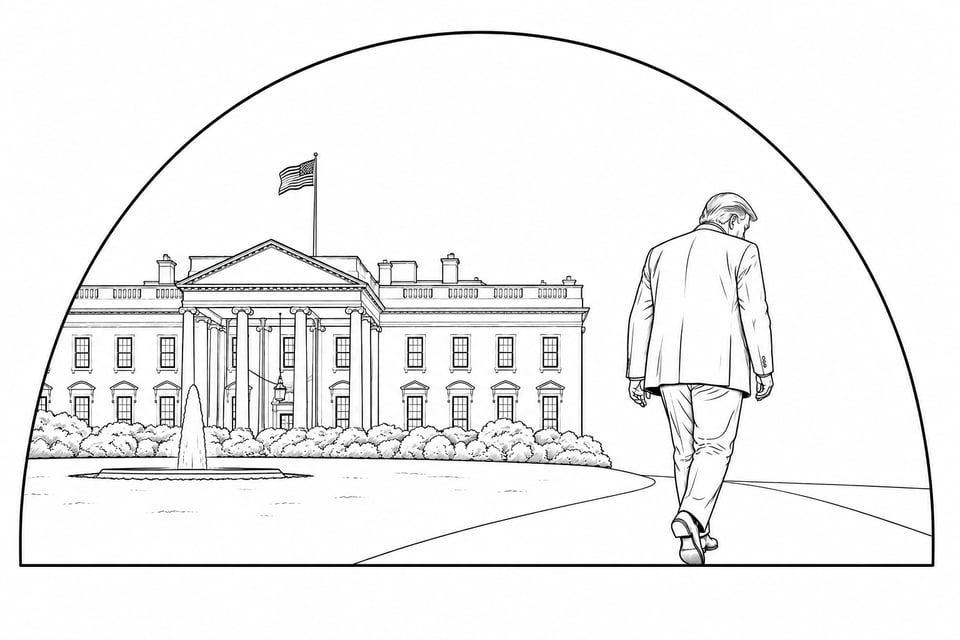
He is a would-be dictator who must be denounced and removed from office, or, if that is not possible, made ineffectual.
Which strategy we should pursue most vigorously to end his rule will depend on the midterm elections and the numbers of politicians in power and judges who commit to protect our nation and the world from an aspiring dictator.
Our resistance against him comes not just from his policies - yes, many of those are reprehensible to me and to you - but that is not the point. The goal is to recognize, expose and end his attempt to destroy our Democracy and Democracies the world over.
Ending or fighting specific policies and appointments is admirable and, in many cases, necessary and important, but we as Responsible Citizens of a once great Democracy must do more. We have bigger fish to fry.
As George Packer said recently, "I don't want to stop believing in America's decency. I want to feel, as Walt Whitman did, that America and democracy are inextricable."
As Anne Applebaum said, "The true nature of the ideology that Trump brought to Washington was not “America First,” but rather “Trump First.” No Declaration of Independence, no Constitution, no Rule of Law, no Bill of Rights. There is nothing more to say.
If you can no longer bear the betrayal of America’s ideals, tell your neighbors, your family and friends by any means possible - in person, writing letters and articles, social media posts, conversations, speeches, joining and organizing resistance groups, and more.
Especially, send your words to your elected officials of either party and demand they stop being complicit. Tell them the price of collaboration will be high. Tell them even actions opposing his policies and appointments are good but not sufficient. Anyone not working to remove Trump from office will know our ire.
We want him out. We demand him out. We will get him out.
Annette Niemtzow
This 'n that.
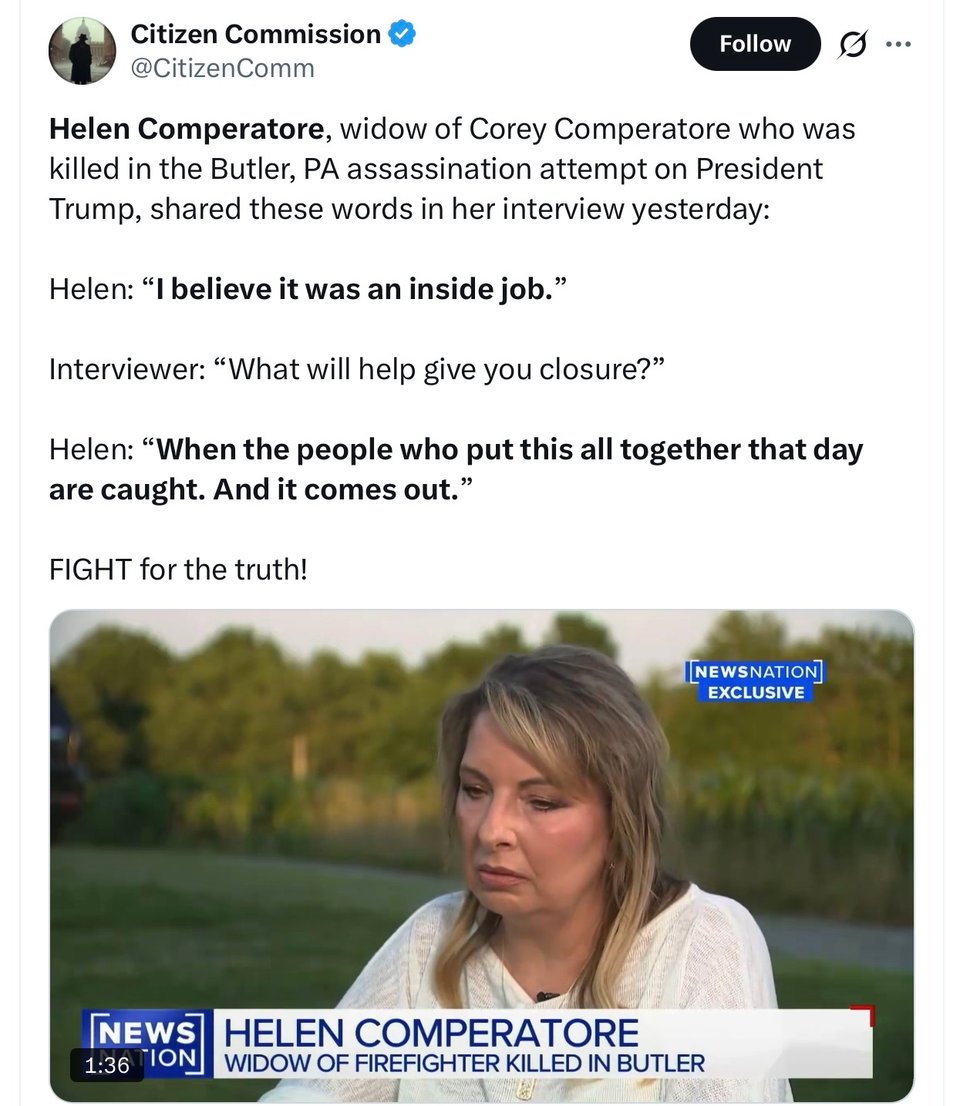
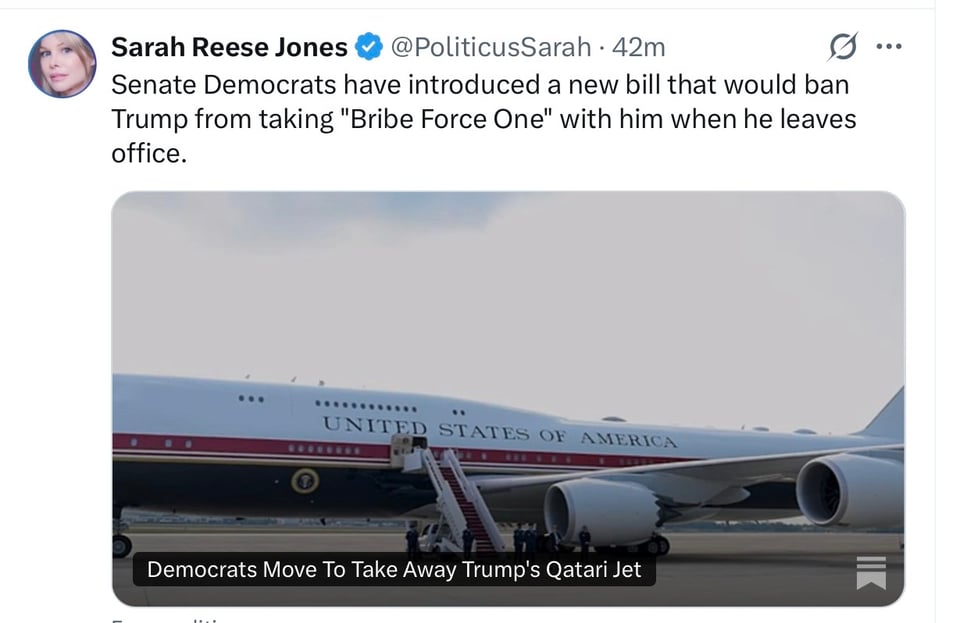
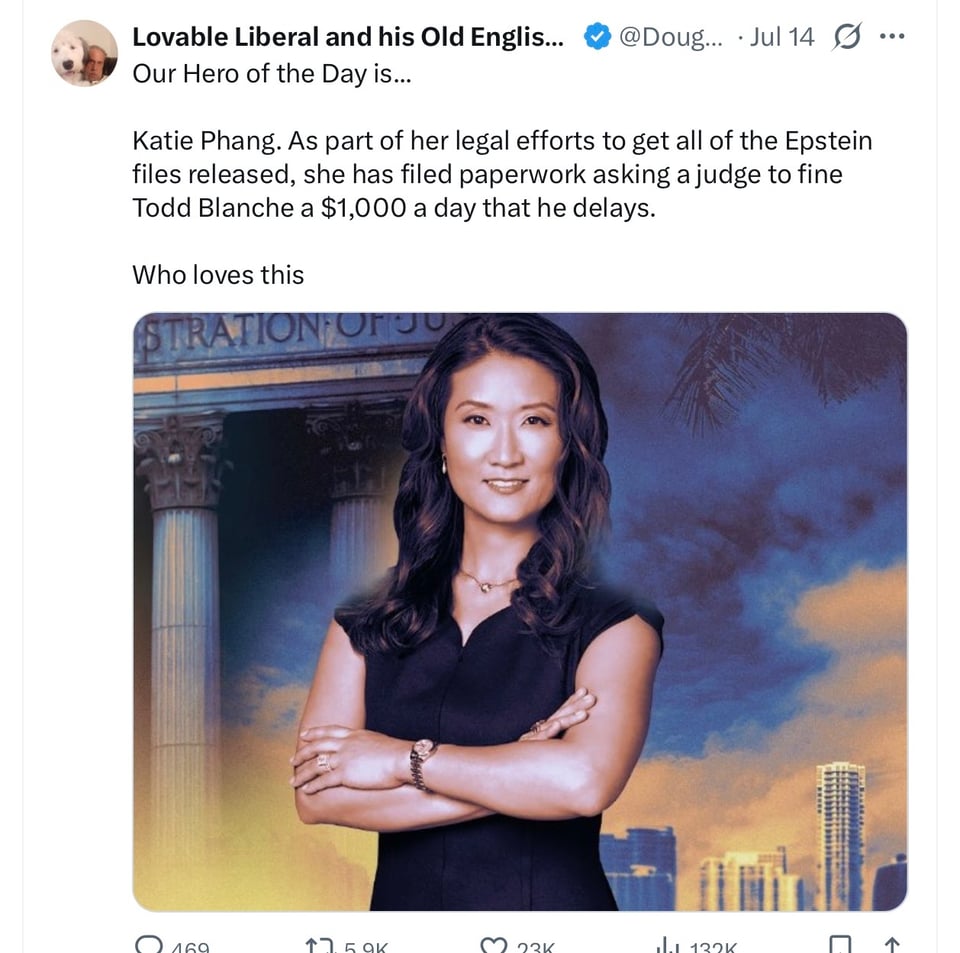
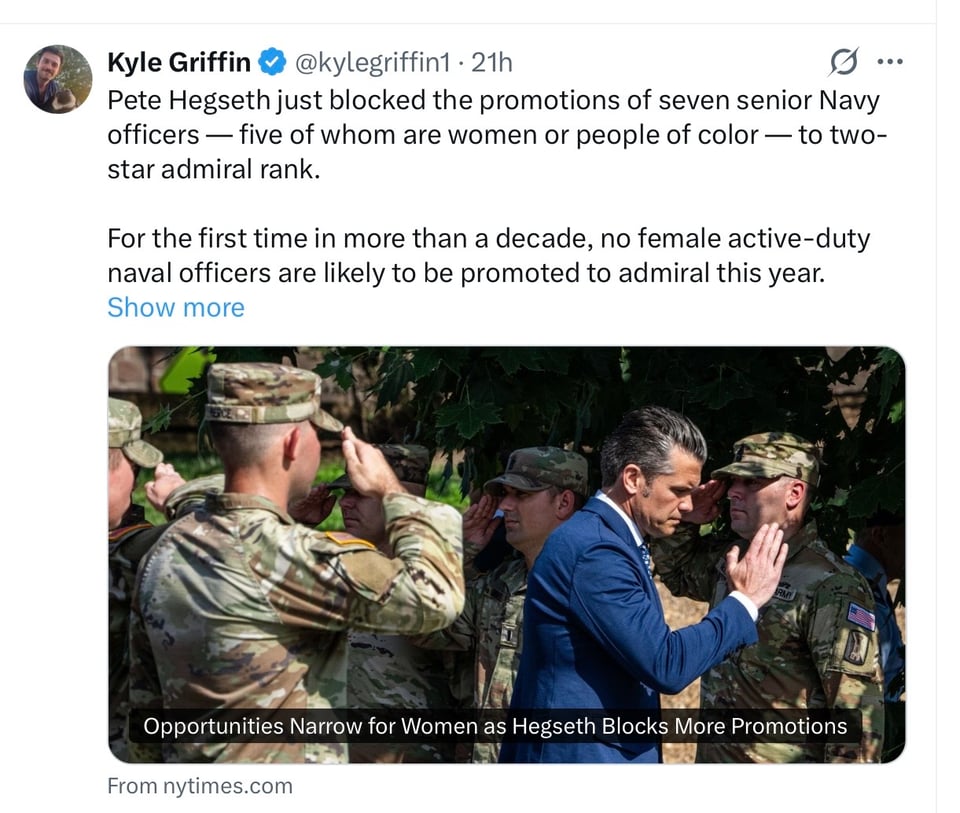
Every day proves Trump must be removed from office.
One more thing.
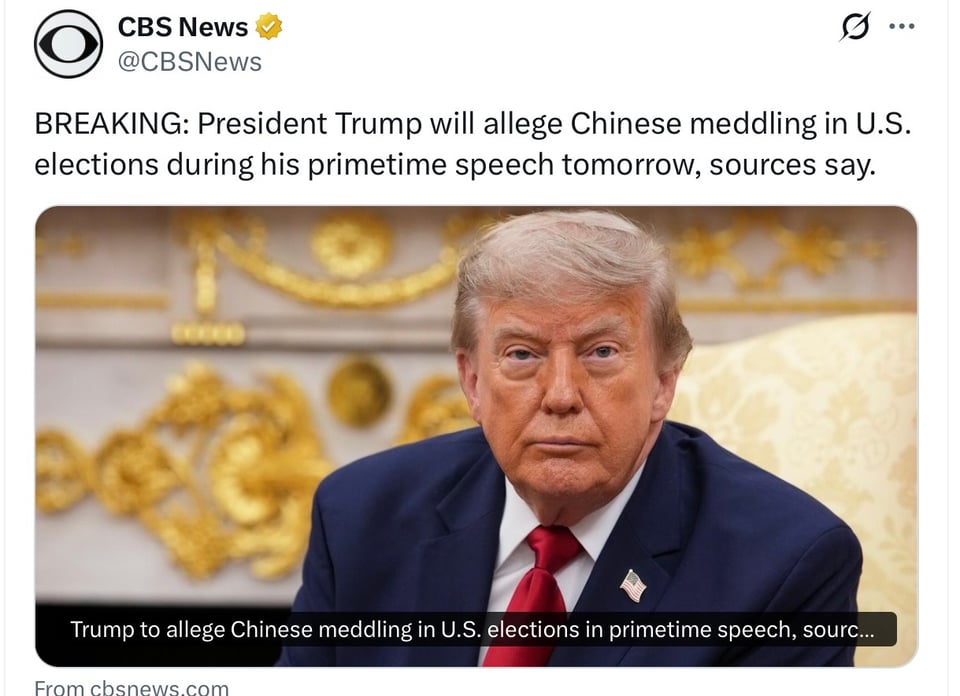
Senators Jon Ossoff and Raphael Warnock of Georgia are about to be Trump’s target in the anti-Democracy propaganda Trump will spit out at the American people tonight.
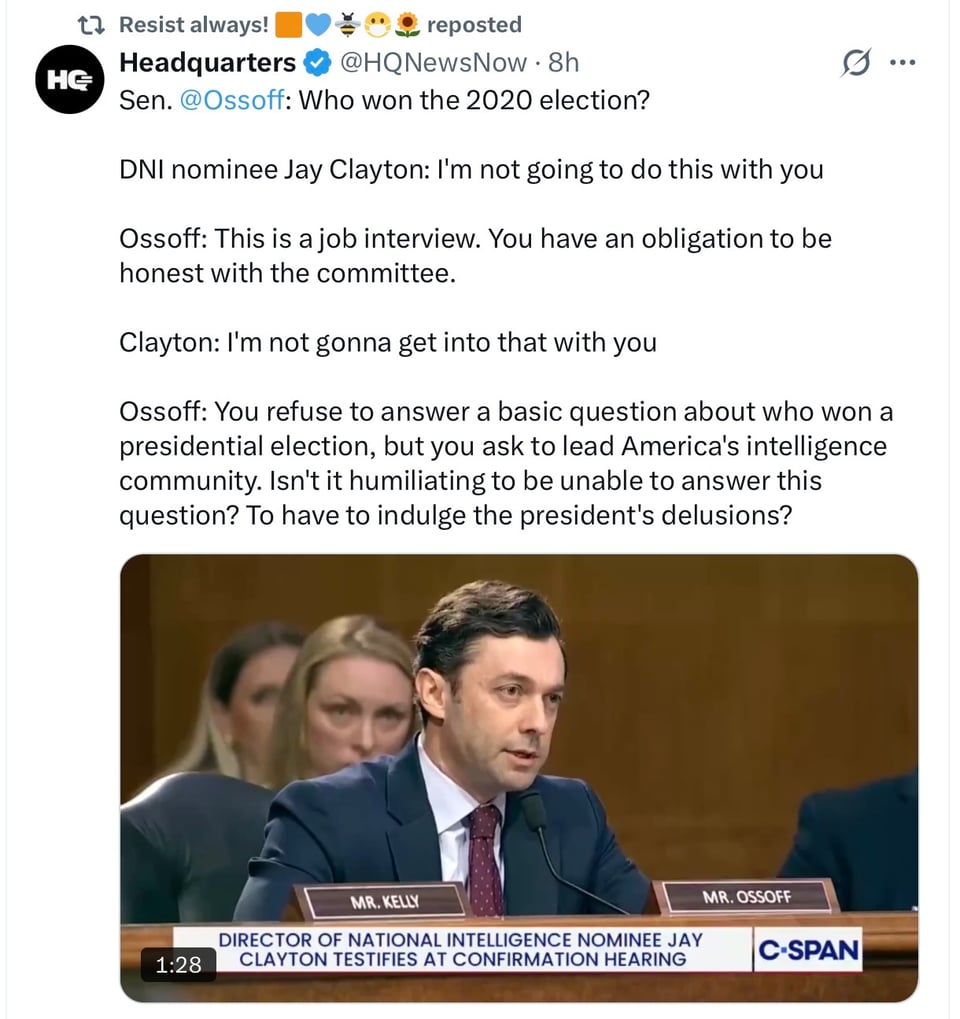
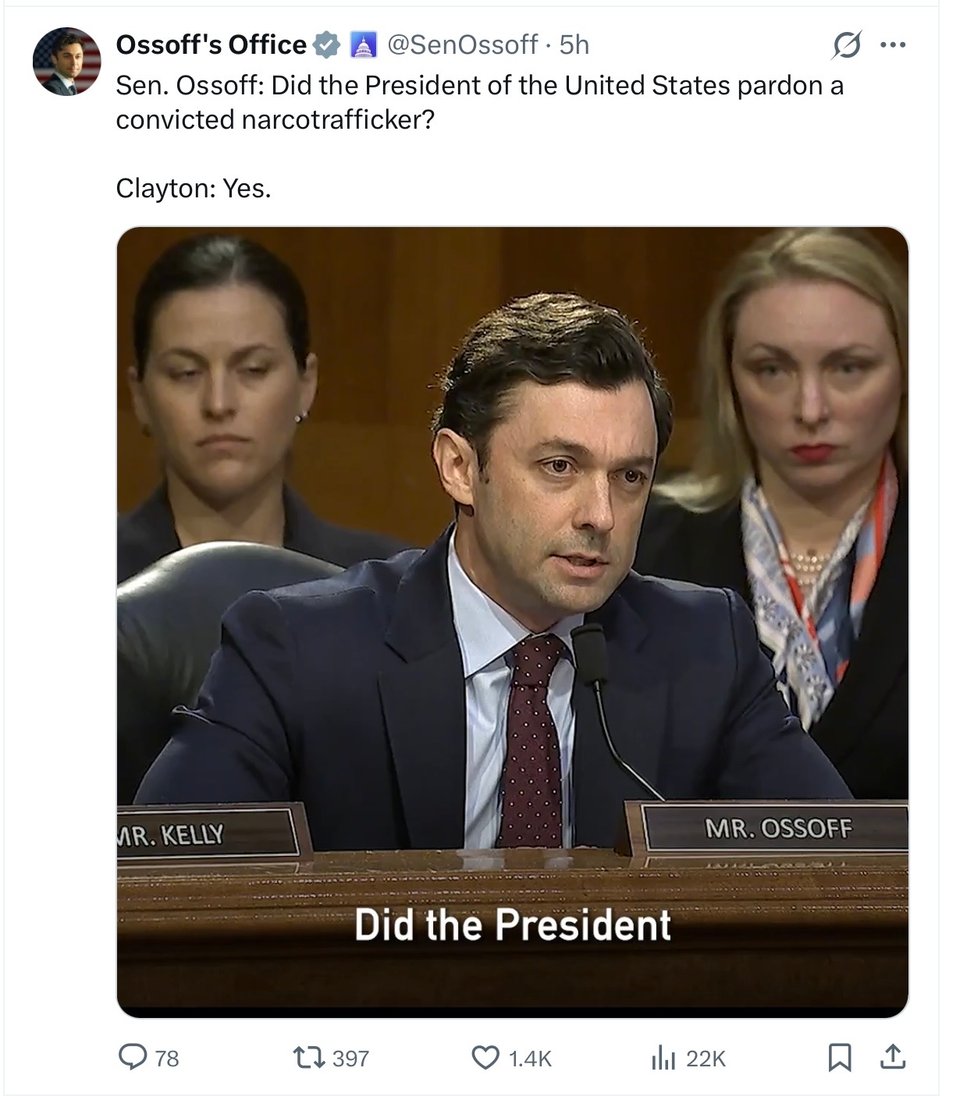
Senator Ossoff was the star of today’s hearing with Trump’s unqualified and unsuitable nomination for Attorney General, Todd Blanche.
Here are some highlights of Ossoff’s performance.
This will make you smile.
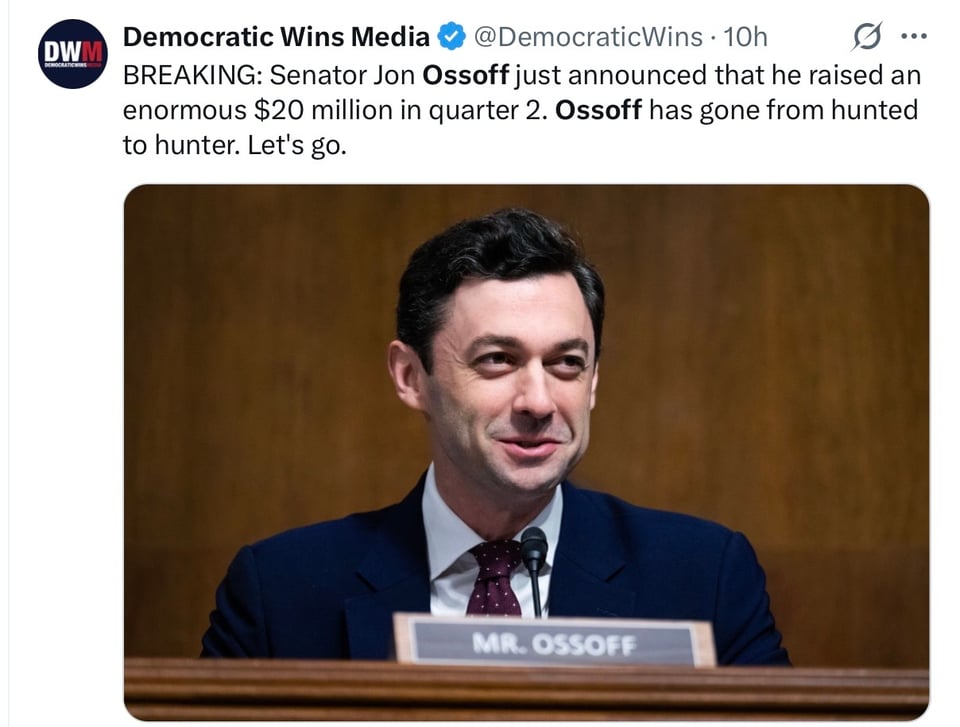
Support a winner for Democracy, give to Jon Ossoff’s campaign here.
The Blanche Hearings
New York Times Editorial- We’re About to Find Out Whether Republican Senators Can Still Say No.
On Monday, two days before the Senate hearing to consider Todd Blanche’s nomination to become the nation’s chief law enforcement official, a federal judge strongly suggested that he may not even be fit to practice law.
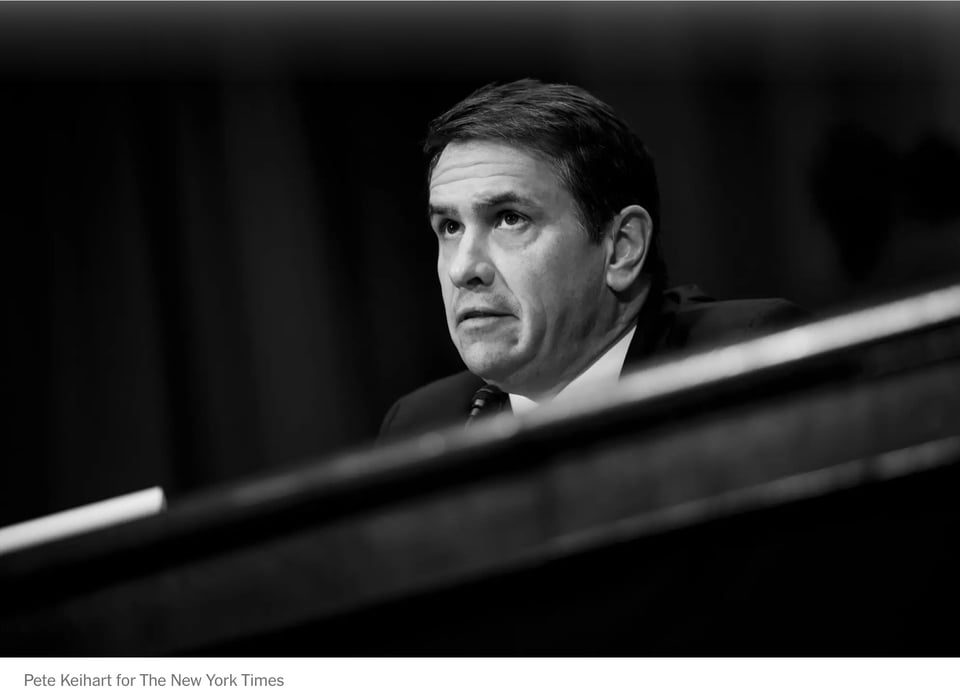
Earlier this year, Mr. Blanche agreed to a settlement that resulted in tax audit immunity for President Trump and his family as well as a potential $1.8 billion payout fund controlled by his administration. It was an inside deal: Mr. Trump the citizen was on one side of the negotiation, while the Internal Revenue Service, which he oversees, was on the other. Judge Kathleen Williams of the Southern District of Florida said in her ruling on Monday that she was “extremely troubled” by Mr. Blanche’s behavior. It was so egregious that she referred his actions to judicial officials in New York State for potential disciplinary action, including disbarment.
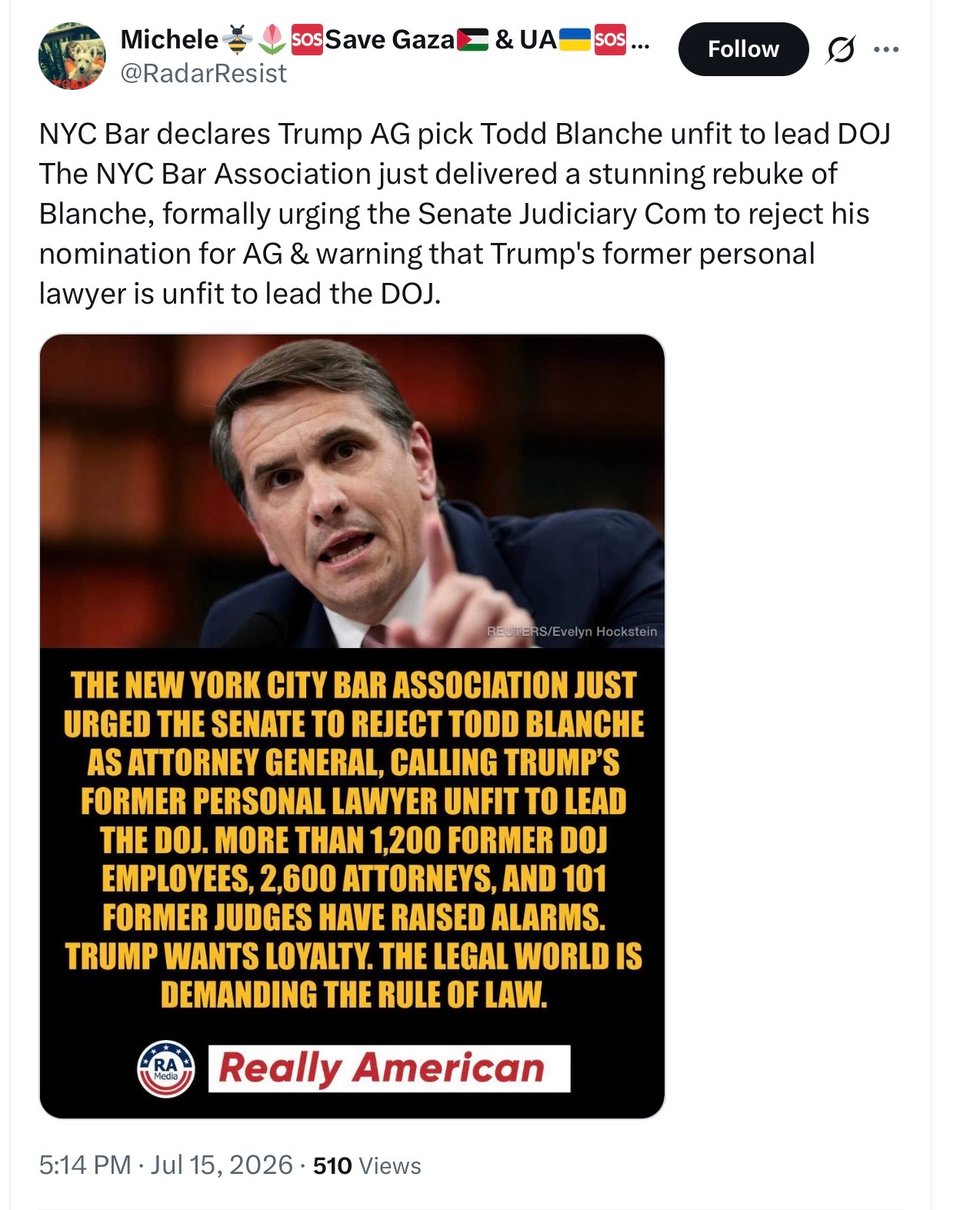
The scheme was one of many ways that Mr. Blanche, who was previously Mr. Trump’s personal lawyer and now serves as acting attorney general, has placed the interests of his former client above those of the country. It is yet another reason that senators of both parties should reject the president’s demand that Mr. Blanche be confirmed to lead the Department of Justice.
Of all the powers Americans give their government, none can curtail personal liberty like those of the Department of Justice, and this editorial board has listed the ways Mr. Blanche has abused that authority. He has celebrated the Jan. 6 rioters. He has misled Congress under oath. He has said it is Mr. Trump’s “right,” and “indeed it is his duty,” to use the department to investigate people he “has had issues with.”
Most Republican senators on the Judiciary Committee nonetheless appear likely to vote for Mr. Blanche. Yet at least two — John Cornyn of Texas and Thom Tillis of North Carolina — have already raised questions about the nomination. Mr. Cornyn and Mr. Tillis are in their final terms in office, partly because Mr. Trump considered them insufficiently subservient to him. They should have the decency, patriotism and self-respect to vote against Mr. Blanche.
To understand why Mr. Blanche poses such a threat to America’s system of justice, look at how sharply he and Mr. Trump have strayed from traditional restraints on the use of law enforcement powers.
Mr. Blanche’s relationship with the president stems from his role as a private lawyer. Over the past decade, Mr. Blanche first represented Trump allies like Paul Manafort before joining the team that defended Mr. Trump over his hush-money payments to the actress Stormy Daniels. After Mr. Trump won the election in 2024, he chose Mr. Blanche to be deputy attorney general.
Ethical guidelines exist to prevent government lawyers who previously were in private practice from using their offices to aid their former clients rather than their current one, the people of the United States. In Judge Williams’s suggestion that Mr. Blanche be a candidate for punishment, she cited these conflict-of-interest guidelines.
He has brazenly defied them at the Justice Department over the past year and a half. He has presided over the frivolous indictments of the former F.B.I. director James Comey and the investigations of the former C.I.A. director John Brennan and the former White House aide Cassidy Hutchinson, all perceived enemies of the president. The cases have gained no traction in the courts.
Mr. Blanche has also mounted an onslaught against the news media, attempting to undermine the First Amendment. Under his watch, the F.B.I. raided the home of a Washington Post reporter and issued multiple subpoenas against news organizations, including The Wall Street Journal. Last week, the F.B.I. director, Kash Patel, who works for Mr. Blanche, went to the White House to oversee an investigation that led to the subpoenaing of five New York Times reporters who broke the news that Mr. Trump’s new version of Air Force One had security flaws.
These acts represent an appalling politicization of law enforcement. Mr. Blanche has helped Mr. Trump violate decades of bipartisan tradition and use the Justice Department as an instrument of personal power.
If Mr. Blanche is confirmed, the problems are likely to worsen. Mr. Trump has repeatedly indicated an interest in interfering with this year’s midterm elections. He continues to lie about his 2020 defeat, and his administration, including Mr. Blanche, has investigated election officials who have done nothing wrong. There is every reason to worry that Mr. Blanche might use the powers of the Justice Department to intimidate voters or interfere with ballot counting this fall.
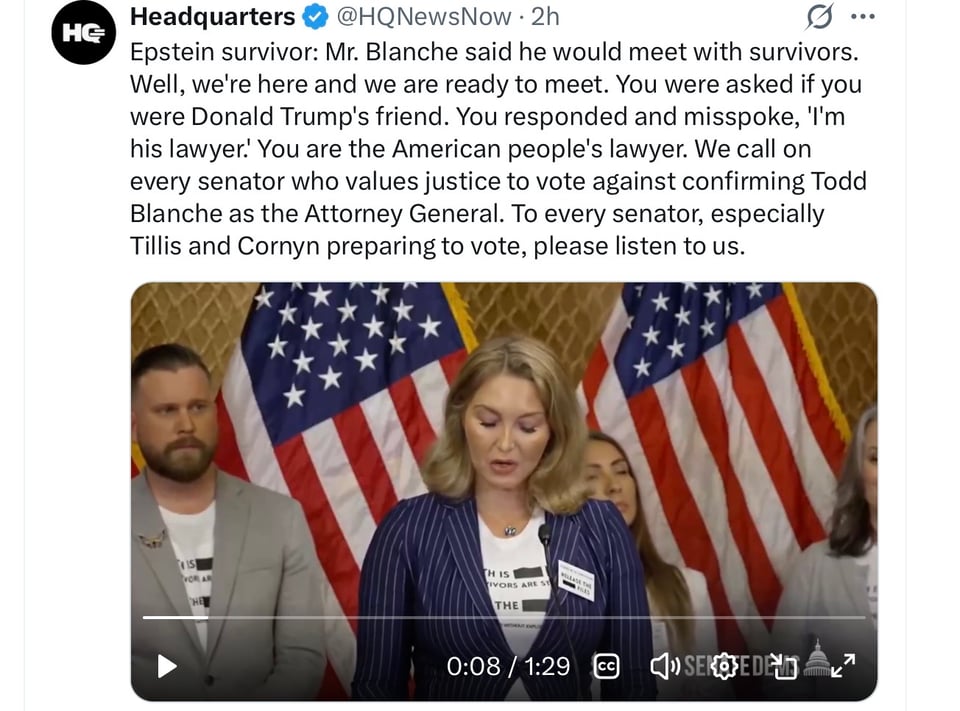
Congressional Republicans have shown that they can exert influence over Mr. Trump. It often takes only a modest number of them. Working with Democrats, Republicans ended Matt Gaetz’s effort to become attorney general after the 2024 election. They forced Mr. Trump’s Justice Department last year to release the Epstein files. They forced Mr. Trump and Mr. Blanche to retreat, at least for now, from their planned $1.8 billion slush fund that would have benefited Jan. 6 rioters.
This week, Republicans, starting with Mr. Cornyn and Mr. Tillis, have an opportunity to prevent Mr. Blanche from doing further damage. Americans can be grateful that the Constitution still provides robust protections of personal liberty, but its words mean little if members of Congress do not stand up to dangerous presidential power grabs. (New York Times Editorial)
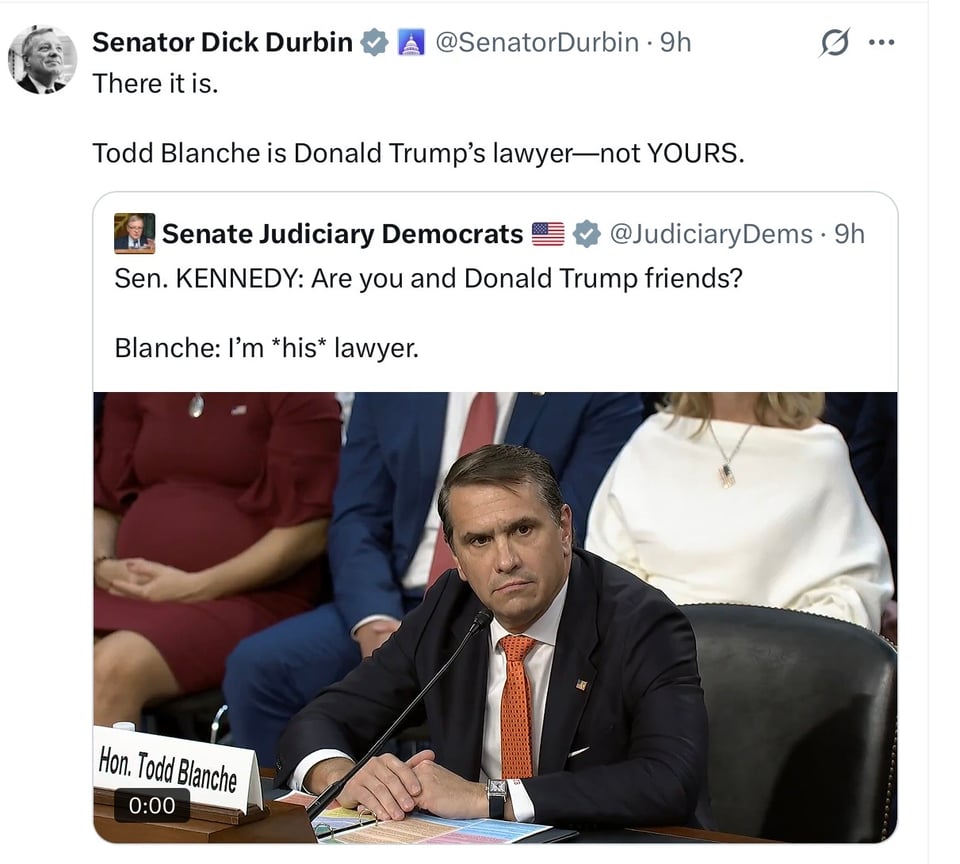
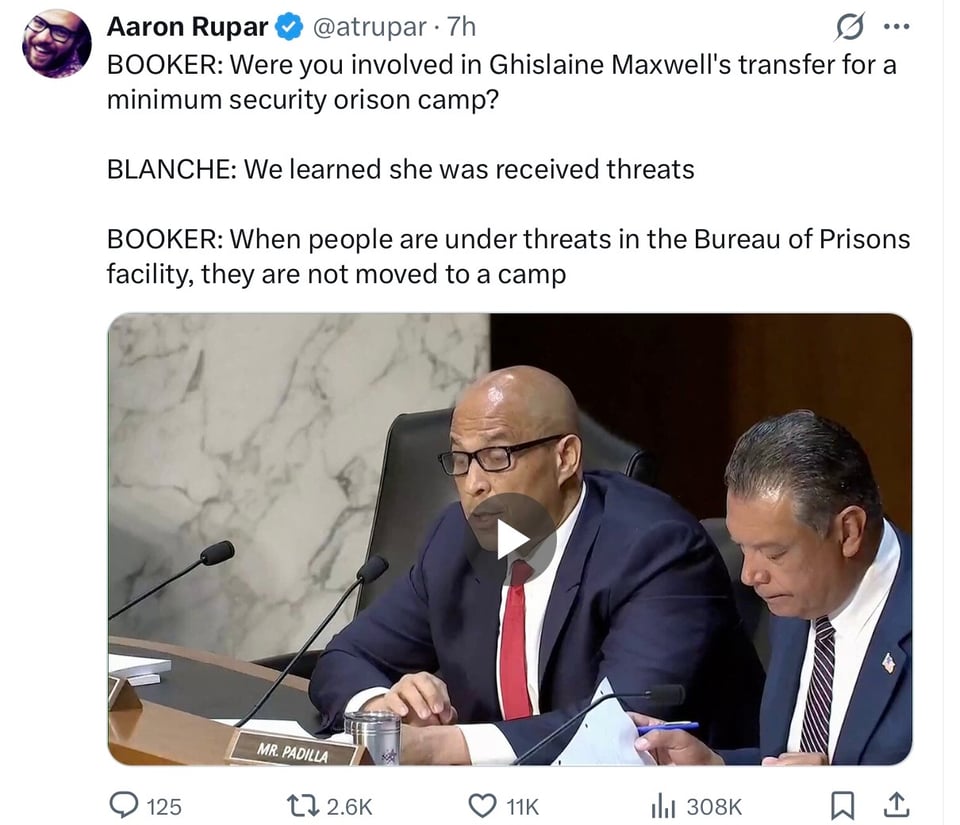
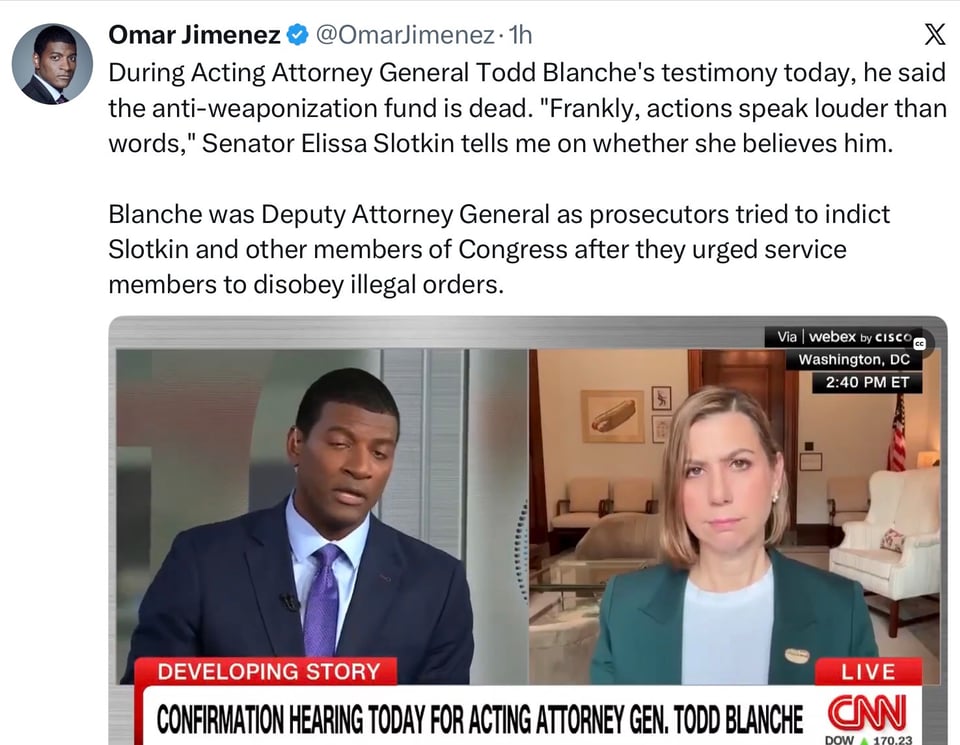
She doesn’t. But she forced him to say the Trump slush fund was dead so there is a record later.
New information about women's role in the Roman Empire.
Roman women managed wine and olive oil production on ancient farms, study finds
For years, historians described the Roman vilica, or female farm manager, as a housekeeper whose work focused on meals, cleaning, and supervising servants inside the home. A new study argues this view misses one of the most important jobs on a Roman estate. Evidence shows many vilicae managed large farming operations, especially the production of wine and olive oil, two of the estate’s main sources of income.
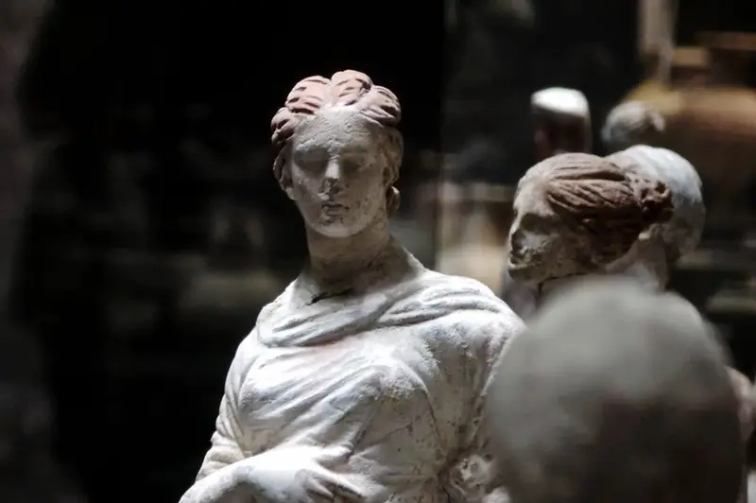
The study, published in the Journal of Roman Archaeology, brings together ancient texts, archaeological evidence, mosaics, wall paintings, and legal records. When these sources are read together, they show female managers played a much larger part in Roman farming than historians long believed.
The main source comes from the first century CE farming manual of Lucius Junius Moderatus Columella. Many earlier studies focused on his opening reference to the Greek writer Xenophon, who argued women belonged indoors managing household work. The new research points out that Columella clearly states those ideas came from Xenophon, who wrote more than 400 years earlier about wealthy families in Athens, not Roman farm estates.
Columella’s own instructions for the vilica tell a different story. He places her at the center of the estate’s processing work after crops came in from the fields. She supervised grape pressing during harvest, managed the fermentation of wine, mixed preservatives and flavorings such as salt, fennel, wormwood, and boiled grape juice, and oversaw olive oil production. These jobs took place in workshops and production buildings built for farm work rather than in the family’s living space.
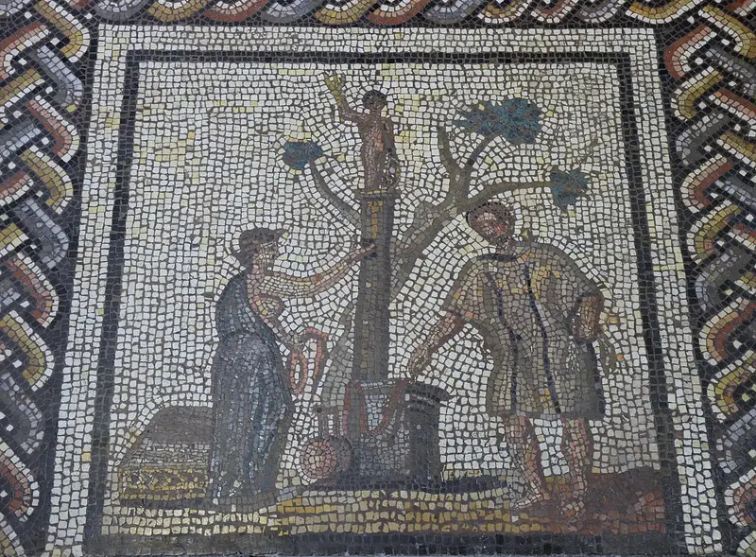
Female and male figures offering garlands to Jupiter for a successful harvest, shown in a 3rd-century CE calendar mosaic from Saint-Romain-en-Gal. Musée d’Archéologie Nationale, Saint-Germain-en-Laye. Credit: Carole Raddato, CC BY-SA 2.0
Archaeology matches this picture. Roman villas across the western Mediterranean contain large wine and olive oil facilities with heavy presses, storage rooms, and processing areas. Some estates produced between 50,000 and 100,000 liters of wine or oil each year. Managing work on this scale meant directing many workers and keeping production running through every stage.
The study argues that labor on Roman estates followed a different division than many historians assumed. The male manager, called the vilicus, supervised work in vineyards, orchards, and open fields. The vilica managed what happened after harvest, turning grapes and olives into products ready for storage and sale. She directed both female and male workers involved in these tasks.
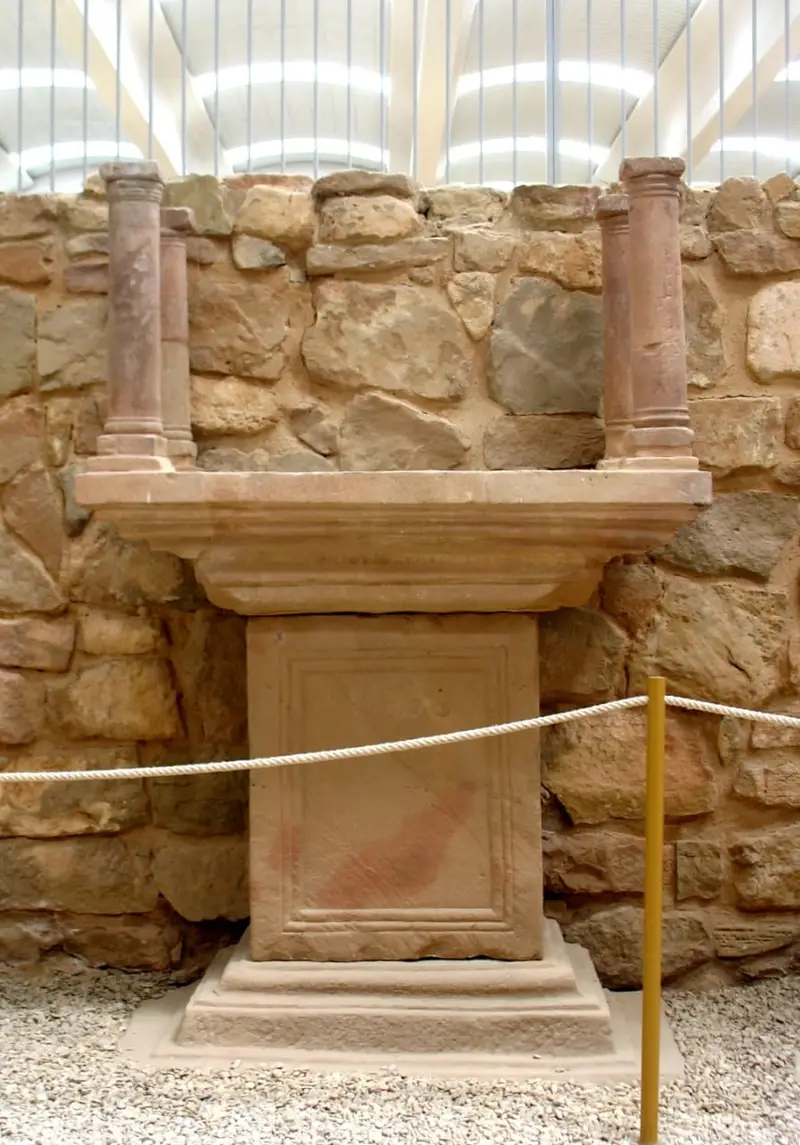
Religion formed part of her duties as well. Romans believed farm success depended on proper rituals. Columella instructed the vilica to perform ceremonies meant to protect wine during fermentation, a process easily ruined by changing temperatures, bacteria, or oxygen. Archaeologists have found altars inside Roman wine-making buildings, showing these rituals took place where production happened.
Earlier Roman writers support the same picture. Cato the Elder, writing more than two centuries before Columella, listed both the vilica and vilicus as key staff on vineyards and olive farms. He assigned the female manager responsibility for processing seasonal products, caring for poultry, maintaining work areas, and carrying out regular religious ceremonies for good harvests.
Other sources add more evidence. Roman legal texts counted the vilica among the people needed for productive farming. A Roman mosaic shows a woman carrying garlands during a harvest ritual beside a male figure. A surviving wall painting appears to show a woman directing workers during wine production.
No vilica left a written account of her daily work. Even so, records spanning five centuries present a clear picture. Female farm managers helped run the productive side of Roman estates and held an important place in the farming economy. (Archeology Magazine)
Jonathan Alter clarifies - when anti-zionists tilt toward antisemitism.
Do folks condemn Chinese writers because their government is dictatorial? Or actors from Hungary when Orban was in power? Or sculptors from Russia because their country is led by Putin?
So why blame Israeli writers and artists and film makers for the fact of Netanyahu?
When Anti-Zionists Become Censors
The president of PEN quit for reasons that are morally confused, hypocritical and, yes, casually anti-Semitic
This column is not about anything in the news from the Middle East. My current views are well-represented by Rahm Emanuel’s blistering critique of the Israeli government.
I’m concerned with something simple: whether writers should be free to write, whatever their nationality or the conduct of the governments they live under.
Last week, the Ethiopian-American novelist Dinaw Mengestu resigned as president of PEN America, the prestigious writers’ group that helps imprisoned authors abroad and fights book bans and other threats to free expression in the United States.
Mengestu, a MacArthur Fellow recipient and professor at Bard College, is said to be a good novelist and journalist. Before I tell you why I think he represents the moral confusion, hypocrisy, ahistorical thinking, and, yes, anti-Semitism of so many of today’s anti-Zionist intellectuals, let’s quote what Mengestu said in an interview with The New York Times after he assumed the position late last year:
“If we lose awareness of how important our culture of literary and artistic production is, our understanding of free expression goes with it.”
Mengestu thinks “literary and artistic production” is important. So far, so good. And even though I disagreed with the boycott that shut down the 2024 PEN literary festival (a boycott that George Packer rightly called authoritarian in spirit), let’s stipulate Mengestu’s argument that it was “very fair for writers to ask us [PEN] to do more” to speak out on behalf of Palestinian writers.
And his next point always bears repeating:
“Writers are the ones who hold us accountable.”
So let’s hold Mengestu accountable for his “understanding of free expression,” as he put it. Sad to say, he doesn’t understand it at all.
Mengestu resigned because he objected to an article on the PEN website entitled “A Silent Moratorium” that detailed how hard it is nowadays for all Israeli writers and many Jewish writers to get published. Thanks to a boycott, the article said, “the mainstream literary world is increasingly shutting them out because of their identity, nationality, or views.”
The article shows how ever since October 7, Israeli and Jewish writers have been disinvited from conferences, harassed on social media, review-bombed on Goodreads, and “subjected to online calls not to be read, platformed, or engaged with if they had ever shown support for Israel or Zionism. Some writers described being ignored by agents, publishers, literary journals, and magazines.”
Mengestu considered the article “unethical” because it discriminated against the Boycott, Divestment, Sanctions (BDS) movement. Here’s how he explained his reasoning that it’s BDS — not Jewish writers — now facing “discrimination”:
We have the responsibility to be conscious and aware of how our work can impact and influence those debates, and especially if that means producing work that might actually restrict or limit or suppress what is constitutionally protected speech.
Say, what? Mengestu’s point is incomprehensible and poorly argued because it’s lame. So let me translate: Boycotts are a form of free speech, and opposing them is a form of censorship.
So if an organization dedicated to fighting boycotts of writers decides to, uh, chronicle boycotts of writers, we’re supposed to believe that constitutes “suppressing speech”?
Somewhere, George Orwell is gagging. If you want to know why, read his essential essay, Politics and the English Language.
Speaking of Orwell: He was British at a time when Great Britain wrote the book on what is now called settler colonialism. So by Mengestu’s logic, if anti-imperialists had announced a boycott of British writers, it would be “unethical” to suggest that Orwell should be published in the United States or allowed to attend a conference here.
Would it be “suppressing free speech” to explain why American authors of the 1960s should not be blackballed even though the U.S. government was then killing nearly two million civilians in Southeast Asia?
Let’s bring it into the present and closer to home. As an American novelist whose work has been translated into more than a dozen languages, Mengestu would have good reason to feel aggrieved if foreign publishers suddenly said that, because Donald Trump is a menace, we won’t be publishing any books by you or other American authors.
In a similar vein, Columbia professor Mahmood Mamdani, father of the mayor of New York City, claims he draws a distinction between the State of Israel and the people of Israel, but he has called for boycotting academic conferences with Israeli attendees. How would he feel if he were disinvited to a conference abroad because he came from the country run by Trump?
Mengestu arrived in the U.S. in 1980 as a two-year-old when his family fled the Ethiopian Red Terror, a period of Marxist-Leninist political repression that led to the deaths of hundreds of thousands of civilians. Let’s say he had stayed in Ethiopia. How would he feel if his books were boycotted and he was harassed for being Ethiopian? Would that be anti-Ethiopian racism? Seems so.
I’m still trying to get my head around the idea that the president of PEN can’t tell the difference between boycotting products and boycotting speech. Economic boycotts have a long tradition, even if BDS won’t admit that its own leaders break the boycott by using iPhones that contain of Israeli parts. By contrast, boycotting, divesting, and sanctioning speech is just censorship with a trendy name.
It boils down to this: Mengestu is against book bans in red-state schools and for them in blue-state publishing houses.
I get the sense that Mengestu loves and respects writers as long as they aren’t Israeli. It doesn’t matter if they’re highly critical of their government. The fact that they are Israeli (and thus by definition “Zionist”) means that they and anyone else with a Z connection have relinquished their right to be protected by PEN.
Actually, it’s worse than that. Mengestu’s theatrical resignation is a way of saying not only that Israeli and Jewish writers don’t deserve attention, but that they must not be heard, and that this a matter of high constitutional principle.
In the end, Mengestu’s tortured logic grows out of the same exasperation that anti-Zionists feel any time someone brings up October 7 or the Holocaust.
They think that writing about Jewish suffering detracts from outrage over Palestinian suffering and thus must be silenced. And of course they’re certain that even poor Israeli writers scribbling in an attic somewhere are too rich and privileged to be “marginalized.” I guess being shunned everywhere in the world just because you’re born in a pariah state doesn’t rise to the level of marginalization.
There’s a long history of telling Jews to shut up about their misfortune and stop calling out discrimination against them. It’s a familiar feature of anti-Semitism. Dinaw Mengestu might not know that, but he should. (Old Goats with Jonathan Alter)

