The Biography of Things
Have you ever considered why some things are so much harder to let go of than others?

Hey there,
Have you ever considered why some things are so much harder to let go of than others?
I promise I am not a hoarder, but I enjoy collecting things. Years later, going through them brings back places, people, and memories I haven't thought about in a long time. I always wondered exactly where these attachments come from, and whether that's why some things are easier to give away or throw away than others.
In 2019, Netflix started streaming Tidying Up with Marie Kondo, where she taught people how to organize, clean, and let go of things more easily. The part about letting things go was what amazed me the most. Marie Kondo encouraged people to focus on what they choose to keep rather than what they throw away. You were supposed to hold each item, ask yourself if it brought you joy, thank the things you decided to discard for the service they provided, and let go of the guilt of not using them.
I had trouble with the idea of things "speaking to you" or bringing you happiness. It wasn't because I didn't like these things. I just didn't know what she meant. But as one curious mind does, I would still try to understand. I would sit on the floor surrounded by my belongings, hold each item, and… feel nothing. No butterflies. No warmth in my stomach. Nothing was sparking within me.
Until I realized that, for me, it wasn't really about the object itself. It was about the memory it held, and maybe that's what Marie Kondo meant as well.
That’s when I wondered whether our brains can turn ordinary objects into containers for memory, identity, and comfort. Can a thing absorb the emotional tone of whatever was happening when it mattered, and then it just holds it for us?
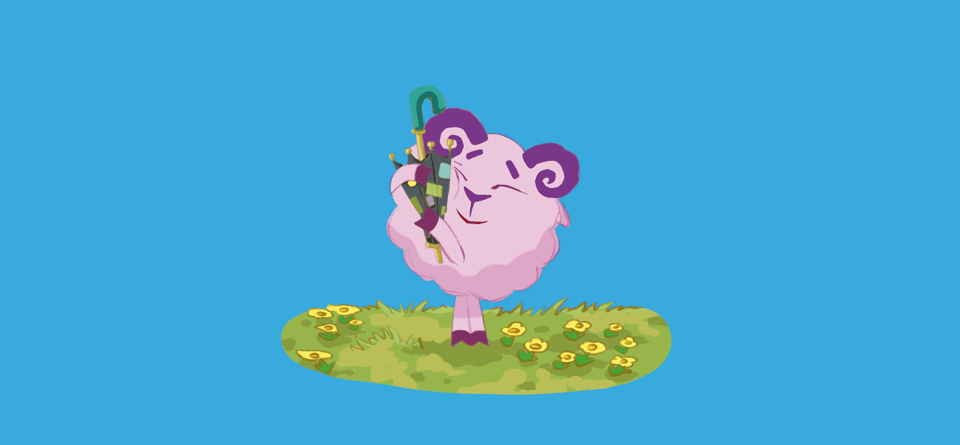
There was a cartoon I watched as a kid called Смешарики, or KikoRiki for English-speaking audiences. One episode, "Biography of an Umbrella," was about Barash, a sentimental poet sheep who had an old, tattered umbrella covered in rips and patches.
His friends give him a brand-new umbrella, but he refuses to use it. The old one was much more than an umbrella to him. Every tear, scratch, and patch represented something that happened in his life, a memory, an adventure, a moment. It has become part of his biography.
Eventually, a massive storm comes, and the old umbrella catches the wind, carrying Barash away. His friends try to save him and are swept into the sea with him. Barash finally has to let go of the umbrella to save them.
And when he begins using the new umbrella, he realizes that it, too, will eventually gather its own stories and memories.
I think that's what happens with our things. We don't necessarily become attached to the object itself. We become attached to everything that happened while the object was with us. And it acts as a reminder of those times.
I believe that's why some things are easier to let go of than others. It isn't necessarily about how useful, expensive, or beautiful something is. Sometimes an object is carrying a memory we aren't ready to put down. Sometimes it belongs to a version of ourselves we don't want to lose. And sometimes we simply no longer need the object because the memory has already found another place to live.
And I don't mean superstition. That's a different kind of holding on.
I think people mix up sentiment and superstition because they look alike from the outside. Both make you protect something, refuse to throw it away, hold onto it a little too tightly. But sentiment looks backward, toward what already happened. Superstition looks forward, toward what you're still hoping will happen.
Sometimes one quietly turns into the other. A ring might start out as your mother's, which is sentiment, plain and simple. Then you happen to be wearing it the day everything finally goes right, and some part of you decides that wasn't a coincidence. The ring hasn't changed. What you're asking of it has.
I have jewelry like that too, pieces given to me specifically for protection, not memory. I can lose an earring with the evil eye, thank it for protecting me, and continue on.
And perhaps letting go is not about deciding that something never mattered. Sometimes it’s the opposite. We let something go precisely because it mattered, and we know that its purpose in our life has already been fulfilled.
Maybe that's why it feels like the right time to go through my own things with fresh eyes. Rearrange what is important and what reminds me of good times. There's a suitcase I've dragged everywhere since I was a kid, held together by will and stubbornness at this point, that I'm finally ready to let go of. In its place, a small collection of pins, one from every place I've visited, is quietly becoming its own kind of map. And a shelf of small figurines from college, the ones that used to hold all that chaotic, sweet dorm-room energy, is now empty. A set of beaded rings a friend and I made together in university holds that whole stretch of time instead.
Let this be a reminder to look at what still matters to you and appreciate what you already have. Then make a little room for what's still coming.
— Zhenia