Floriography: A Language That Doesn’t Need Decoding”
Do you know what your favorite flower means?
Hey stranger,
Do you know what your favorite flower means?
The spring has come, and with it, more flowers have bloomed.
There are flowers in every store, at a farmers' market stall, and on the side of the road. Plastic replicas are hiding among them, and even Lego came up with some more unwithering flowers to decorate the room.
With the change of seasons comes a new wave of trends and content. One of them is the language of flowers, floriography, or more simply, the meanings we’ve assigned to blooms over time. It’s not new, but like many beautiful things, it keeps returning in new forms.
I’ve come across all kinds of interpretations, such as guides on what to give to express hidden feelings, breakdowns of bouquet symbolism, and even debates about whether people “got it right.” And I’ll admit, that’s where I start to feel a little out of place. Because to me, the meaning of a flower has always felt a bit more personal than that. Isn’t it shaped, first and foremost, by the person giving it?
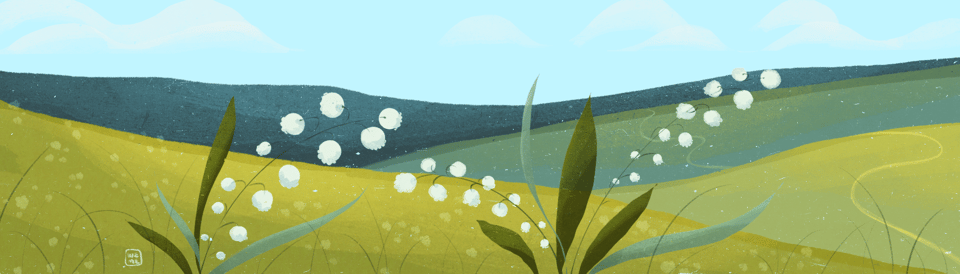
This curiosity led me a little further back, into the 19th-century Victorian era, when floriography wasn’t just aesthetic, but practical. At a time when certain emotions were better left unsaid, flowers became a secret language of their own. A red tulip could carry a confession, a lily of the valley a quiet return to happiness, and even a sunflower did not represent care or friendship but commented on one’s great pride.
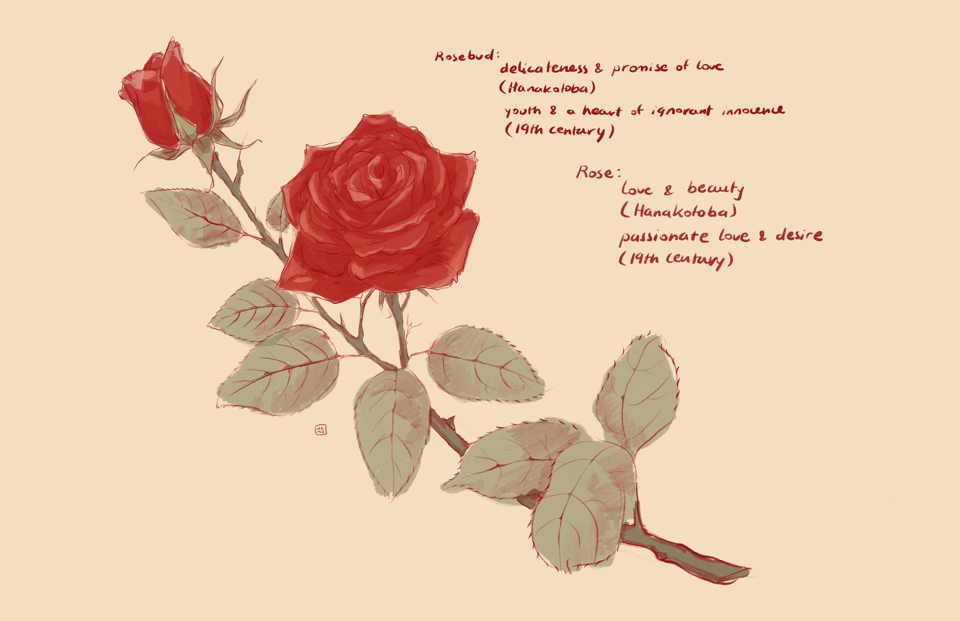
And it wasn’t just a Western tradition. In Japan, there’s Hanakotoba, the centuries-old cultural tradition that assigns meanings to flowers and is commonplace in culture, literature like “Haiku“, art, and everyday life. It is a language of flowers shaped by a different culture, but with a similar instinct to let meaning bloom where words might hesitate. There, the same flower can carry entirely different emotions, shaped by history, symbolism, and storytelling rather than a fixed code.
The more I read, the more I realized that flower language has never really been one fixed dictionary. It shifts across places, across time, and even from person to person.
I love the idea of floriography. Learning about its roots in the 19th-century Victorian era, when people used flowers to say what they couldn’t say aloud, made me appreciate it more. I’ve even started incorporating those meanings into the bouquets I give. But I don’t expect anyone to decode them. If anything, I’ll still write a note or say the words myself. Maybe that’s the biggest difference between then and now: flowers once carried the whole message, while today they get to accompany it.
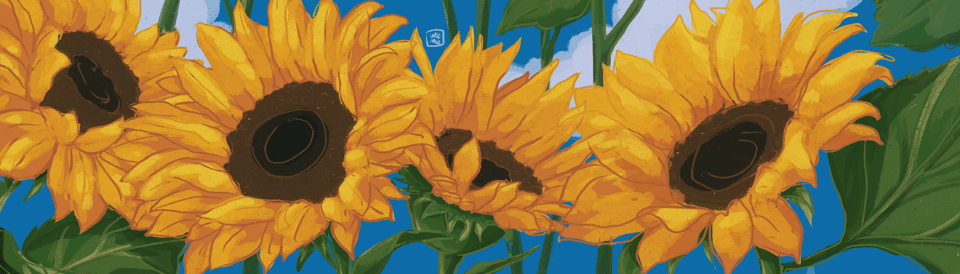
After International Women’s Day, on March 8th, I received lots of sunflowers, real ones, and even a Lego set. They drastically brightened the room and my mood. I’ve always loved them as they are big, radiant, and cozy, like a little sun on the stem. I now know that sunflowers have meant many things over time. In one place, they spoke of pride. In another, devotion or loyalty. But none of those meanings are on my mind when I look at them. My loved ones know these flowers bring me joy, so they bring me sunflowers. No decoding required. No hidden message to get right. Just a simple, shared understanding.
Maybe that’s what I keep coming back to.
We can learn the meanings, borrow them, even play with them, but we don’t have to inherit them unchanged. Flowers have always carried stories. Some were written centuries ago. Others are much smaller, quieter, and passed between two people who already understand each other.
And maybe that’s enough.
— Zhenia
P.S. During my research, I’ve seen plenty of little books about flower and even plant language sold here and there. They all say the same thing over and over again, but a couple I found that were kept within a family were the most unique and sweet. They had personal notes and improvised combinations that completely changed the meaning. So, I started to wonder if I should make one as well. Something small and personal, shared only with the people I trust. A secret language that only a select few know how to read.