newsletter #001: landscapes, sappho, & oaks
a recap of recent screenings
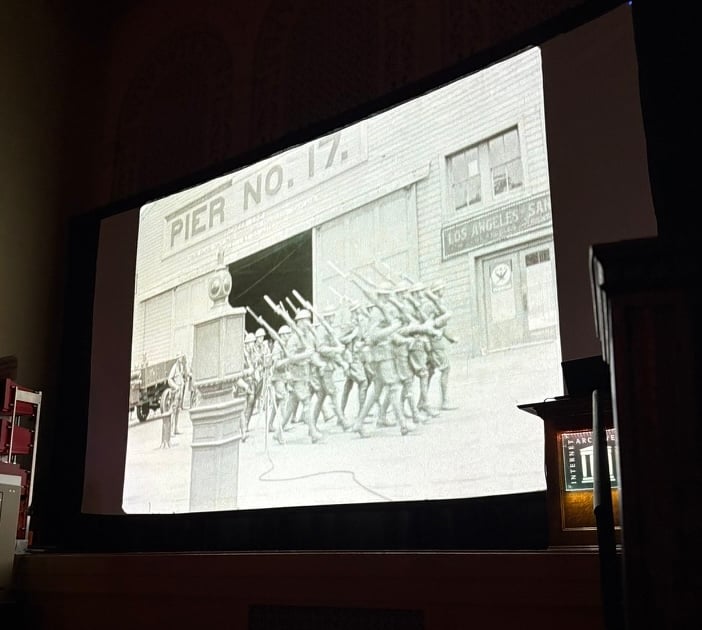
January: I’ll start with a screening I attended: Lost Landscapes by Rick Prelinger for its 20th anniversary.
This screening was held at the church-turned Internet Archive headquarters in San Francisco. The last time I was at the Internet Archive was when I was getting training by Rick Prelinger to scan 16mm film in 2018. At Lost Landscapes, I got to chat with one of the most impactful librarians of our current age, Brewster Kahle, the founder of the Internet Archive, as I was sitting one pew behind him at the screening. We were surrounded by ceramic figures of its employees, past and present, and packed seats awaiting the collage of clips of long lost landscapes of the San Francisco Bay Area. Rick shared musings and wisdom before his screening, and this one has stayed with me:
it’s not promised that those who learn history will not repeat it; in fact, some will look to it as a playbook.
In these dark and overwhelming times, it’s worth re-evaluating truths we’ve held on too dearly and come up with new ones. It’s worth remembering that worlds have ended and started before us, and people have survived under horrific circumstances. For me, doing memory work has meant witnessing past histories of resistance, alternative lives lived, and a constant acknowledgment of the timeline beyond my own lifetime. Archives have been an important tool for me to connect with the specificity of those who have come before me and to constantly consider those who will come after. To be a bridge.
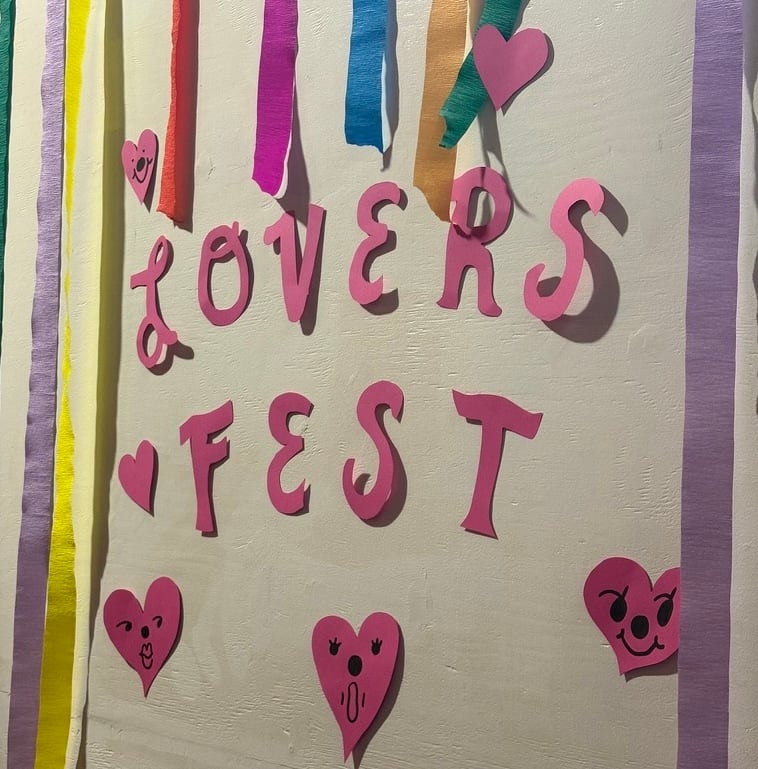
February: sappho on film at Lover’s Fest, The Red Museum
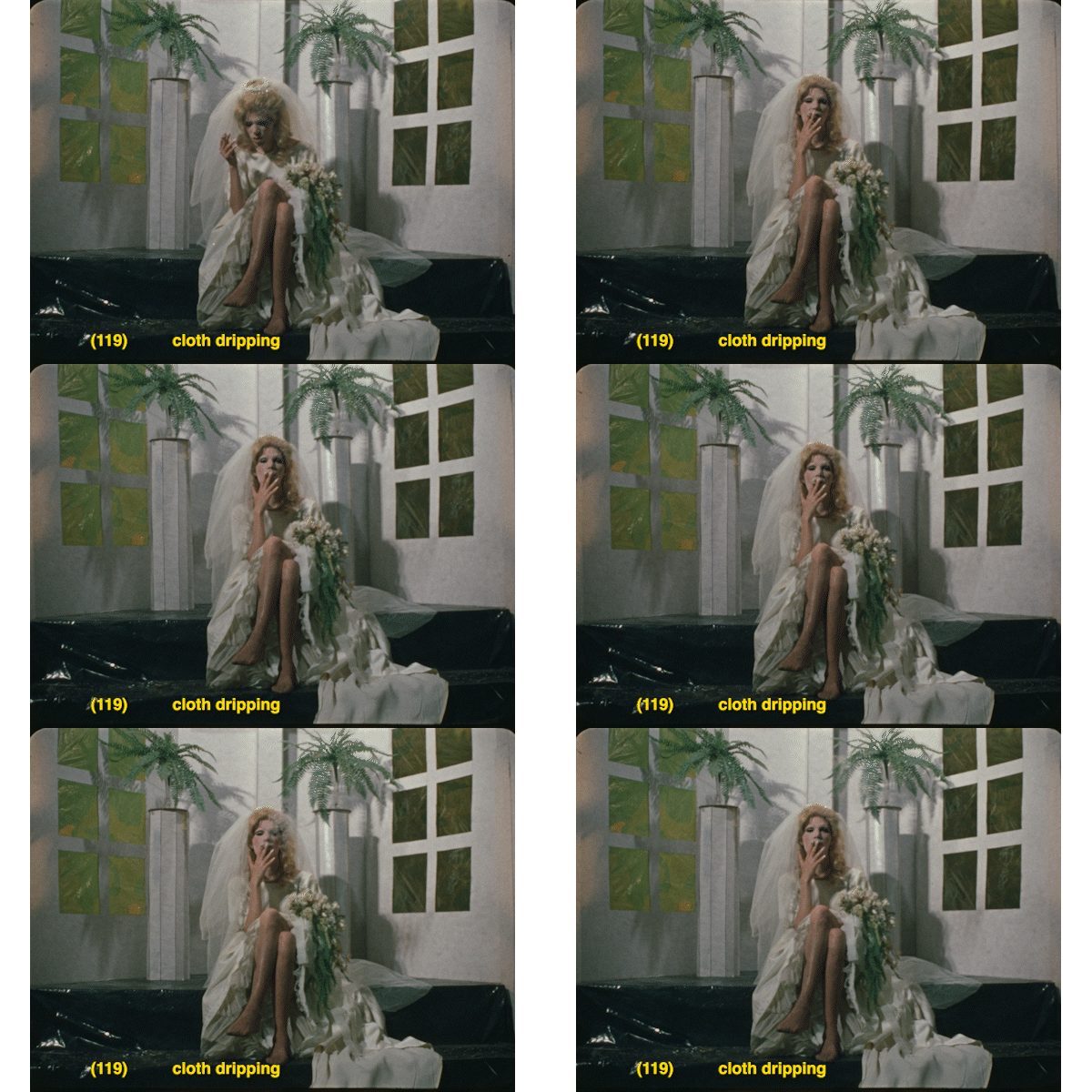
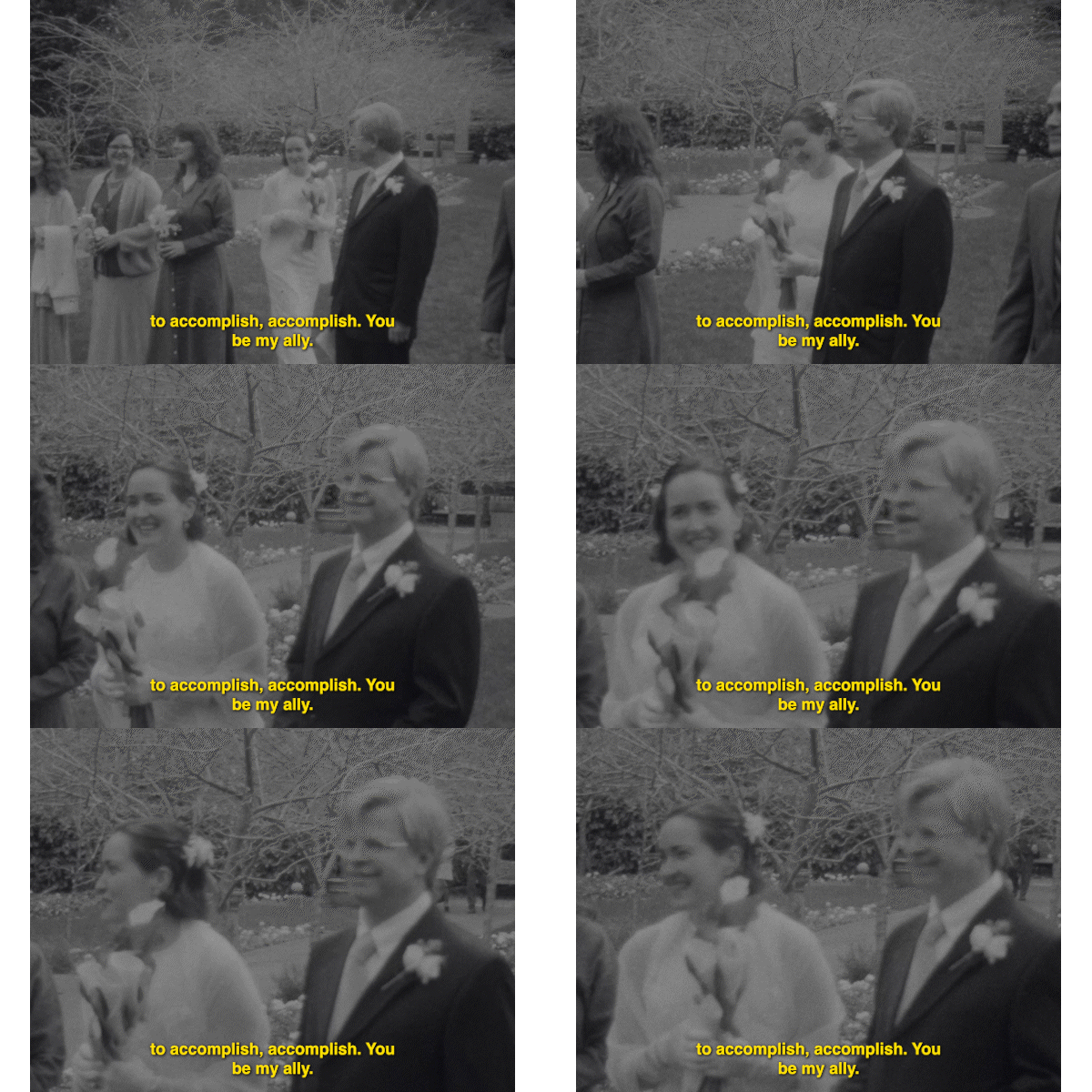
Alisa Turner and Avery McPherson invited me to participate in a group show called Lover’s Fest at The Red Museum in February. I created a film collage using digitized 8mm, super 8mm, and 16mm footage of weddings, parties, and lovers sourced from The Prelinger Archives, who specialize in ephemeral, useful, and home movie films. Overlaid are Sappho’s poems, which are some of the earliest records of first-person lyric poetry and exist almost entirely in fragments. These poems have been translated by Anne Carson.
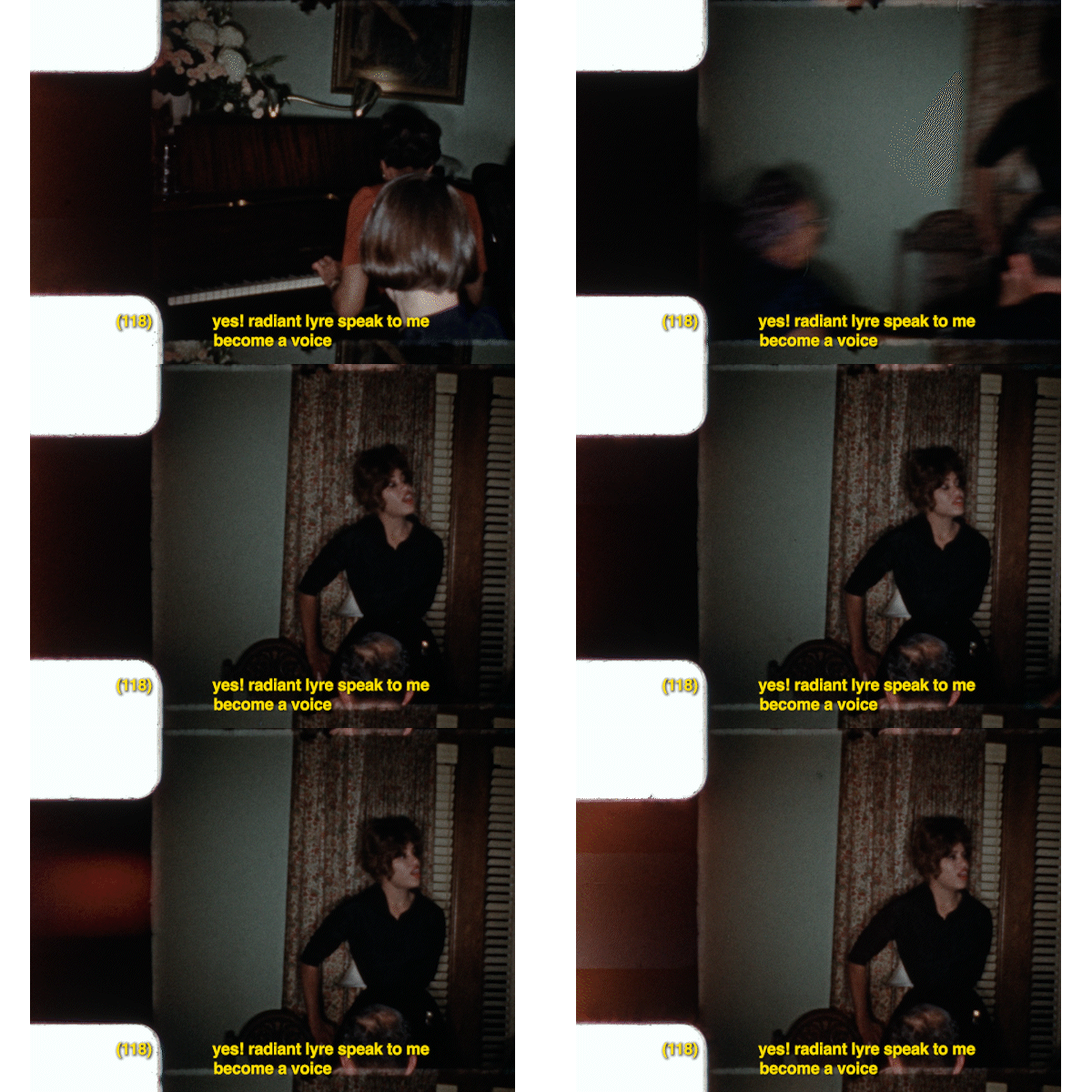
Aside from Sappho’s heartbreaking and alluring poetry, Sappho is a central figure for all of my longings: my interests in the histories of women, sexuality, poets, artists, origins of current culture, and the meaning we make of the material of fragments left behind. She is the author of one of my favorite lines of poetry, as an archivist:
someone will remember us, I say
even in another time
![A gif made from an 8mm black and white home movie of a white woman with her hair in pin curls smiling with yellow subtitle text that reads "] among mortal women, know this / ] from every care / ] you could release me" from the ~1930s](https://attachments.buttondown.com/images/c7b7e33b-b12d-40b5-b775-103e8eccefd8.gif?w=960&fit=max)
What is most special to me is that I was able to include footage of Megan and Rick Prelinger’s own wedding, which is featured in the last sequence of the collage. If you were unable to attend, I have an unlisted video of sappho on film for your own viewing pleasure. I hope there’s reason to screen it again. Thank you to Alisa, Avery, Rick, and Megan. Thank you to my own lover, Kyle Ray, for helping me assemble the poetry and films.
March: Thelmarama Cinema Club @ The Crocker Art Museum Touching Grass featuring Oaks: Heritage Trees of the Sacramento Valley (1975)
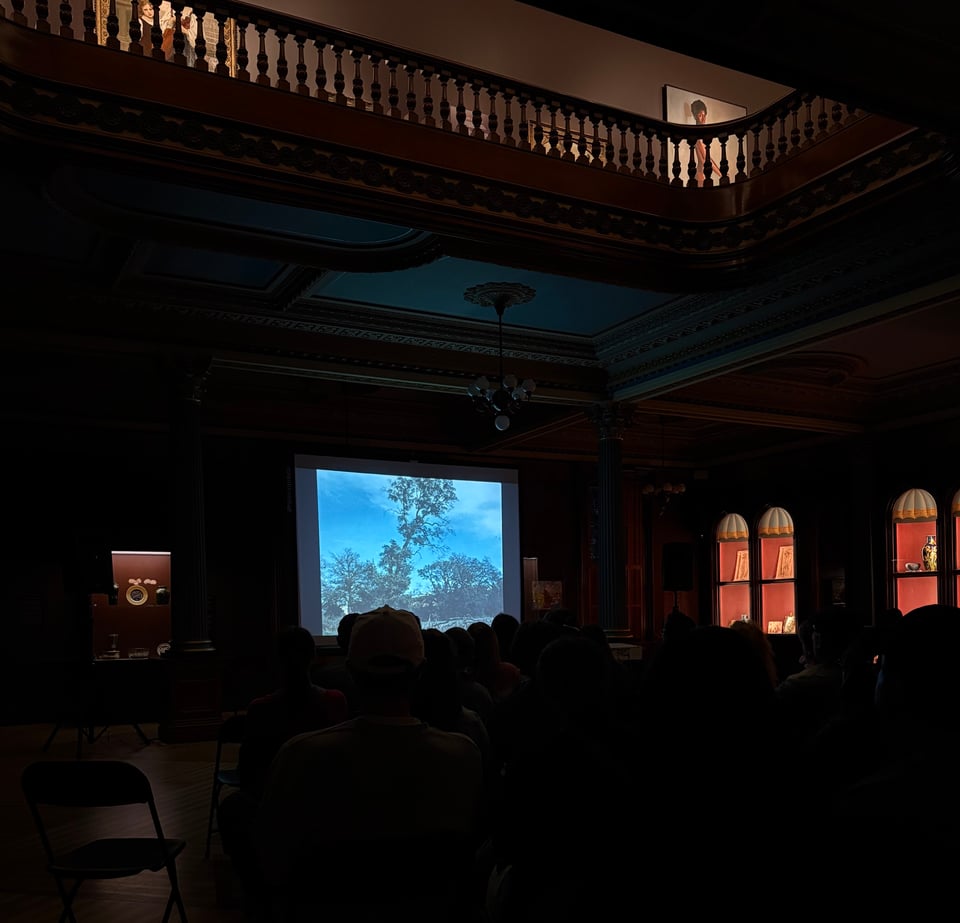
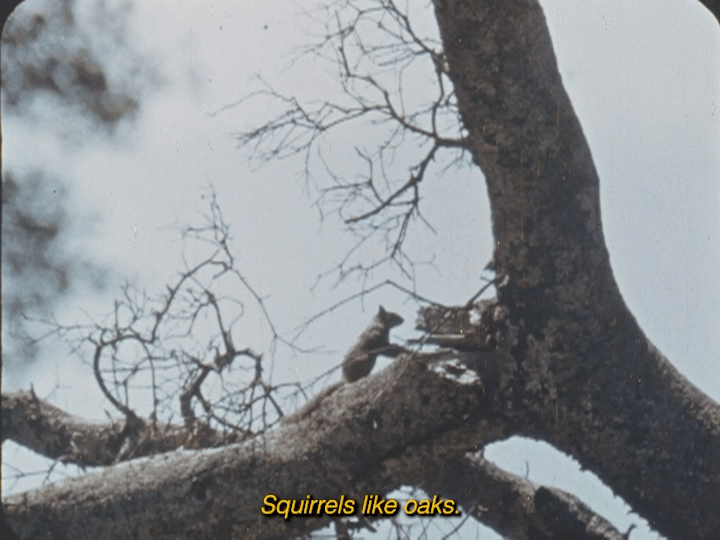
Sarah Kamiya and Jordan Mata invited me to add to their film club programming in March while they are in residence at the Crocker Art Museum. Their programming centered on films related to the landscape paintings in the collection, which they titled “Touching Grass”. I chose to include Oaks, Heritage Trees of Sacramento Valley (1975) produced by the Sacramento County Office of Education, sourced from the Yolo County Archives, and digitized through California Revealed. Its original forms are a film strip and audiocassette, an analog powerpoint with loud “dings” to indicate we’re ready for the next slide. After editing sappho on film it was a relief to return to some classic 1970s educational film content that still had something to say, and we got out on the other end with a couple laughs, knowing a bit more about the native trees in our landscape— how to identify them, who lives in and around them, and how to take better care of them.
It is so special to have the opportunity to watch these films in a group. In my previous work at California Revealed as the Audiovisual Preservation Assistant, one of my main jobs was reviewing digitized material for quality assurance. When I’d find something special, I’d find myself looking around my office, saying to an absent audience: “do you see this??” and then feel deflated I didn’t have others to share the experience with. Because Jordan and Sarah invited me to contribute, I got to share my fascination with friends and strangers (new friends).
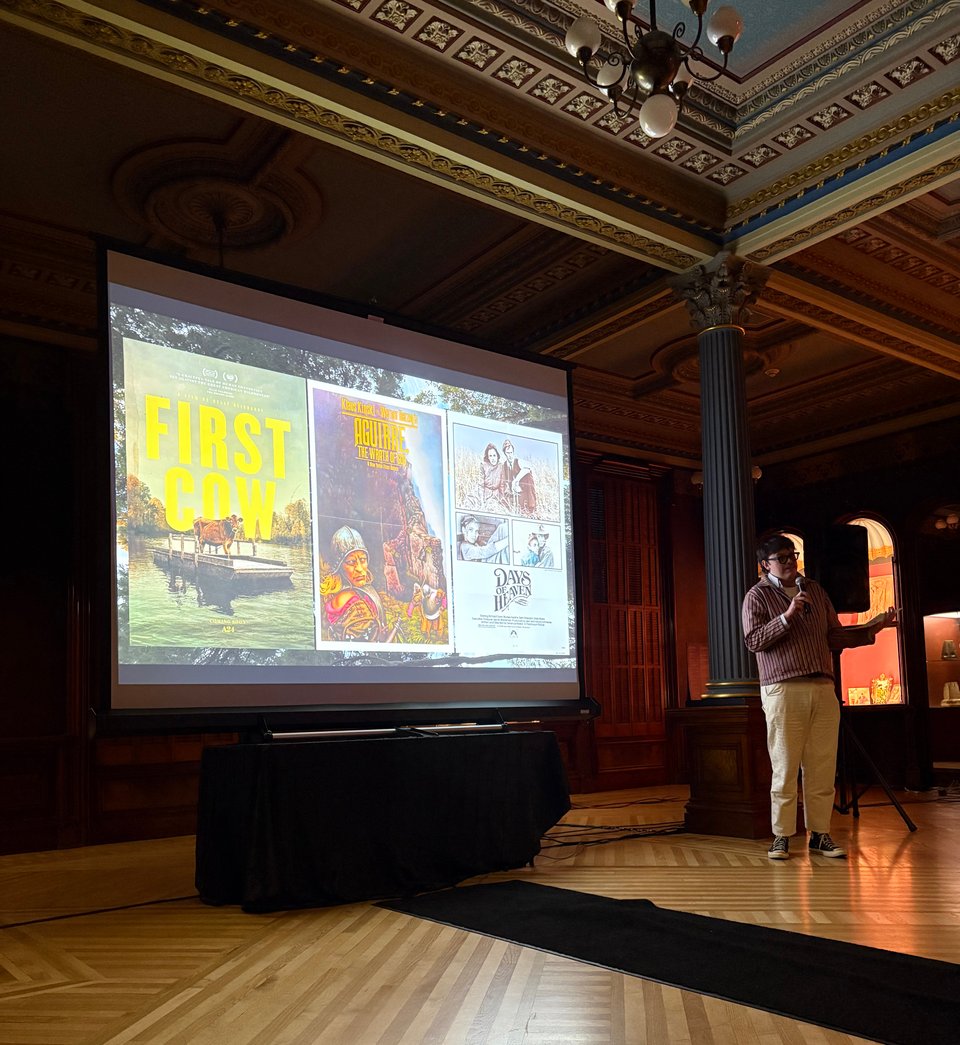
Following up the archival short with First Cow felt just right. As Jordan pointed out in his introduction to the film, this First Cow was theatrically released in March 2020, which meant it got swallowed by the COVID-19 lockdown. Set in 1820s Oregon country, this film easily could have focused our eyes and ears on the most horrific violence that was surely taking place, but instead we’re placed in the forest, walking through the mud on the riverbank, watching two strangers form a strong companionship: Otis "Cookie" Figowitz and King Lu. If you haven’t seen this yet, please please go see it.
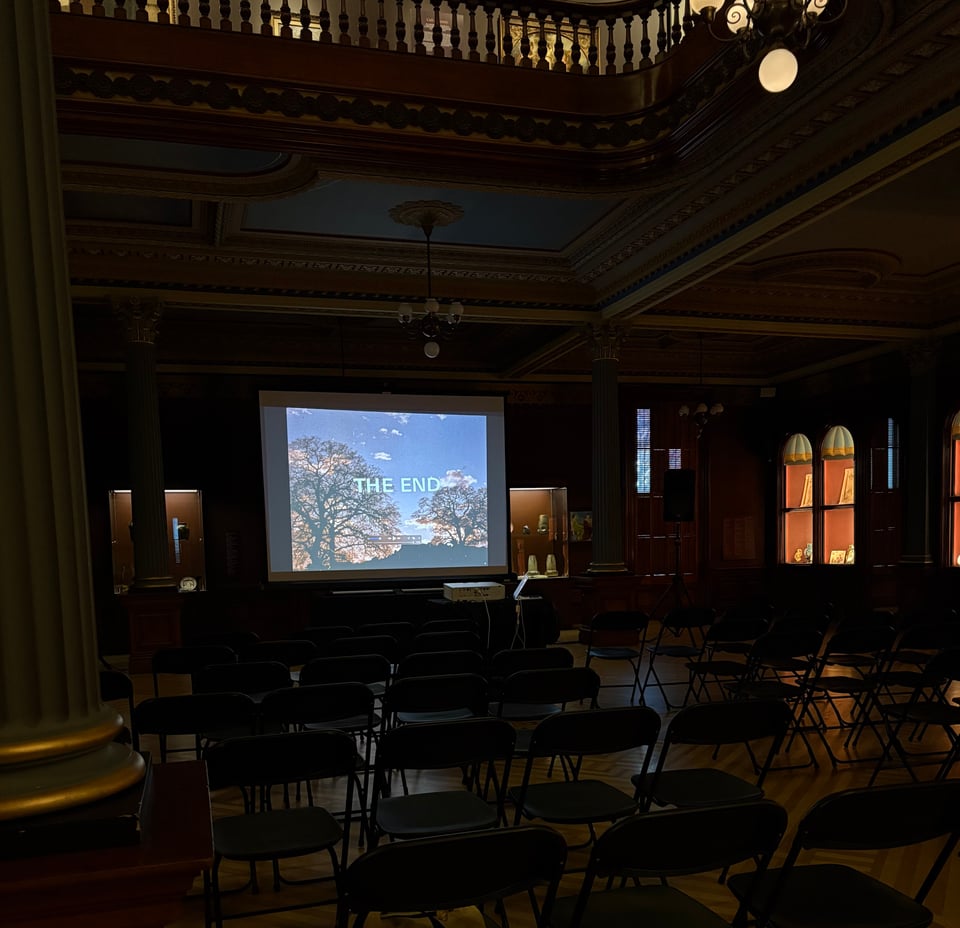
If you are around Sacramento this week, don’t miss the next Thelmarama, May 7th: Rituals and Repetition, with a pre-screening tea ceremony with Taohua Tea by Ziru Mo and Olive Olsen.

There’s more to report for April — talks instead of screenings — that I hope to include in my next newsletter.
Until next time. Thanks for tuning in to this one.
-Willow