Book for Sale, Holiday Gift Guide, and Gratitude
The Deaf Baby Instruction Manual is now available for pre-order! Also, a meditation on gratitude, and other things to buy for people.
Purchase Today! Receive Later!
I’m happy to announce that The Deaf Baby Instruction Manual is now available for pre-order at Bloomsbury.com, Bookshop.org, Barnes & Nobel, or the bad place. The book will be published in April 2026, so buy a copy now—for yourself or your favorite parent, caregiver or educator—and it will arrive in time for IEP season.
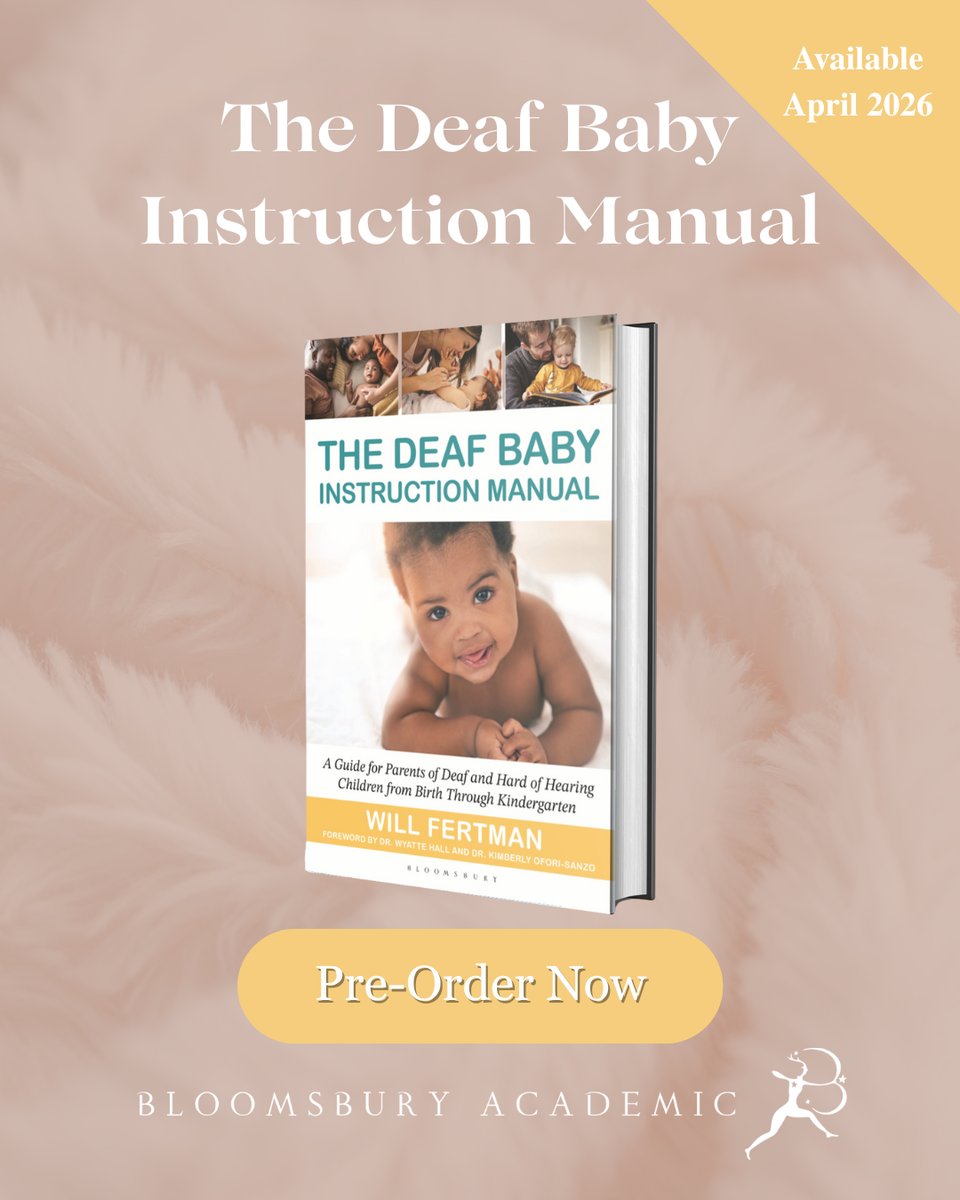
They tell me that pre-orders are important for a book’s overall success, and a strong showing will help me keep writing stuff about deaf kids. So if you were planning to buy the DBIM, now’s a great time to do it.
Holiday Gift Guide
I actually meant to do this list last year, but it turned into the Jon Klassen & Mac Barnett show.
This year, to keep it simple, I’ve picked one item from some of my favorite Deaf artists as a gift idea, and added links to their full store just so you don’t have to buy another Starbuck’s gift card or ILY T-shirt from Target. For more recommendations for parents of deaf children you can check out my website.
Games & Accessories
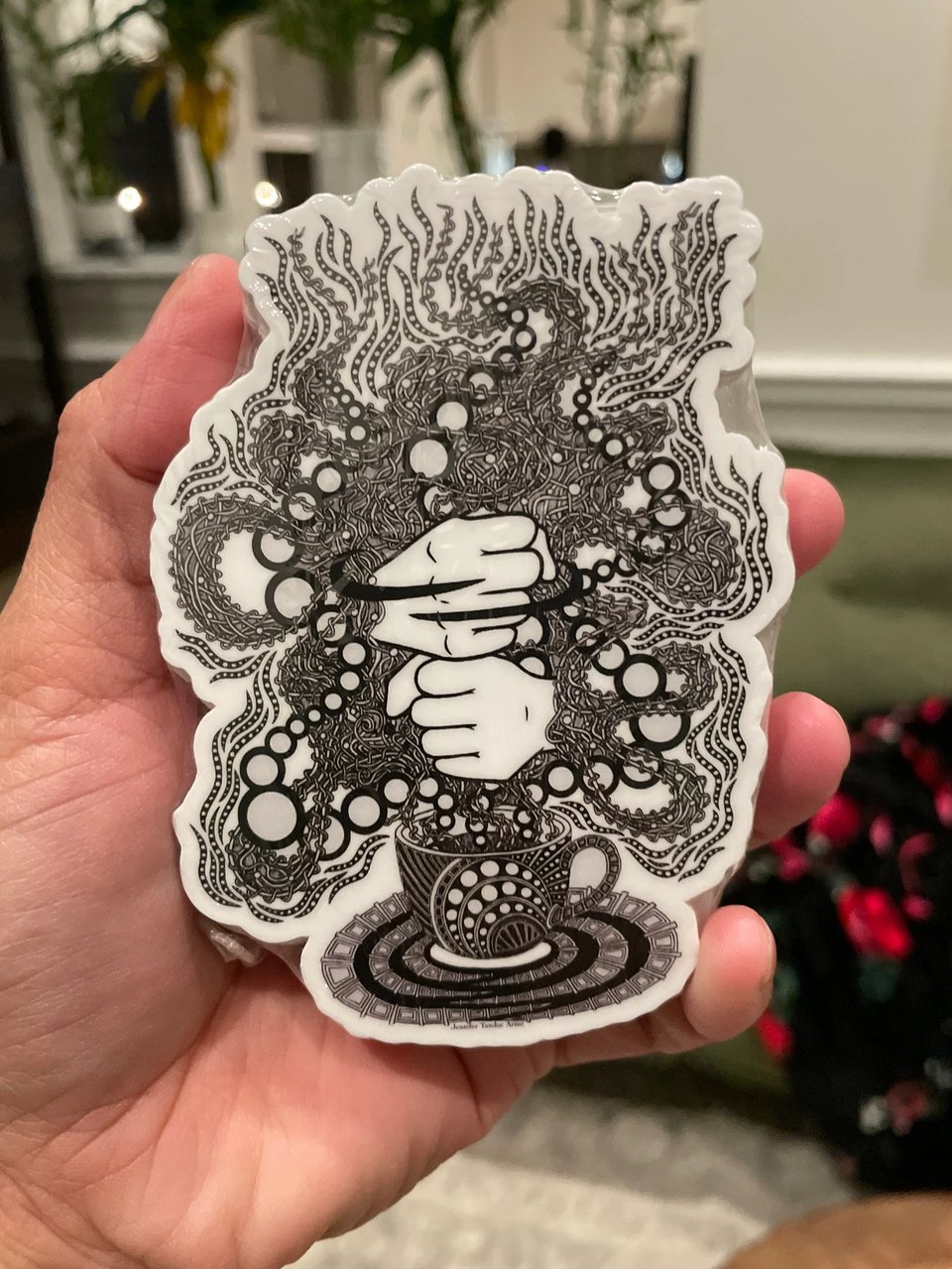
JT9artist / Jennifer Tandoc’s trippy ASL poster and sticker designs are great, like this COFFEE sticker, which makes me think there’s something a little stronger in the cup than half-and-half:
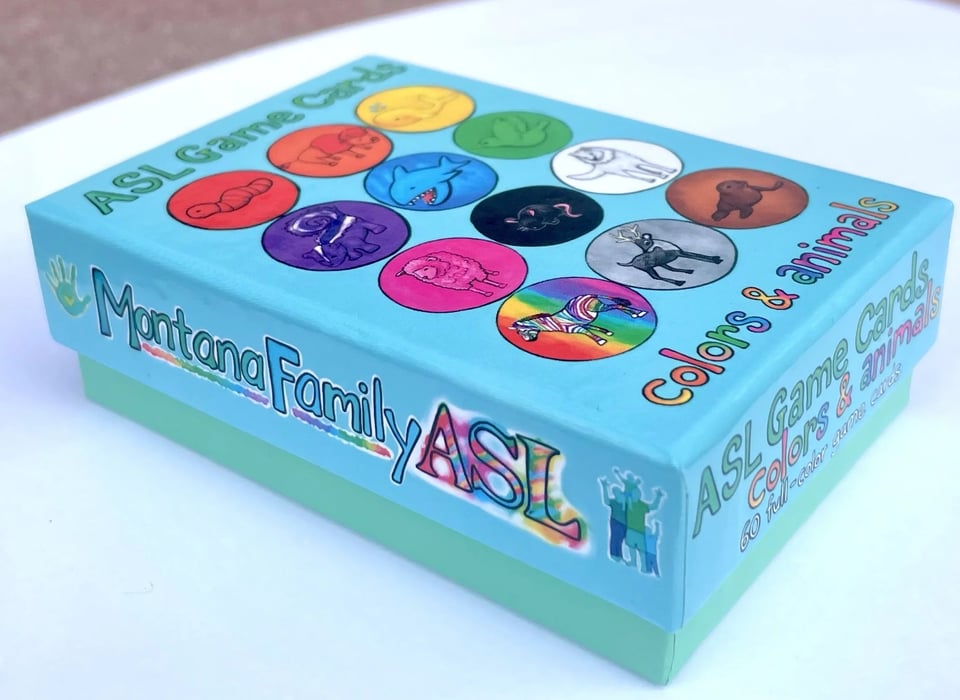
Montana Family ASL has my absolute favorite “educational” store right now, with their amazing ASL handshape posters. But they’ve also got really fun rhyming color and animal cards, made to match Hands Land’s Colorful Animals song, with pairs like YELLOW WHALE, PINK SHEEP, BLACK MOUSE, etc. The set comes with the corresponding color, handshape, and sign cards, too, and instructions for several different games to play.
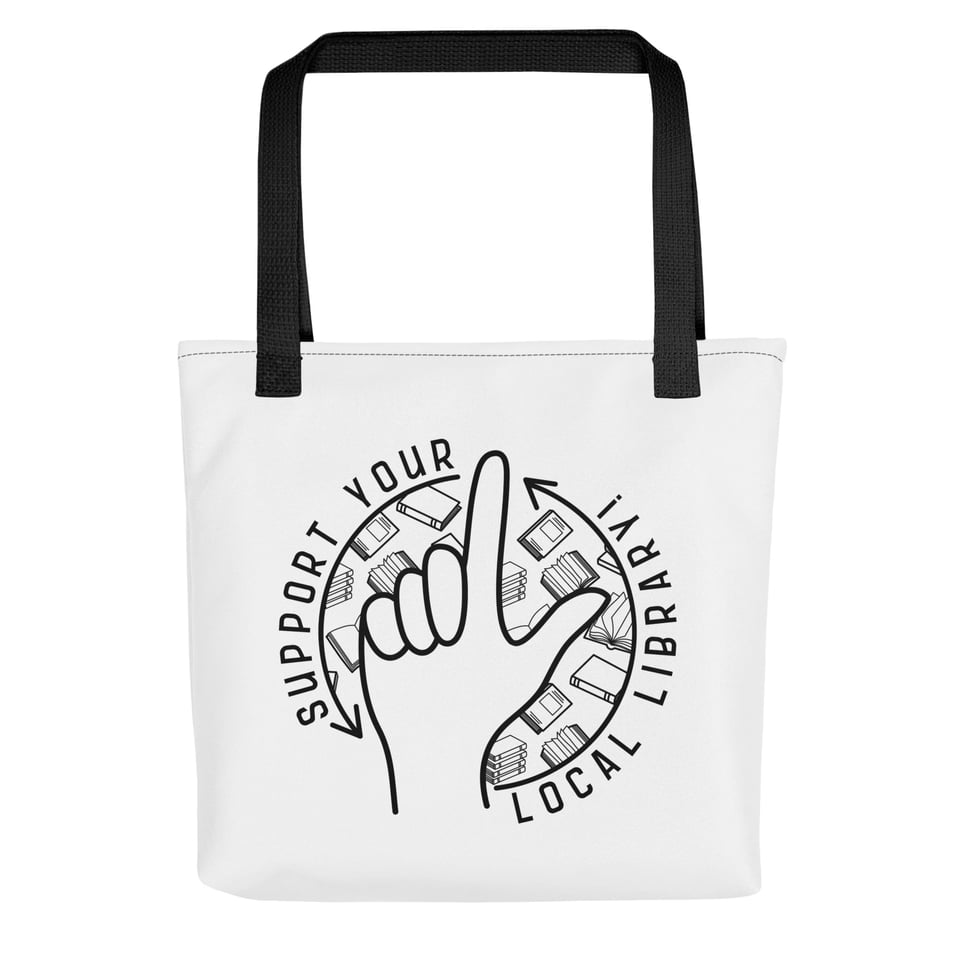
Language Priority is a reliable standby for all kinds of ASL clothing and swag, so I don’t need to hype them up much, but I think their library tote bag hasn’t gotten enough love.
Clothing
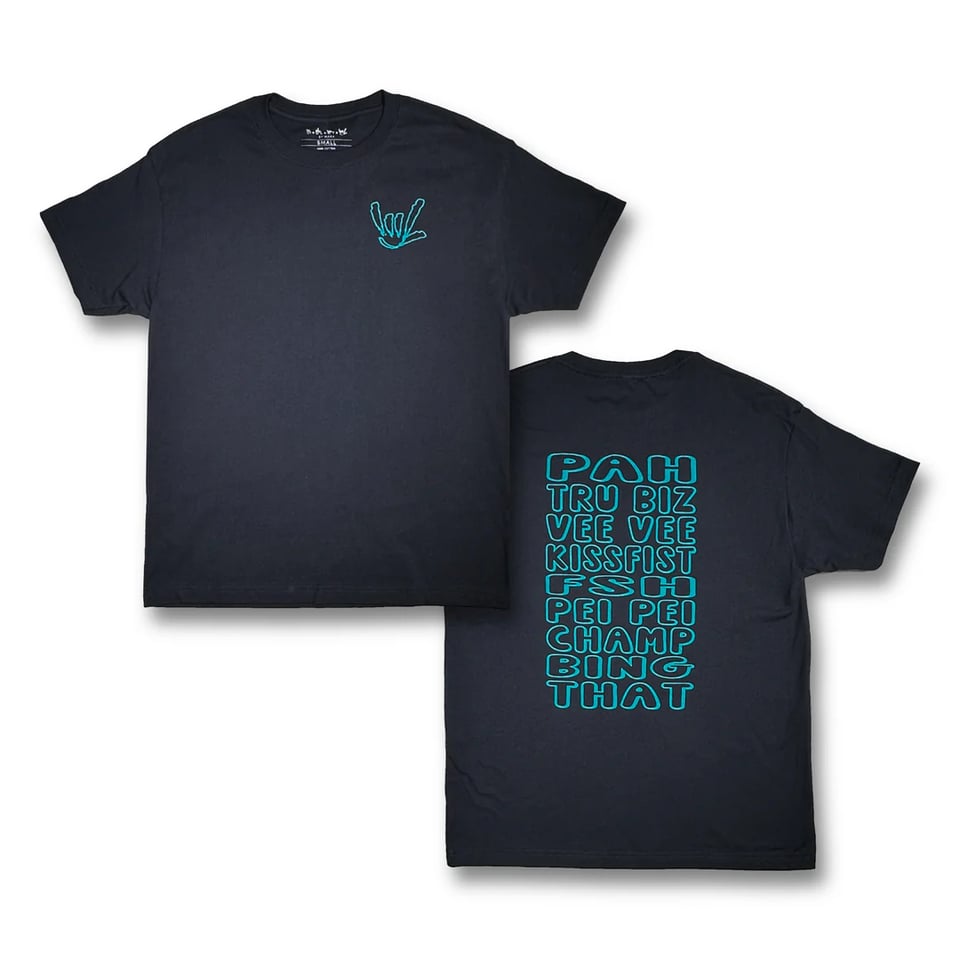
By Mara’s ASL Slang T-Shirt is cool. Of course, if you’re a parent or educator, you won’t be cool wearing it, but it’s worth a try.
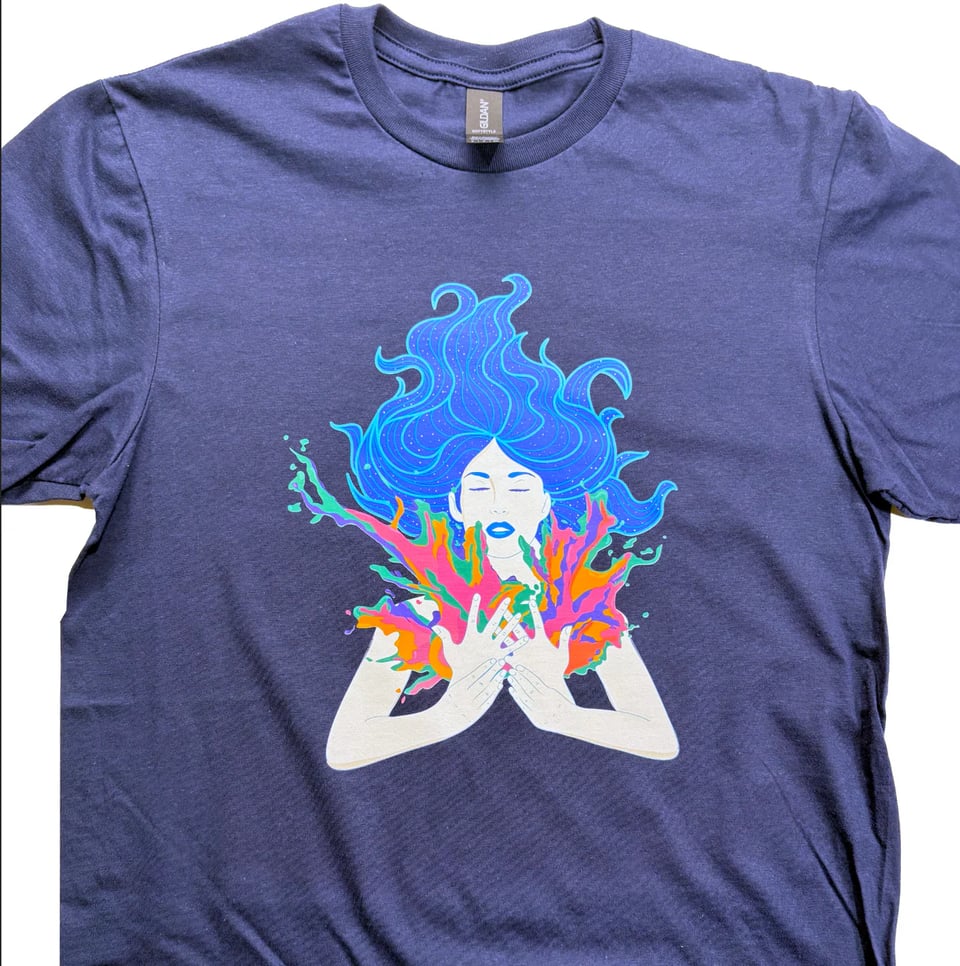
Brittany Castle of 58 Creativity is another reliably great designer, and I really like her her INSPIRE shirt, which apparently depicts the company’s mascot.
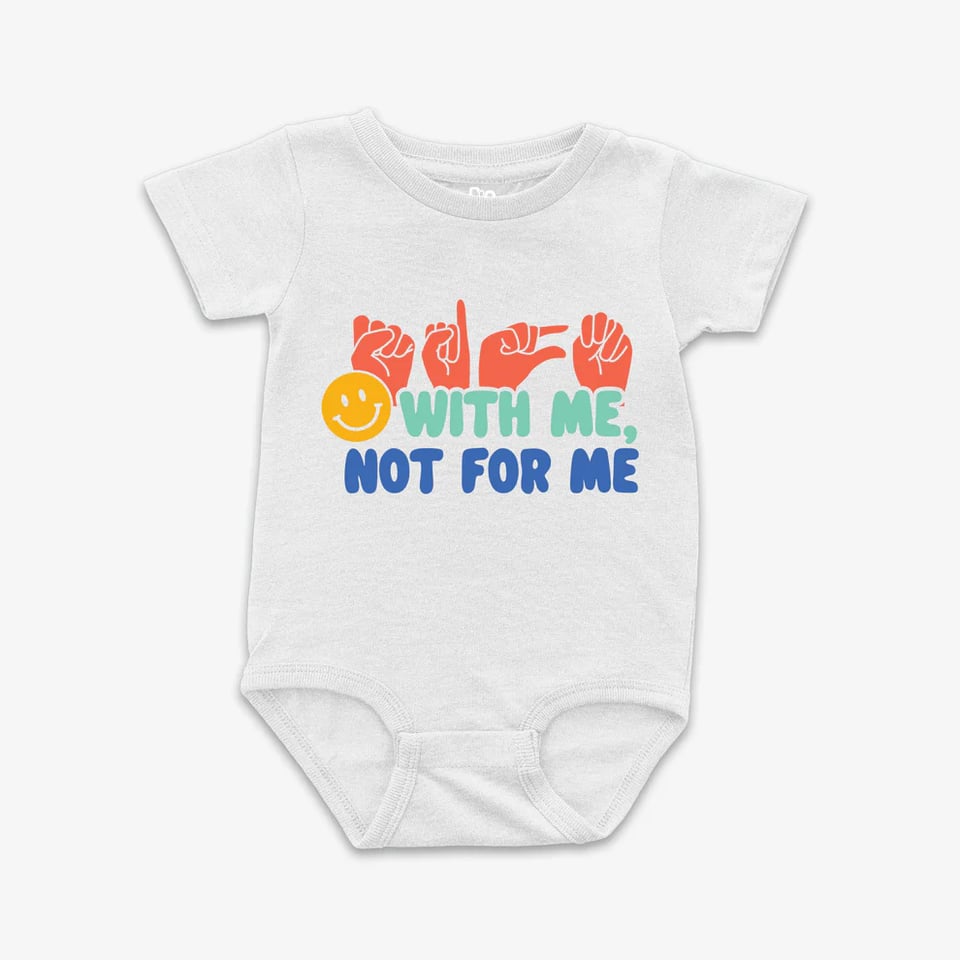
If you want something a wee bit militant for the Deaf baby in your life, Kasmira and Isabel from Girl and Creativity have got you covered:
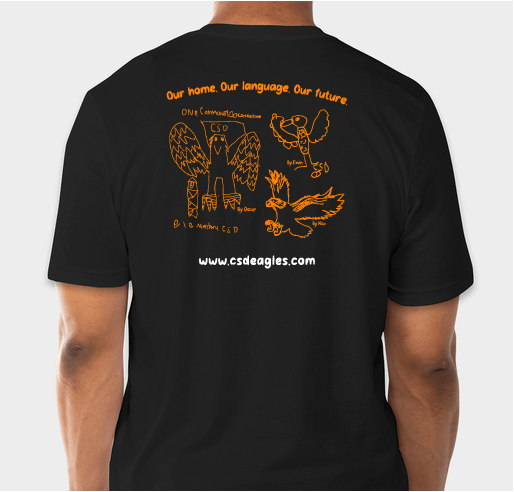
But if you want to own a genuine Fertman design, now’s your chance. Oscar won third place in the annual CSD t-shirt design contest, so this lovely orange-on-black number boasts his drawing on the back, along with the other winners. All proceeds go to the Elementary Department for support students at CSD Freemont.
Books
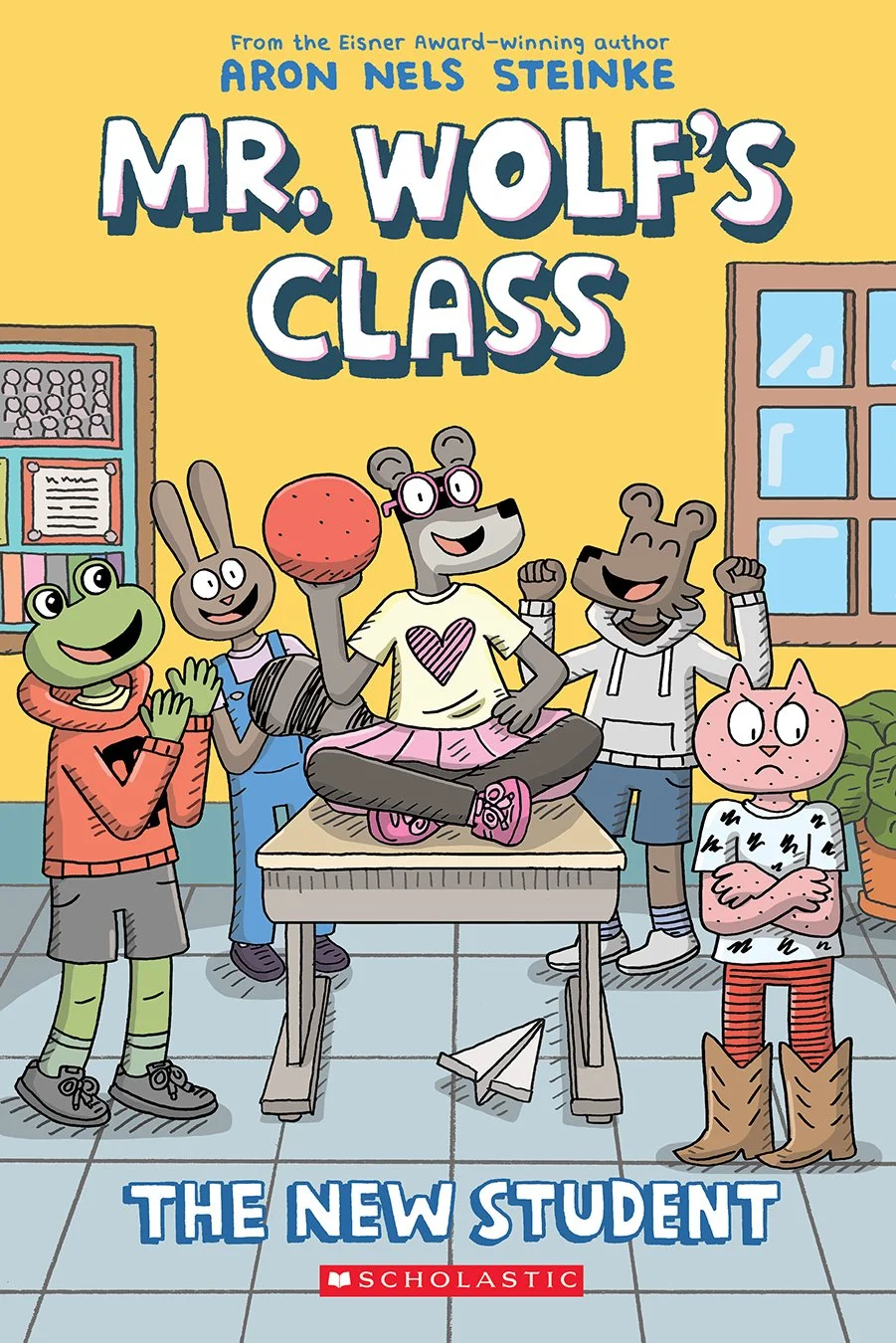
Throwing a curveball here for the older kids. As far as I know, Aron Nels Steinke isn’t Deaf and doesn’t have any particular relationship to the Deaf community. But what he does have is a series of incredibly engrossing comic books about elementary school, Mr. Wolf’s Class, written from his perspective as an actual teacher and sensitive observer of his student’s realities. It’s great for grade-schoolers to read on their own, or to read to kindergarteners curious about what the older kids are up to. Both my guys were fascinated by the low-key drama, and the books are still in rotation in our house.
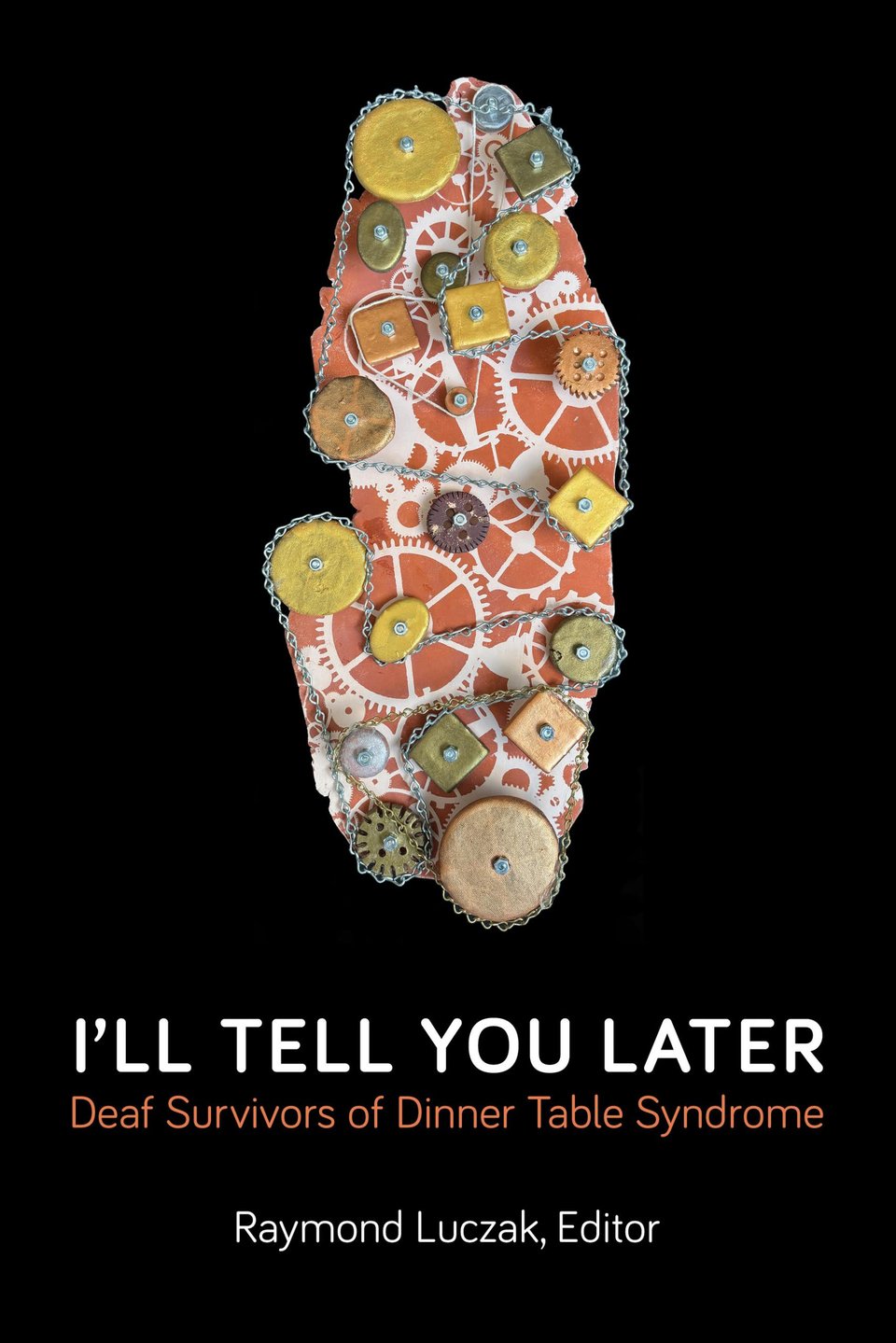
For adults, Raymond Luczack’s anthology I’ll Tell You Later is a harrowing, important, and fabulous collection of dispatches grappling with dinner table syndrome. Harrowing because I might be thoughtlessly inflicting dinner table syndrome on my kid right now, important because the book digs into many aspects of dinner tabling, from deliberate abuse through subtle, relationship-curdling disconnect, and fabulous because it serves as an introduction to over a dozen talented d/Deaf writers you may want to read more of.
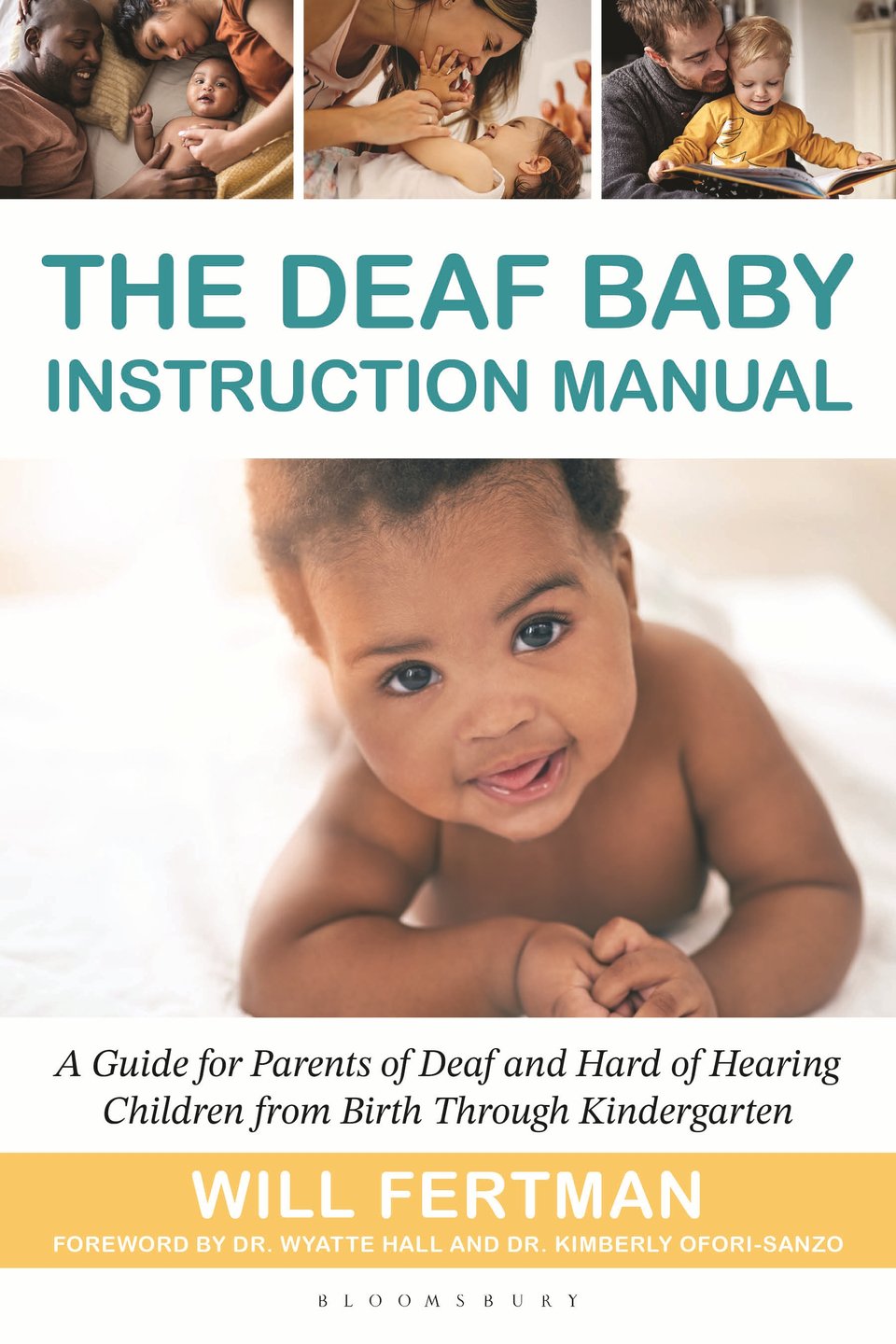
And then there’s The Deaf Baby Instruction Manual. Educator and activist Dr. Paddy Ladd called it, “Absolutely essential for all parents of Deaf children,” while author Sara Nović said, “I wish this book was handed out to every family of a d/hh infant in the hospital; it could change everything.”
It’s now available for pre-order from your favorite online bookstores.
What, me thankful?
With Thanksgiving here, I wanted to spend a minute with gratitude. The past year has been a 5-alarm fire for anyone who cares about deaf kids and the institutions that keep them safe. That fire is still burning, but it’s an emergency because what exists now is precious.

There’s a type of religious argument that comes up sometimes called God of the gaps. It generally starts like, “If science can explain how the world works, what role does God play?” Then someone answers, “He’s in all the things we can’t explain,” and goes on on to talk about quantum physics.
These kinds of arguments start as bad atheism and end up as bad theism, because there’s lots of mysteries in the world, until there suddenly aren’t: missing links get found, big bangs get their start, and bumblebees fly. Details always get filled in, and a God of the gaps has to squeeze into ever-smaller cracks.
What makes a thing useful isn’t always what makes it valuable—you can use the Comanche language to trick Nazis, but that’s not why Comanche is important. But when I’m talking to parents of deaf kids, I sometimes find myself focusing on useful gaps: ASL works in the bath, it works when the batteries run out, you can communicate through windows, it’s great for gossiping at a restaurants.
I mostly use these examples, or see them used by well-meaning people, to bolster the main idea that ASL is a reliable language to raise and educate our children with, preventing language deprivation and dinner table syndrome. But those cute bits on the side can feel a lot like missing links. Technology marches on, and one day, my son’s CI batteries may last a whole week, and he’ll be able to hear me in the tub. So instead of focusing on what oralism and technology can’t do for my kid, or what ASL can do, I wanted to express my gratitude for what it is.
Abstractly, ASL is the foundation of a 200-year-old culture here in the US, with roots that go back hundreds of years before that. But more concretely, it’s my family’s heritage. Sign language was the mama loschen that my hearing grandmother spoke with her Deaf parents, and the link my great-grandparents had to one another, and to their community in New York City in the early 20th century. So I’m grateful for that history.
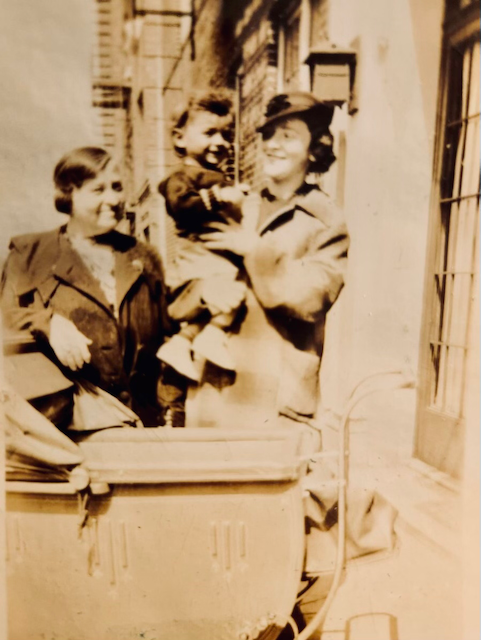
That heritage lay dormant for three generations, until my wife and I started having kids. And when Oscar was born, Minda and I were sent scrambling for “solutions,” but what we mostly found were Deaf people. A mother and child signing to each other outside the audiologist’s office. A sitter who started coming over for Christmas. Loopy little kids and buttoned-down teachers. Online eccentrics and friendly neighbors, CODAs and terps, writers and readers, lawyers and crafters, playgroups and nonprofit boards. Many of them helped us, some of them became our friends, and I’m lucky to know them all.
We also found CSD Fremont, an hour from our house. Oscar goes there to learn the California Common Core, make frenemies, and win third place in the t-shirt contest. But he’s doing it in ASL, surrounded by other Deaf people and immersed in Deaf culture. He has a chance to have friends and role models that are like him, and skip a lot of grief that deaf kids can encounter in mainstream education. So I’m thankful for the school.
But entering a new community, however peripherally, is a delicate operation. And with wobbly started-learning-at-age-40 sign skills, it will always be a little precarious for me, socially and linguistically. Some days are exhausting, but it’s good to learn new things, and I’m grateful that I have the opportunity to take some of this on, instead of forcing my son to do all the adjusting in a hearing world.
And now we’re on school break this week. As I watch my hearing and my deaf kid squabble over tater tots in ASL, I can see that even their fights can be a privilege. I guess fighting your brother over junk food is probably one of those gap cases I was talking about earlier, but when I’m looking at the big picture, the gaps don’t bother me as much.
