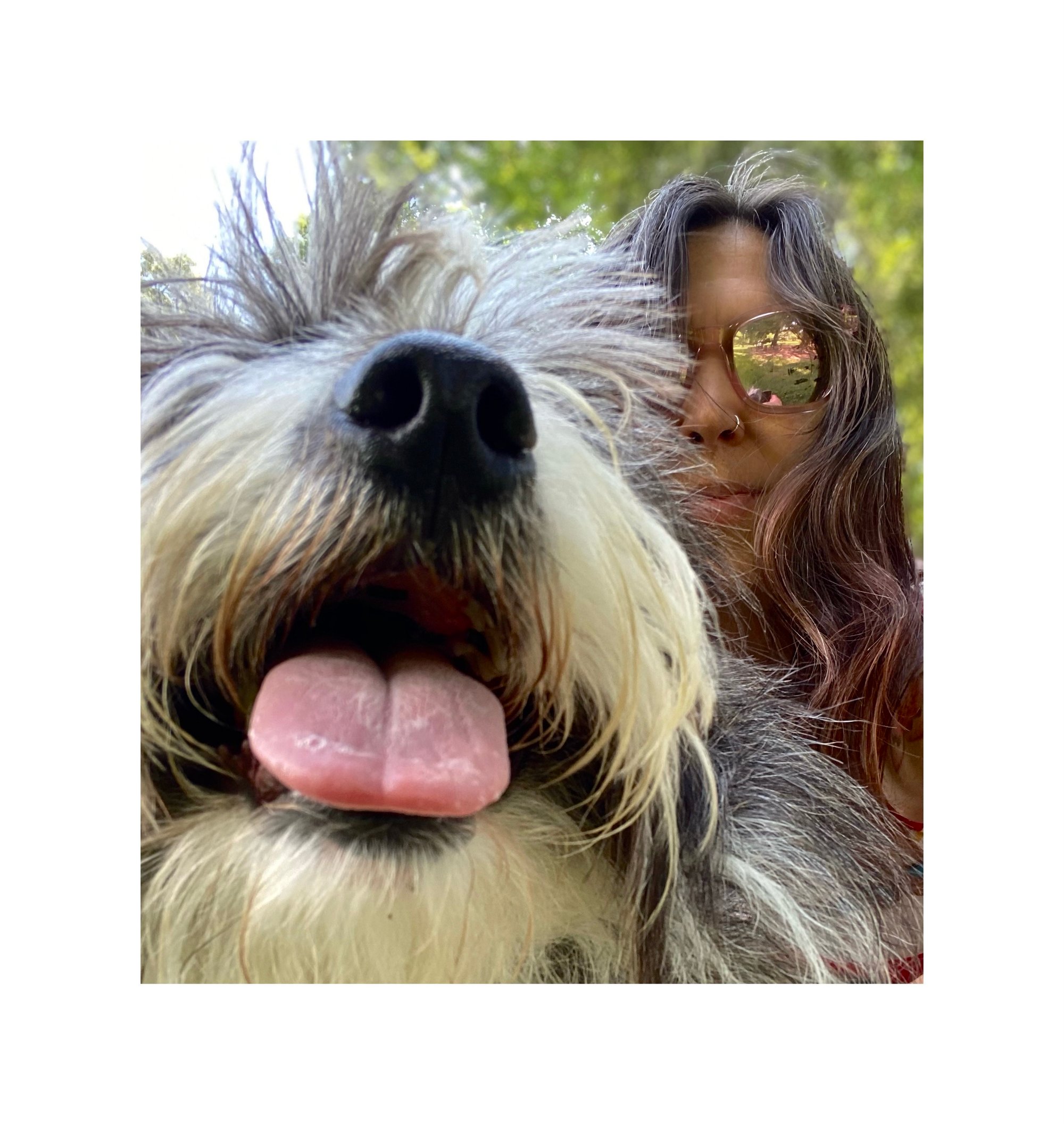
Returning to myself
Dear Reader,
Since my newsletters have been a bit heavy lately, I thought this week I’d lighten things up . My spring/summer show season starts at the end of April. And, as I head into yet another year of art shows, I thought I’d share some of my words of wisdom about what I’ve learned. Much like life, this journey is a continuous learning process that still surprises me. I’ve made many mistakes along the way, and I’ve learned a lot. Just when you think you’ve figured things out, you realize that you haven’t, because you never know what’s going to happen. For those of you who don’t do art shows, I think some of this information might be relevant for life in general.
I’ve been doing art shows for about twenty five years, and here are the two biggest lessons I’ve learned along the way.
Go into every show with no expectations.
You have to find the right fit, while always maintaining your authenticity.
Why should you have no expectations?
This might sound counter-intuitive, but trust me, it’s true. I’m not saying that you should have a defeatist attitude. You should definitely be proud of what you make and be happy to share it with an audience. What I mean is, that you shouldn’t try to predict the outcome of the show. Because you never know how things will turn out. And, why should you waste your energy trying to be a fortune teller? Instead, use that energy to put your best foot forward at your show. I can’t tell you how many times I did shows when I was first starting out where I thought the location or the crowd would be perfect for me, and things didn’t work out like I planned. It was always a big let down. The truth is, that when I had shows like this I might have had good products, but my set-up wasn’t where it should have been yet, and that was my problem. But, because I already had myself believing that my products would sell themselves, I put much more effort into what I made then how I displayed it. In doing so, I was missing a big part of the process.
What I’ve realized now is that the set-up process is not always the same. I change things up based on the venue, the season, and what types of things I’m making at the time. Not only do you have to figure out what will work for your event functionally, but you also have to consider what will be the best for sales. In addition to that, you have to consider how easily you can consolidate things when you pack your vehicle.
Setting up used to completely stress me out. And, since most shows are in the morning, and I am absolutely not a morning person, that made the set up process even more difficult for me. But, now I’m more prepared and I’ve really figured out what works for me. The only time set up still stresses me out is when the weather is severe. I come to every show with a good attitude and always hope for the best. But, I DO NOT have any expectations.
You have to find the right fit and stay true to yourself in the process.
I once did a show a couple of years ago that for whatever reason, was very poorly attended. The weather was nice and the organizers advertised, but people didn’t show up. The reason for this is often the result of an oversaturated show market. There are too many shows at one time, and people can’t get to all of them. I’d much rather not do as well at a show because the attendance is low than have low sales because the show was not a good fit for me. At least when the show is slow, you can commiserate with the other vendors because you’re all sharing the same experience.
I still did ok at this the show, and I didn’t pay anything to be there, which took the pressure off, so I wasn’t upset. And, if I’m sitting outside on a beautiful day, I’m happy. Since no one was busy, I was talking to a nice guy in the booth next to me, and he said something to me that I thought was not only completely insightful, but also a very positive outlook on the whole process. He said that if you create a quality product and you aren’t doing well at shows, it’s time to reevaluate the shows you’re doing. You’re doing the wrong shows. This is what it’s all about folks. The only problem is, that in order to find the shows that are the right fit for you, that requires vending at a lot of shows while you figure this out. I have vended at many shows that I thought would be great when I applied, but when I got there I wondered what I was doing. In my opinion, I think that the folks running the event should play a part in this process when they select vendors. If they’ve been putting on their show long enough, then they should be aware of their market, and have this be part of their criteria when choosing vendors. Sometimes the folks that apply aren’t as aware of this as the show organizers. I’d much rather not get accepted to a show where I wouldn’t be a good fit than be accepted and not do well at the show.
I feel like even after all of these years, this is still a lesson that I’m learning over and over again, but I’m getting better. Having my own studio /showroom space has enabled me to start weeding out shows that weren’t consistent for me. I now have a space where people can make shopping appointments with me, so I don’t need those shows in my life anymore. And, my favorite shows that have been so good to me over the years will remain on my show schedule. So far, I only have two shows scheduled for April and May.
Too many shows can lead to FOMO
There are so many shows nowadays, that it can be overwhelming. How can you figure out which shows to do when it seems like there are too many choices? Well, the answer to this is that there is no one-size-fits-all answer. I would always suggest researching a show before you apply. Talk to your artist friends and see if they have suggestions. It’s also a good idea to attend a show and see what the turnout is like and what types of vendors are there. You can do some online research as well. Check out instagram to see if the show runners are good at promoting both the event and the vendors. If the folks running the show are not present online to do the work it takes to promote an event, it’s likely that they won’t be available to you at the time of the event either. Trust me on this one, I’ve seen it in real time. I would also suggest starting out with shows that either charge no vendor fee or a very small fee. After you’ve established yourself at shows where you haven’t invested a lot and things went well, then move on to shows that might have a higher fee. Over time, you’ll find the shows that you want to keep attending, and you’ll say goodbye to the ones that weren’t worth your time.
How much money should I make at a show and how should I price my items?
My rule for how much money I should make at a show is ideally 8-10 times my vendor fee. Meaning that if I paid $50 to get into a show then I should make a minimum of $400. If you’ve traveled for a show, you’ll want to factor in those costs as well. I have traveled to different states for shows, and when I do this, my family and I will also take a vacation while we’re there.
Pricing items can get a little tricky, because there are so many factors to consider. Since the cost of materials for my business is very minimal, I mostly price my items based on how much I want to pay myself per hour based on how many hours it took me to make that item. Since I don’t always sit down and make things from start to finish, it can be difficult to figure this out. I feel that my prices are very fair though, and sometimes too low. I’ve learned what the market will bear locally and I price accordingly. I also prefer to always give my customers the option of sliding scale pricing. I value myself and my work, but I also value humanity. Sourcing my materials the way that I do and always recycling has enabled me to offer this option to my customers.
So, as I get ready to head into my show season this month, I’m sure that I will learn many more lessons as the journey continues.
I truly appreciate all of you who choose to be here and read my newsletter.
xo,
Christa
Last week at a glance
I started listening to Memories, Dreams, Reflections by Carl Jung.
I brought some new skirts, pants, dresses, earrings, and necklaces to the studio.
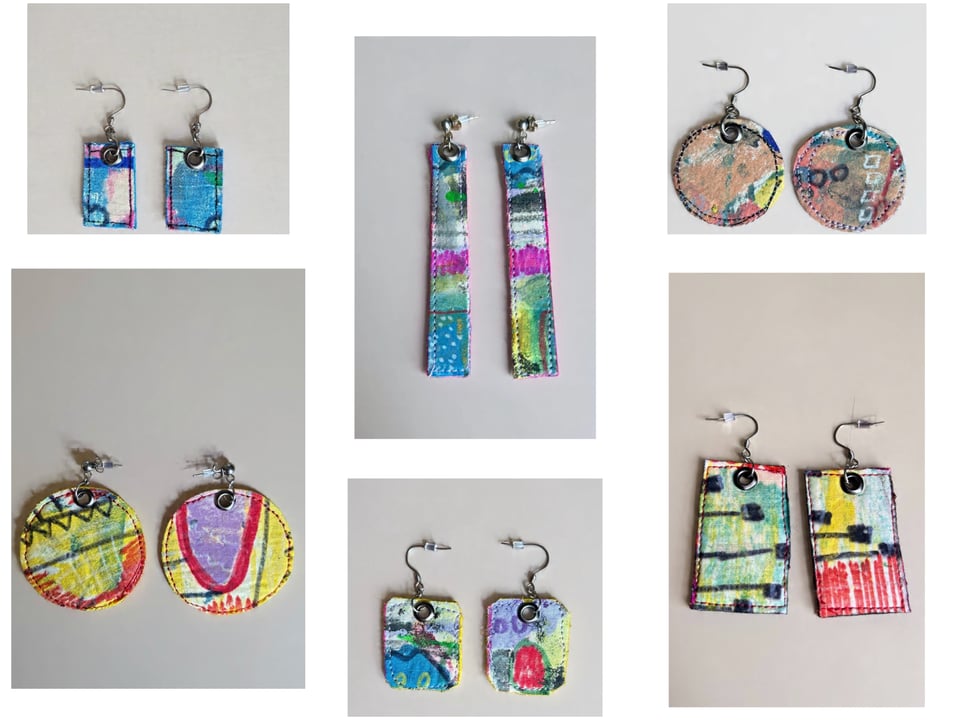
Hand painted fabric earrings I went to market with friends.
I painted some new paper clay objects.
Our refrigerator died. It lived a good long life.
A couple of months ago I started to make sure that my face sees sunlight before screen light in the morning. This just means that I don’t look at any screen until I’ve spent time outside. I walk Albus every morning before I look at my phone or the computer.
I made some chocolate chip muffins.
I had a friend tell me that her therapist told her to start saying no more often. I’ve been telling her this for ten years. I hope she starts to do it.
I stopped listening to my podcasts and audio books when I walk Albus because I wanted to pay more attention to the world around me. It’s been a great experience.
I made small paper clay bowls and candle holders. The smaller things I’m making will be available at shows and in the studio. And, the larger things will be available in the studio.
My husband put up more pegboard for me in the studio. I’ll be doing more rearranging in the studio this week.
I want to a craft supply yard sale at Snake and Skein, but I only found fabric markers. All proceeds went to a good cause, so that makes me happy.
My family and I went hiking.
I made an elderberry tincture.
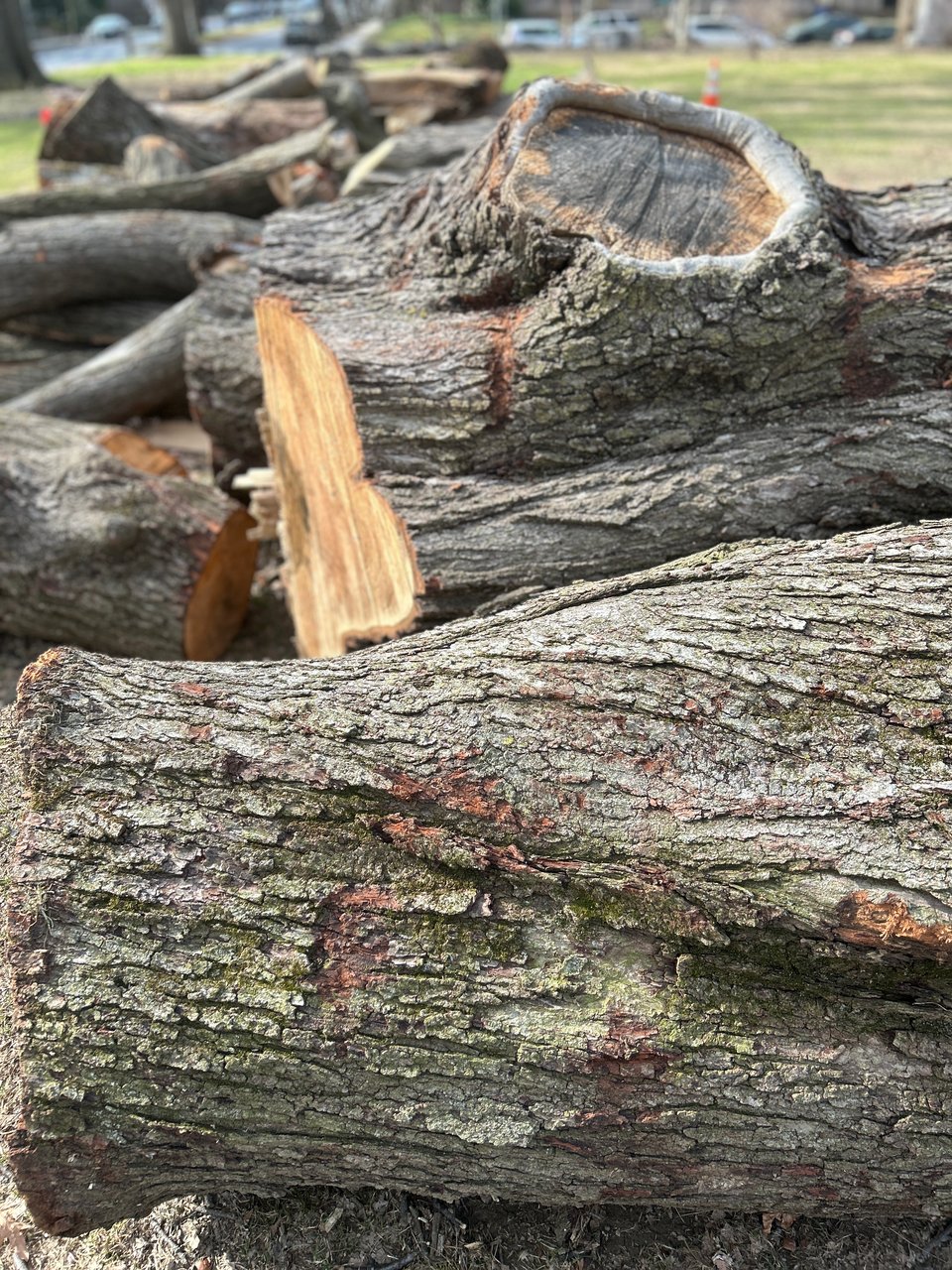
They cut down at least four trees at the park. I could tell by the plaques that some of the trees were at least 65 years old. That makes me sad.
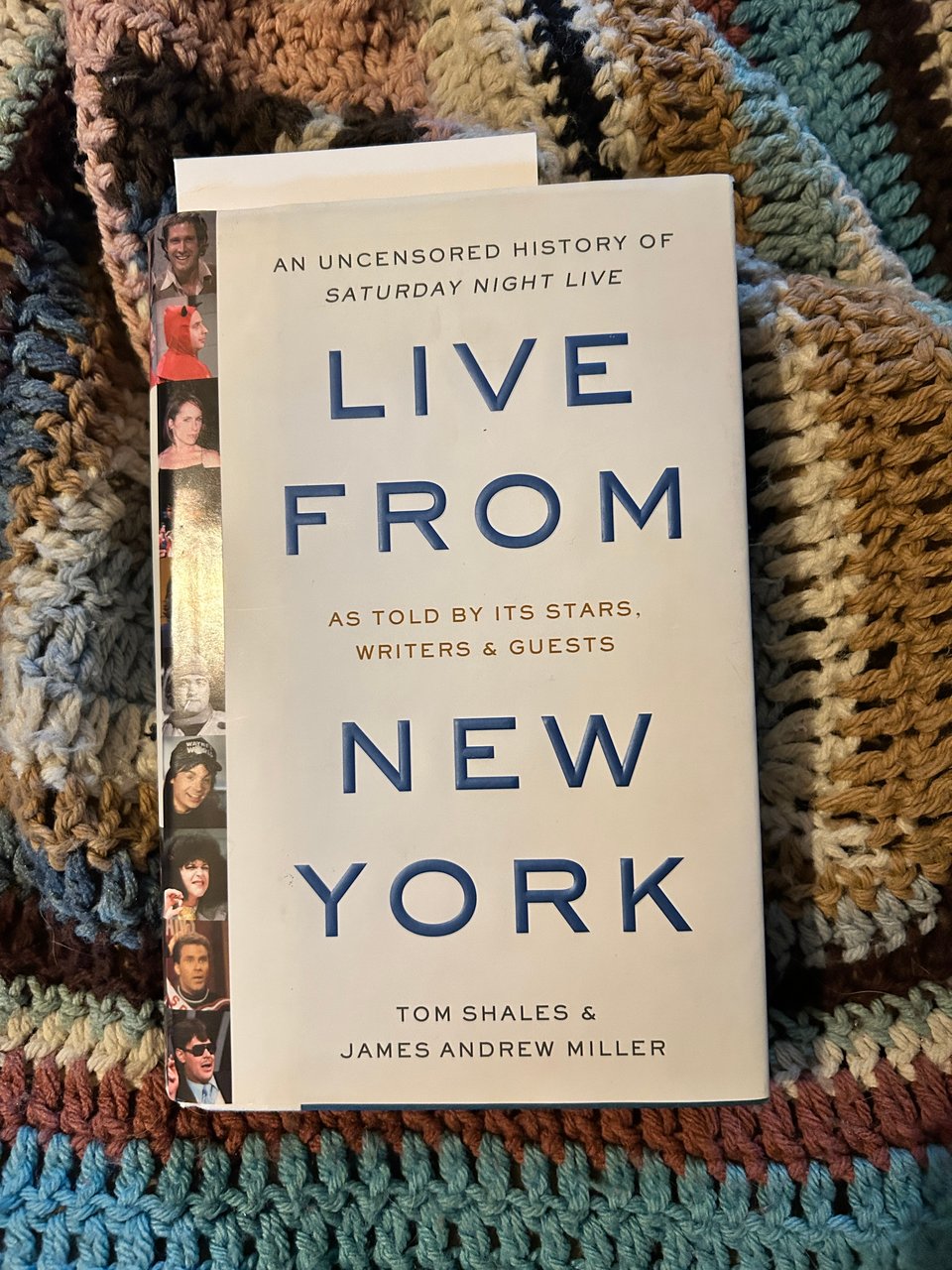
I found this book in the free library and I’m pretty excited to read it.
I found some brand new chalk pastels at the thrift store.
I watched the first episode of the tv show Rooster and I liked it. In my opinion, you can’t go wrong if Steve Carell is involved.
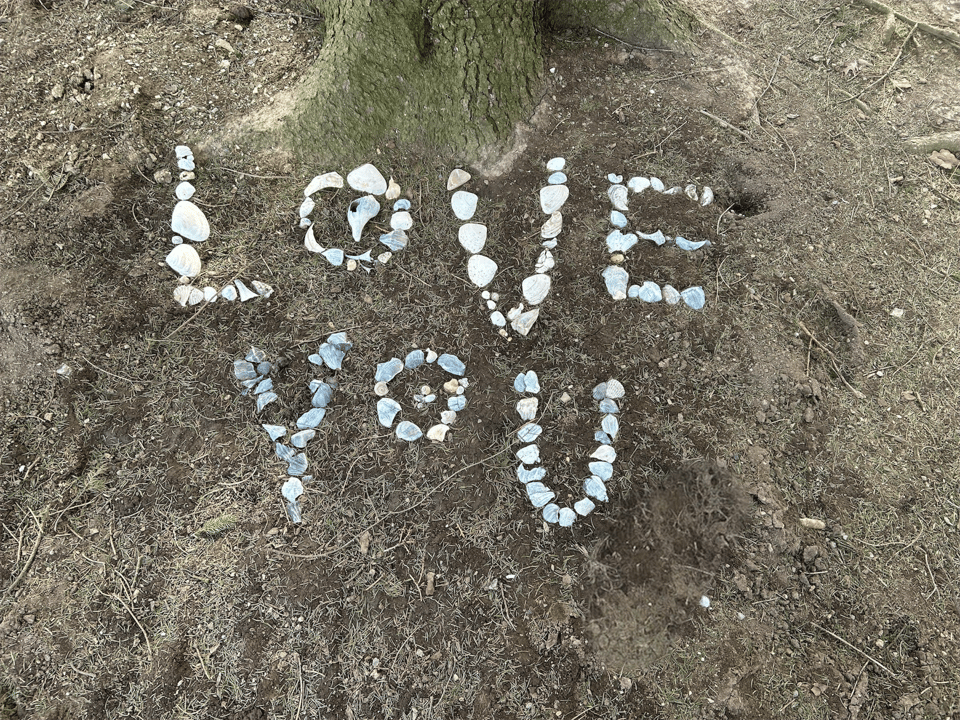
After I saw all of the trees that were chopped down, I saw this written under a tree.
Links
Email: wildchildfibers@gmail.com
Website: https://www.wildchildfibers.com
If you’re in Marietta, you can find my work at
Book a shopping appointment: here
Anytime 20% off discount in the online store for subscribers
You just read issue #58 of Moon's Day. You can also browse the full archives of this newsletter.
Add a comment: