
Two Documentaries That Explain This Moment in Libraries and Book Censorship
The Librarians and An American Pastoral together are a robust, if imperfect, means of understanding this censorship moment.
This week, I’ll be on an in-person panel discussion following a local screening of The Librarians. It will be my second time watching the film, and I’m honored to say I’ll get the opportunity to sit on another post-film panel next month as well.
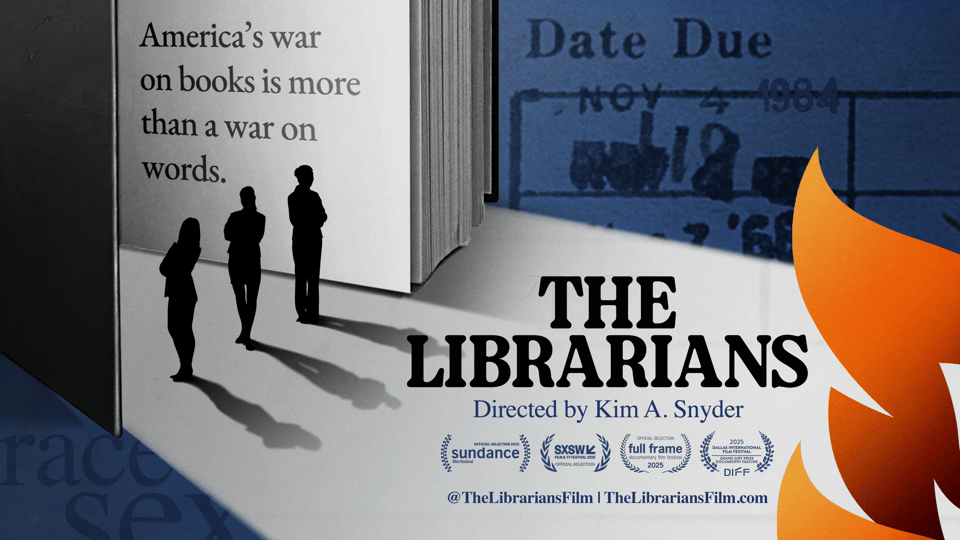
For readers who don’t know about The Librarians or haven’t yet seen it, it is a must-watch if you want a sense of what’s been happening in public school libraries over the last five years. It’s available to stream on PBS, but if you get the chance to see it in person, it is really worth venturing out. Those who’ve been tapped into this ongoing attack on our public institutions will see what they’ve read or heard play out on the screen while simultaneously hearing gasps and shock from the audience who haven’t necessarily been as tuned in. Of course, even if you are aware, seeing things play out on film adds a kind of realism that can elicit surprise.
While many of the examples draw from Texas and Florida, the film doesn’t apply only to those states. We know so much about the book banning efforts in both of those states because there are ample efforts to document and push back against them. Florida is the blueprint of American censorship, and Texas only takes a step back because its legislative sessions are biannual.
You’ll meet an array of librarians whose lives have been upended over accusations of grooming, of peddling pornography, and of defending “obscene” literature. You’ll get to know their stories, as well as the stories of on-the-ground activists and activists who’ve been fighting to keep literature on library shelves. Among the people in the film are Martha Hickson–who I’ve written about in this newsletter before–as well as Amanda Jones–whose story I was among the first to tell back in 2022. Clay County librarian Julie Miller is part of the film; she was instrumental in getting the first story out about the serial book banner, who is still working his way to thousands and thousands of title removals in the district. Librarians and Texas FReadom Fighters Carolyn Foote and Becky Calzada make appearances, alongside parent advocates like Texas Freedom to Read Project’s Laney Hawes. The film also uses student voices, including members of Granbury Public Schools (TX)’s student-led Banned Books Club.
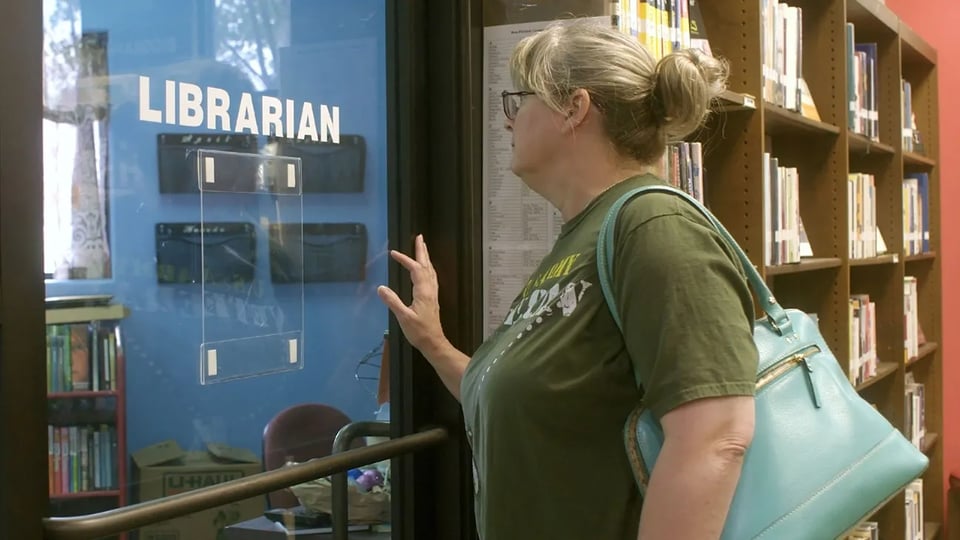
There are two points of criticism worth bringing up about The Librarians. The first is that while the film does a tremendous job of showing viewers what’s going on, it lacks takeaways on what they can do in their own community to protect their libraries and library staff. This made sense in the context of live screenings. That’s the role of the post-film panels: open up the opportunity to ask questions and provide ideas for ways to get involved in one’s own community.
The second piece of criticism is raised by Edith Campbell, a Black academic librarian and longtime champion and blogger about children’s literature. She writes:
So, what about the movie? It falls short in its lack of inclusion. While it acknowledges the banning of BIPOC stories in our libraries, it has ignored the voices of BIPOC librarians. I know it’s not easy for everyone to talk about race, I know too many of us are so comfortable in our own little worlds that we unconsciously forget about the other. That threatens our collective survival and it endangers our youth. We – you and I – are the ones who can accept the discomfort of growth. A more inclusive story pushes growth by bringing light on elements we haven’t even considered. It strengthens us.
While the film’s cast is not exclusively white, and the attacks on marginalized people in literature are ever-present, The Librarians could have absolutely benefited from a more diverse cast. Fear and worry likely played a part, as did the fact that librarianship is still predominantly white. Yet, the lack of those crucial voices is visible, and it continues to uphold a standard for what librarianship looks like. Post-screening panels have likewise perpetuated this, and it’s on those who agree to take part in them to speak up about it.+
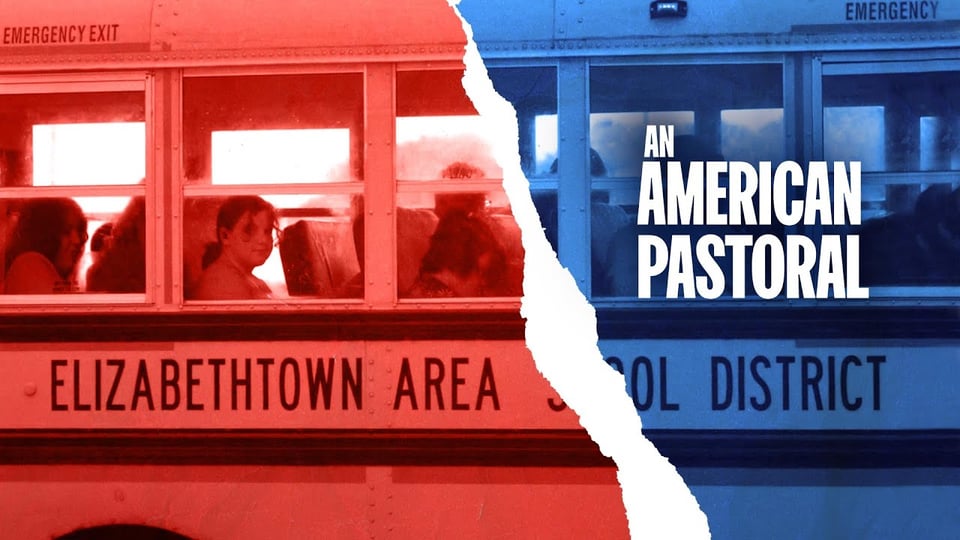
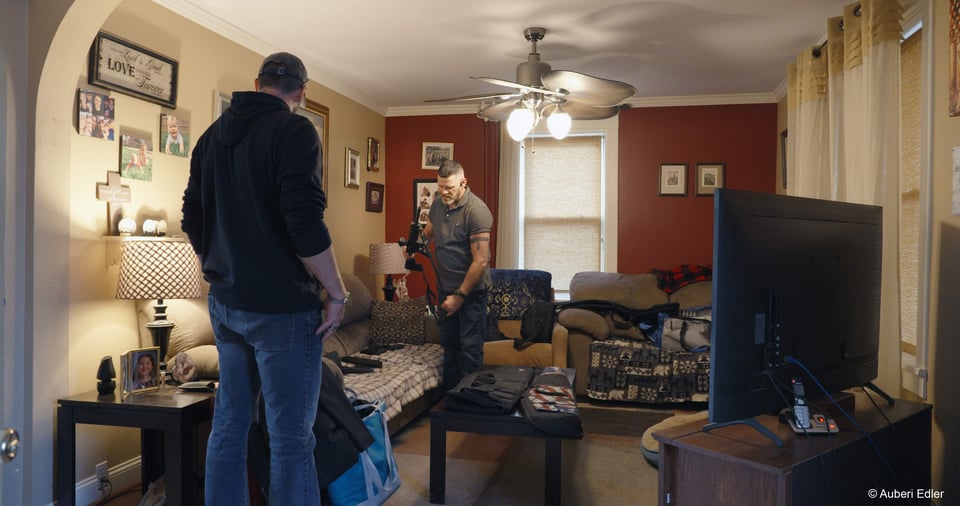
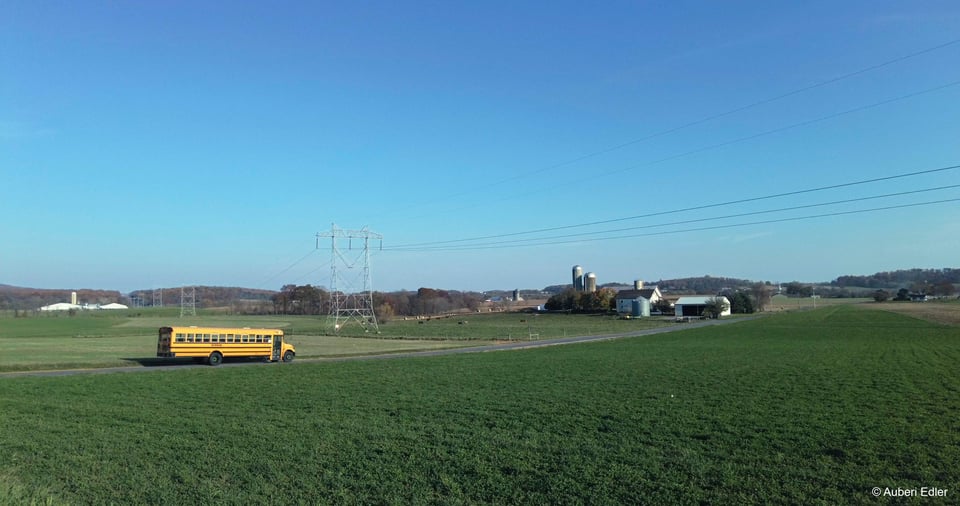
I thought about that criticism as I watched another recently released documentary that also explores the rise in attacks on public education and the materials available in public school libraries. An American Pastoral takes a different–and, perhaps, more comprehensive–approach to highlighting what’s going on with our public institutions. Filmed and set in Elizabethtown, Pennsylvania, French documentarian Auberi Edler followed nearly a year in the life of the district’s school board. Five seats were up for election on the 10-person board, meaning the board's ideological makeup was at stake. Pennsylvania is among the few states that have partisan school board elections.
But An American Pastoral is not really about the school board. It’s about how Christian nationalists were able to take over the school board and build upon a culture of fear and distrust to spur a blizzard of extremist policies and book bannings. This Christian nationalism has created a vast rift in the community of 12,000 people.
An American Pastoral is cinéma vérité; the entire documentary consists of filmed footage, rather than providing any specific framing or narrative. There are no interviews with those in the film. As a viewer, you are trusted to figure out how to make sense of the story and what the takeaway is. This decision cleverly amplifies the point it’s trying to make, and it’s also led to people on all sides of the political arena to believe it’s sympathetic to them. This is hard for me to believe, especially given the ongoing issues in the district. Some have grown more extreme in the wake of the film’s release.++ Many times throughout, I couldn’t help but wonder exactly how the filmmakers managed to get into as many meetings and spaces as they did. What kinds of stories did they tell about their film plans?
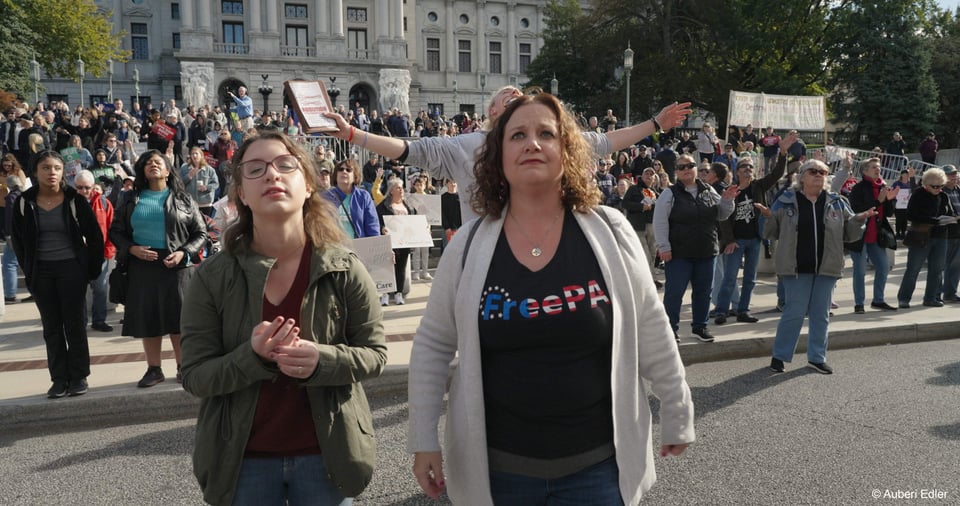
We follow some of the Christian nationalists as they door-knock, weaving stories to anyone who will listen about the pornography being made available right there in the schools to “their” children. They’re not even particularly good at it, either. In many instances, you can tell the speaker is pulling from a list of bullet points provided to them, rather than speaking to the issue from any real personal concern or connection. There’s one scene where one of the board candidates tries to explain that the “social and emotional learning” is infiltrating the schools, and that’s a bad, bad thing. She doesn’t bother to define what that phrase means, let alone why it’s a bad thing. But it’s right there in the books available in the school library.
These scenes are paired with the democratic candidates seeking election to the board, as well as those participating locally in pushing back against book bans. At one point, both local republicans and democrats are at the county fair. We learn that the democrats receive criticism from the fair leadership because they dared to have copies of books like Gender Queer and Lawn Boy on display behind them. As someone who has been covering this now since the beginning of the current rise in book bans, it’s almost quaint to think about Lawn Boy in the context of banning, given how long ago that title was one of the significant “dangers”–a reminder that while the film exposes contemporary ideologies and practices, it’s already sort of dated. Focus is no longer solely on individual titles but on entire swaths of themes being removed. There’s foreshadowing of this, inasmuch as that foreshadowing was possible by the filmmakers in that moment. We see the extremists attending a religious convention featuring the likes of Glenn Beck speaking about going bigger and broader. We also see state representative Tom Jones espousing the kind of right-wing rhetoric with constituents that now provides the backbone to anti-library and anti-education bills.
Undergirding all of the film–and the thing I found most effective–was the fear emanating from the extremists. There were numerous filmed conversations about guns and gun ownership, and those are contrasted suavely with a scene filmed in one of the high school classes where the teacher leads his students on a discussion of what the Second Amendment means. Are students worried about school shootings? Do they realize they’re a generation that has come to see this sort of tragedy as normal, rather than not? As someone who came of age before the normalization of school shootings, hearing where and how students now thought about this was chilling. It’s normal to them.
Throughout the documentary, I kept thinking about the Shiny Happy People docuseries, which exposes the world of the reality television family, the Duggars. The same philosophies and values that thread through their religious practices are those employed in Elizabethtown. Where the Duggar docuseries showcased the Seven Mountain Mandates as they play out in home and religious life, An American Pastoral offers the education, arts/entertainment, and public sphere pieces.LifeGate Church in ETown, which has sunk its claws into public goods. The extremism of that congregation is shown in parallel to other people of faith in the community, including those who believe in inclusion and public goods for all.
Although it is clear there are families of color in Elizabethtown–about 10% of the community is Black, with about 5% composed of other racial backgrounds–the main characters are white. In amplifying the realities of Christian nationalism and the brand of extremism that follows the Seven Mountains Mandate, this whiteness makes sense. Unfortunately, the counter to it did not leave room for voices of color, even though it did provide space for queer voices.
Thinking about where and how the filmmakers got access to the meetings they did–including several among the extremists talking about their plans for how they “take back” education as part of the Mandates–it should come as little surprise that not only are things still bad in Elizabethtown. They’re also getting worse.++ Christian nationalism was not presented in a good light, and the people engaged in it in Etown weren’t presented as good or godly at all. It is risky to enter a community and build a story around it, and as it stands now, the reaction has only furthered hateful and harmful behavior. At least, perhaps, it’s better known where, how, and why it’s being perpetuated, but, like The Librarians, there’s no real action presented as a way to push back against it. We end by seeing one of the democratic candidates for the board address the newly sworn-in extremists, saying she’ll be keeping an eye on them.
Together, The Librarians and An American Pastoral present a robust picture of the beliefs and tactics employed since 2021 to attack public education, public libraries, and the right to read. They come at a time when discussions about what’s happening have been underway for five years, and they do a good job of illustrating what words often cannot: the real human emotions and pain that resonate more vividly on screen than in op-eds, essays, or news reports.
These aren’t the only documentaries capturing this moment, but their recent releases make them worth highlighting together. A couple of additional documentaries for your to-watch list include Banned Together, which follows students and parents in Beaufort County Schools (SC) when 97 books were yanked from shelves, and 2023’s The ABCs of Book Banning. It’s interesting to think about these “older” documentaries alongside the two newer ones. Their differences really highlight how the battle itself has changed. Indeed, individual title bans still occur, but what used to happen at school board meetings is now simply a step higher, taking place in city, county, and state policy and legislative rooms. Instead of picking and choosing one or 97 titles, it’s now entire categories of books–with little shame of what those categories are or represent: diversity and inclusivity.
Notes:
+ The panel I’m on this week will be two white women, though efforts were made to secure a wide range of panelists. The panel I will be on next month will include more diverse voices and perspectives–something I made a condition of my participation and that I encourage all white folks to do when invited to speak on any panel.
++ Yes, this symbol is intentionally doubled in the text above, as it serves as a list of references to current issues at Elizabethtown Area Schools. See here, here, here, here, here, and here, and know this is far from a complete snapshot of this moment. If you don’t want to click through, here’s a summary: the board cut funding for all books in the middle and high school library, banned a bunch of books in the libraries and classrooms, and students have been protesting these decisions.