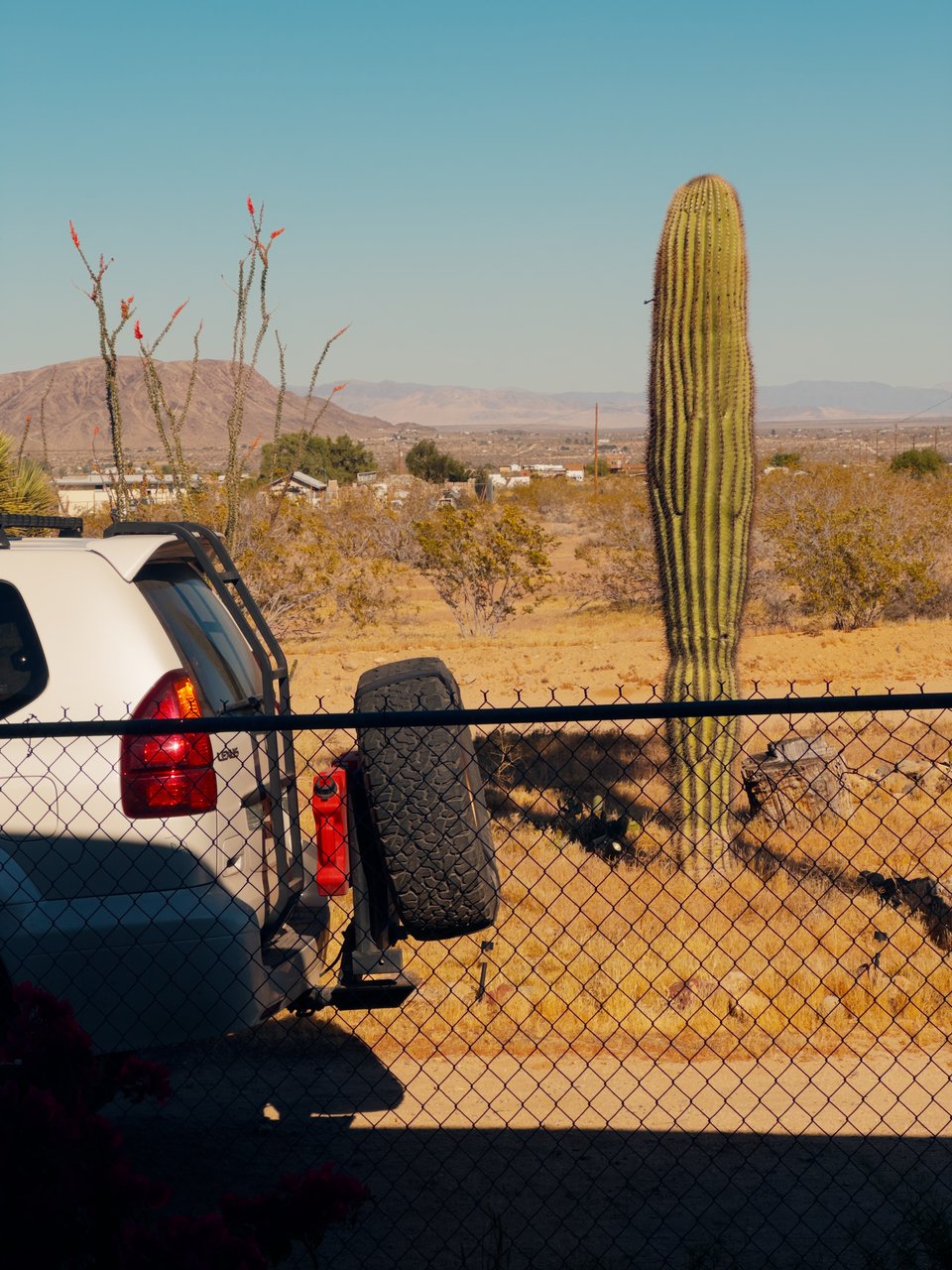
Weightshifting: I’m on a plain.
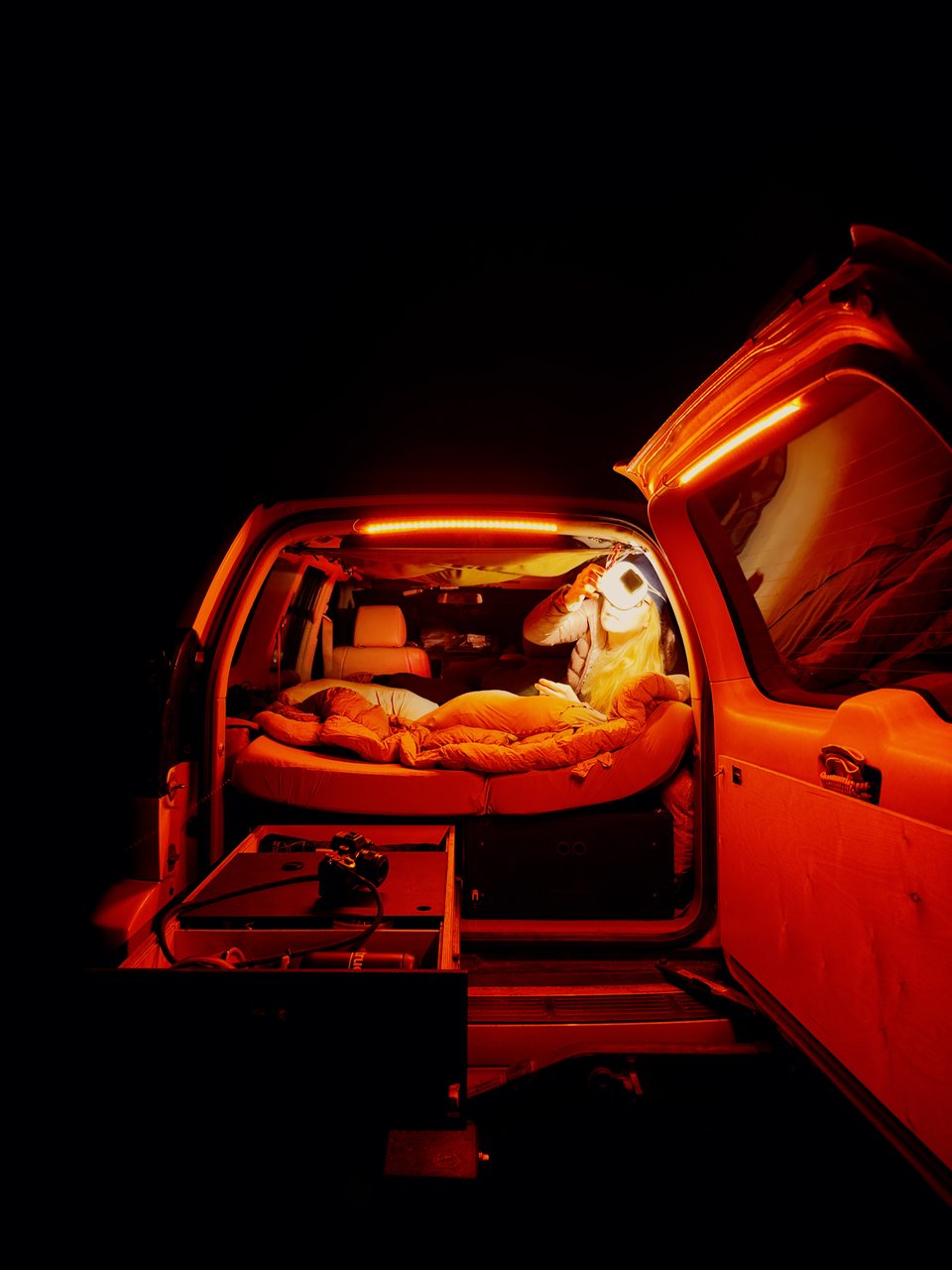
It’s just after 9pm. We’re lying in bed. Not at home. Not in our rooftop tent either. But in the back of the rig on our Hest mattress. It usually lives in the tent, but we’re going lo-fi.
We’re in the Central Coast of California, on public land. We were in San Luis Obispo a few hours before at Scout Coffee, a favorite, getting refueled for this last leg.
We’d camped here before, two years ago in February 2024, for the first time. Barb was still with us. It was quiet then, and it’s quiet now. It was colder then, and we awoke to some frost on top of the tent. We arrived today in some very light rain. The trails are in better shape: not as muddy and sloppy. No need to peel off inches of mud affixed to the tires and wheel wells with a stick this time.
We haven’t slept in the rig like this since our very first overland trip, when we met up with Tyler for a phenomenal first trip into Death Valley. It didn’t quite work then, and we switched to our tent for the rest of it. To get the then air mattress in, we had to take everything else out and put it in a tent. That was... ridiculous. It made more sense to just sleep in the ground tent with Barb, and leave everything else inside. We were such noobs.
Long-time readers might know that we’ve slept in the rig a number of times, though in the front seats when horrendous winds drive us from the tent to the relative peace of the cabin.
We get to lie down this time and with no fridge and power station to weigh us down and eat up space, we’re getting a bit of both worlds.
Our destination could have been reached in one day, but we wanted to break up the journey. Carrizo Plain makes for a quiet night. Jen and I have come to dislike spending money on a middle-of-the-road hotel that’s more than it’s worth and built poorly. I don’t want to hear my neighbors’ TV, their clomping around, and children screaming and pounding floors. That’s not worth the likely $200/night after taxes and fees for a rest pit stop.
Peace and quiet. It’s all I’m looking for these days.
I wrote a post recently: Baseline Loss. It’s a strange time to contemplate what my career looks like in an age where the dialog, power, and money is centered around all things AI. What does it mean to practice design and development when you’re working with people that can send you a wireframe that looks like a finished product? Sure, it’s not finessed nor the fit and finish of something great, but there’s enough existing design and frameworks out there that mean the “wireframe” or the prototype look better than some of the products actual companies produce. Take a look at institutional software: banks, airlines, etc. Their digital footprint sometimes feels and looks shoddy. Like the structure will come apart with one wrong click. Presentation isn’t everything of course, and that’s where the real work lies. It’s in the durability and quality of things, not just craft or taste, that makes things last, makes things sturdy, makes things usable.
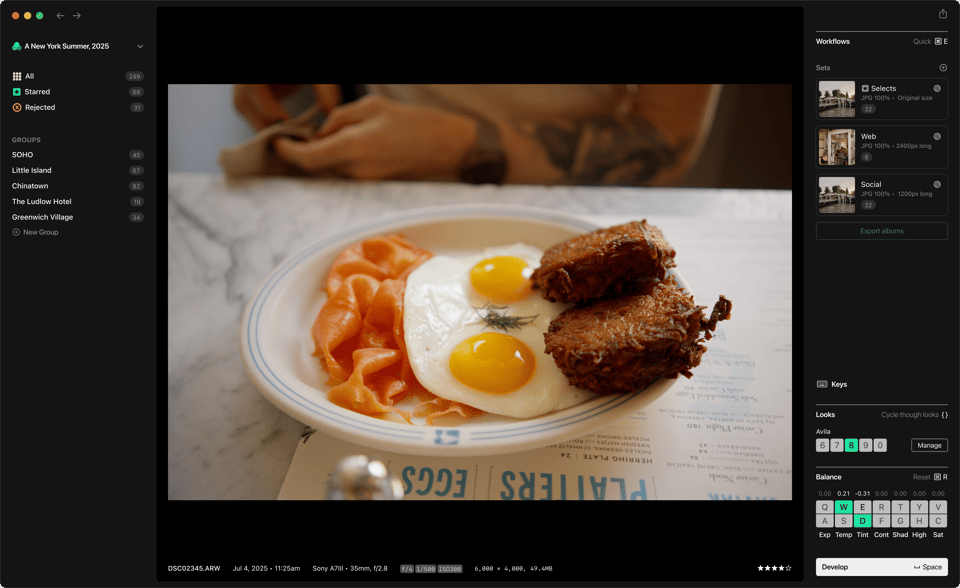
In related news, I co-founded a new company, Latent Co. I joined Ryan Carver and Juan Pablo Zambrano to make a photo editor for Mac, called Aphera. We’re getting close, and our beta testers have been great. It feels anachronistic to make a fully-fledged photo editor in an age where everyone can supposedly make software. But we’re doing things the hard way. This moment feels extremely turbulent and I’m doing my best to straighten out the plane, to carve out a semblance of control and independence. It’s a gamble, a risk, but it also feels like the right thing to do.
If you’re interested, you can sign up for early access and updates at the website and learn more about the app in the About, Now, and Docs. Or, if you shoot RAW, are tired of Lightroom, appreciate independent software, and would like to test, you can hit reply.
We’re in the desert now, for a week. There’s a cactus outside. I’ll soak my bones in the dust.