Design Wall: Heart Mountain Regalia
During the process of producing a piece I’ll usually collect a large number of photos. They collectively serve as both inspiration and reference. Whenever I feel unsure about a decision during the work I will go back to these and look through them to ground myself in what has come before.
Sometimes my work for the day is simply sitting at a computer and looking through databases for what I need. In the context of this newsletter, I am calling these collections “walls” after the parallel ideas of the red string crime board in detective fiction and the idea of a pattern wall in quilting.
A third reason, might be that they hang from a wall in my studio, so I can keep multiple projects going at once while not getting overwhelmed by paper.
Heart Mountain Regalia has already required a comparatively large number of images. I wont be able to share as many as I have saved in on way or another, but here are some of my favorites:
The Hospital at Heart Mountain and Related
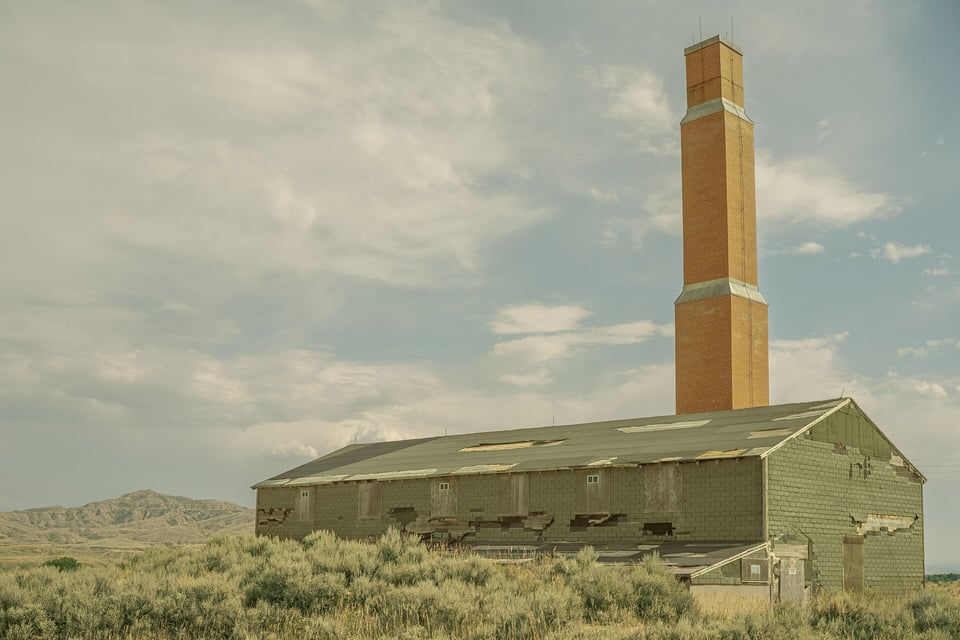
This photo was uploaded to Wikicommons (on of my favorite places to do visual research) by a photographer as part of their Wiki Loves Monuments event in 2025. That stuns me because it feels so nostalgic and old. But the condition of the hospital is correct for current day, so I suppose I have to believe it.
This was the first photo that drew me to the hospital-one of very few original buildings from the relocation camp still standing. My great grandfather helped decide how the camp was taken apart and what materials were sold. I wonder why he left this one alone?
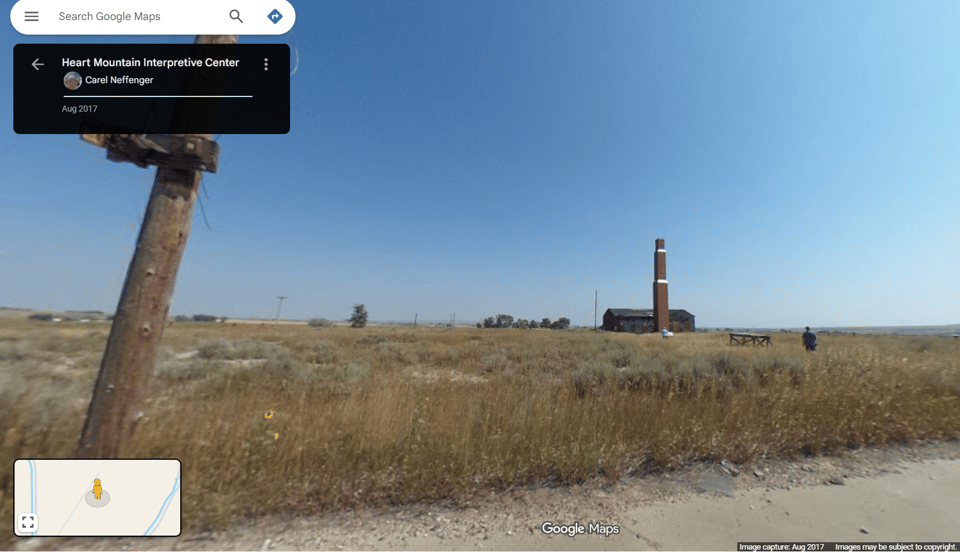
I went to google street view to investigate where someone would have to be standing to get a heart mountain building in the foreground and the mountain on in the upper left of the image. It was impossible not to notice that basically anywhere you dropped the little guy on the map you could see the chimney of the old hospital.
It reminded me of the lighthouse in Clive Barker’s Abarat, which crumbles as it rises out of the plains near Chickentown U.S.A.
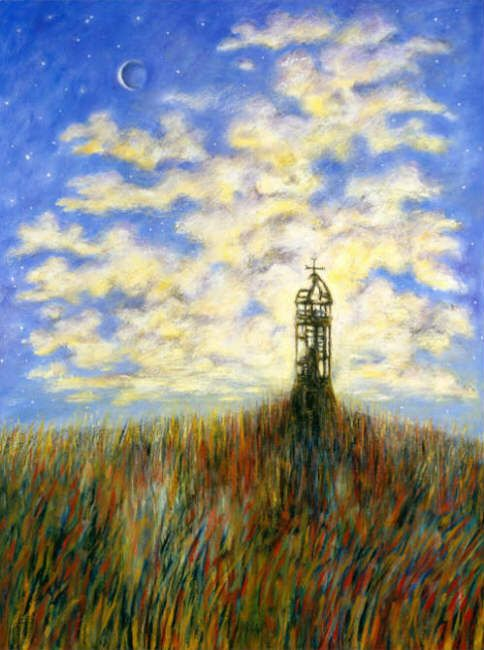
Most people don’t know that british horror writer Clive Barker, who is probably most well known for the Hellraiser films, has a set of young adult books. Not only that, but the books are illustrated by several hundred oil paintings he completed while planning the book. The books genuinely rule, and are also genuinely some of his most revolutionary and hopeful works.
Being exposed to his work very early in the process of developing my own conceptualization of what art is shaped me. In particular my visual imagination is full of his oil painting. One day I want to be able to create worlds as visually rich and surprising as his are. I want to create images as wholly my own as his are.
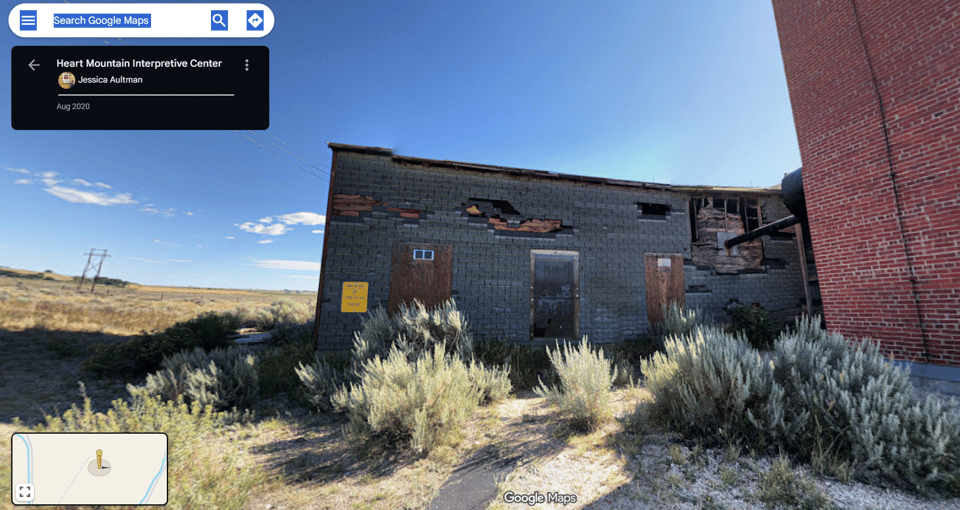
I was pretty sure I was going to feature the hospital in my regalia when I saw this image on street view. It sealed the deal for me. I mean just look at that texture on the wall and the one bright piece of gold (a plaque? or perhaps plywood?). If I have time I think I can quilt this part with golden Sashiko thread and really emphasize how the building is falling apart.
The Camp and the Mountain
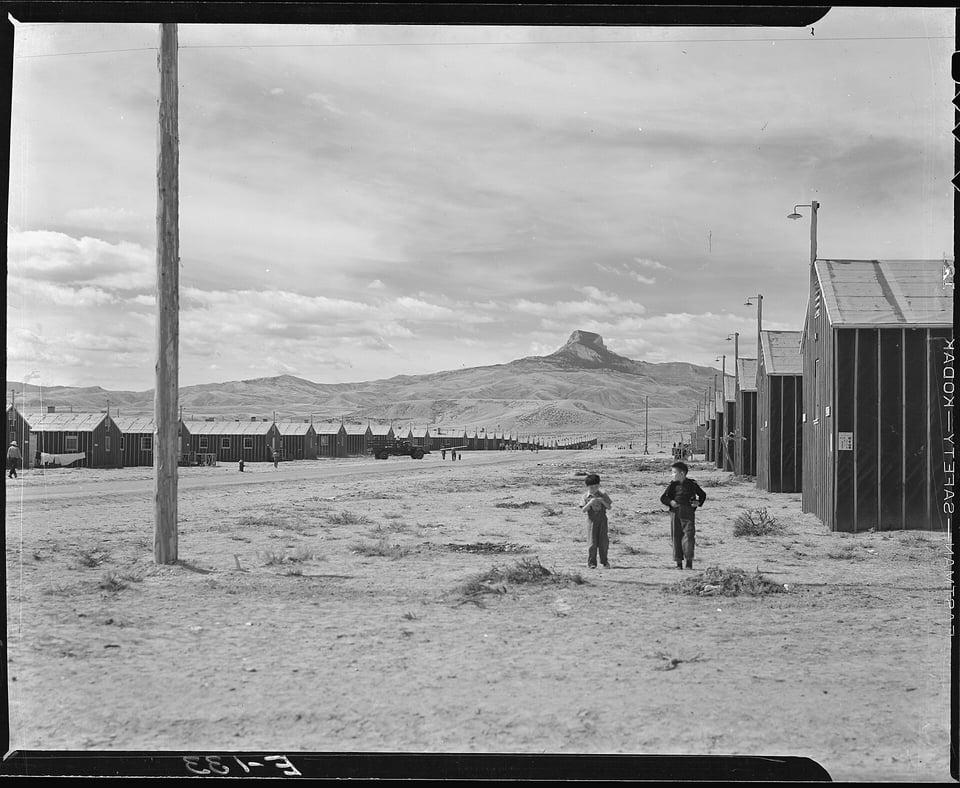
I think Parker was looking a few degrees South of West, rather than due West. As far as I can tell from the maps I’ve found the streets of the relocation camp ran East/West almost exactly. This is the photo that started to make me thing that my initial image of the mountain rising on the left shoulder of the garment was right.
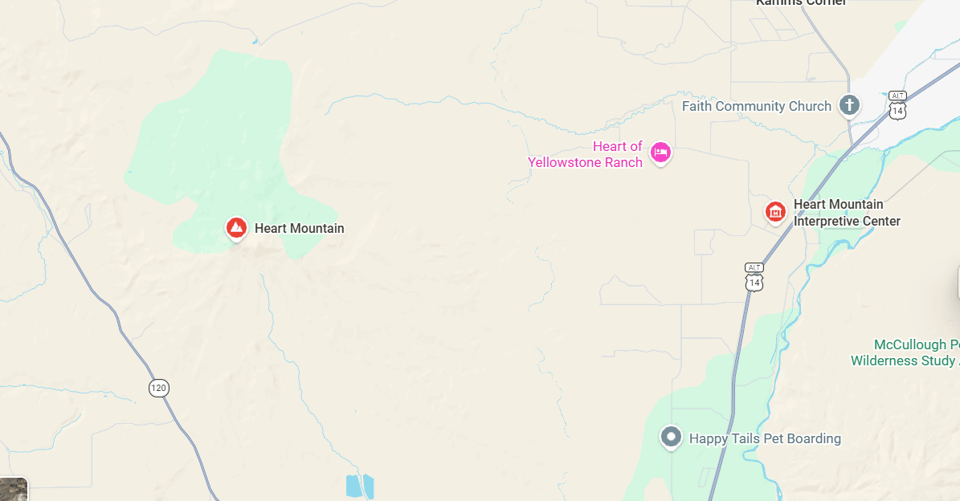
This map shows the relationship of the peak to the the contemporary interpretation center for the monument. Now compare that with this image.
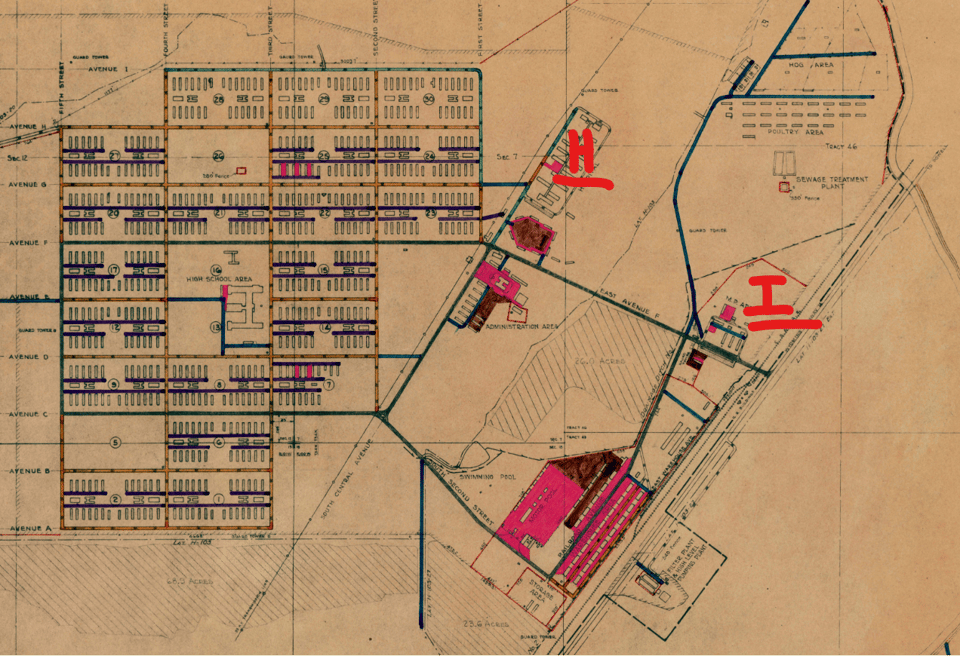
The I marks the interpretation center and the H marks the hospital. You can see that the hospital doesn’t run north to south. When I imagine this piece I think I am standing in the field between the contemporary building and the ancient hospital looking North-west.
The Mountain
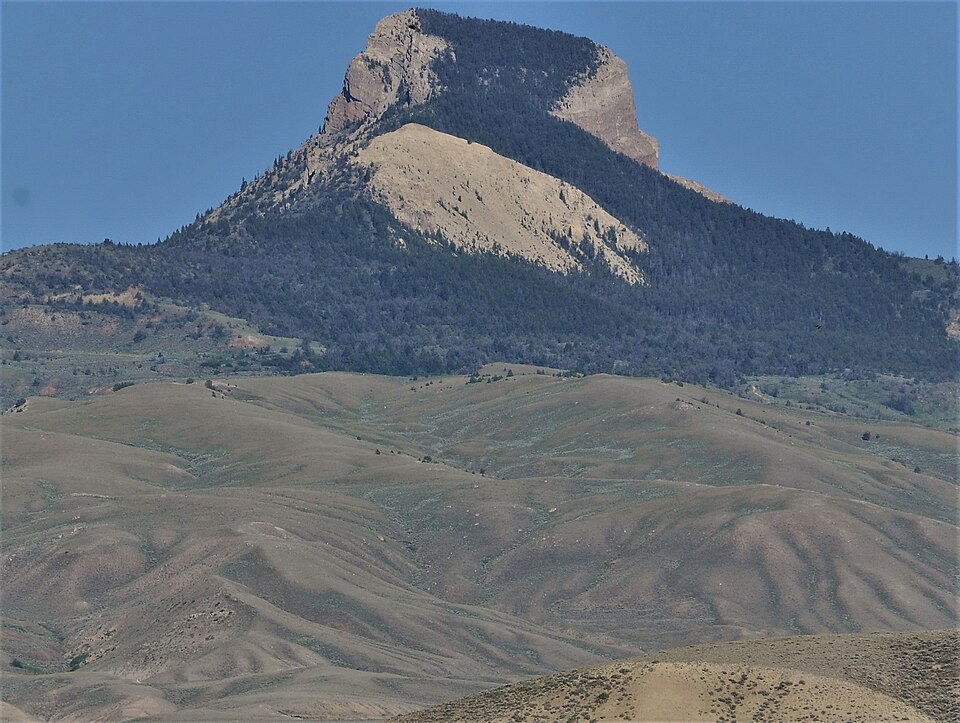
Here you can really see the distinctive shape which gave her the name buffalo heart mountain. I think nailing the two-tone nature is going to be key to a convincing portrait of her.
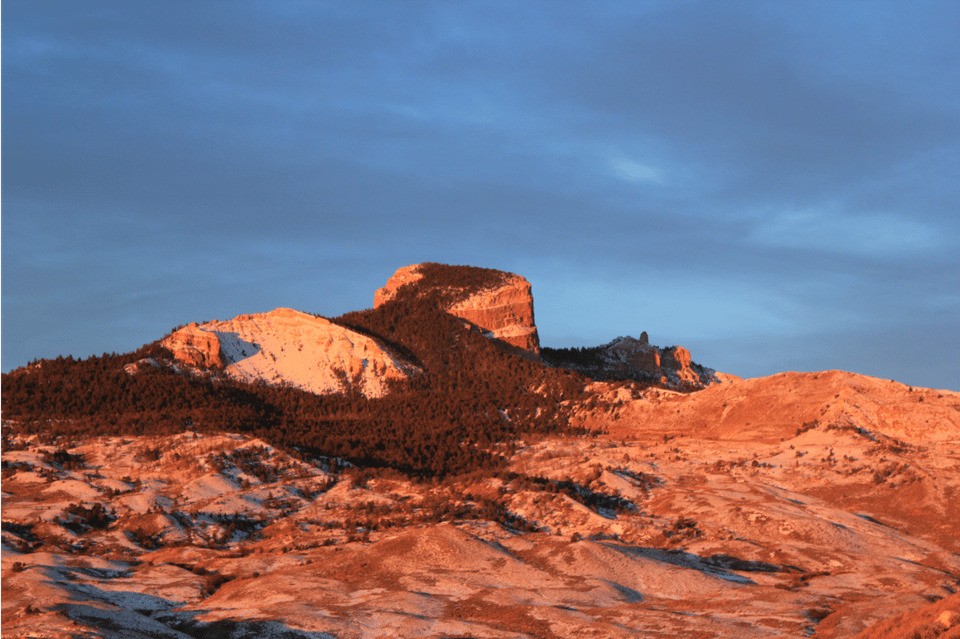
This one helps me see the three-dimensionality of the mountain, its mass and wheight. It also makes me wish I could get a red foreground to work, but I think I have to keep the red for the hospital’s chimney.
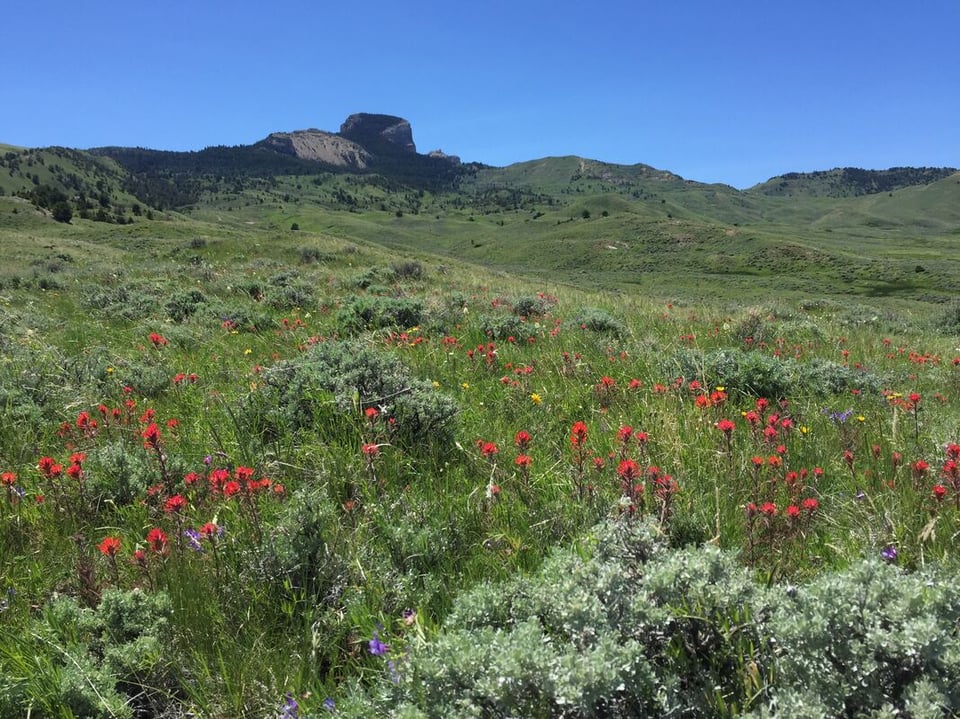
This one makes me okay with the fact that I’ll probably have to choose green for the landscape. I can use sashiko thread in red to get some of the wildflowers into the quilting.
Why these photos?
This piece has two subjects. The mountain and the hospital. The mountain serves as anchor for the way things grand and natural are sacred, and the hospital as an anchor for the way that things all too human are sacred.
The “buffalo heart” will sit right behind my own heart. Aligning the pumping of my blood with the pumping blood and heart beat of the land from which Heart Mountain rises. The hospital will sit on my right side, behind my lungs with only bone in between. The energy of each breath I breath will be aligned here, encouraging me to “breath through” both me and this land’s memories.
More tomorrow,
Weaver
-
There is something jarring (in a positive way) about the two maps late in this series - like suddenly seeing a pleasant town from the perspective of a military satellite halfway through a movie.
-
I think maps in general are very jarring.
-
powerful landmarks both. buffalo heart mountain's signature shape and the deterioration of the hospital make me wonder about their beginnings, long (and not so long) ago. how the earth pushed against itself to make that stone top. who laid the brickwork that is falling apart now.
-
Wow, I only know Abarat via the audiobooks so I had no idea about all the oil paintings! I mean, I've seen a few of them used as cover art, but I didn't know they were by him or that there were hundreds of them. That's wild.
-
Yeah! Its cool isn't it! He's been painting on and off for his whole life. His work was used on the covers of horror magazines in the 80s. He has a pretty distinct style and if you start to look you can see his work all over. Its in the Chilling adventures of Sabrina (i think thats the name) as part of the set. I think his visual art is a huge part of understanding him and Im so Grateful I can get to share it with people/
-
I love to see your process! I got goosebumps looking at these photos and walking through the connections you made placing them in relation to each other.
I also love Abarat! Not a book I think my mother would have liked knowing I read if she'd realized what it was about.
-
Abarat was a book my parents encouraged me to read but I never had any friends who read it because I think parents hated it. I'm so delighted to find others who have read and loved it.
Add a comment: