PCT Special Edition - Food
One of the big questions I get is - what do you eat out there?
People who know me in normal life may be surprised to hear the answer is basically “pure junk”.
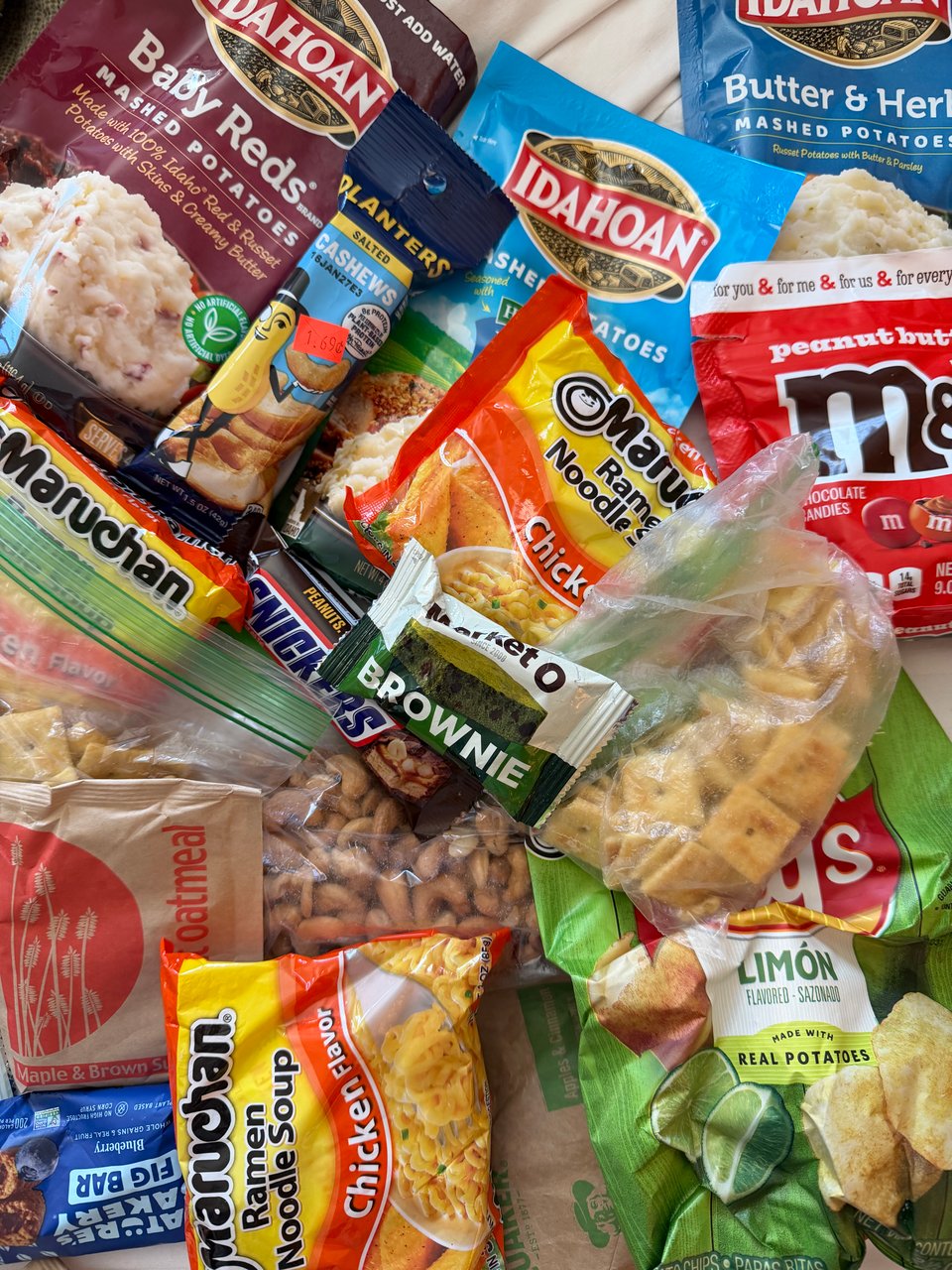
It comes down to your priorities. I want to carry as little weight as possible. I want variety. I don’t want to worry about cooking and doing dishes. I want to be out there hiking big mileage and enjoying the views! Because of these priorities, I choose food with the maximum amount of calories per gram of weight, and which require little prep or cooking, best if I can eat them while walking.
As for the weight, fats have 9 calories per gram, while carbs and protein each have 4. Water has 0 calories and is very heavy, so anything that contains water is basically a no-go, ruling out all fresh fruit and vegetables, breads, and most other “normal” foods. It follows you should prioritize foods high in fats to minimize weight. Nuts are king here, and while they are actually NOT an especially good source of protein (more on that later), since they are mostly fat, they are very weight efficient. Fried chips, chocolate, crackers, cookies, and candy are also great here.
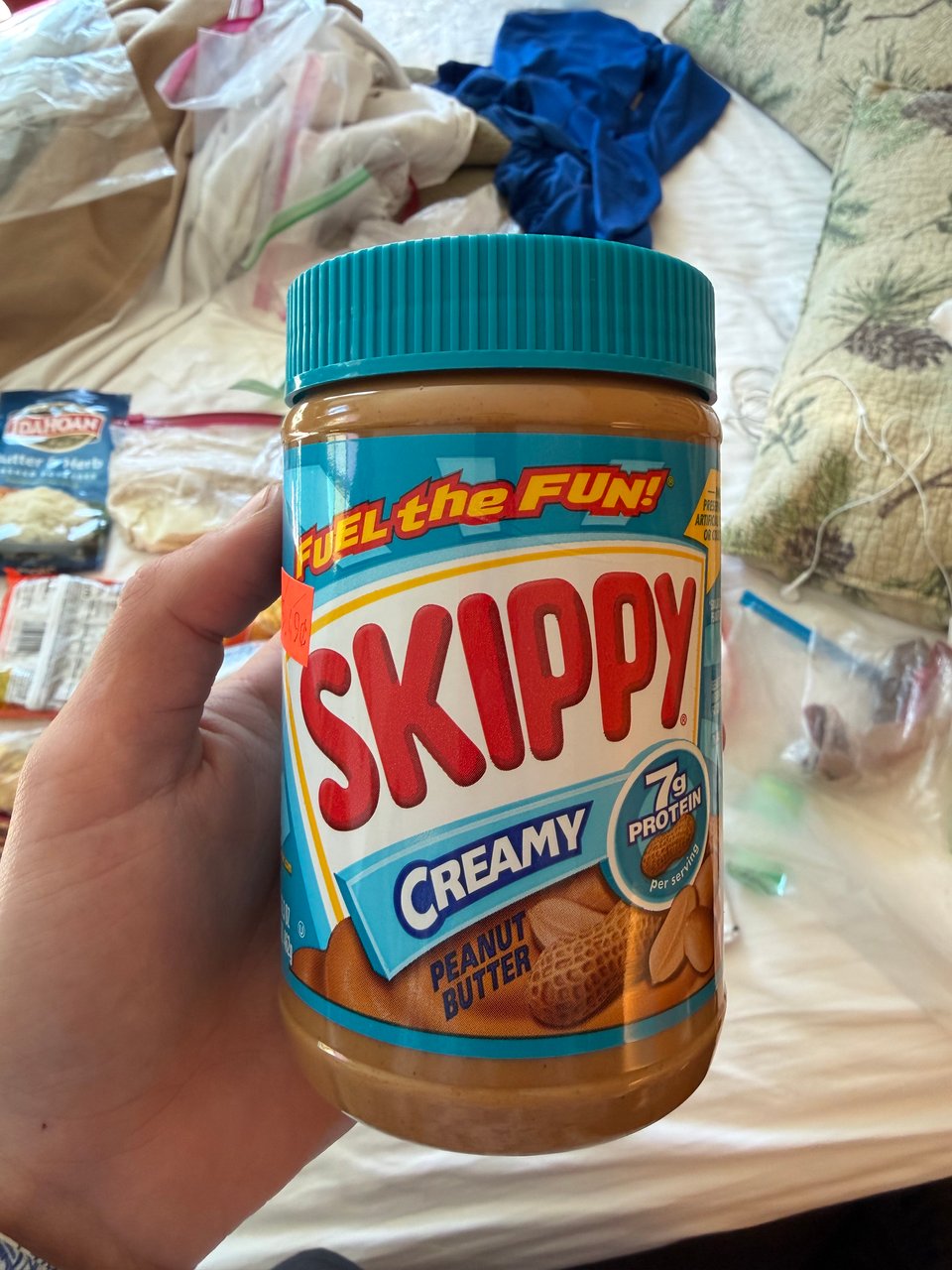
Sugar, which some people think would be king, is twice as heavy per calorie as fat. I try to avoid it for that reason and also the typical reasons, though it is tough to fully eliminate and can at times be good for quick energy. Some people bring a supplemental bottle of olive oil to add extra calories but I am too afraid to do that since I know I would eventually end up with it exploding or leaking inside my pack. A jar of peanut butter (the artificial kind that is fairly solid and does not “flow” or leak) is almost as good and seems less risky to me. This Gear Skeptic video has great info on the subject and a spreadsheet with calorie per gram values for those who want to know more.
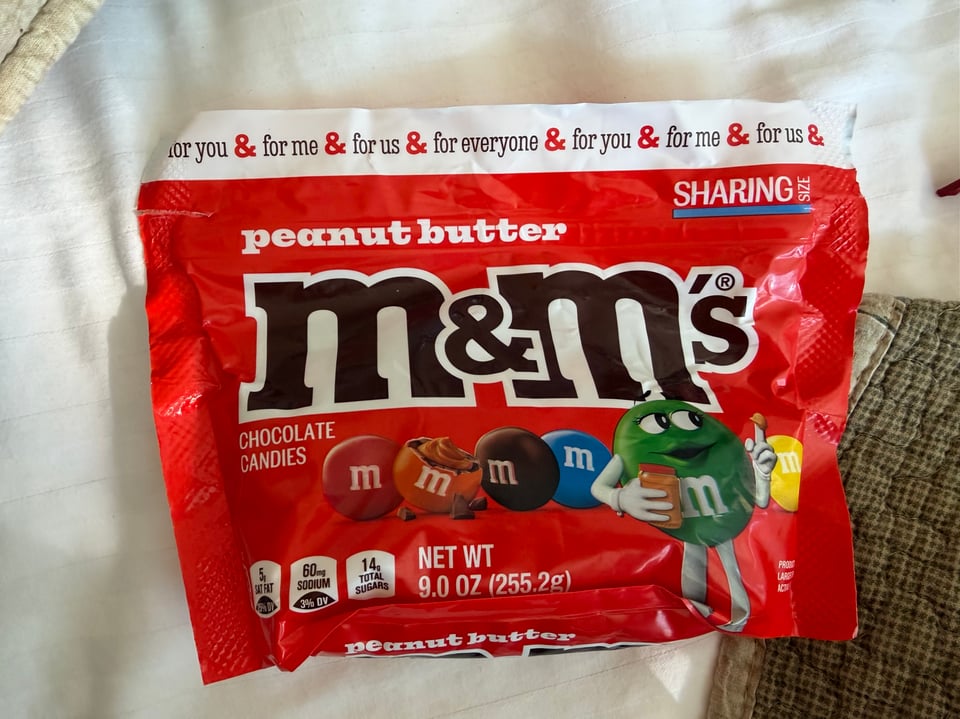
I don’t have a cook stove, and instead “cold soak” in a plastic jar. The name is somewhat misleading, as there is very little actual soaking involved. I am impatient and hungry at the end of the day. I pour a package of instant mashed potatoes in with water and can eat it within 2 minutes. Honestly it tastes A-OK especially if you just hiked 30 miles. Oatmeal soaks overnight, I prepare it when I finish dinner so it is ready in the morning. Some people get fancy, soaking beans or couscous all day etc, but I am here mostly to hike so don’t bother with that. It is usually hot out, but even when it’s cold, I find that I do not mind this system, usually just glad to have food in general.
Traditional “backpacking meals” are fairly rare out here. Not only because of the price, with many being $15+ each nowadays, but also since they are not always stocked in towns. They also must be cooked or reconstituted with water, with many taking about 20 minutes. I am not sure I could stomach knowing I was eating $90+ of food per day, or wait that long every time I wanted to eat. Fuel cans for stoves are also hit or miss to find, sometimes being out of stock, not stocked at all, or with eye-watering prices like $30 for a small can. I will stick with my peanut butter cold soaking jar for now.
I learned that apparently my ramen habits are unique. In the desert, you sweat so much that in order to maintain performance in the heat you need to consume lots of electrolytes (primarily salt). They are key to maintain energy and coordination over long hours of doing endurance sports especially in hot weather, something I learned the hard way as a runner. So now I do not mess around anymore. I get some from specialized electrolyte packets. But there is another good source of salt. My 11am snack is usually ramen, where the normally concerning sodium content now works to my advantage. Water is scarce and I want to waste no daylight so I eat it as follows. Crush up the ramen in the bag, pour in seasoning, shake, eat with a spork like chips. And wash down with as much water as you can afford.
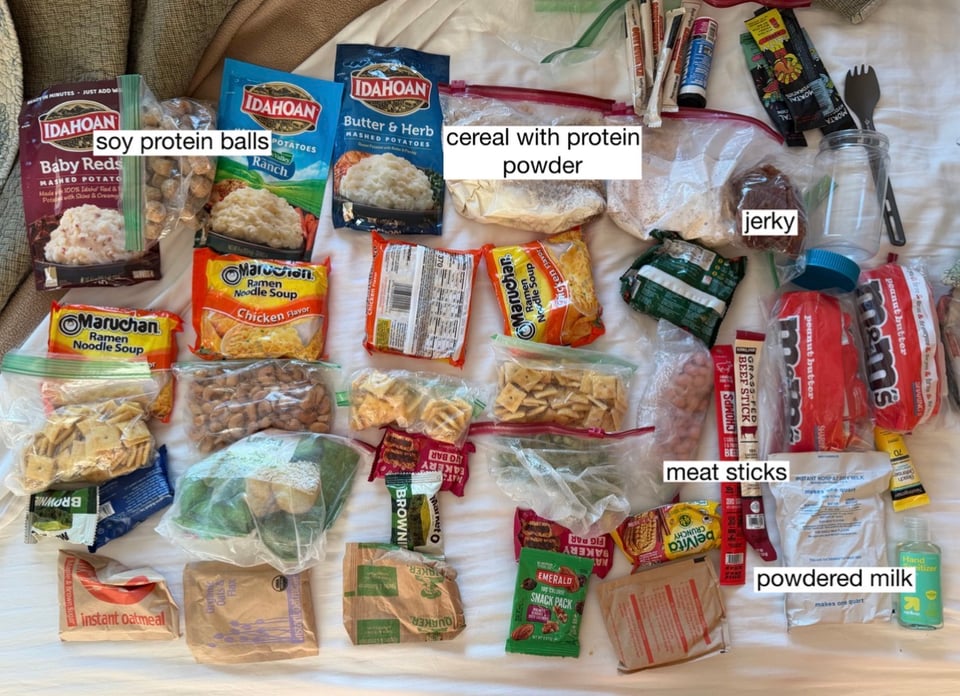
The hardest macronutrient to source on trail is protein. I have found some extra things to add to meals. Unfortunately most types of nuts are about 80% fat in terms of calories so they are only marginally useful here. Things like dried milk, jerky, soy protein balls (tvp), and protein powder in meals help me get enough. Also notable are things like dried refried beans, ramen, and crackers which are mostly carbs being grain-based, but have a non-negligible amount. Other foods have marginal amounts, but since the quantity I eat is large, they become another significant source when combined. I am probably not getting the optimal amount of protein, but I am at least getting the minimum requirement.
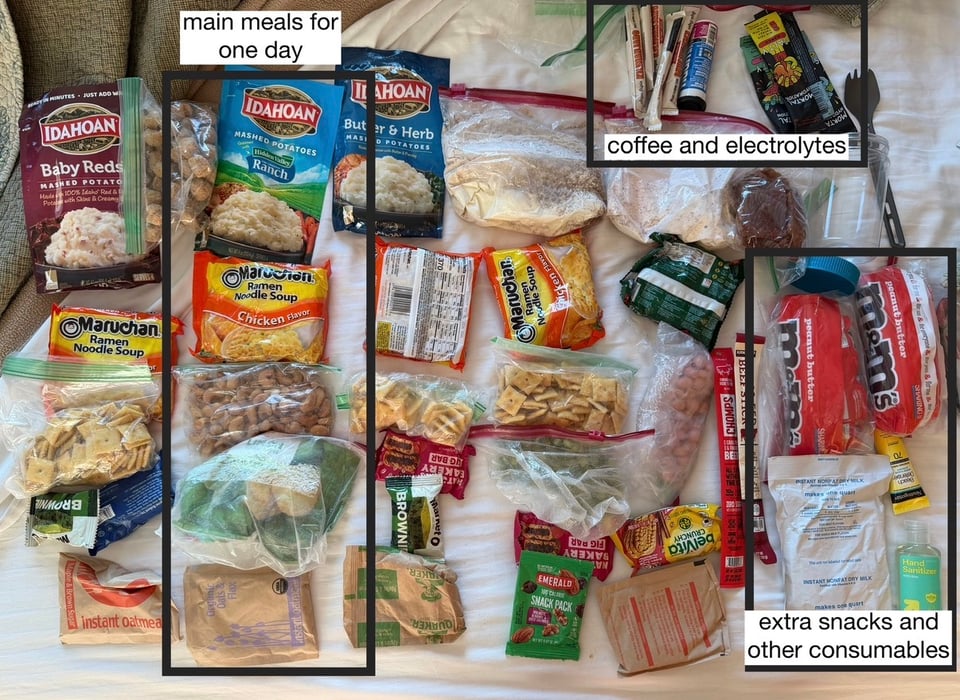
A sample day of eating is something like oatmeal and coffee for breakfast with some peanut butter, mid morning ramen, 3-4 large snacks of 300-500 calories throughout the day, and instant mashed potatoes with soy protein or a side of jerky for dinner. And some more peanut butter before bed.
The options to resupply ie get more food also make things difficult. Some towns have grocery stores, while others have basically only gas stations. The logistics of mailing yourself food in boxes is very complicated. Packages get lost. Post offices are open only weekdays in some towns, often with hours like 11am-4pm. If you arrive at 4:01pm on a Friday you just lost almost 3 days waiting for your box. You may no longer enjoy the foods you liked before the hike and shipped yourself. In my opinion it is better to take what you can get. I am largely taking my chances and seeing what I can source locally, with a couple boxes here and there.
“Hiker boxes” are another essential piece here, where in towns there are large boxes or bins where you can leave anything you don’t want. There is inevitably food in them, but it is very hit or miss. I have gotten some great hits so far though, as well as other essentials like sunscreen, toothpaste, and ibuprofen. I even found a brand new pair of my favorite brand of socks in my size.
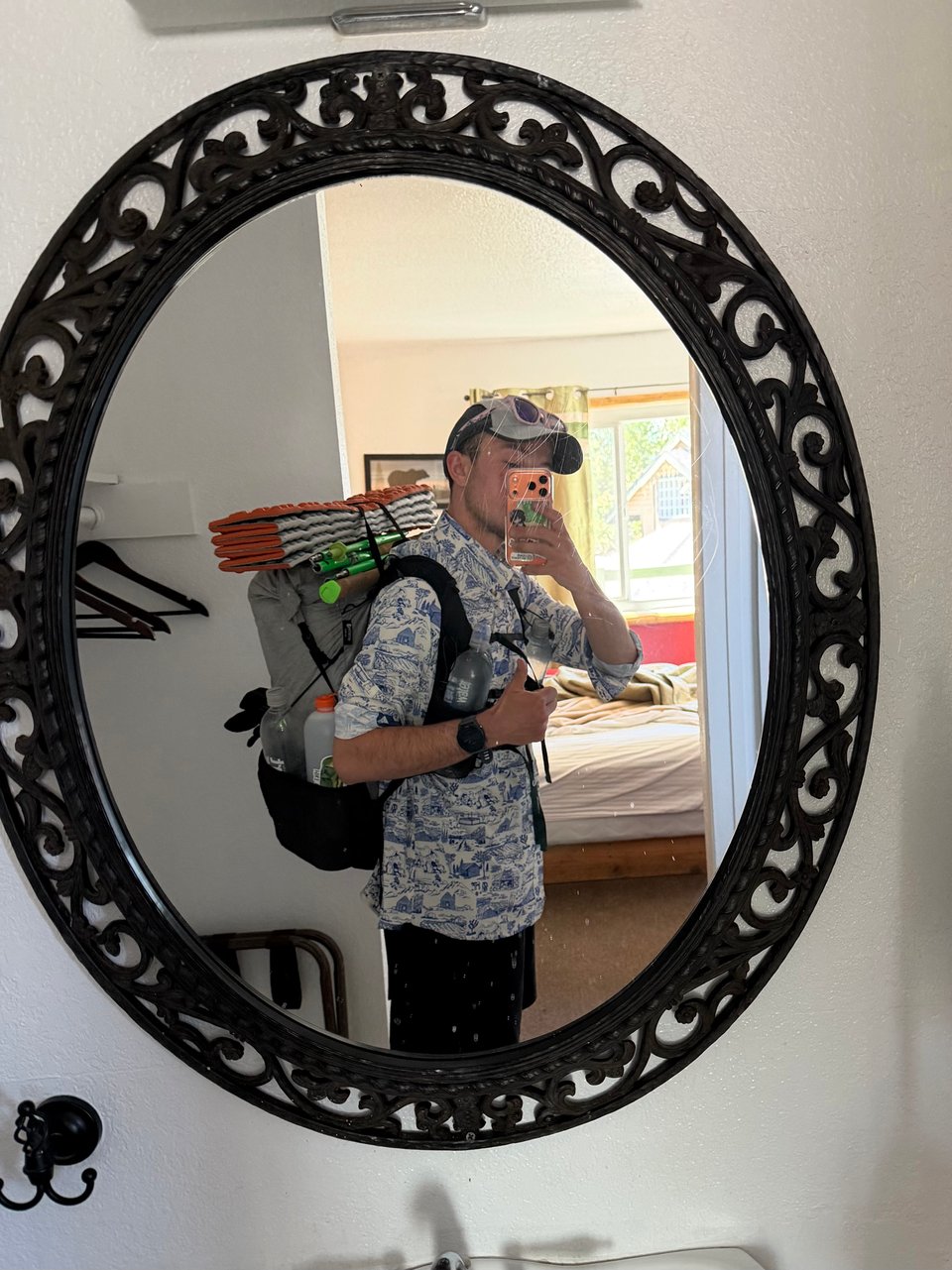
Mostly the hardest thing is eating enough. The bottom pocket on my pack helps to keep snacks within reach at all times, but it is a constant struggle since it is not trivial to replenish the approximately 6,000 calories burned per day. And carrying more than my typical 1.5-2 pounds of food per day is incredibly heavy. As I go on, I have heard the “hiker hunger” will set in and it will become easier to eat more.
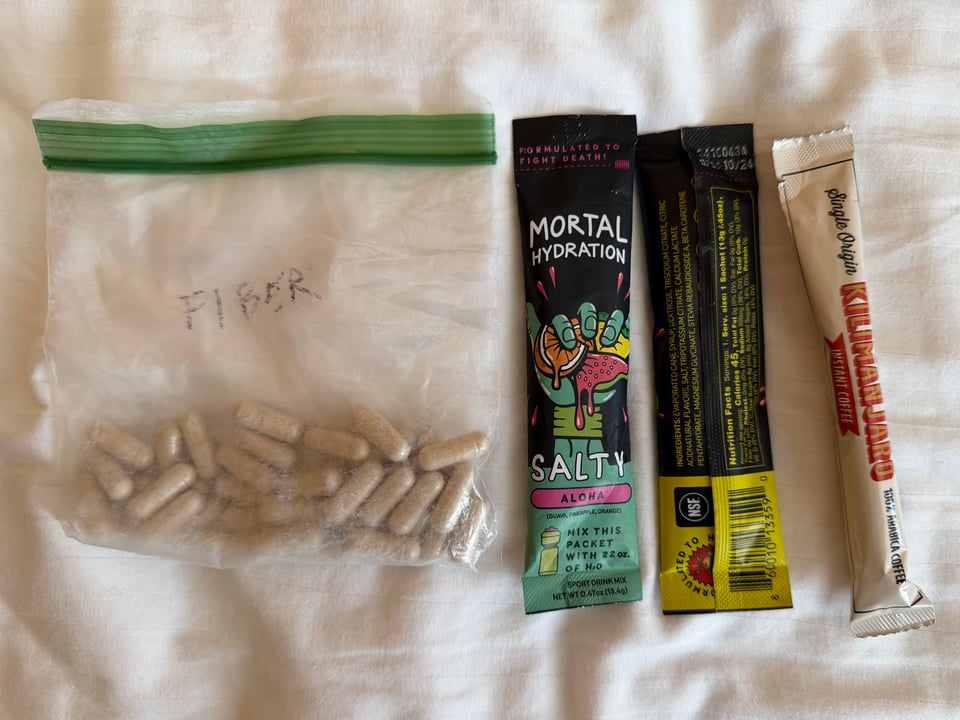
As for supplements I take fiber pills, instant coffee in the morning for caffeine, and electrolytes each day. So far I have no GI issues, feel adequately nourished, and have energy to bust out a 35 mile day when I want to. I eat lots of real food - salad and meat and ice cream when I am in town. Of course I am constantly working on being better and honing my food choices, but so far, this is my basic setup. If you have interest in a deep dive into another topic, let me know.
Eigen