
Travel Log Ep 1: Liepāja, Latvia
In which Kat visits an abandoned military structure in the sea, and records it in image and audio.
You step out of the portal into the Study at the top of the Tower of the Castle in the Bog. On the desk, otherwise tidy, lies a carved wooden sign that says "Gone travelling". It hasn't been hung up anywhere, so you can only assume the travels have finished, and the hubub coming from downstairs confirms this.
Indeed, friendly faces are filling the lantern-lit common room as you enter, and the picture screen at the far end is already up. You see me sitting cross-legged in one of the armchairs and I give you a little wave. Soon enough, everyone has their warm drinks and snacks within easy reach, and the lights dim to a comfortable twilight.
I've had two journeys recently, so this won't be a craft project breakdown. There are a few projects currently sitting around the house (giving me puppy eyes at best and psychic damage at worst whenever I pass them), but this letter is going to be about the Baltic Sea.
In particular, about a certain abandoned area on its coast. See, I managed to get into an international project with my design university, giving me a chance to experience a different culture and go abroad... to the country I was born in.
Granted, I hadn't been to Liepāja before, so most of my experiences were as new to me as to the rest of my party, and I certainly learned a thing or two. And since you're here, you're about to learn them too. So, let’s journey into the (ruefully) rich world of military legacy of Latvia and visit its western coast, just north of the Lithuanian border – the city of Liepāja.
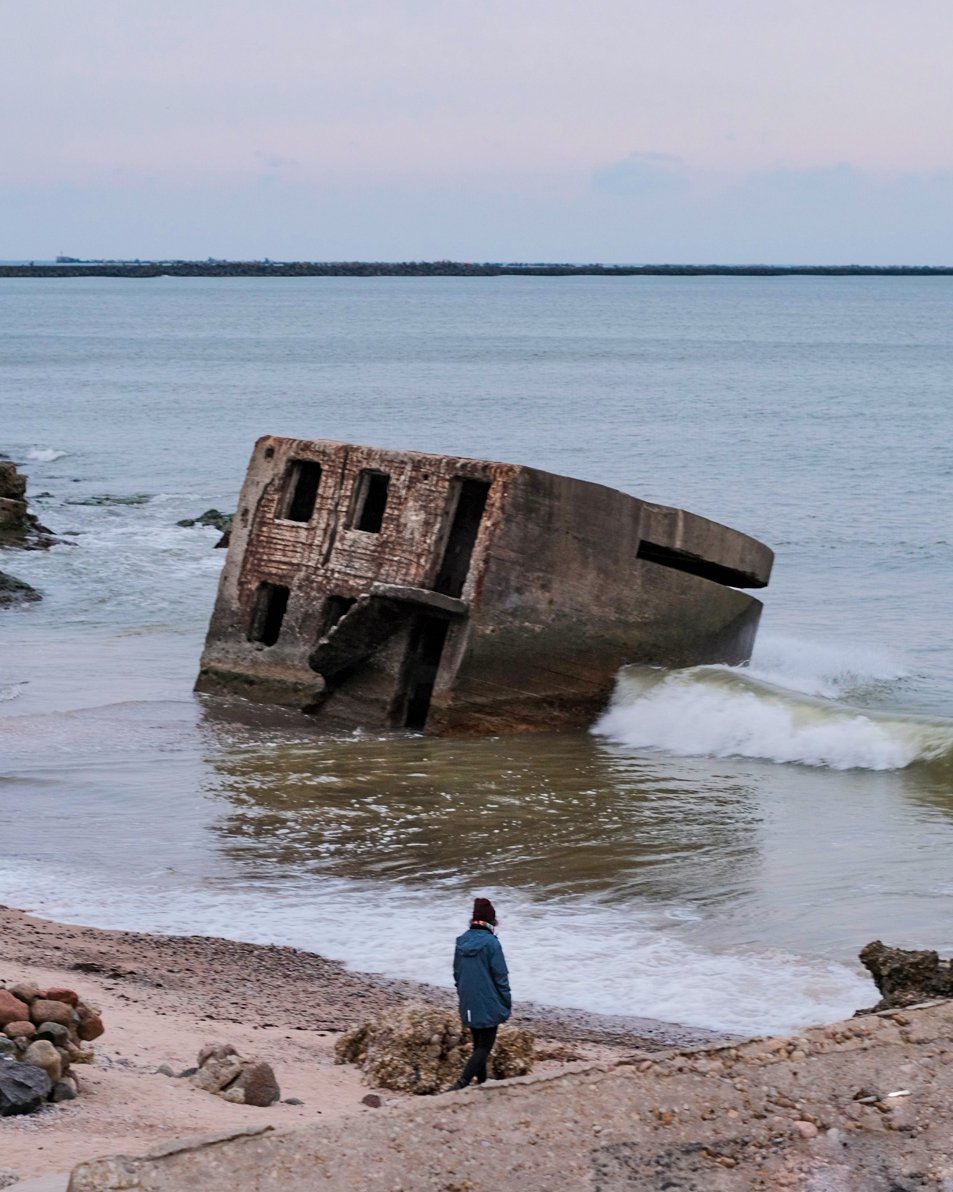
First, a bit of history. The Artillery Batteries, north of Liepāja proper, lie on the shore of the Baltic sea. A part of the military fortifications built around Liepāja city (back then known as Libau) in the 1890's to protect the Russian empire from invaders such as the German Empire, these reinforced concrete structures were designed mainly to house cannons, and to survey the horizon for things to shoot them at. The construction finished in 1906, however by then, it was too late to celebrate. With the looming threat of WW1, the whole military complex was deemed too dangerous to keep around, so close to the border of the Russian Empire, right where another horrible military power could grab it. (Talk about being stuck between a rock and a hard place, am I right? I almost feel sorry for the cannons.) And so attempts at demolition were carried out (and the cannons allegedly smelted), but we can only assume these were half-hearted, as the structures are still standing over a century later.
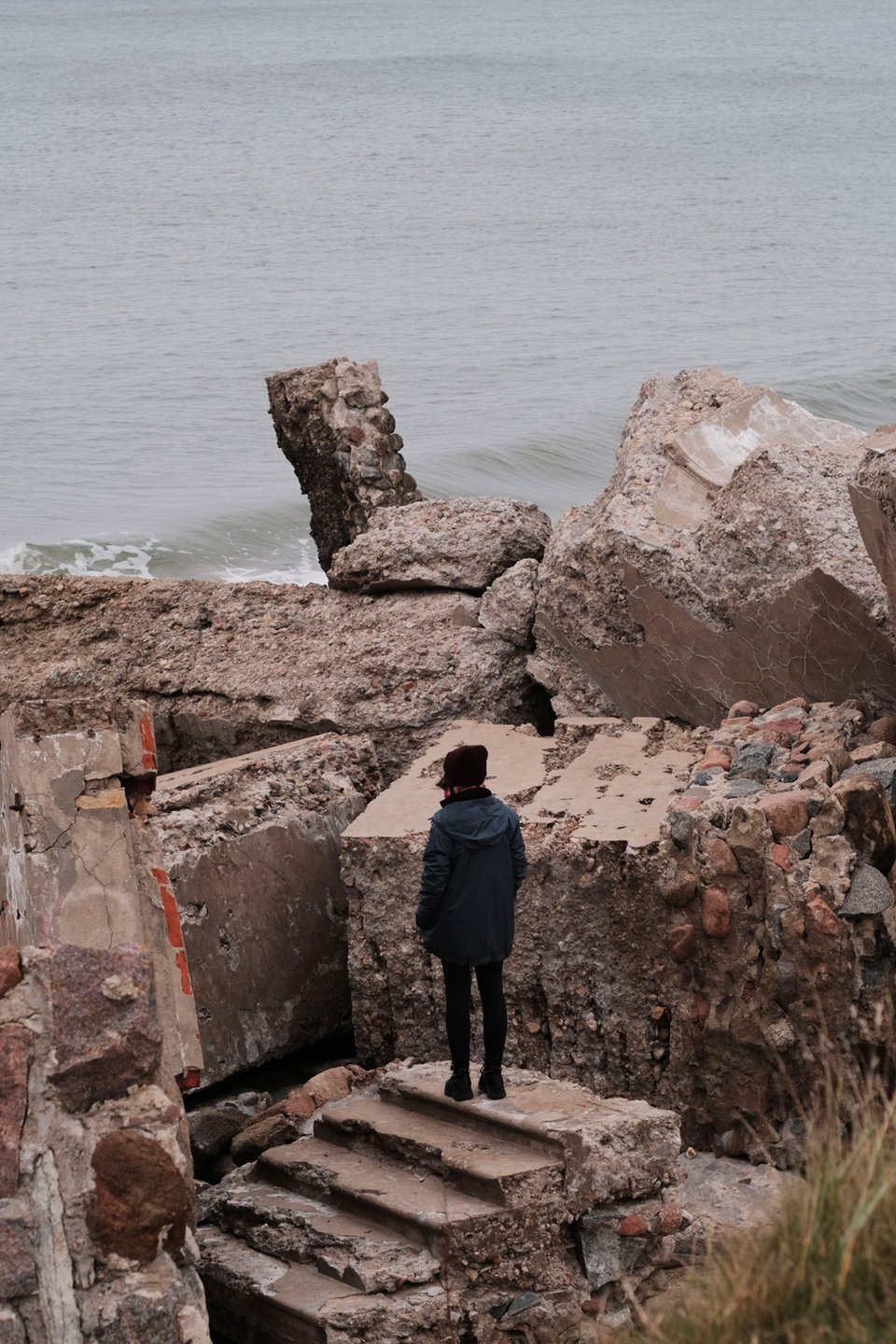
Well, mostly standing. The fine sand dunes of the Baltic sea could not be expected to reliably work as foundations for tonnes of reinforced concrete – after all, dunes are very busy and they have places to be – and so the fortifications were carried along, right into the sea. Some of the buildings have fallen and piled up on each other like drunk youths, while others stand solitary in the shallow water, their walls slowly melting, like snowmen in late March. (Hey, can I say that? Does it still even snow anywhere in March?)
Which is when I and my design team showed up, with a bag full of audio equipment and a fisherman suit, fully intending to take the “field” out of “field recording”, and replace it with “sea.” The setup appeared complicated to the uninitiated (me), but in the end, it allowed one of us to wade into the water with hydrophones in tow, connected to recording devices with monitoring outputs, meaning we could listen to the underwater sounds live, without all the hassle of dunking one’s head into the Baltic Sea in early October.
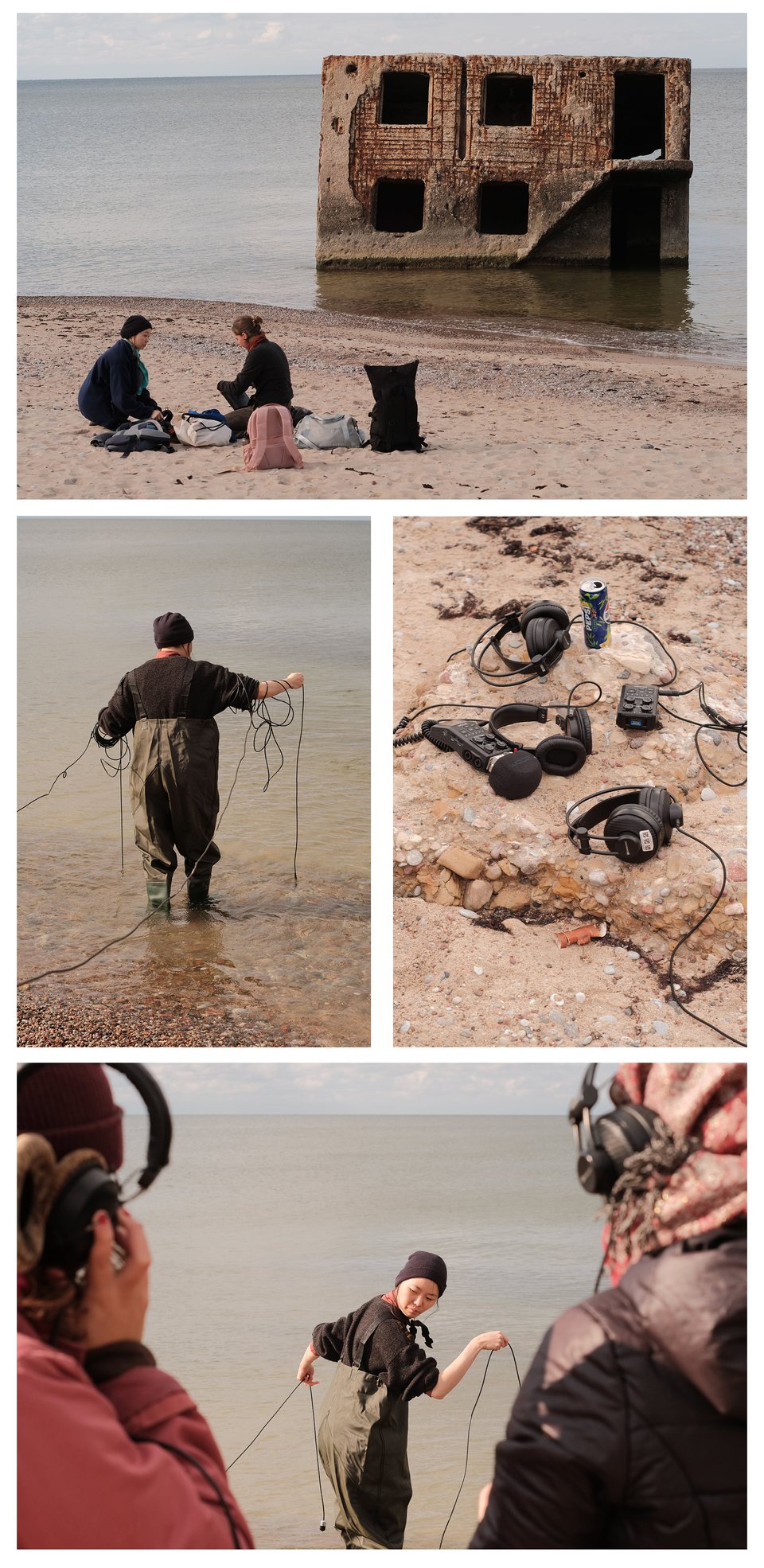
It sounded like pebbles and bubbles is all I’ll say. We dropped the hydrophones over the windowsill in the water inside the submerged building, and when it was my turn with the waterproof suit, I did a little experiment, scratching the walls and stepping hard on the stairs to the second floor – it was later confirmed to me that the sounds carried through the walls into the water (into the cables, into the headphones) and the people on shore could hear me playing the house like an instrument.
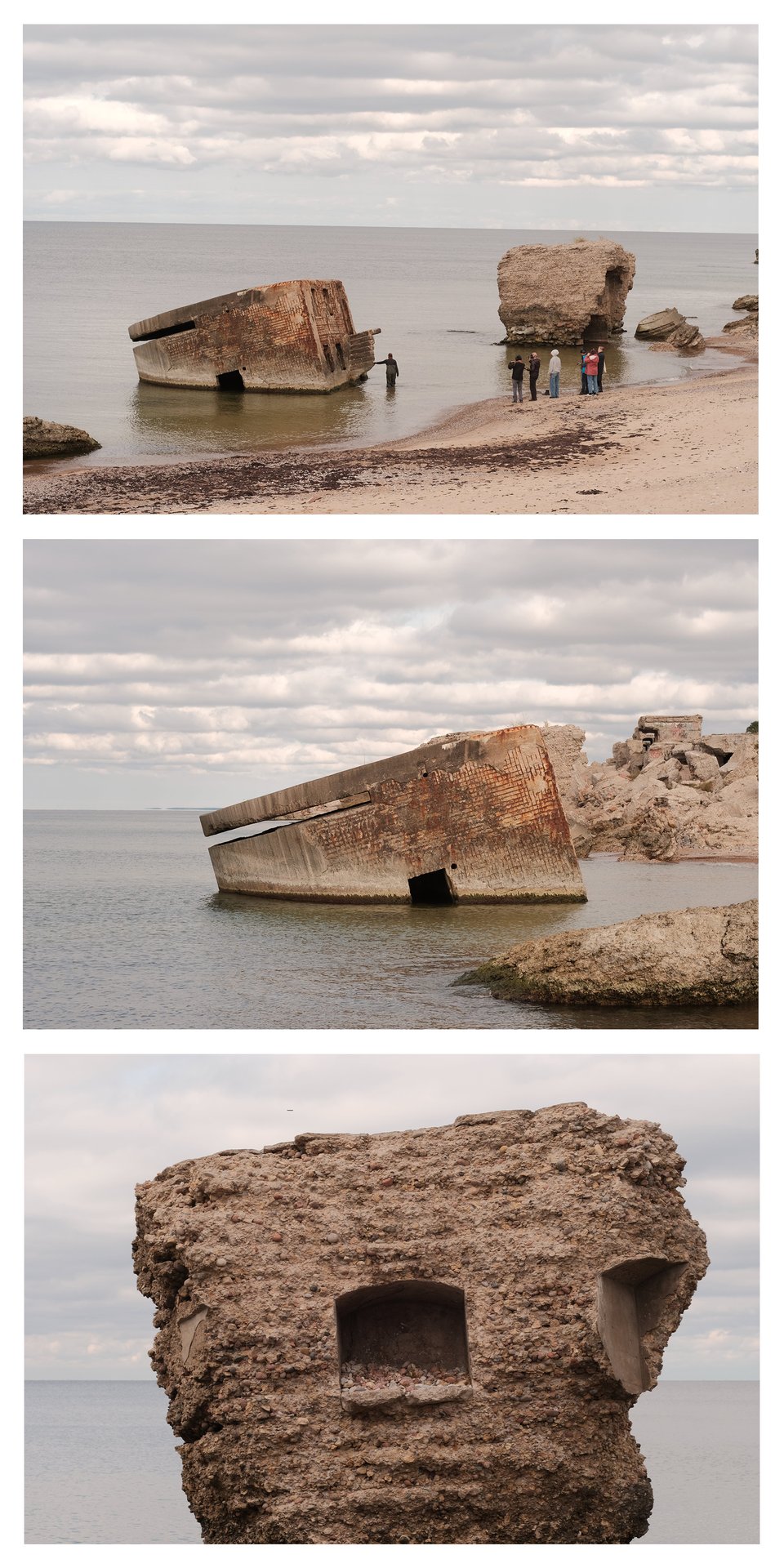
Despite the demolitions, the area wasn’t completely abandoned in the 20th century. Besides the artillery batteries, the military complex also included several administrative buildings and bomb shelters connected with a maze of underground tunnels, designed to confuse and trap overconfident teenagers, a horse-riding arena, officers' hall and even a stupid-looking cathedral. The area was closed to civilians during the Soviet occupation, and as a result fell into the hands of atrophy and organised crime once the Soviet military moved out in 1994. Some of its rough reputation still endures through urban legends, but the military structures are treated as tourism objects.
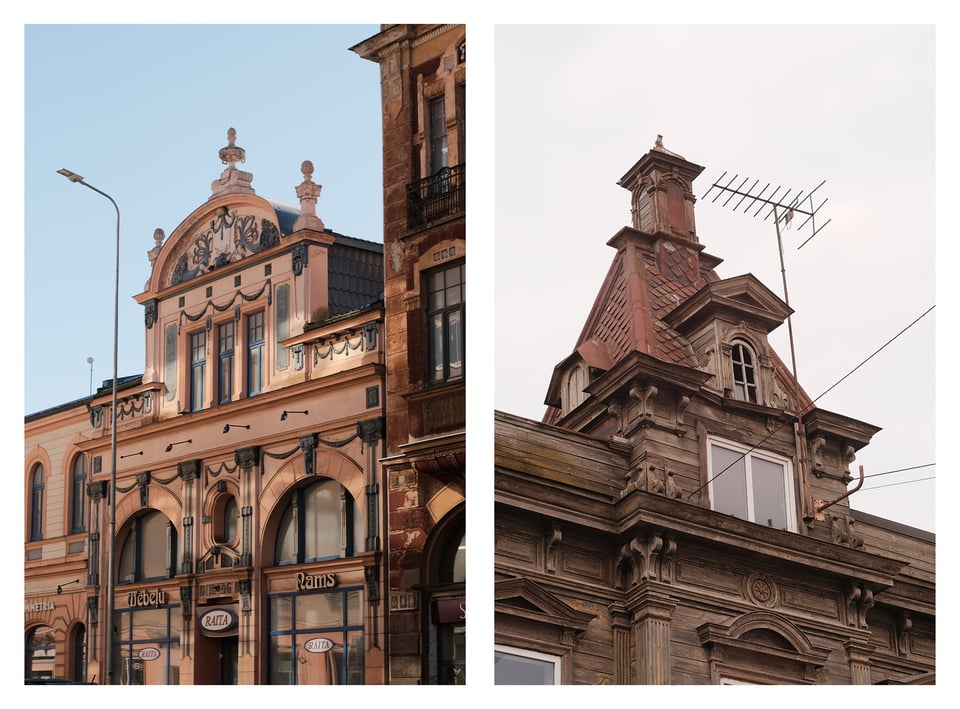
Setting aside its rough past, Liepāja today is a really nice place to be. The architectural palimpsest characteristic to the Baltic states is in full swing here, mixing 19th century wooden manorhouses and the city grandeur of Art Nouveau with the austere socialist classicism of the 1930’s and the depressing concrete blocks of the Soviet occupation. There’s even a fully reconstructed 17th century inn. You never know what you’ll find around the corner. And the unique geographic location of the city, tucked between the sea and Liepāja lake, ensures you never run out of lovely locations to watch the sunset or go for a swim.

Imagine being able to casually have this, a short walk away from home.
There are lovely cozy restaurants, concerts, craftsmanship and culture to be enjoyed, and if your phone dies on your way home, you can reliably navigate using the murals that pepper the city with colour. Honestly, if it wasn’t so far away from Rīga (3h as the car drives) and, therefore, my friends, I would be seriously thinking about moving there. (But I’m thinking a lot about moving these days - like a migrating bird, fidgeting restlessly in southern lands, dreaming of a nest. Oh well, all in good time.)

On a fun note, we had the opportunity to go on two boat rides during our project, one into the sea and one to the lake. Liepāja is known as the city “where the wind is born”, and even though the weather was quite kind to us on most days, the sea trip truly convinced us of the truth of this moniker.

So, if this has given you ideas of seeing the place for yourself, there actually might be a nice moment coming up for it, as Liepāja will be the European Capital of Culture in 2027. Wait, has this been a paid advertisement all along? Don’t be silly, recommending Latvia to people is a hobby.
The picture screen dims just as the lanterns light up, revealing empty cups and satisfied faces. Little snack bowls are stretching their feet, and as you get up to return to your life, you notice a string of little postcards pinned to the wall next to the stairway. And there appear to be several more strings, as of yet unfilled.
