
The 1882 Petition to England
In 1882 three rangatira from northern New Zealand travelled to London on an explicitly political mission. They had been selected by Ngāpuhi to convey a petition to their Treaty partner, Queen Victoria, setting out the many grievances of Māori generally.
Although to many Pākehā at the time this seemed like an exercise in futility given that the Queen had no practical influence or control over the affairs of New Zealand, to many Māori it appeared entirely logical. After all, repeated appeals to local authorities had fallen on deaf ears; and the Queen had entered into a series of undertakings with the Māori people through te Tiriti o Waitangi signed in her name. No great ariki would wish to have their reputation called into question due to unfulfilled promises.
The Queen's mana was dependent upon upholding her end of the bargain. Surely, if Victoria only knew of the true plight of her Māori subjects she would act to ensure justice was delivered them? After all, she had told many Māori visitors to England over the years of her great love and affection for the Māori people.
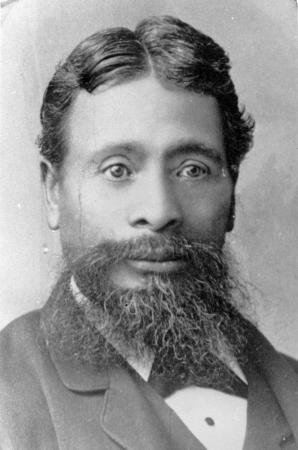
Social visits were one thing but political emissaries were another matter altogether, especially now that New Zealand was a self-governing colony only weakly subject to any kind of imperial oversight. In November 1881 the Taranaki settlement of Parihaka had been invaded by Armed Constabulary, an action widely reported on and condemned by the British press and public.
And so New Zealand’s Agent-General in London, Francis Dillon Bell, a former Native Minister, did all in his power to persuade the British government not to grant the Māori deputation an audience with Queen Victoria. Hirini Taiwhanga, the most influential member of the group, was described in one report (from former Native Land Court judge and Hokianga resident Frederick Maning) as ‘a scheming unprincipled native and notorious mischief maker’.
Reports such as these were solicited by the New Zealand government in order to convey an impression that Taiwhanga and the other two members of his group (Wiremu Reweti Te Puhi Hihi Te Awha and Hakene Parore) were not of suitable character to be introduced to the monarch, that their motives for wishing to do so were doubtful and the grievances they spoke of entirely unfounded. Nothing to see here, and certainly no basis upon which to permit a meeting with the Queen, was the consistent message conveyed by the colonial administration’s London representative.