
Stolen Books
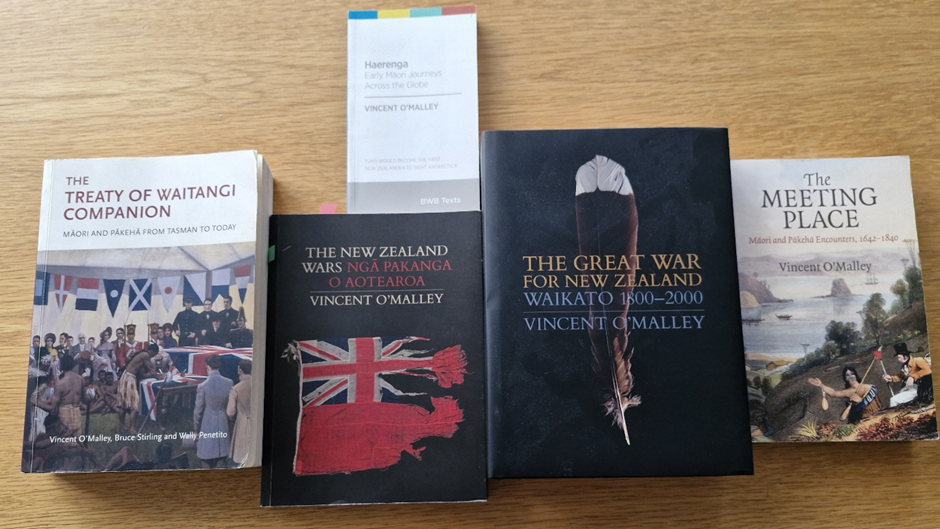
When it comes to AI, call me a sceptic. It doesn’t help that five of my books were illegally downloaded by Anthropic for AI ‘training’ purposes according to a searchable database put together by The Atlantic in 2025. If you have published anything, it is worth checking whether your work has been stolen too. They are not all books. I’ve also got articles and book reviews included in the database.
Large numbers of other New Zealand authors are in exactly the same situation. Following class action in the United States, a $USD1.5 billion settlement was agreed in September 2025.
The catch? Only books registered for copyright in the United States are eligible for compensation. That includes about 500,000 books out of the estimated 7 million stolen globally. None of mine are included in the payout and that would apply to the vast number of other New Zealand books stolen by Anthropic – around 3500 books in total according to the New Zealand Society of Authors.
The theft of my books might explain why I get fewer school students contacting me to ask questions about the New Zealand Wars these days. Why bother when you can get my answers from Claude instead?
There is no doubt AI can be useful for a range of tasks related to historical research. Personally, I choose not to use it. I would not trust its results and would prefer to do my own research in any case. Contrary to some stories, it won’t be replacing historians anytime in the near future.
But AI training does raise concerns about the pilfering of intellectual property published online and I have thought carefully about what I might do about that. Perhaps, for example, I should restrict access to my newsletter archives to subscribers only in an effort to minimise ongoing thefts? I know some other writers have done so.
For the time being I have chosen not to do that. But it might be one option for the future. It is one of the reasons I use a paywall and paid subscription tier for some of my content – it is harder for AI crawlers to steal that stuff.
In the meanwhile, one thing I have started doing is making clear that my works are not the product of AI. Our new edition of The Treaty of Waitangi Companion, to be published in November 2026, is the first of my works to include such a disclaimer.
Personally, I would like to know when I read a work whether it is the product of an actual human author rather than some stolen, regurgitated or AI-generated process. And I’m guessing many other readers would also like to know that.
-
At least 37 of my published papers have been stolen. Of course, I had to assign copyright to the publishers for many of those papers, so I have to apply for permission to use my information if I want to use the tables or figures. If there were ever a finding against AI owners for the theft of my published papers, the money would go to the publishers rather than to those who developed that intellectual property. So those of us whose academic publications consist entirely or nearly entirely of journal papers will never receive compensation for the theft.
Add a comment: