
Abolishing the Waitangi Tribunal and Cuts at Archives New Zealand and the National Library
The ACT party’s newly-announced policy to abolish the Waitangi Tribunal once it has completed hearing all historical inquiries may be deeply ill-informed. But for all that, it is still hardly surprising. For the past three years it is almost as if the different parties within the coalition government have been competing with one another to see who can come up with the most anti-Māori policies – whether axing te reo Māori from school books, removing references to the principles of the Treaty across a range of legislation, overturning Marine and Coastal Area (Takutai Maona) judgments considered too favourable to Māori by legislative fiat, or dozens of other things.
New Zealand First has already signalled it will also be announcing the abolition of the Waitangi Tribunal as one of its policies. According to ACT, the Tribunal has intruded into ‘day-to-day government policy. It proposes alternative policy settings and seeks to steer decisions that properly belong to elected governments and Parliament.’ It is claimed that ‘This is not the tribunal's role and never was’.
But that is either deeply disingenuous or profoundly ignorant. As multiple scholars have noted (and I pointed out in a post at the time of the Waitangi Tribunal’s 50th anniversary in October 2025), the ‘original intent’ behind the formation of the Waitangi Tribunal in 1975 was to investigate contemporary claims. Indeed, it could do nothing else before an amendment to the Treaty of Waitangi Act in 1985 that enabled it to inquire into historical acts and omissions of the Crown dating back to 1840.
So by investigating contemporary claim today, including through a range of thematic kaupapa inquiries, the Tribunal is not departing from its original purpose but in many ways returning to it after a long period in which its primary focus was diverted to historical matters.
And in any case, it is not as if te Tiriti o Waitangi has a time limit on it. And neither does the obligation on the Crown to honour it. The present government has strained Waitangi Tribunal resources to capacity by breaching the Treaty on so many different fronts, so frequently, that multiple urgent inquiries have had to be convened. The Tribunal is not responsible for that. The government is.
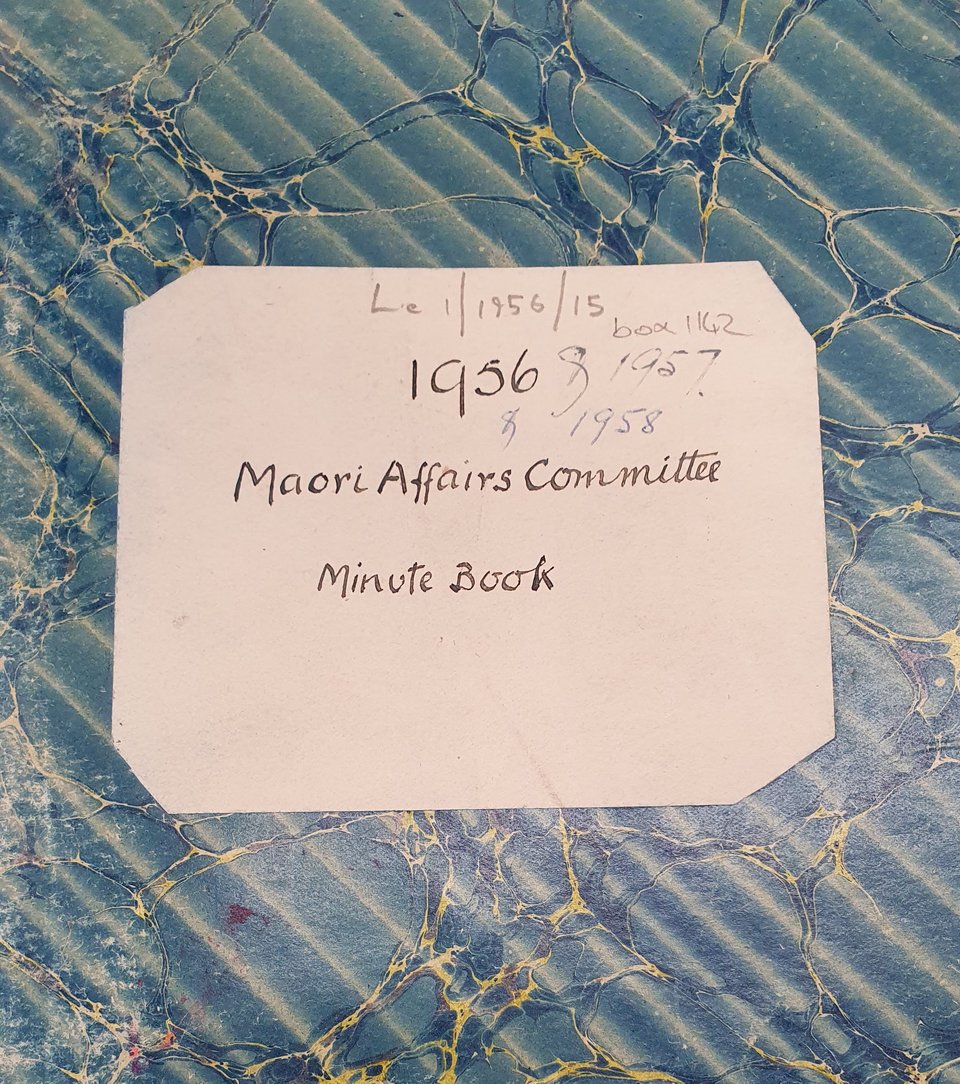
Turning to another (not entirely unrelated) topic, readers may have seen the recent news that Archives New Zealand and the National Library are proposing to shed around 12 per cent of their staff, with some units losing more than one-third of their total numbers. Both institutions are vital custodians of the country’s cultural and documentary heritage and these proposals come on top of previous cuts. It is already the case, for example, that researchers outside of Wellington are restricted to a maximum four hours per day at the Auckland, Christchurch and Dunedin Archives New Zealand offices. I commented on the implications of these latest cuts for a Newsroom piece the other day:
It’s difficult to imagine the National Library and Archives New Zealand could shed an eighth of their staff without this having a significant effect on frontline services for researchers. Historians, Treaty researchers, genealogists, academics, writers, school and university students, and everyone else who rely on these services will suffer as a consequence. And this comes on top of previous cuts to staffing levels, and other programmes being canned altogether, such as the digitisation of archival records.
Add to that the Ministry for Culture and Heritage getting rid of nearly all their historians last year (the ones who kept alive things like Te Ara and the Dictionary of New Zealand Biography) and it is clear these are pretty grim times for anyone who cares about history and cultural heritage in this country…
The weird thing is public interest has been booming at the same time governments have been slashing funding. Go figure. As a country we pretty much suck at valuing and protecting our cultural heritage and this is just the latest example.
Of course, research for the Waitangi Tribunal is heavily reliant upon the resources of Archives New Zealand and the National Library. But there are other common threads across these stories.
Recent reading
Asher Emanuel, The Valley: A ton of praise has been heaped on this book and it is all entirely justified. An epic work.
Maggie O'Farrell, Land: Some critics considered this a cliched and stereotypical take on post-famine Ireland. I was interested to read this both in terms of my evolving research on Irish and Māori historical relationships, but also my forthcoming work Whenua that will explore Māori and European attitudes to land. It certainly speaks to older Celtic and Irish notions of the land as another living being.
Padraic X. Scanlan, Rot: An Imperial History of the Irish Famine: As above, this time a recent history of An Gorta Mór (the Great Hunger), the famine that killed at least 1 million people in Ireland between 1845 and 1852 and drove millions more to emigrate.
Richard Shaw, The Good Settler: The latest in what is now a trilogy from Shaw exploring family history, colonisation and decolonisation in Aotearoa. Another work with Irish connections.
Eugene Bingham, The Chief and the Empire: The story of the remarkable Ngāpuhi rangatira Te Pahi and his trans-Tasman travels and connections. My review will appear in a future issue of the New Zealand Journal of History.
Add a comment: