
Mit Verspätung erhält Einfahrt: [Undisruptable Technology - Ausgabe #295]
#295, 28. November 2025
Guten Morgen,
bitte treten Sie von der Bahnsteigkante zurück, der Newsletter #295 fährt jetzt ein, bitte entschudligen Sie noch einmal die Verspätung und danke, dass Sie auch heute mit “Undisruptable Technology” reisen. Leider ist diese kleine Sammlung von Tech-Themen, die mich in der vergangenen Woche interessiert haben, gestern nicht mehr fertig geworden (es ist toll, dass man Arzttermine online machen kann, blöd bleibt, dass man dann vor Ort ewig warten muss), aber das ist ja jetzt nachgeholt. Rechtzeitig zum - Trommelwirberl - Black Friday.
Der schwarze Einkaufsfreitag hat mich ja in der Vergangenheit eher kalt gelassen, aber dieses Jahr haben der Sohn mit seinem Ersparten und ich ein echtes Gaming-PC-Schnäppchen gemacht. Gelingt, wenn man wirklich über Wochen Preise studiert (er), genau weiß, was man will (er) und jemanden hat, der nicht bei der erstbesten Lösung zuschlägt und immer wieder sagt, lass uns doch nochmal woanders schauen (ich). Was nicht hilft: Den Agentic-Mode der KI nutzen und sie mit Einkaufszettel losschicken. Das bringt exakt Nullkommagarnix, so leid es mir tut und so gerne ich andere Ergebnisse vermelden wollen würde. Kein Schnäppchen, nur komische Shops, vermutlich fehlt der KI das Gespür für Geld (ob’s an den Eltern liegt?). Alles andere zum Black Friday durfte ich bei meinem Arbeitgeber Bitkom am Montag in einer Pressekonferenz mit vorstellen, die Ergebnisse sind interessant und hier zu finden.
Und weil wir ja keine Zeit haben (das kennt man vermutlich nur noch, wenn man so viele Lebensjahre hinter sich hat wie ich und seit dieser Woche schon wieder eines mehr aufsummiert, man sollte Alter einfach in Millisekunden seit Geburt messen, dann gibt es nicht so komische Sprünge), geht es jetzt los mit den 10+ Links rund um digitale Disruptionen und analoge Absonderlichkeiten.
Bis nächste Woche (dann hoffentlich pünktlich,
Andreas Streim
Ten news that fit to send
X Just Accidentally Exposed A Vast Covert Influence Network Targeting Americans: Wer es nicht schon gelesen hat, diese Geschichte, bei der plötzlich X den Standort anzeigt, wo ein Account angelegt wurde und von wo aus er vermutlich befüllt wird, ist schon… interessant, wenn auch nicht wirklich überraschend. “On Saturday, X users found scores of pro-Trump and MAGA accounts that were trying to pass as Americans but were operated from countries in Europe, Asia, Africa, and elsewhere. X acknowledges that some of the operating locations may actually be the location of a VPN service rather than the location of the account owner, but the sheer number of accounts operating from outside of the United States makes it clear that not all of these are simply proxy locations. Furthermore, some of these accounts had listed their locations as being within the U.S., and some were operating with usernames such as (@)American despite being operated from overseas.”
AGI is not possible even in 10 years: Kommt die KI-Superintelligenz oder kommt sie nicht? Man kann die Debatte und die vielen Beiträge dazu für müßig halten, aber, nun ja, es hätte halt nun mal ziemliche Auswirkungen auf Wirtschaft und Gesellschaft. Vermutlich. Der Ansatz hier: Mal zu unterscheiden was die sagen, die Geld einsammeln müssen, und die, die KI bauen. “The CEOs of major AI companies paint a picture of machine intelligence surpassing humans just around the corner, but when you look past the headlines and listen to the researchers actually building these systems, a different story emerges.”
The chip made for the AI inference era – the Google TPU: Dass man für KI ganz viele Grafikkarten braucht (Stichwort: GPU) und dass auch deshalb Nvidia vom KI-Boom so profitiert hat, das ist ja relativ bekannt. Hier geht es aber um Google und seine Tensor-Chips und einen “comprehensive deep-dive” ins Thema. Und vielleicht lohnt sich der Text alleine wegen dieser These zu lesen, bei KI ist ja alles möglich: “Google’s TPU is the biggest competitive advantage of its cloud business for the next 10 years”
A humanoid robot-shaped bubble is forming, China warns: Während hierzulande auf den Börsen-Seiten ja über die KI-Blase spekuliert wird, ist man in China einen Schritt weiter: “A humanoid robot bubble could be brewing, warned China’s leading economic planning agency on Thursday.” Interessantes Detail aus dem Text - außer, dass mann nicht so genau weiß, wofür diese Roboter denn taugen sollen - für mich: “More than 150 humanoid robotics companies are operating in China, Li said. More than half are startups or entrants from other industries.”
We're Losing Our Voice to LLMs: Ein Plädoyer, sich nicht alle seine LinkedIn- und Social-Media-Posts von ChatGPT & Co. schreiben zu lassen, nur weil es geht. “Having an LLM write "in your voice" is not the same. Your voice is not static. It changes with the tides of your life and state of mind. Your most impactful message may come because it was the right moment and you were in the right frame of mind. Let your voice grow with use. Let it be unique.”
Really Good Search is Really Hard: Aus gegebenem Anlass, weil ich damit gerade recht viel Zeit verbringe, und es dabei doch so trivial klingt: Gute Suche ist nicht einfach. “Search remains a highly open problem, especially as the standard for agents nowadays is to have readily available access to information, without a human-in-the-loop. Systems that plug AI in require highly configurable behavior and properties that aren't always conventional. Building around those constraints not only as an infrastructure project, but also a product development problem, was incredibly fulfilling and taught me lots about something that i've been consistently interested in, and that I'm eager to continue.”
Amazon Takes Aim at Starlink With Satellite Beta Promising Gigabit Speeds: Allein damit Starlink nicht weiter zum Synonym für Satelliten-Internet wird, mag ich das Projekt von Amazon. “Early test users will receive access to the Leo Ultra, Amazon's most powerful satellite dish. “The full-duplex phased array antenna provides download speeds of up to 1Gbps and upload speeds up to 400Mbps, making it the fastest commercial phased array antenna in production,” Amazon says.”
Drones have already revolutionized warfare. They’re about to do it again: Bei CNN gibt es einen guten Überblicksartikel zum Thema “Drones – and artificial intelligence – have reshaped the modern battlefield and are about to do so again”. Es geht nicht nur um die Ukraine, sondern um mehr: “Much like the Kalashnikov rifle in the previous century, mass adoption of drones became an asymmetric weapon of choice for forces facing long odds in global warfare, such as the Hamas militant group in Gaza; anti-junta rebels in Myanmar’s civil war; and the militaries of poorer nations, including many in Africa.”
The Nerd Reich: Ein Buch mit dem Titel “The Nerd Reich”, Erscheinungsdatum August 2026. Alleine wegen des Titels kommt das wohl auf meine Liste. “Drawing on insider political experience and new investigations, Durán traces this ideology from its philosophical roots in The Sovereign Individual by James Dale Davidson and Lord William Rees-Mogg. He introduces its modern apostles—some of Silicon Valley’s biggest names—and shows how the promise of technological liberation has transformed into a global movement for digital feudalism, powered by cryptocurrency, artificial intelligence, and the algorithmic propaganda of social media.” Was waren das noch für Zeiten, als don’t do evil das Tech-Motto war.
Bureau of Meteorology's new boss asked to examine $96.5m bill for website redesign: Wäre eine lustige Geschichte, wenn es nicht vielleicht sowas wie ein Abziehbild für manche Digitalisierungs-Story wäre. Website kostet 20x mal mehr als geplant - und taugt am Ende für die Nutzerinnen und Nutzer nicht. “It comes amid revelations that the new website cost more than $96 million to design — a far cry from the $4 million figure it originally claimed had been spent…. It comes amid revelations that the new website cost more than $96 million to design — a far cry from the $4 million figure it originally claimed had been spent.”
Undisruptable Technology im Bild
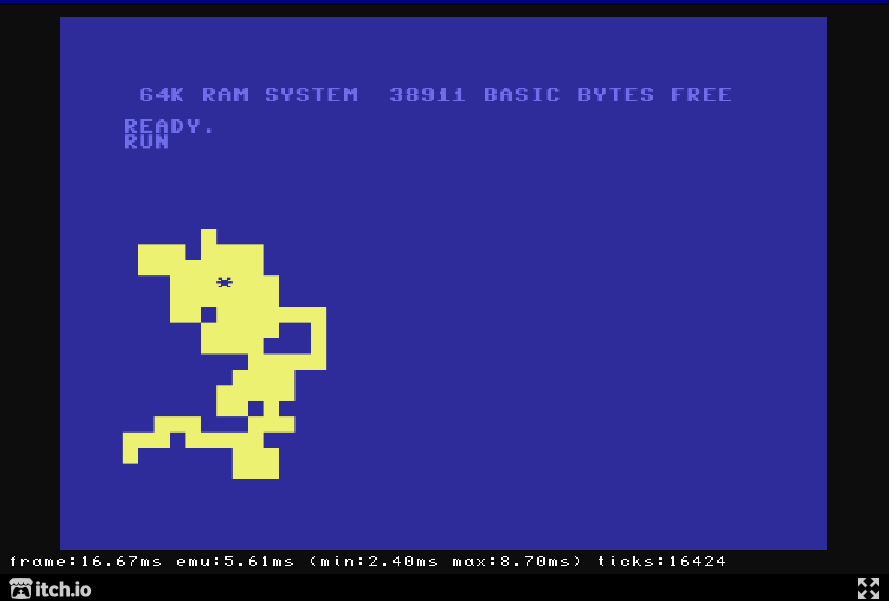
Man kann ein C64-Programm im Browser laufen lassen. Das ist, wenn man sich mal in die Zeit zurückversetzt, als diese Computer “state of the art” waren, Statussymbol im Kinderzimmer und einfach krasse Nerd-Maschine, schon… ernüchternd. Aber allein wegen Peek & Poke (ich hatte das wirklich vergessen) muss dieses Projekt hier rein. Was mit einer Zeile Code möglich war, heute müsste man dafür vermutlich 12 Bibliotheken importieren: “So, a simple program that crams a lot into two lines. The original was line 2; I adapted line 1 (changing the colors) from another one-liner to make the colors pop a bit more.”
Und zuletzt...
Hätte ich den Text gestern nicht zufällig gelesen, ich wäre nie auf die Idee gekommen, es auszuprobieren: Mein Pixel 10 kann jetzt AirDrop. Klingt jetzt nicht so aufregend, aber dass mein Android-Gerät mit der Apple-Welt auf diese Weise Dateien austauschen kann, das ist ja… fast schon revolutionär. Und wem ist es zu verdanken? Der EU-Regulierung. Jawohl. “If you’ve been scratching your head trying to figure out just how — not to mention why — Google was able to get this up and running, the answer might be a little more simple than you could think. While this certainly brought back memories of, say, Beeper’s attempt at getting iMessage up and running on Android two years ago, as well as Palm’s war of attrition on iTunes support in the earliest days of the Pre, it sounds like this particular example was far less hostile towards Apple than any of its predecessors, all thanks to some of the changes made by the EU.”
Oder ein bisschen technischer ausgedrückt: “the answer to this week’s mysterious Quick Share upgrade lies in the EU’s interoperability requirements designed for the DMA. The ruling out of the European Commission pushed Apple to begin supporting interoperable wireless standards beginning with this year’s set of OS upgrades, replacing the previous proprietary standard the company used to power its various Continuity features. That forced Apple to add support for the Wi-Fi Alliance’s Wi-Fi Aware standard of multi-directional file sharing, at the cost of completely phasing out its previous walled-in protocol.”
Sagen wir es mal so, aus Nutzersicht kann ich da jetzt nichts Schlechtes dran finden.


