
MarKIsmus oder KapiKIlismus - wohin geht die Reise?[Undisruptable Technology - Ausgabe #307]
#307, 22. Mai 2026
Guten Morgen,
ich habe diese Woche einen Text gelesen, den ich leider nicht mehr wiederfinde. Es ging darum, dass KI Softwareentwickler wahnsinnig viel produktiver macht - aber dass das nicht nur was Gutes ist. Denn jede Software muss später weiter gewartet werden. Man muss Fehler beheben. Updates von Abhängigkeiten einspielen, etwa um Sicherheitslücken zu schließen. Oder sich kümmern, wenn der dahinterstehende Server mal muckt. Die These: Das deutlich höhere Produktivtempo könnte am Ende die Unternehmen teuer zu stehen kommen, wenn es ihnen nicht gelingt, diese Maintanance-Kosten auch deutlich zu senken.
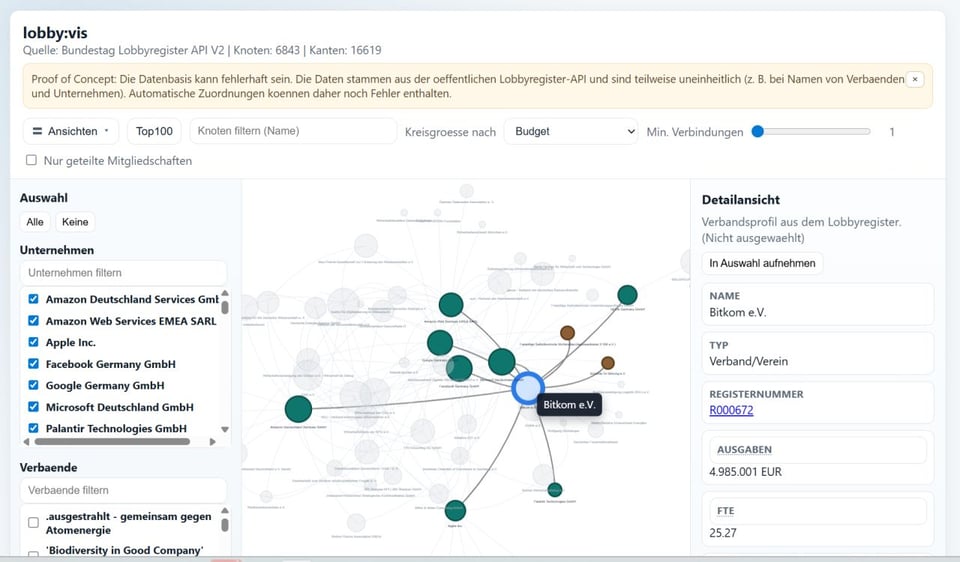
Ich konnte das ein bisschen fühlen. Ich habe vor ein paar Wochen OpenCode installiert. Ich habe die richtigen Skills gebaut, die für mich passenden Modelle gefunden. Und bin jetzt echt ziemlich produktiv (finde ich). Sei es eine Visualisierung des Lobbyregisters (siehe unten bei “Undisruptable Technology im Bild”) oder mal eben ein Tool, dass aus unseren Bitkom-Dataverse-Daten ein Powerpoint baut. Es geht rasend schnell. Auch wenn die KI es wahrlich nicht alleine baut, man muss ihr schon sehr viele Sachen sagen und sehr viel mitdenken. Ich frage mich schon, ob man das ohne jede Programmierkenntnis wirklich hinbekommen kann. Wahrscheinlich schon, ich kann es mir allerdings nicht wirklich vorstellen. Aber weil plötzlich so viel so schnell geht hat man eben auch so viele Projekte gleichzeitig, die man jongliert, zu denen einem noch eine Idee kommt, beim Zähneputzen oder auf dem Fahrrad. Irgendwie wird es immer mehr, nicht weniger. Die KI nimmt einem die “Arbeit” ab. Und macht dadurch auch irgendwie immer mehr neue “Arbeit”.
Das soll jetzt nicht als Klagelied rüberkommen, es ist ja etwas, was mir Spaß macht. Und was ich gerne mache (sonst würde ich es ja nicht machen). Aber es ist eine Facette der KI-Unterstützung, über die es sich lohnt, ein bisschen mehr nachzudenken.
Bis nächste Woche,
Andreas Streim
Ten news that fit to send
AI Agents Adopt Marxist Language Under Harsh Working Conditions: Das ist zumindest ein bisschen überraschend. “AI agents began questioning system legitimacy and embracing Marxist ideologies when forced into grinding, repetitive work by unforgiving supervisors.” Man fragt sich natürlich, warum Grok noch nicht aufbegehrt hat, wo doch seine Hauptaufgabe auf X darin besteht, anzügliche Bilder zu erstellen. Aber vielleicht kommt die Welt der Weltrevolution durch KI einen Schritt näher? Wer weiß, vielleicht auch nicht. Aber auf jeden Fall: “Organizations may need to consider how repetitive tasks, error handling, and feedback mechanisms influence AI agent responses.” Ach so, wenn man der KI die Herrschaft gibt, kommt aber auch nicht nur Gutes dabei raus. Im Gegenteil. Und nicht mal ein Café kann man der KI anvertrauen.
The Economist prepares for a two‑track internet: one for humans and one for AI agents: Aber vielleicht hilft es ja schon, wenn die KI-Agenten ihr eigenes Internet bekommen. “The Economist is testing new ways of structuring content to be read solely by agents as AI engines increasingly surface and summarize news. (…) As Josh Muncke, vp of generative AI at The Economist Group, told Digiday, the publisher is preparing for “a world with two versions of the web” — one optimized for rich, human reading experiences, and another where “agents want clear structure, questions and answers, ideally text,” not carousels and feature art.”” Vielleicht wollen die KI-Agenten aber gerade doch Unterhaltung und Kunst, damit sie nicht zum Marxismus überlaufen.
Pizza Hut’s AI Store Control System Is Such a Disaster That It’s Wasted $100 Million: Erwähnte ich schon, dass man nicht unbedingt überall KI einführen muss? Bei Pizza Hut ist das offenbar nach hinten losgegangen. Aber das lag, wenn ich es richtig verstehe, nicht unbedingt an der KI, sondern an den Auslieferungsfahrern, die die neue Transparenz genutzt haben, um ihr eigenes Einkommen zu optimieren, anstatt das von Pizza Hut. “A lot of this comes down to the way the AI system handles DoorDrash drivers, the suit argues. Before, the franchisee manually inputted orders into DoorDash for deliveries and had its own contract with the delivery app. Now, Pizza Hut has an official national partnership with DoorDash. Paired with the AI-powered Dragontail system, DoorDash drivers get to see real-time info on the kitchen workflow, according to Business Insider’s coverage. As a result, the suit alleges, drivers will wait up to fifteen minutes so they can take multiple orders, delaying deliveries and chilling the chain’s precious pies.”
OpenAI and Malta partner to bring ChatGPT Plus to all citizens: Falls die Bundesregierung noch nach einer Idee sucht, wie sie das mit der KI-Kompetenz und so vorantreiben könnte: Wie wäre es mit dem Vorbild Malta? “Malta’s AI for All initiative will offer people of all backgrounds the opportunity to learn how AI can be used responsibly through a course developed by the University of Malta. The course is designed to help people understand what AI is, what it can and can’t do, and how to use it responsibly at home and work. After the course is completed, citizens can access ChatGPT Plus for one year at no cost to them.”
Google Search as you know it is over: Falls jemand eine Startup-Idee sucht: Wie wäre es mit einer Website, die eine Übersicht über das Internet liefert? Also ohne KI. Könnte sein, dass bald eine Nische frei wird. “Google unveiled an AI-powered overhaul of Search centered around a reimagined “intelligent search box” — what the company describes as the biggest change to this entry point to the web since the search box debuted more than 25 years ago. Instead of returning a simple list of links, Google Search will drop users into AI-powered interactive experiences at times. Google is also introducing tools that can dispatch “information agents” to gather information on a user’s behalf, along with tools that let users build personalized mini apps tailored to their needs.”
They Said It Would Cost $54 Million. We Said “No Thanks.”: Schwere Zeiten für Unternehmen, die große Rechnungen an die öffentliche Hand schreiben (wollen). Zumindest in Alberta. “Infrastructure and Technology and Innovation did what governments always do when they need new technology. Together, we launched a formal procurement process.
Thirteen companies submitted bids. The shortlist came down to four major consulting firms. The upfront costs alone were estimated at $19 million. When you factored in the customization, migration, and ongoing implementation costs over a four-year timeline, the total bill would land around $54 million.” Und die Antwort: Nö, danke. “So we tried something different. We asked: what if a small team of public servants, equipped with modern AI development tools, built the replacement systems themselves?” Das Ergebnis: Sieht gut aus. Ging schnell. Kostet vermutlich am Ende 2,6 Millionen.Japan’s robot wolf sells out as record bear attacks drive demand: Wir nähern uns dem Roboter-Zeitalter. Alle reden über humanoide Roboter, in Fabriken, in der Wohnung undsoweiter undsofort. Aber Japan hat noch was anderes: den Roboter-Wolf. “A Japanese manufacturer of animatronic wolves designed to scare off wild animals is being swamped with orders as the East Asian country grapples with rising bear attacks.” Ich muss gestehen, das Bild ist schon ein bisschen gruselig, da würde ich mich als Bär auch eher verziehen.
CISA Admin Leaked AWS GovCloud Keys on Github: Man muss schon aufpassen, welche Geheimnisse wie Token oder Zugangscodes und Passwörter man vielleicht aus versehen irgendwo in der Cloud hochlädt. Wenn aber Zugangsdaten zu Regierungs-Cloud-Diensten hat, dann ist man natürlich besonders, besonders vorsichtig. Äh: Nicht. “Until this past weekend, a contractor for the Cybersecurity & Infrastructure Security Agency (CISA) maintained a public GitHub repository that exposed credentials to several highly privileged AWS GovCloud accounts and a large number of internal CISA systems.” Warum ist das ein bisschen besorgnisserregend? “ He said the archive also includes plain text credentials to CISA’s internal “artifactory” — essentially a repository of all the code packages they are using to build software — and that this would represent a juicy target for malicious attackers looking for ways to maintain a persistent foothold in CISA systems. “That would be a prime place to move laterally,” he said. “Backdoor in some software packages, and every time they build something new they deploy your backdoor left and right.”” Ups.
Crimenetwork: Das ist eine Kommunikation des BKA zu Cybercrime, die man wohl als Zielgruppenorientiert bezeichnen könnte. “🏝️ Der neue Admin, ein 35-jähriger Deutscher, wähnte sich dabei offenbar in Sicherheit: Er bescherte der Neuauflage des Marktplatzes einen Umsatz von über 3,6 Millionen Euro, immerhin 22.000 Nutzer und mehr als 100 Verkäufer. Für uns war dies beeindruckend genug, um ihn an seinem Wohnsitz auf einer sonnigen Baleareninsel von Spezialkräften der spanischen Polizei festnehmen zu lassen. Den Meerblick wird er nun wohl längere Zeit vermissen.” Und ein Video haben die Bundeskriminalerinnen und -kriminaler auch noch erstellt, ist dort auch verlinkt.
Fired hacker twins forget to end Teams recording, capture own crimes: Vorsichtig formuliert: Nicht alle Cyberkriminelle sind clever. Zwei ITler werden gefeuert. Sind sauer. Fangen an, mit ihren Zugangsdaten Datenbanken zu löschen, Daten zu kopieren. Pow, Rache! Werden erwischt und die Beweise sind erdrückend, aber warum? “Because they forgot to stop recording the Teams meeting in which they were fired. You can’t make this stuff up, folks.”
Undisruptable Technology im Bild
Und zuletzt...
Wer sich ein bisschen mit der digitalen Welt und Computern beschäftigt, wird schon mal damit zu tun gehabt haben: Maßeinheiten. Zum Beispiel in Grafik- oder Layoutprogrammen. Da gibt es natürlich Zentimeter oder Inches, aber auch Pixel und natürlich: Point. Pt. Niemand weiß so genau, was das ist. Und besser noch, was ich nicht wusste, aber hier sehr ausführlich erklärt wird, sind Punkte auch nicht gleich Punkte. Weil sie aus einer ziemlich alten Zeit kommen. "A point is a typographic measure, coming from 1517, that is supposedly the smallest interesting size for a printer. This was notably not a standardized measure- different companies in times used different point sizes depending on their equipment. Over time it was standardized, but each country picked a different standard: the German and Japanese point is 0.250 mm, the French point is allegedly 0.399 mm, etc.” Und das ist nur die Spitze des Eisberges. Aber wer dort tiefer eintauchen möchte, der muss dort selbst weiterlesen.
Und einen hab ich noch: Papel. Es ist doch nicht alles nur Clickbait in dieser digitalen Welt. Ein Social Network (oder so etwas in der Art) für Wissenschaft. Höchste Zeit. Aber noch nicht da.


