The Understory’s 2025 in Review
I summarize my year of career success in the dark.
(Read to the end for Skyrim as your next coworking location and an antidote for too much doomscrolling from Kristen Koopman.)
In my previous newsletter, I reflected on how much my 2025 was defined by watching friends and colleagues lose work and coworkers, which emotionally has been very tough. But when it comes to my career and personal life, I have much to be grateful for. Last year, I hadn’t even been freelancing for a full year yet. Now, after several big career wins, I feel affirmed, along with some modicum of stability.
It’s strange to be writing about this success as the whole country is descending into a dark period and I’m inundated with disturbing news about ICE’s violence in Minneapolis. It feels like we are approaching a turning point, and I am doing everything I can to turn things toward peace, justice and democracy. But my reflections on that will have to wait, because I just don’t have it in me to start drafting a different newsletter at this point… and I’m still processing this moment. So, let’s take a look back.
I began 2025 last year with a new role as the environmental health beat leader for the Association of Health Care Journalists. I’m proud of much of the work I did for them last year, but especially the ways I broke down silos–not just between environmental coverage and health coverage, but also between science and the humanities fields that study science, particularly the interdisciplinary field of disaster research.
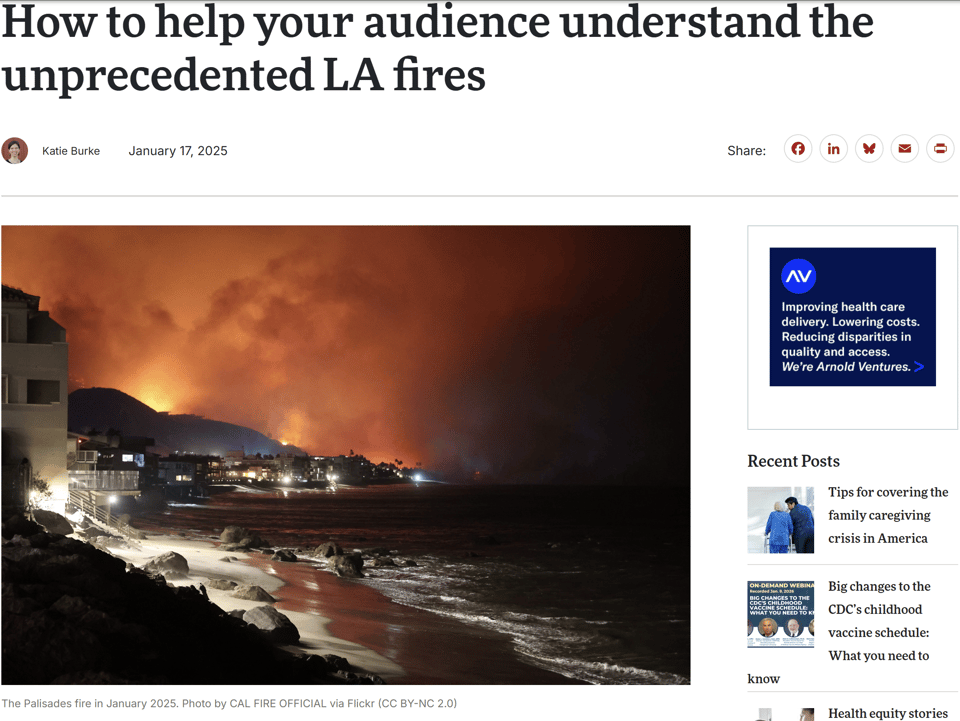
To that end, I’d like to highlight my coverage of the LA fires last year. That post showcases the kinds of unique tips and angles you can find by talking to disaster researchers rather than only scientists. I am adamant that all disaster journalism should bring in their perspectives. Many of the tips I uncovered and sources I highlighted could still yield important stories, even a year after the disaster. I don’t live near LA, so journalists out West, please take these tips and run with them.
In the spring, I traveled to Florida, which I hadn’t visited since the 1990s, but which I had visited often once my sisters and I were old enough to snorkel. One thing that struck me was how much the water quality had changed. Algae blooms have long been a problem in South Florida, but they are much worse now than they were in the 1990s. (The key lime pie and seafood, though? Just as good.)
On one of my reporting days there, I drove out of Miami, across Alligator Alley, through the tiny fishing town of Matlacha (pronounced MATT-la-SHAY) to Pine Island off the Gulf coast, because a red tide event had been reported there. At the tip of Pine Island, the breeze off the coast sent me into a coughing fit, something I’d never experienced at the beach before. I can’t imagine having to breathe that air regularly. I did a number of street interviews with people who said they were sure it was affecting their and their families’ health, at times quite seriously.
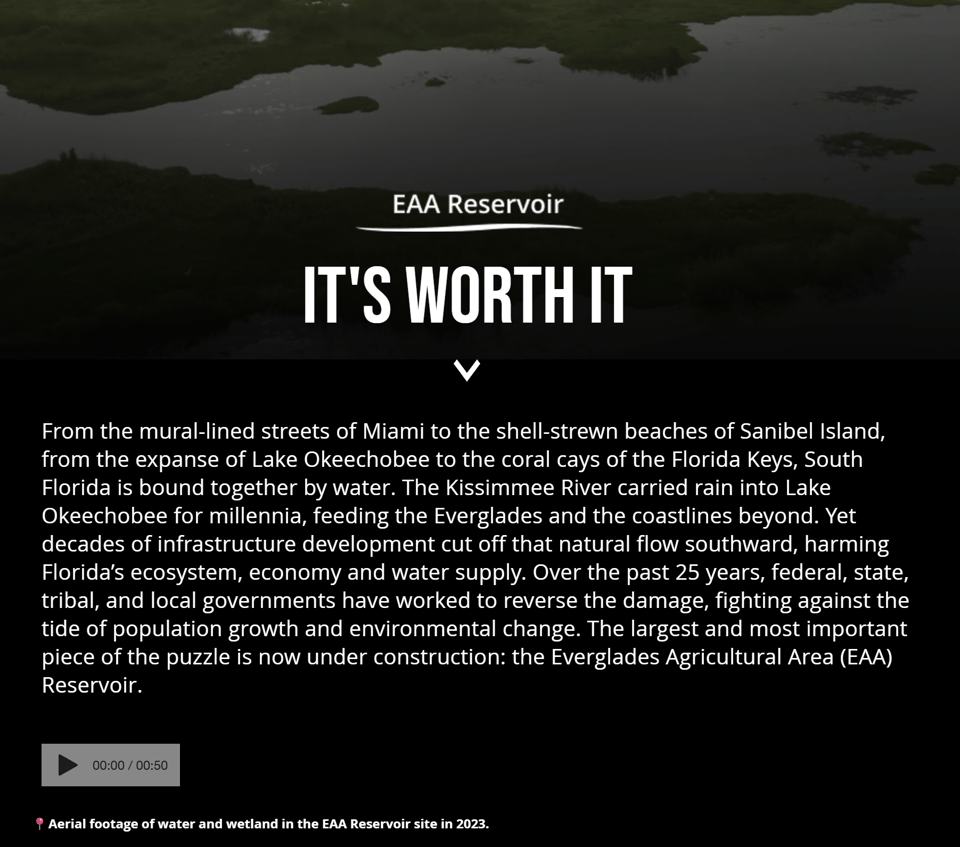
Two journalists who used to work for McClatchy, Abby Reimer and Jessica Gilbert, launched last year their digital design firm the Composition Collective to produce stories for mission-oriented nonprofits. They contracted me as the writer for an interactive digital feature about a huge reservoir project that would reduce the number of red tide events and send water into the dehydrated Everglades, which also feeds the aquifer under Miami. It’s a big deal and not without controversy. The digital feature I helped produce is gorgeous, but it was never released to the public, probably because of the current political climate. It’s rare that I get to work with a crack team of digital designers and see how they approach wireframing a project, because most journalism organizations don’t have the budget to invest in such a team. I hope one day this piece sees the light of day, and regardless I’m glad to have had the experience.
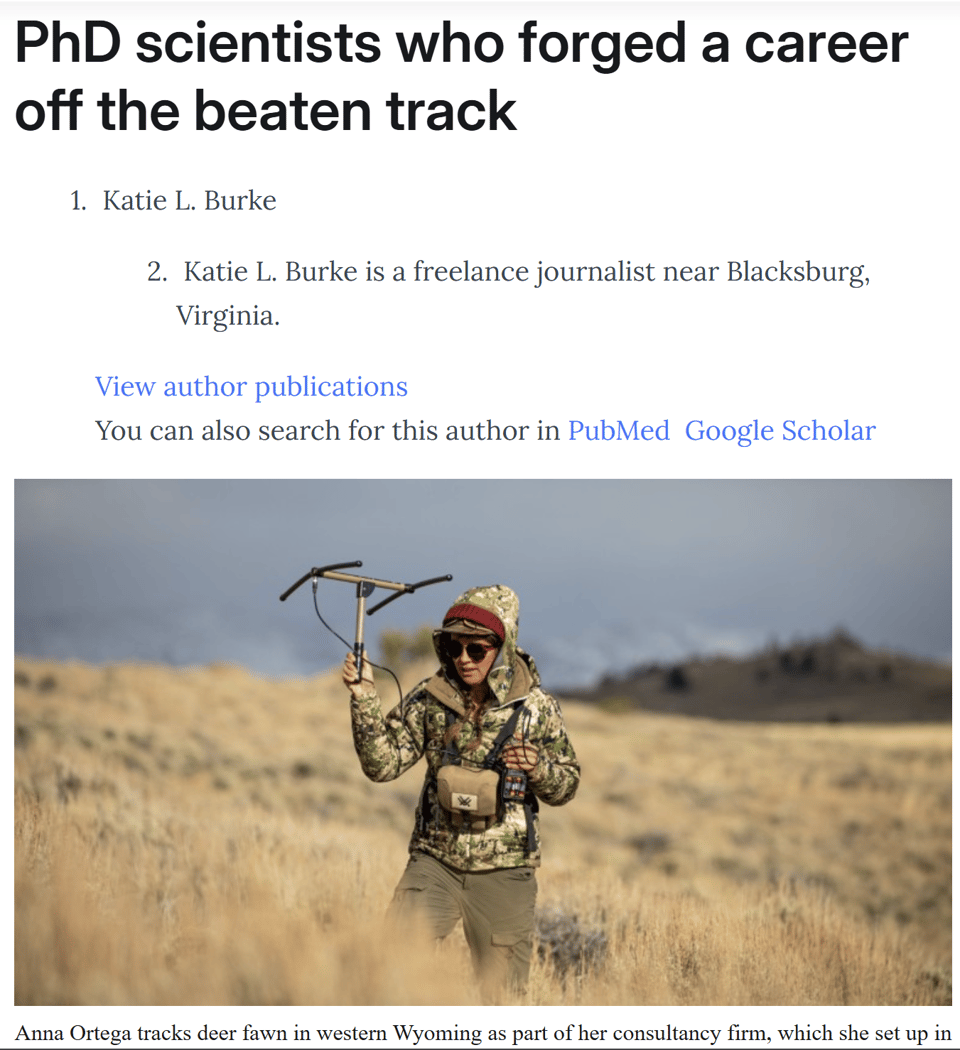
One of the reasons I started freelancing was to diversify my writing and editing experience. To that end, I have been focusing on working for many different places to see how they operate and what their editors are like. This year, I wrote my first feature for Nature in their Careers section. I am especially interested in looking for the people who are finding ways to do science differently amid rigidly unjust workplace promotional structures. My feature for Nature looked for those changemakers. (Also, shout out to my friend from my field biology days Nikki Forrester, who writes for them regularly and helped me talk through my pitch.) I also want to acknowledge Nature Careers editor Kendall Powell, who was one of my favorite editors to work with this year.
I launched this newsletter in May. My favorite newsletter that I have published so far is my interview with Joseph Graves about how HBCUs (historically Black colleges and universities) could address African American underrepresentation in the sciences if the policies determining their funding were updated. To that end, I’d like to publish in this coming year more Q&A’s with scholars working toward justice in the sciences.
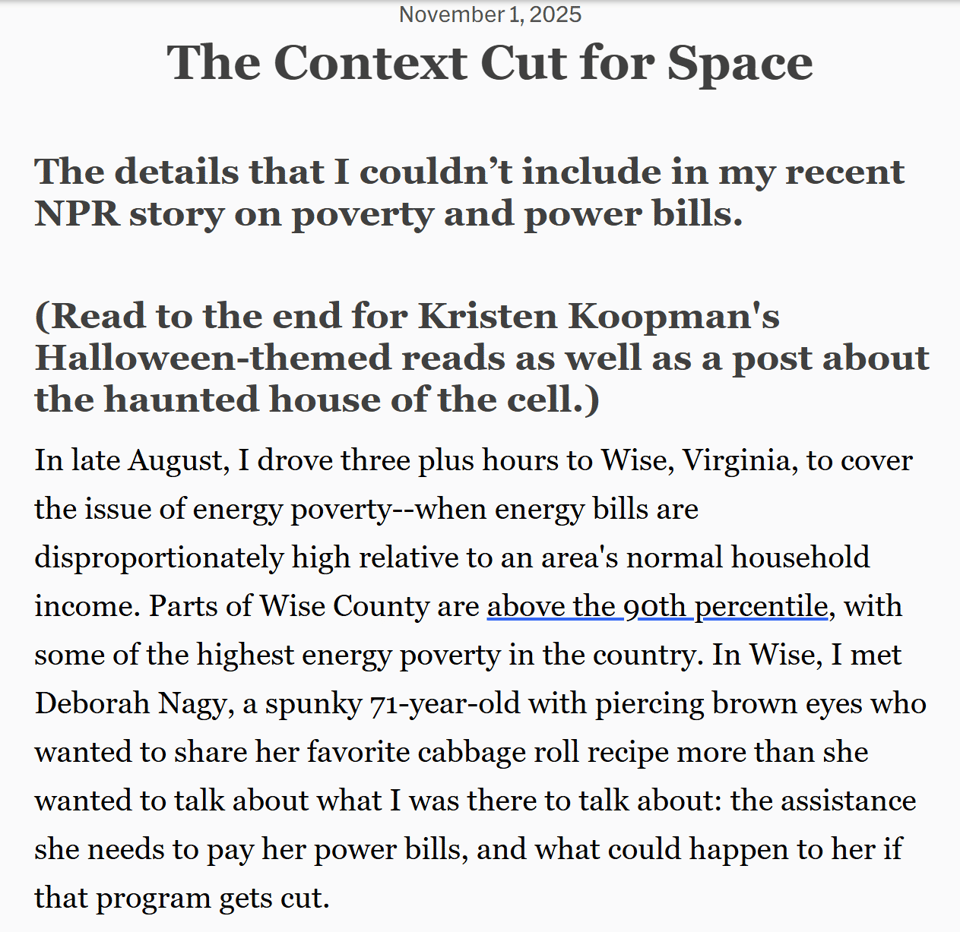
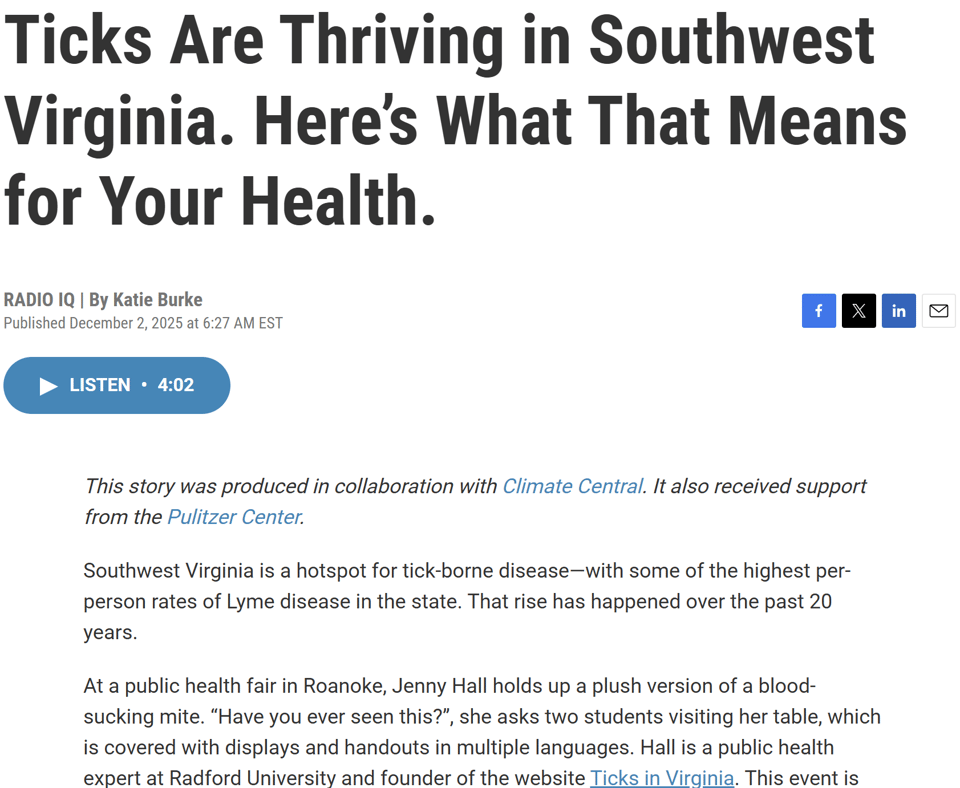
I also broke into radio journalism this year. Although I had produced a short radio feature for PRX years ago, I have training in audio production from the now-sadly-defunct Center for Documentary Studies, and I had long worked on American Scientist’s podcast, I still had a learning curve when it came to writing and producing audio. This trajectory into audio is really due to several reasons: First, I like audio; I find it intuitive and intimate in a way other news media are not. Second, my collaborator Melba Newsome suggested I apply for the Pulitzer Center grant earlier this year, which prompted me to make connections with my local NPR station, WVTF. And third, my friend and local coworking buddy Kelley Libby is an audio journalist who I contracted to help edit my first scripts for WVTF, since I knew my writing tended toward a print style and I wanted to sharpen my audio script writing. I have already written about my first two stories for WVTF, and my favorite so far is the one about ticks.
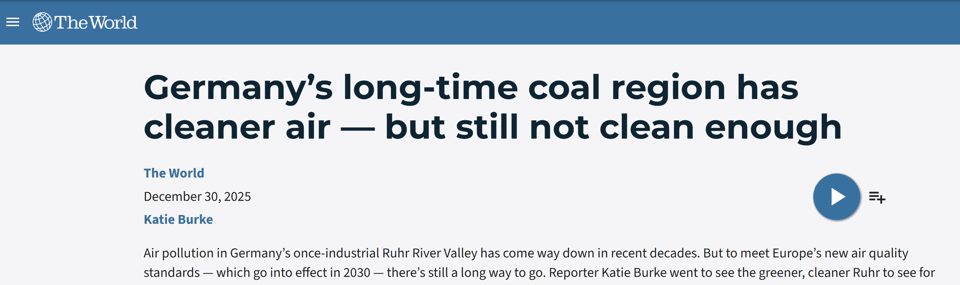
When I got the travel fellowship to Germany from AHCJ in the fall, I also asked Kelley if she had suggestions of places to pitch. I knew that I could pitch some print stories and some audio stories and probably reach different audiences with some overlapping material. I knew which editors I wanted to pitch in the print world, but didn’t have many connections in the audio world. Kelley suggested I pitch The World, and so I did–which led to this story. Shout out to Gina Kaufmann for being one of my favorite editors to work with in 2025.
It is really fun to work with audio. I find dealing with the equipment in the field kind of a pain, but I enjoy putting together the ambience and voices. I love that my sources’ tones, personality and expressions are imparted directly through their voices. I love that the places I visit can be experienced in a visceral way through their soundscapes.
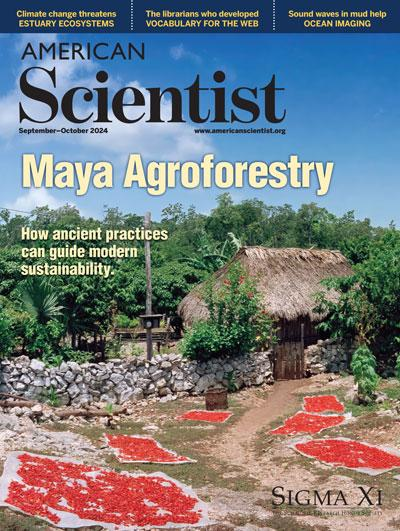
I also continued to edit features for American Scientist, and my favorite feature I worked on was this cover story about Anabel Ford’s lifetime of scholarship with the Maya. I worked with Ford from conception and outline all the way to final draft, coaching her every step of the way. It’s so hard to see the forest for the trees when you’re trying to summarize a lifetime of work. It was gratifying to help Ford get there; she has so many amazing stories. I wish we could have included them all, and I hope she writes a book.
I continued to edit and coach book authors, which is a long game since most books take years to write. Working with authors over the long term is one of my favorite parts of my work. I also edited some Front Matter stories for PNAS.
In 2026, I plan to continue diversifying the outlets I’ve produced content for. I also have plans that intersect with this newsletter’s purpose of covering ongoing long-term projects. I’ll be interviewing more people about how to create justice-oriented change in research workplaces. I also will be working on writing more intentionally about how scientists study the boundaries between life and… not life. And I’ll be workshopping my book proposal skills. Stay tuned.
Koopman’s Corner by Kristen Koopman:
It's rough out there, y'all, so this corner's theme is laughter and joy—things to make you laugh, raise your spirits, and get you through to tomorrow, no matter how snowed-in and existentially despairing you are.
Jason Mantzoukas on Taskmaster
Taskmaster is a UK show where comedians do silly and ridiculous things and get judged for it. In series 19, Jason Mantzoukas became the first American to be flown over to participate (although apparently the upcoming season's Kumail Nanjiani really wanted to do it first). Mantzoukas’s performance is absolutely unhinged and hilarious. A few of his moments occasionally cross my mind at random times for no reason whatsoever and make me laugh, particularly "What do you think will happen when we graduate?"
An oldie but a goody and too, too real.
Despite my own personal very strong opposition to AI, I have a weird soft spot for stories about AIs that approach humanness in their deep caring and creativity. In this one, a smart bathroom tries to fix a date.
Recent Things I Wrote:
Germany’s long-time coal region has cleaner air — but still not clean enough, The World
Why air pollution is an underreported health story of the decade, AHCJ
Recent Things I Recommend (The top two are from my friend in Minneapolis, communications scholar Kate Harris):
I’m a Minneapolis sociologist who studies violence. Here’s how ICE observers are helping, MS Now
Pressure from the Ground: Black Minnesotans on Survival and Strategy, Zedé’s Substack
Congress Is Rejecting Trump's Steep Budget Cuts to Science, NYT (with the caveat that I celebrate the win and disagree with the final quote, the latter a great example of Overton windowing at work)
Scientists Thought Parkinson’s Was in Our Genes. It Might Be in the Water, Wired
How Nature Became a 'Prestige' Journal, Asimov Press
It’s Not Too Late for the US to Reassert Its Leadership in Global Science, Science Politics
US science after a year of Trump, Nature
‘Shattered’: US scientists speak out about how Trump policies disrupted their careers, Nature
Tell Us What You Think
Please tell us here what sorts of content and subscriber perks you suggest. In the meantime, please subscribe to the free version and buy me a coffee here.
Something Fun:
About Me:
https://authory.com/KatieBurke