What to do with New York
Why I started with film, and how I found some confidence in myself.
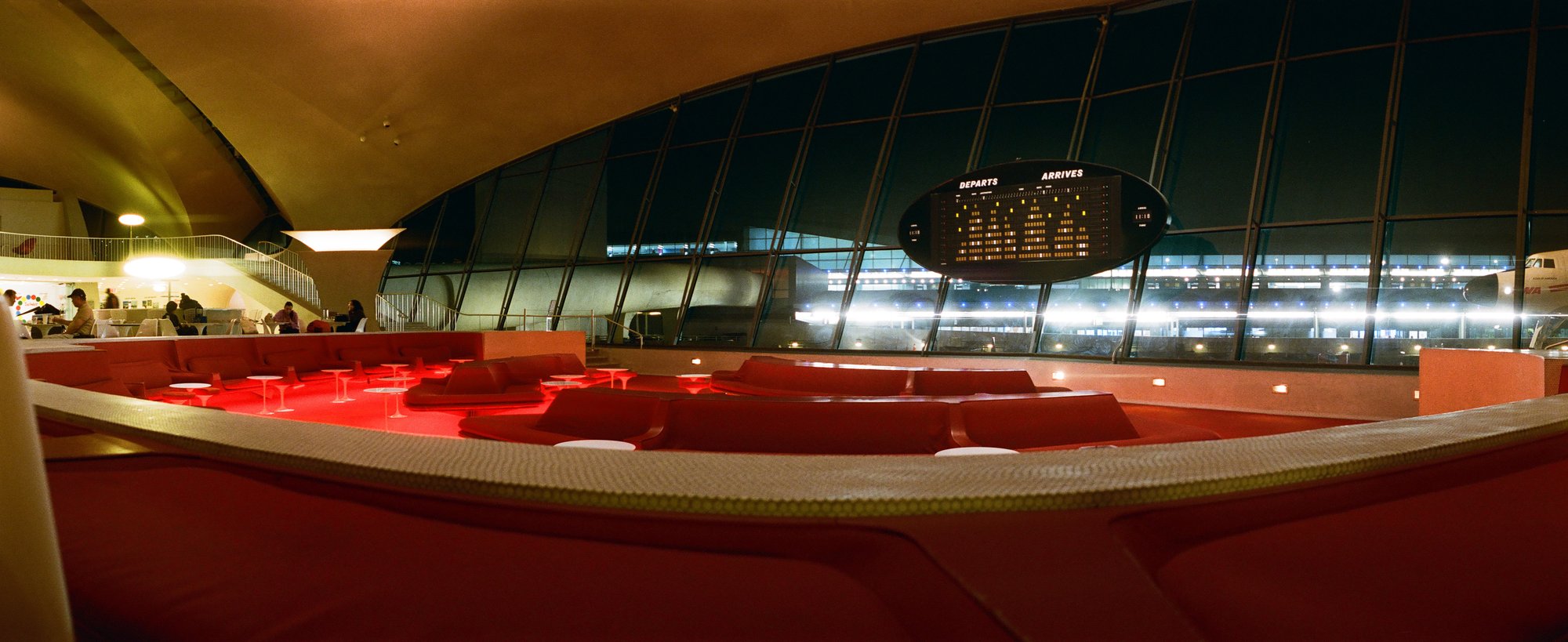
The first time I came to New York, I didn’t know what to do with it. I was unsure of what to do with myself, too.
Starting with Film
I picked up the habit in the fall of 2022, as a way to ease my anxiety. I was curious about having a complicated little device to fidget with, something which felt good in my hands, producing photos as a byproduct. The act of loading a roll of film seemed as though it would feel amazing compared pushing squishy buttons to access menus on a digital camera. Rewind knobs, heavy mirrors, aperture rings, and shutter speed dials, all sorts of different sensory pleasures for me to play with! My friend Liz had a little Olympus which she let me shoot a roll on. Fun! Drop that off at a local lab and $20 later, I’ve got photos which are poorly framed, underexposed, blurry from shaking, and out of focus. Hooray. As some weird byproduct of the age of the roll she’d left in there for a few years, the sprocket holes cast a weird shadow all across the images. I hated the photos, and I didn’t ask to use it again. I secretly blamed the camera. I didn’t yet understand that maybe “Beginner’s Luck” doesn’t apply everywhere. One of the most valuable things you can have when trying out photography is a critical eye toward your own work. They won’t all be winners. I didn’t share my photos with anyone.
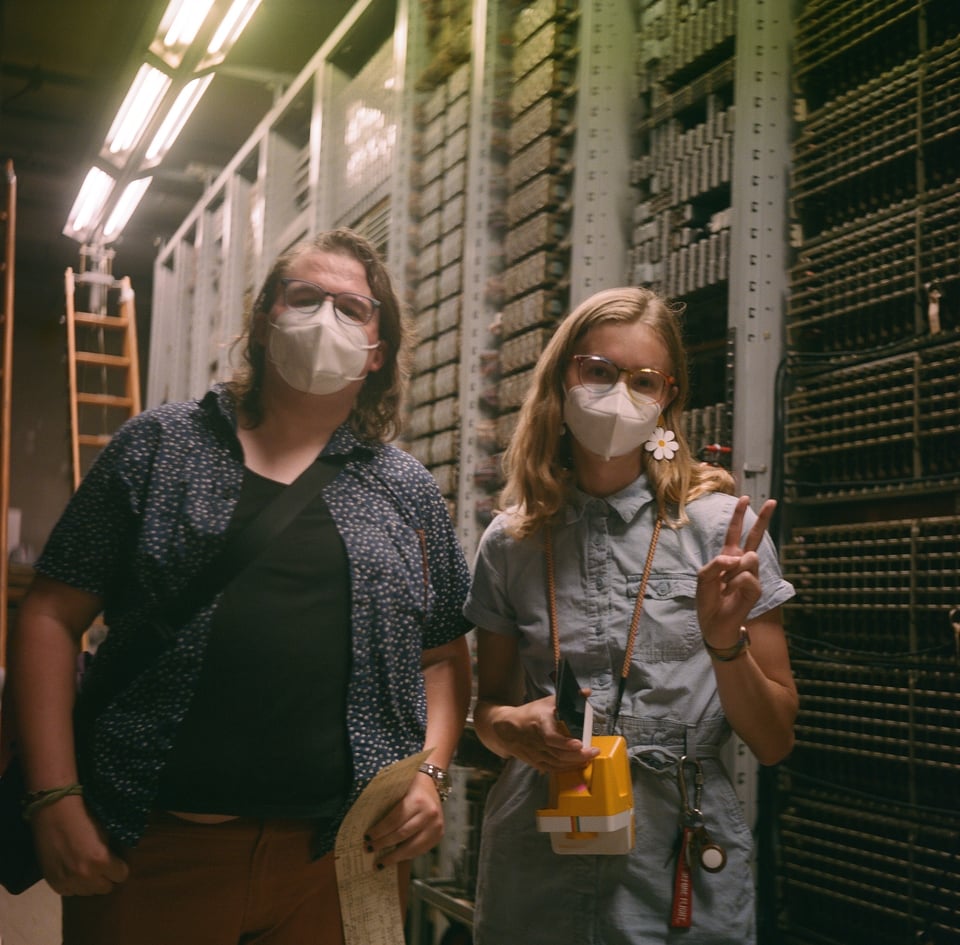
My partner Sarah, though, had a Rolleiflex T lying around the house. Prints of her photos taken a decade before were taped up on all the walls, I was curious to try it, and she encouraged me. It was slow to use and awkward to focus. Images mirrored across both axes twisted my brain in knots as I tried to take a photograph that wasn’t at a dutch angle. Still, there was something about the waist-level viewfinder and the twin-lenses I found interesting, a surreal universe I could capture through a kind of embarrassed shoegazing, photos I could make where I didn’t have to look someone in the eye. The square aspect ratio of the Rolleiflex’s images seemed easier to me than the frame on Liz’s SLR, since I’d played around with Polaroids for years until they felt like some kind of intrinsic part of being around me — I’m pulling a yellow one out of my bag in a photo in We Deserve This. The Rolleiflex felt more fun, but the mechanisms and the era didn’t feel right stylistically.
I’d been through a tough time that fall, having lost a lot of social connection I was relying on too heavily, and I was adrift. One panic attack a day at a minimum, on a path toward crashing out of my job.
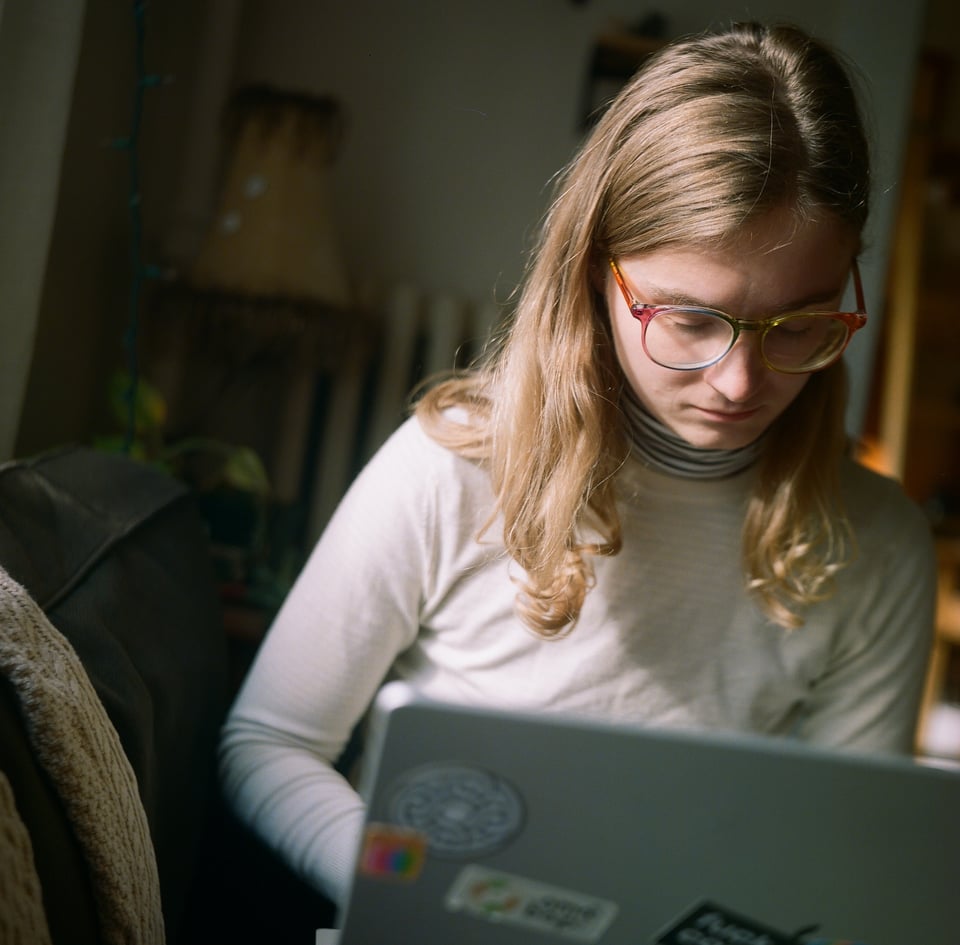
Sometime that December, I was introduced to Tef, whose beautiful photos of crows I’d seen online. I met them at a Seattle bar as they were in the middle of shooting some kind of cursed Leica contraption, firing away without a care in the world, flashbulbs popping in everyone’s faces from only a few feet away. The bright light burned holes in our vision. Here was someone who clearly understood the joys of fiddling with cameras, an advanced practitioner who could give me some idea of where to start. My initial reaction was fear, not knowing what to do with my face, secretly embarrassed at the idea that someone would want to take a picture of me, even more embarrassed that maybe they wouldn’t want to. Still, I was entranced by the performance, and most especially the confidence (real or imagined) in the act, and a few days later I started looking at cameras on eBay. I needed my own.
For reasons now a mystery to me, I bought a Praktica B-series camera, a cheap late 70s East German piece-of-junk that couldn’t hold itself together long enough to finish a single roll. It felt like cheap plastic, and I didn’t like it — the sensory experience of using the camera was in conflict with the very reason I’d wanted to shoot film in the first place, but I insisted it was what I wanted, no matter how annoying. Many of my friends at the time had an attraction to cameras which were bad on their merits and fought against their operators. They found some romanticism in making a problem child behave. Suffering for art seemed important, and I was suffering anyway, so I followed along. My pictures were terrible. I tried repairing my camera with parts from another one I’d bought online, and then another, and then another. I hated that too. I couldn’t find anything noble in the suffering, and it certainly wasn’t visible in the “art.”
I kept approaching film in a way I believed was “principled”, stubbornly deciding on artistic intent and a rigid structure of “correct” reasons to take photos and methods to do so, out of some misunderstanding that this would help me “understand” photography, but I was confused and wasting my time. I hadn’t earned any right to these ideas yet because I couldn’t produce a single image I was really proud of, and I hadn’t done enough work to realize I didn’t believe in any of them. Still, having a camera felt good in my hand, and I went on fiddling around with them.