
2025 Reflection, Part 2
On moving from the Horizon202 swing-lens camera to the Hasselblad XPan, and finding beauty in the industrial.
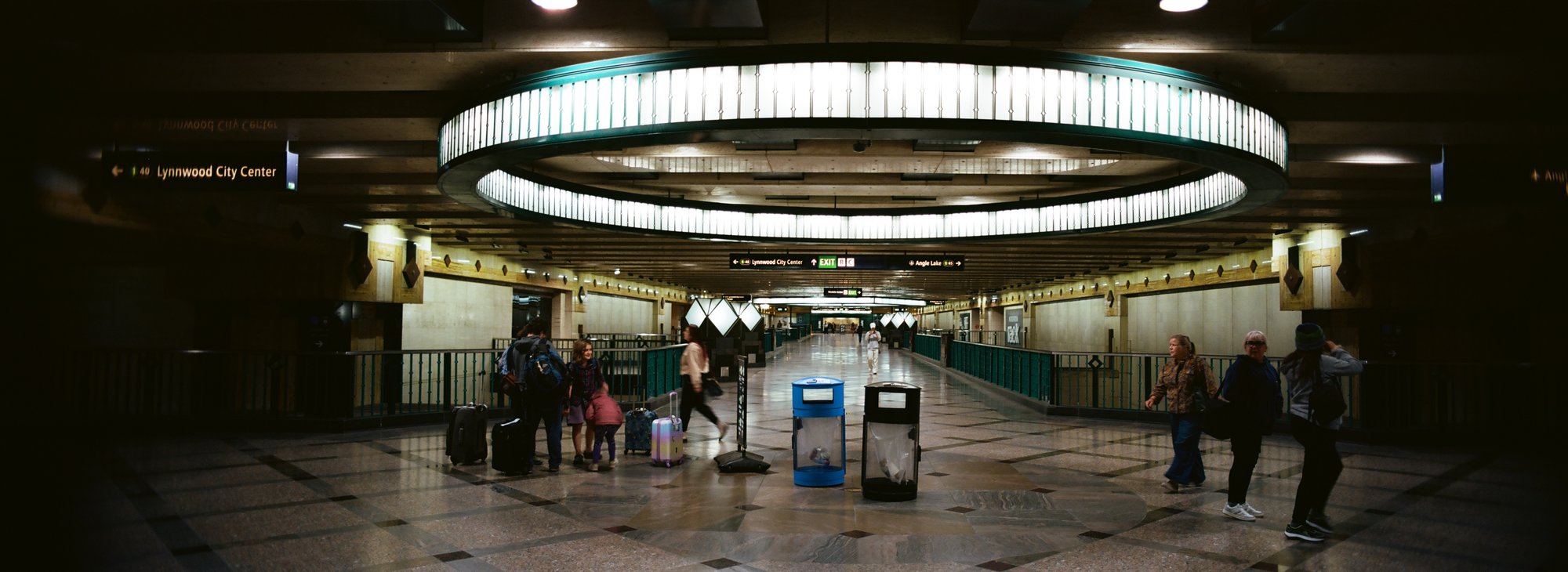
Seattle is quiet, and not big enough to create the complex geometry and dense spaces I’d really enjoyed capturing in Europe. Our metro stations are quite new, and many were originally designed quite spaciously for buses. Lots of dead visual space, and quite dim, too. The Horizon’s viewfinder fell flat when in front of my eye—Everything was too far away.
from 2025 Reflection, Part 1.
In the fall of 2024, I’d tried the Horizon on the Washington State ferries and found the images I got out of it to be fun, but ultimately not captivating.
In the winter of 2025, I sat at home thinking. What did I most want to photograph with my new toy? Where can I find lots of motion, visually confusing but emotionally charged subjects, and interesting textures in high-contrast, close-quarters environments? What am I in particular uniquely suited to capture?
New York, New York
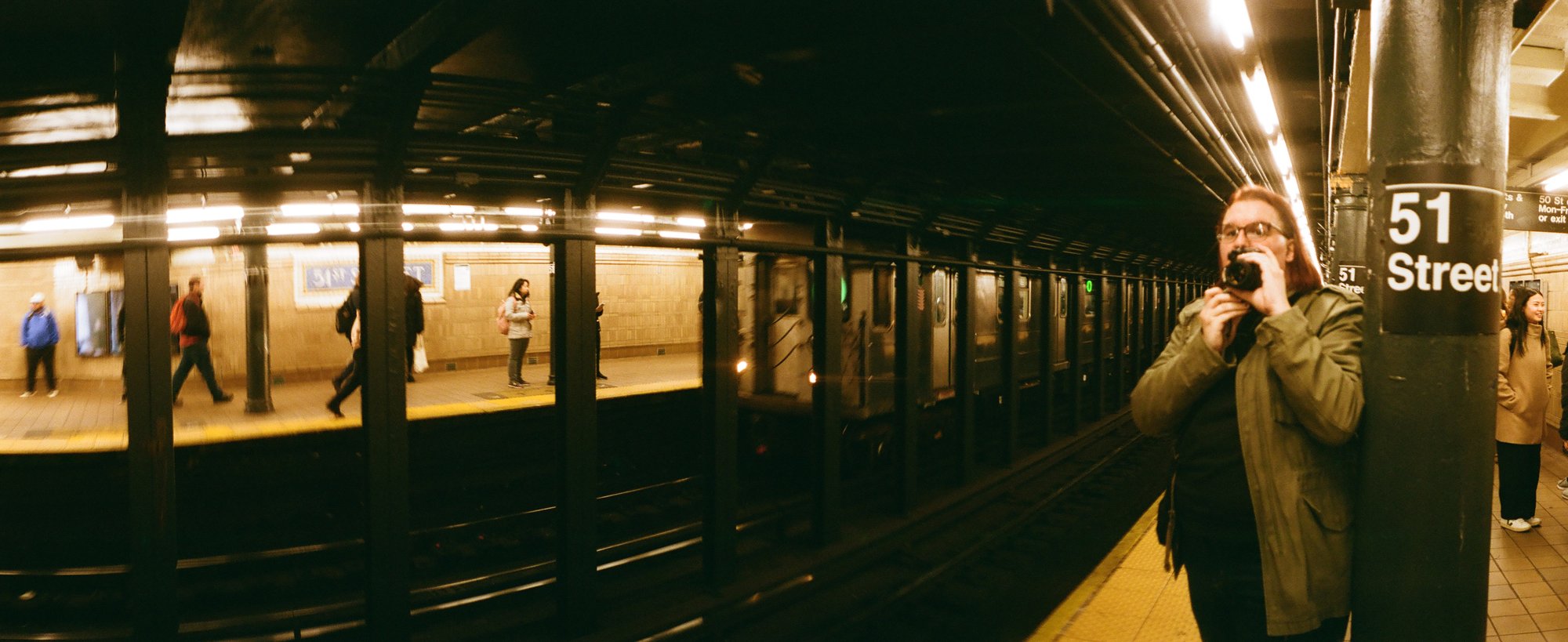
So. In early April, my friend Lisbeth went to New York City for work. After begging her for weeks, she very kindly agreed to let me share her hotel room.
Every spare evening, I rode the subway alone, frantically trying to find interesting compositions for the Horizon. Subways worked before, so maybe they would again!
One of the things I find deeply comforting about New York is the rhythm. I understand how to move there, weaving through crowds, turning my shoulders to squeeze through tight spaces, reading fractions of a sign in the subway for a hint of which stairwell I need to make my transfer, feeling the rush of air as a train enters the station and knowing I need to pick up my pace. My brain feels saturated with information on a deep level, and my body loves the exercise. My heart races. I find it intoxicating.
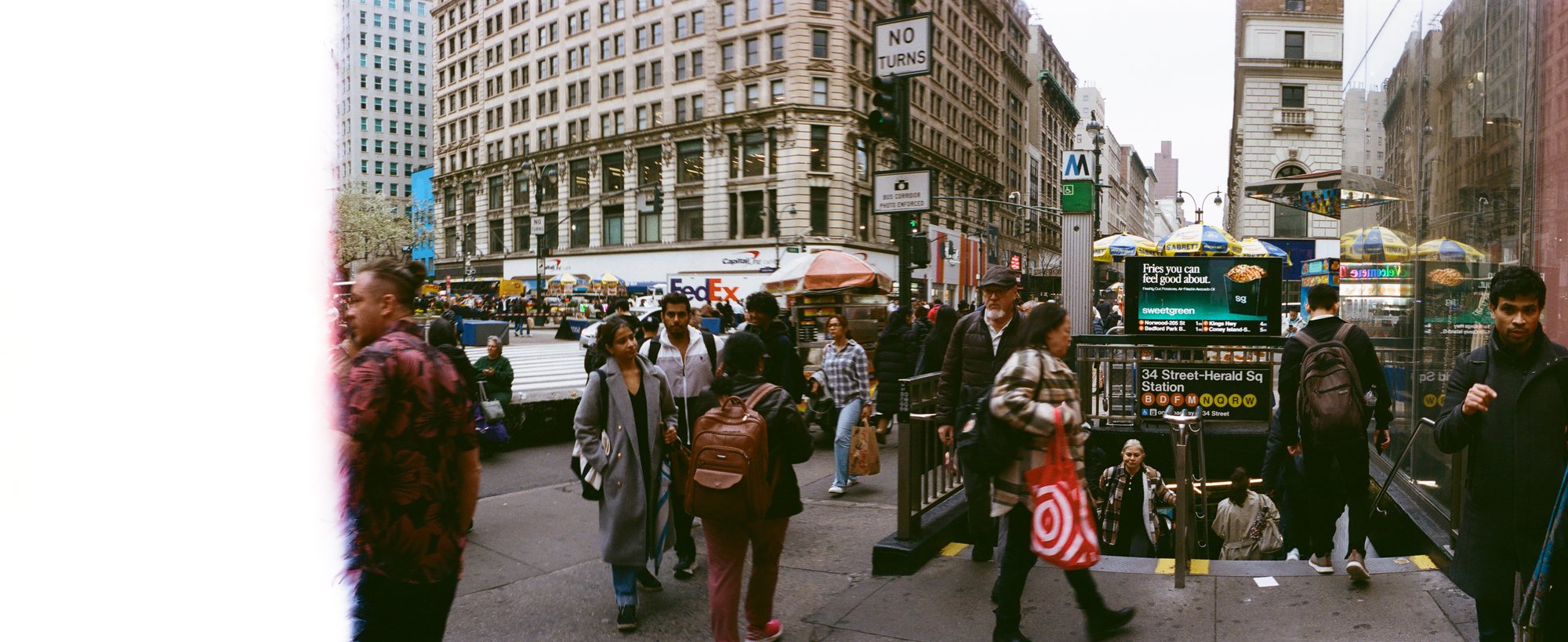
With the Horizon, I captured my movement on narrow platforms, I pushing right through the middle of people, bumping shoulders with everyone else waiting for a train. The movement of the cars creating exaggerated blends of color just as they had done so interestingly in London and Berlin, leaving long trails of light if the train travelled left-to-right along with the the fixed direction of the swing-lens’s motion, or compressing them into smushed shapes in the opposite orientation. The darkened spaces of Chambers Street captured the same ominous mood I’d loved from some of my photos in Berlin and San Francisco. Lonely photos late at night moved me deeply. Grand Central felt like a paradise with its scale, detail to be found in every corner. Busy crowds raced every which way, and with one swing of my lens, I’d capture them, before hopping on another train to go across town and find more busy people to lovingly get right in the way of.
Many of the photos surprised me. For one in particular, which I titled “2048,” I’d taken a risk with the shot, and assumed the result of it would be one big smear of silver or beige train car.
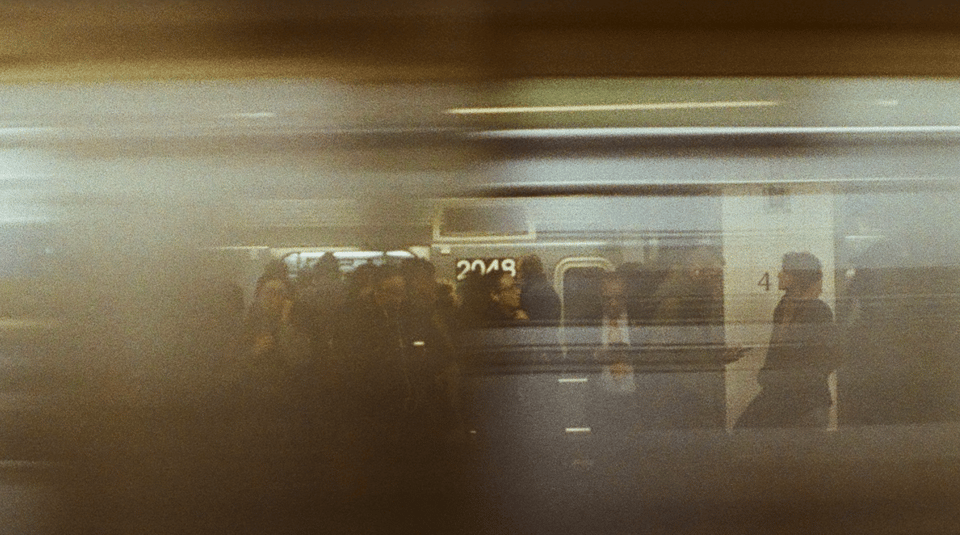
Instead, I was rewarded with this intimate little view of commuters on the opposite platform of the 6 train at Grand Central–42nd Street station, just barely visible thanks to a gap between the cars passing in front of me. It felt vague and impersonal, full of movement, and interesting color. A unique perspective, the feeling of that platform on any day, not just that day.
I posted this photo to Glass, and people responded to it! My friends loved it, and I was featured on the site’s “Explore” page. At the time, this was always a nice confidence boost that someone else agreed that what I was seeing was beautiful. People close to me had long been encouraging, but I was never sure if they were discerning with their praise. Now, I was beginning to find my confidence in myself and in my work.
Problems with swing-lenses.
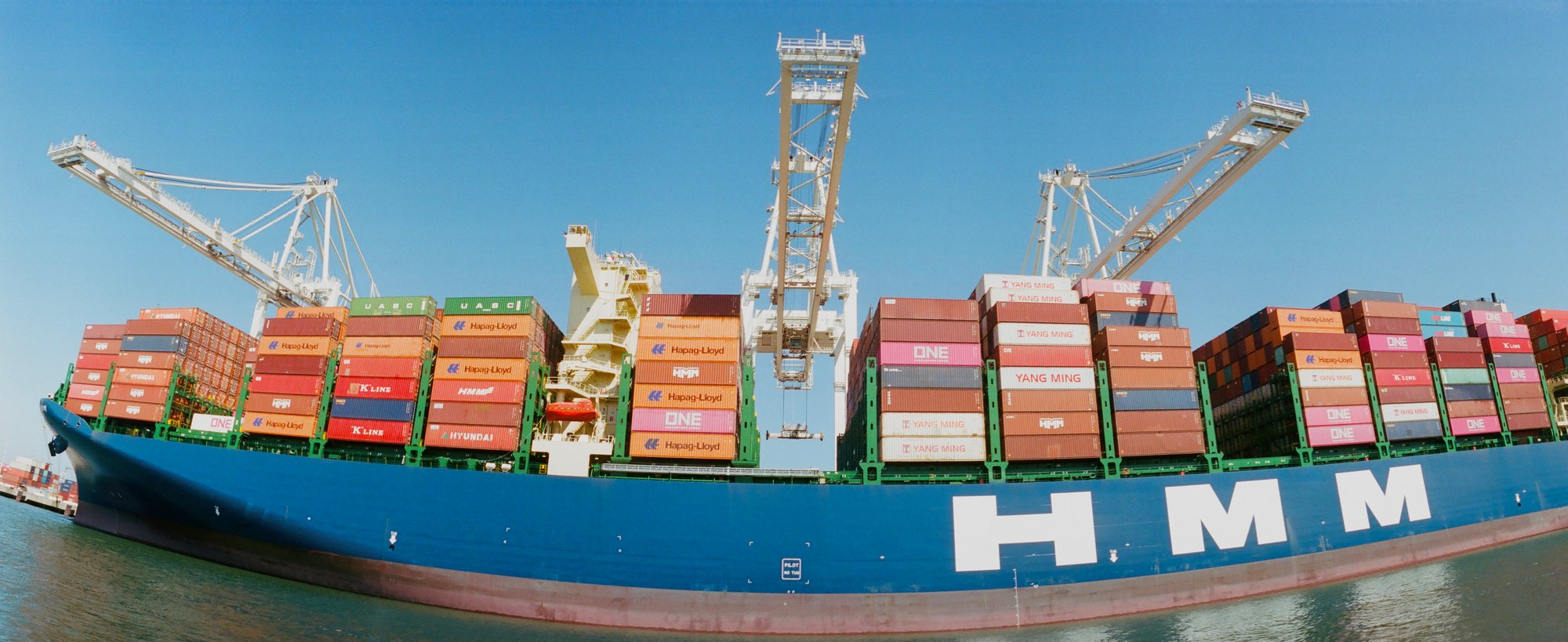
One nagging problem was left. Composing with the swing-lens was always difficult. In practice, I found that many of my compositions worked for the aspect ratio, but not the distortion of the lens mechanism. Using the camera outdoors felt all but impossible to me. One of my best results was a photo of Cafe Zoetrope and the Transamerica Pyramid slowly becoming shrouded in afternoon San Francisco marine layer, but it still had problems which frustrated me. The building in the center, my subject, is distanced by the design of the camera. Instead of my intended subjects, the buildings which take up most of the room in this photo are the ones at the edges, which the swing-lens draws inward and enlarges. They present no marvelous subject matter. With a standard 4:3 aspect ratio camera and an ~85mm lens, I could take a better photo of this moment, where my subjects feel nearer, legible, and you can observe the detail. I could line up the architecture much more easily without worrying about which streetsigns on the edges of a 120º field-of-view are intruding on the image. The side-streets on the left and right edges bend upwards towards the sky, and even for San Francisco’s hills, I find it a bit nauseating.
Further still, shoot at even a slight up or down angle, or even worse, hold it a little bit askew, and almost always, it just doesn’t work. The image’s horizon is all over the place, even in a small space like a subway car, and it’s difficult to correct for afterwards.
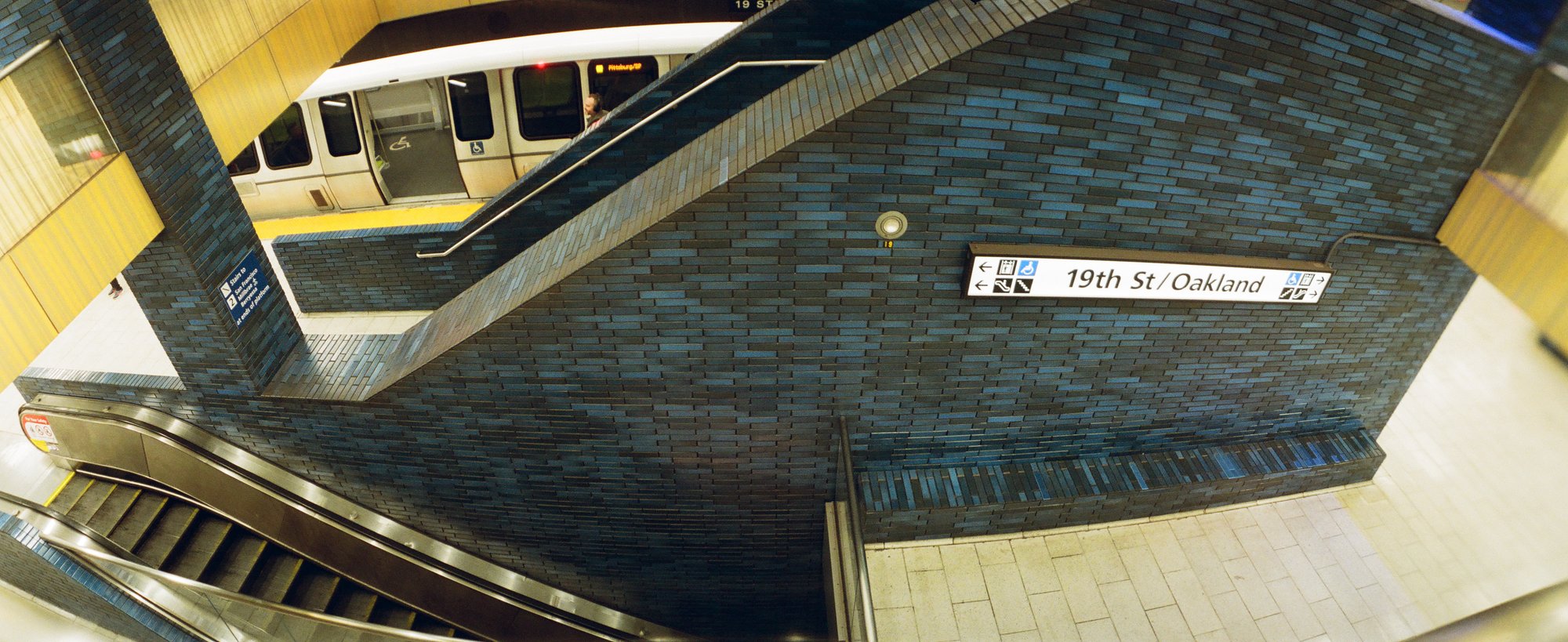
This photo from Berlin’s Alexanderplatz illustrates what I find the most frustrating about the Horizon, however, which bothered me right from the beginning. With the right camera, it would be a fantastic composition in a wide aspect ratio photo (though it could stand to be a bit busier, more people would help) but the curved film plane warps the horizontal lines of the architecture and station signage, which we intuitively know to be flat.
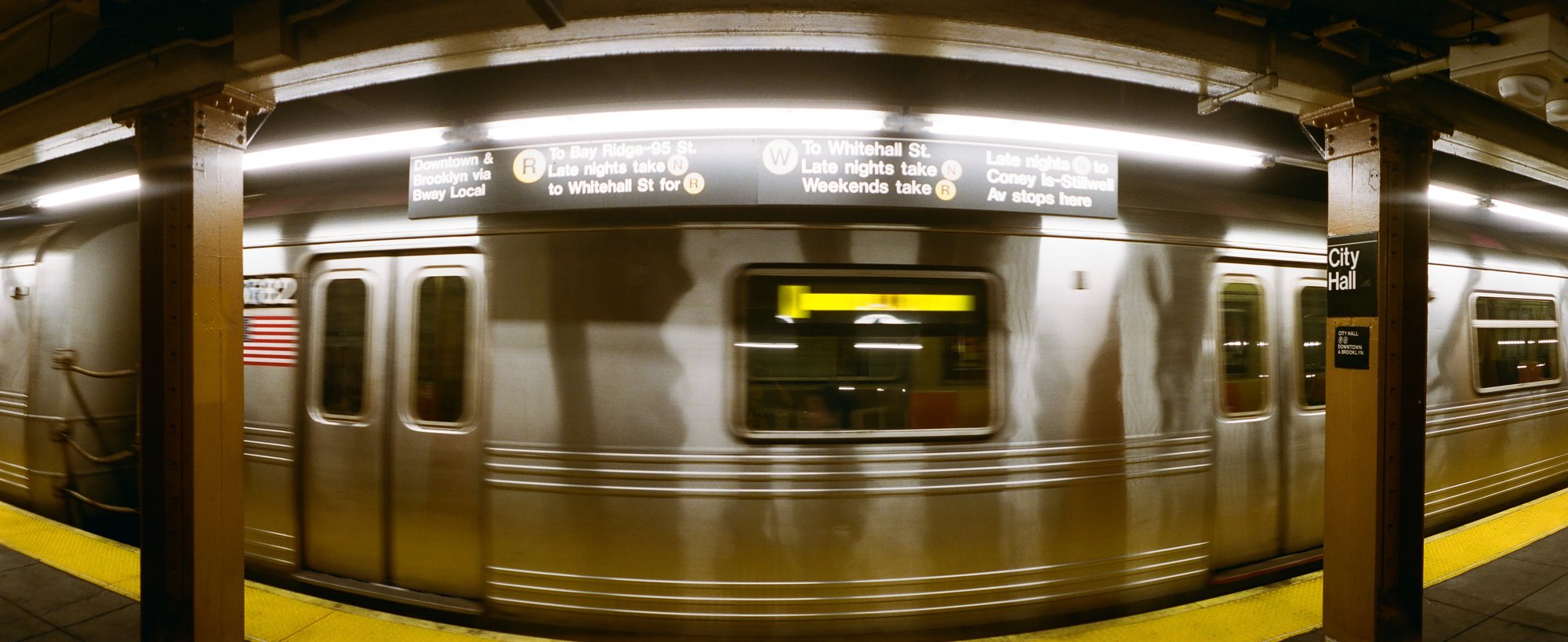
In New York, I found this problem especially bothersome. I always envision signage as it would be on a page in a graphics standards manual, an idealized 2-dimensional navigational instruction. To me, the iconic graphical language of the MTA, designed by Massimo Vignelli, is an incredibly important piece of the environment that I wanted to capture. But the Horizon202 is incapable of presenting flat graphics in the correct perspective, because the film plane itself is curved. In a lot of photos I wanted to take, the warp created by my camera’s mechanism just looked wrong.
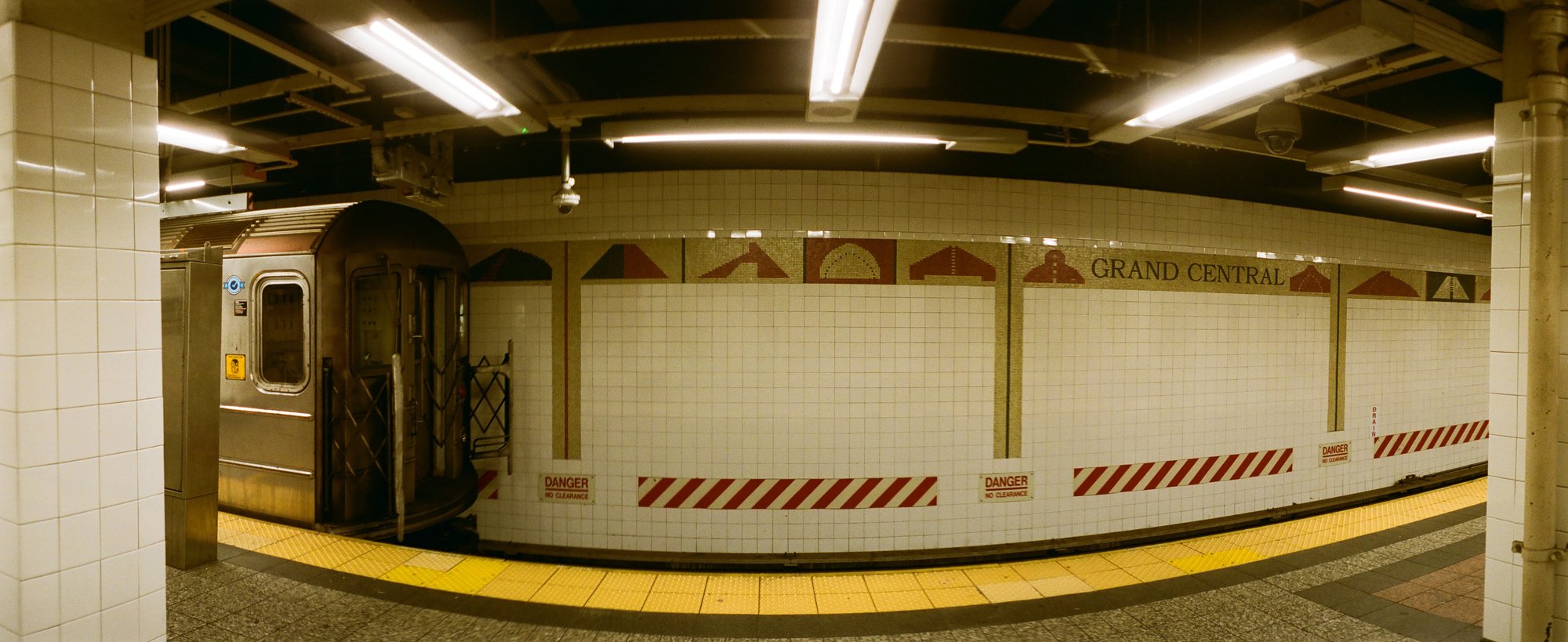
On top of that, the subway is full of beautiful tile details and murals which all ended up looking distorted, or worse, far away. As I got scans back from my photo lab, I found support columns intruding on the sides of images, blurred bits and pieces of things in the corners, and all sorts of distractions I could have pushed out of frame if I’d just taken one step more forward. Composing a wide, curved image is inherently difficult, especially with such a cheap plastic viewfinder as is built into the Horizon. I was proud of what I’d done, but I wanted something else.
I have a bad habit of browsing the used section of my local camera store the night before I’m supposed to fly somewhere. In April, before going to NYC, I bought a NIKKOR 35mm PC shift lens. The lens, designed for architectural use, allows you to take photos at an angle without having the straight lines of your image converge by shifting the glass up, down, or to the sides. This lets your film plane stay in line with the subject, even if it’s a bit above or below you. “Perfect for NYC”, I thought. Neat, lucky me!
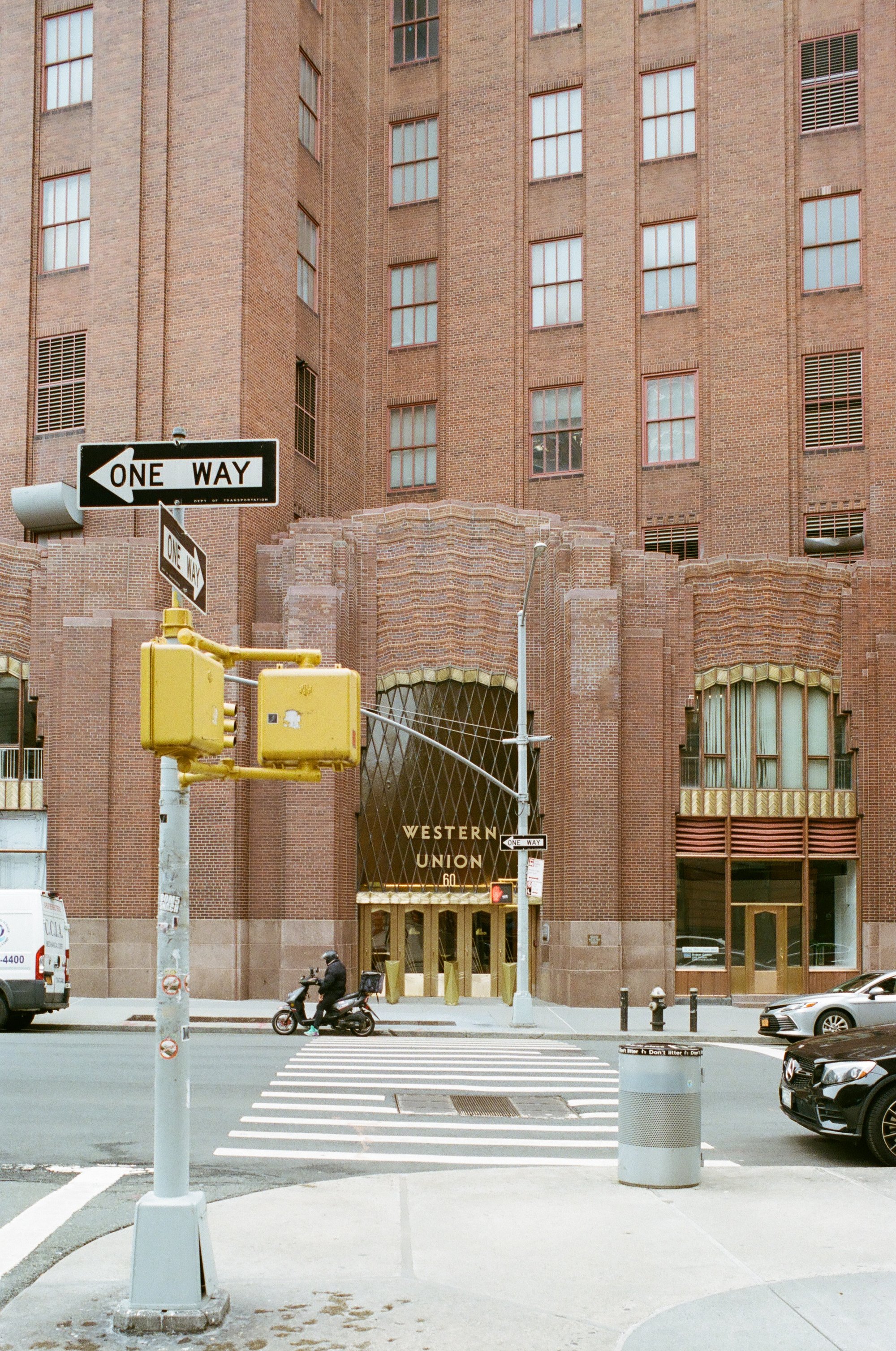
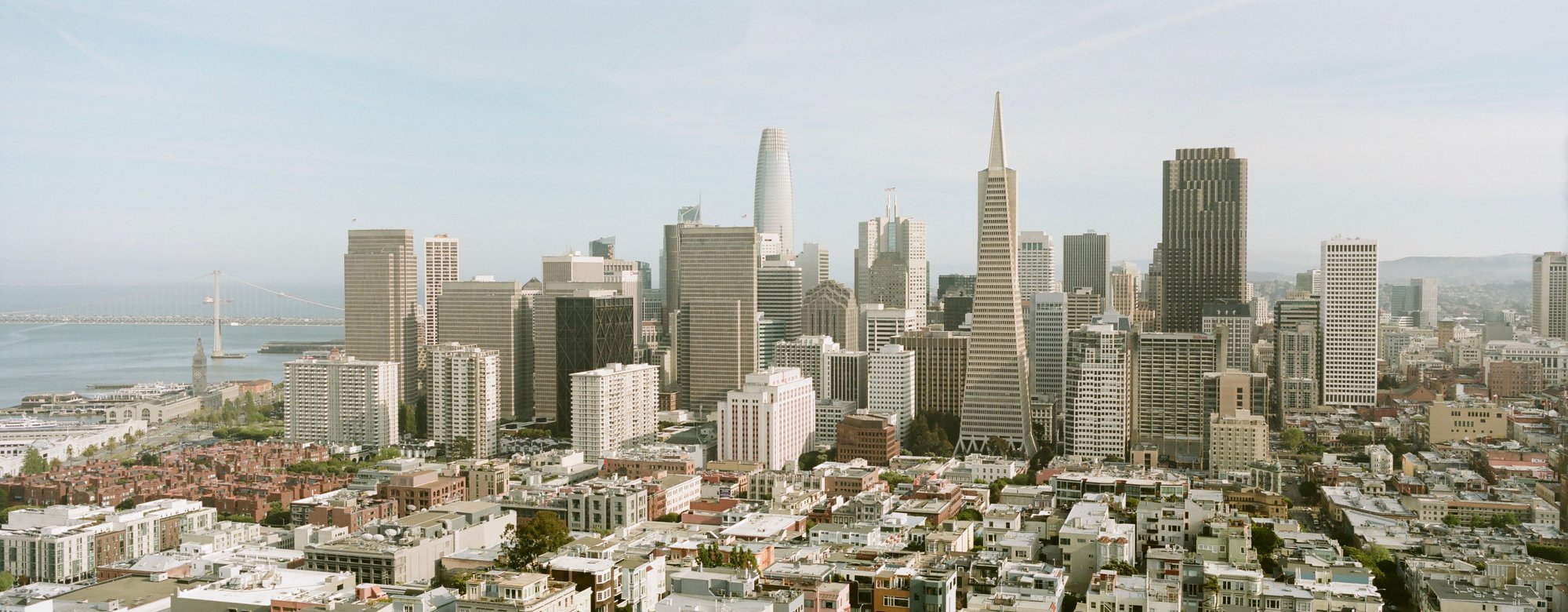
At the end of April, I went to San Francisco with my partner for a few days. The night before I left, I looked at my local used camera listings again.
Enter: the Hasselblad XPan.
What’s that?1 Why not something else?2 Hey Claire, aren’t those insanely expensive?3
The XPan became my new favorite camera, overnight. It felt like a technological marvel. In one purchase, I’d jumped from 1959 (when the Nikon F was introduced) to 1998, almost 40 years of camera engineering later. A compact little device which could read the ISO of my film off the canister, roll out my film for me, auto-advance to the next frame, light-meter, exposure bracket, on and on. It can take 4:3 shots interspersed with its custom 65:24 aspect ratio panoramic shots without wasting a millimeter of film!
On my first roll, I naively thought I could use the automatic shutter speed, a feature I’d never had before. That was silly of me, and I lost a roll to image shake. Despite having a light-meter in the viewfinder, the automatic shutter speed is displayed on a little LCD panel on the back of the film door, outside the viewfinder, where I forgot to check. Luckily, I had a sneaking suspicion towards the end of the roll as the sky darkened that my aperture didn’t make sense for my film speed, and a moment’s pause helped me realize my error. On I go.
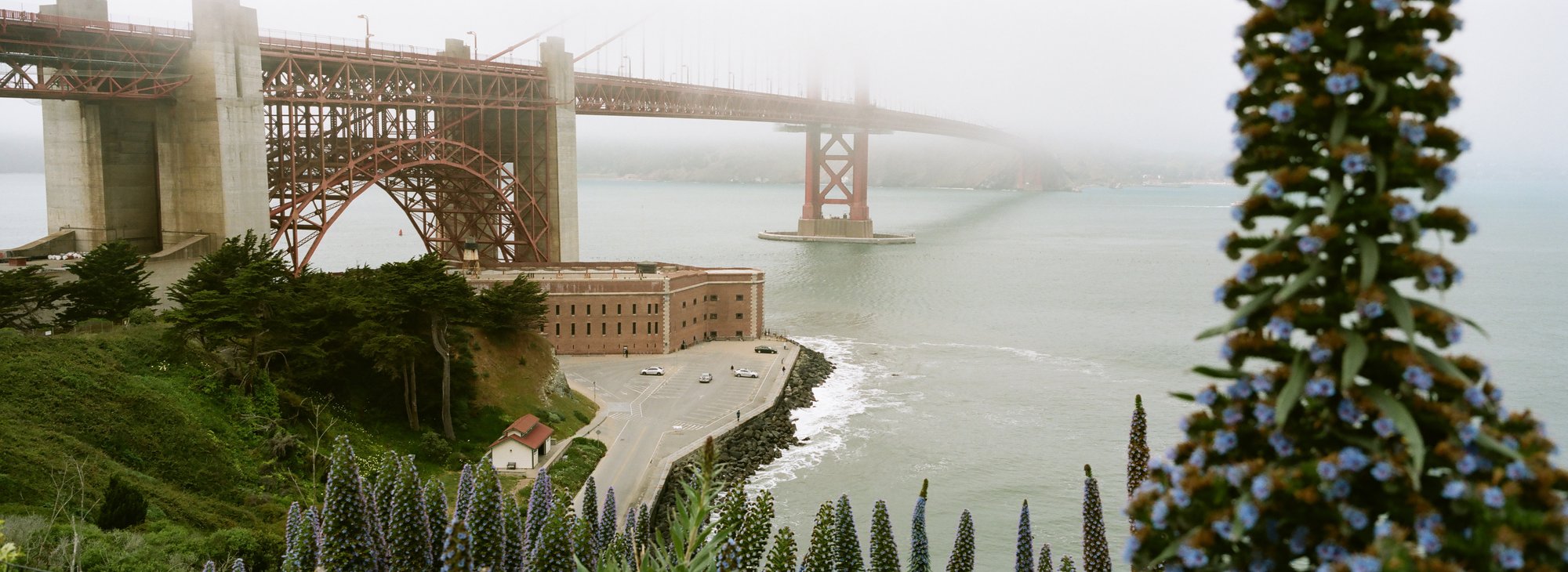
Still, I discovered the camera is an absolute blast to shoot. Riding trolleys, streetcars, buses, trains, bicycles, and just walking around the city, I realized I was holding a panoramic camera that composed images very intuitively for me, and I was taking photos which I couldn’t make before, that had always felt a little boring on narrower aspect ratios of my Nikon, but that still attracted me.
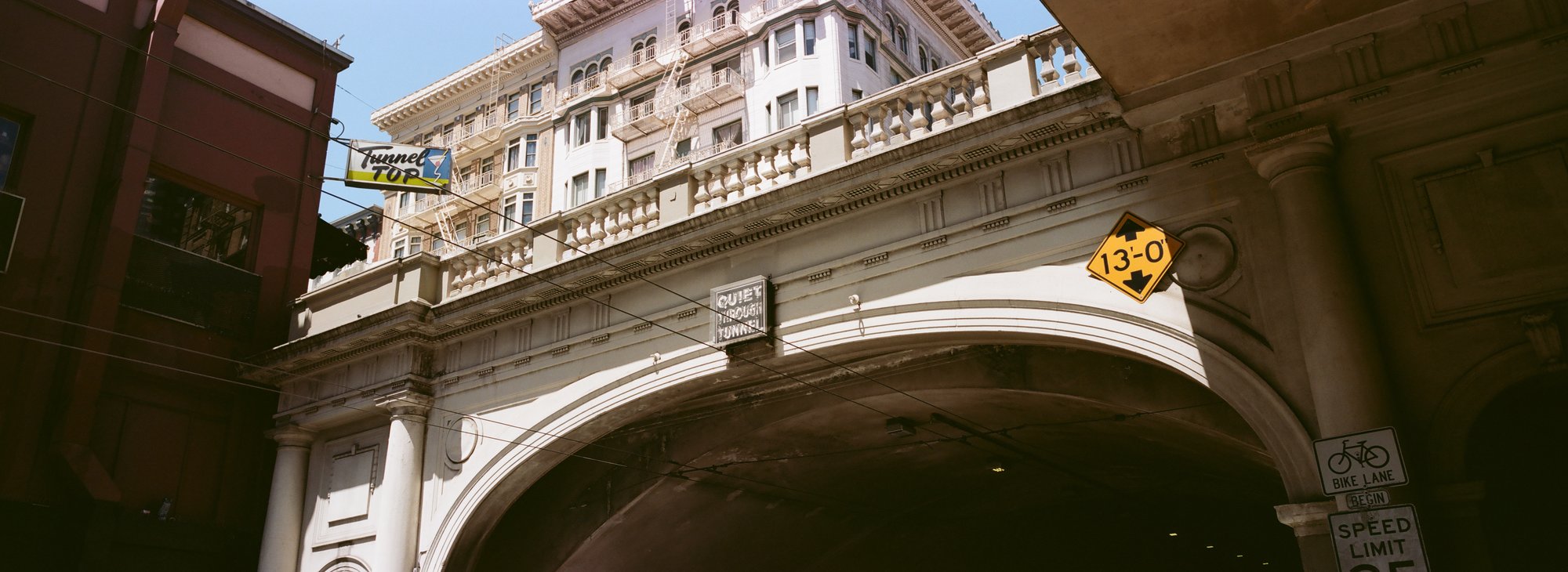
These images are all from my first rolls through the camera. I shot 15 of them without seeing any of the results, and my negatives later revealed fantastic frame after fantastic frame.
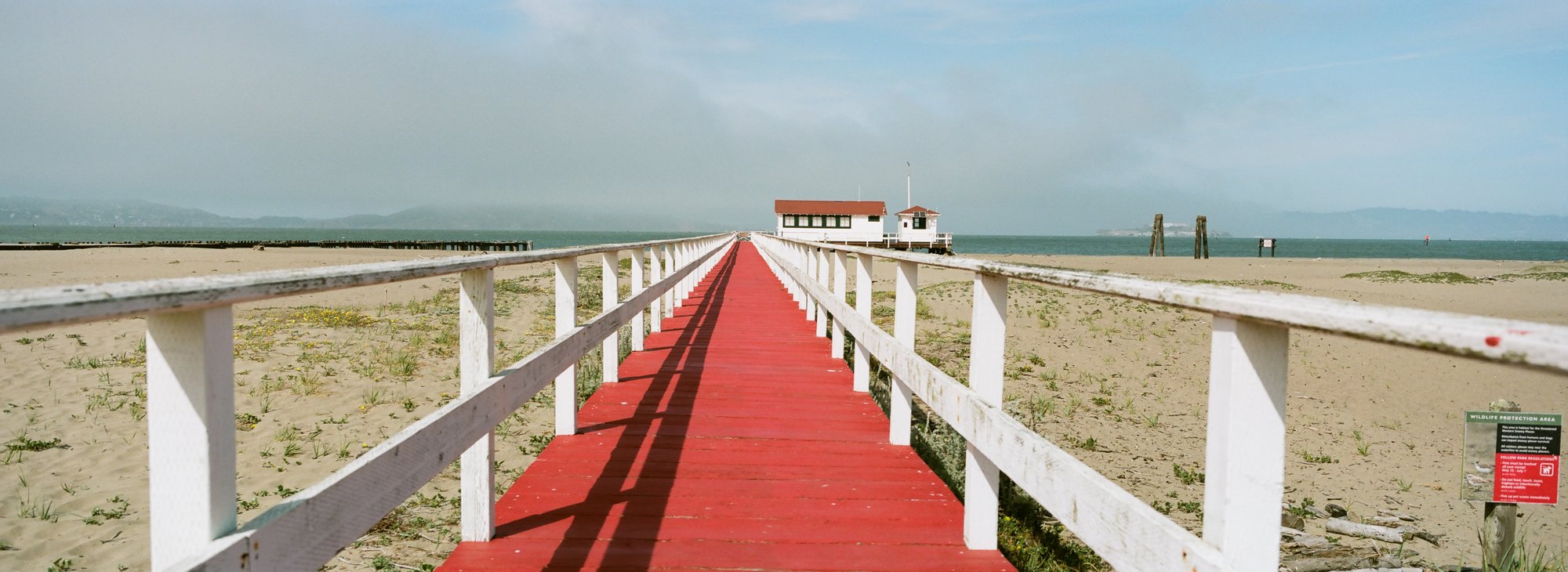
My previous perspective problems were gone, but I still needed to develop a better understanding of how to compose, scout shots, and frame my subjects. I revisited old locations and found that what worked for the Horizon didn’t necessarily work for the XPan. That makes sense up front, but it took me a few tries to really grasp. I’d need to stand a little further back from subjects, and see things a different way.
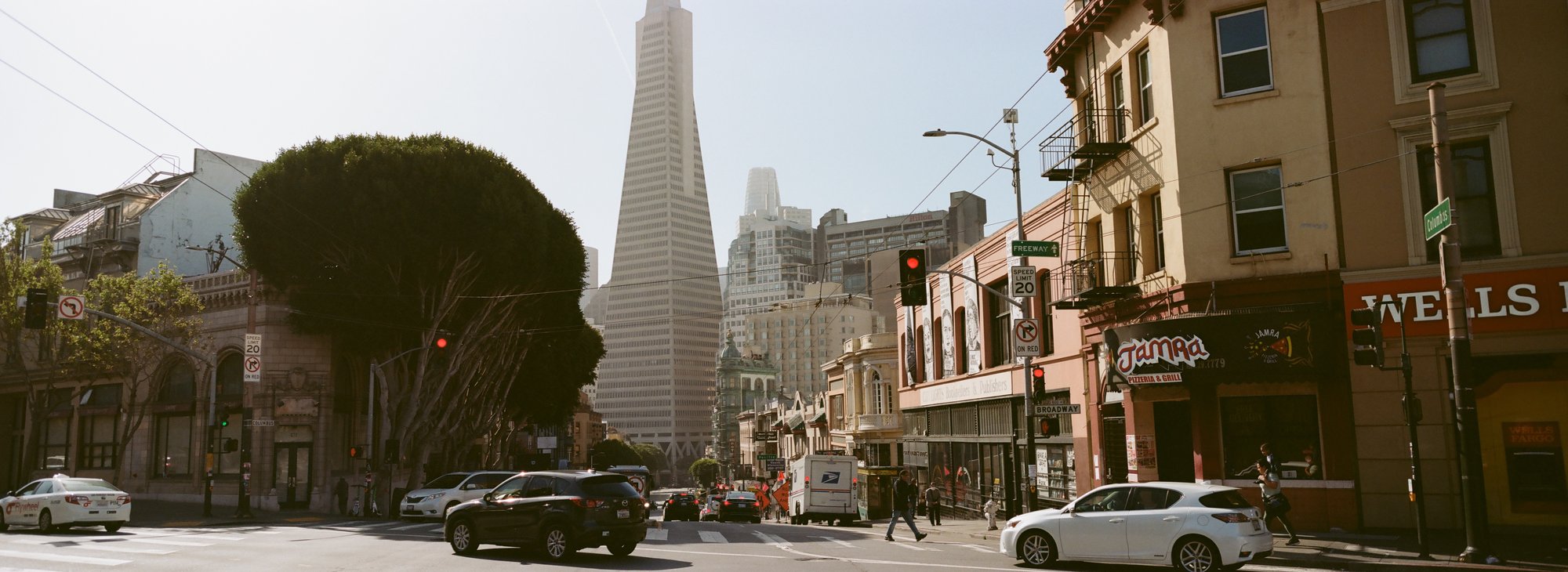
Physically tired and emotionally exhausted, I went home with my rolls of film, and developed them at my local lab, under the Space Needle. I shared my results with friends to much acclaim, especially from the ones who’d ever previously attempted to use an XPan. From the way they talked about these photos, it seemed I’d hit on something really special. But after my initial success, I soon found that what my subjects were would change, with different inspirations I found back at home.
Seattle (Reprise)
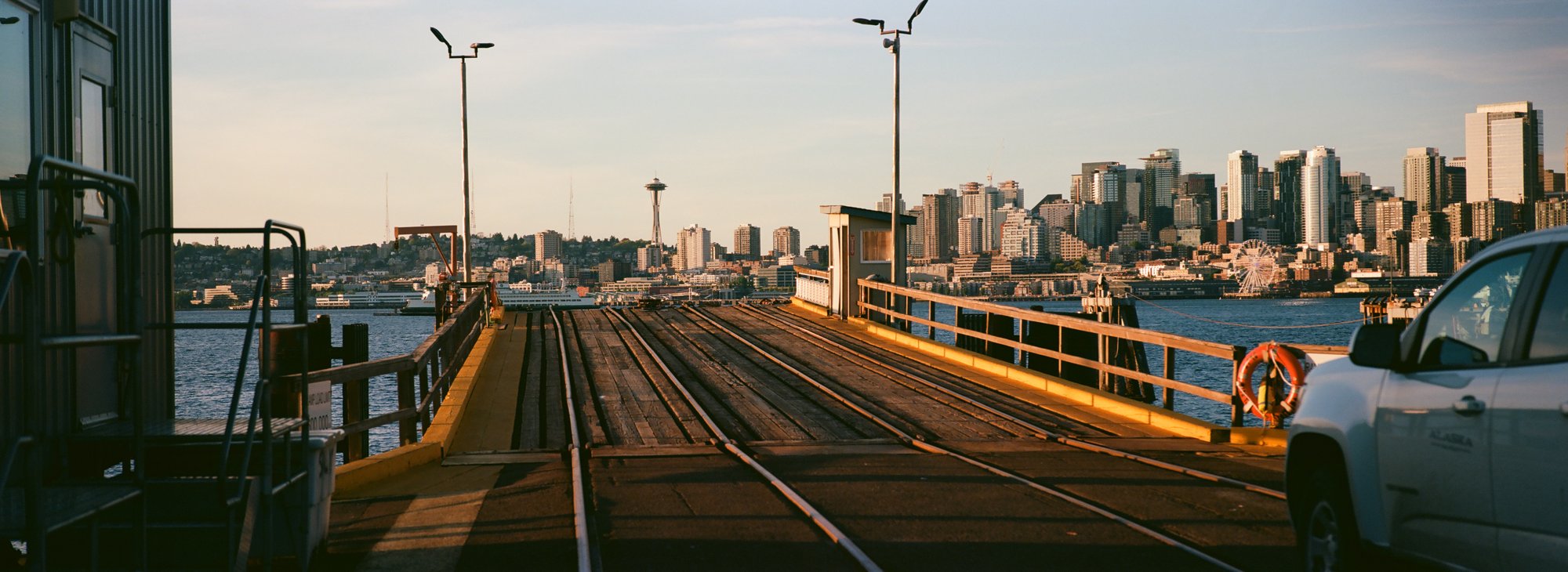
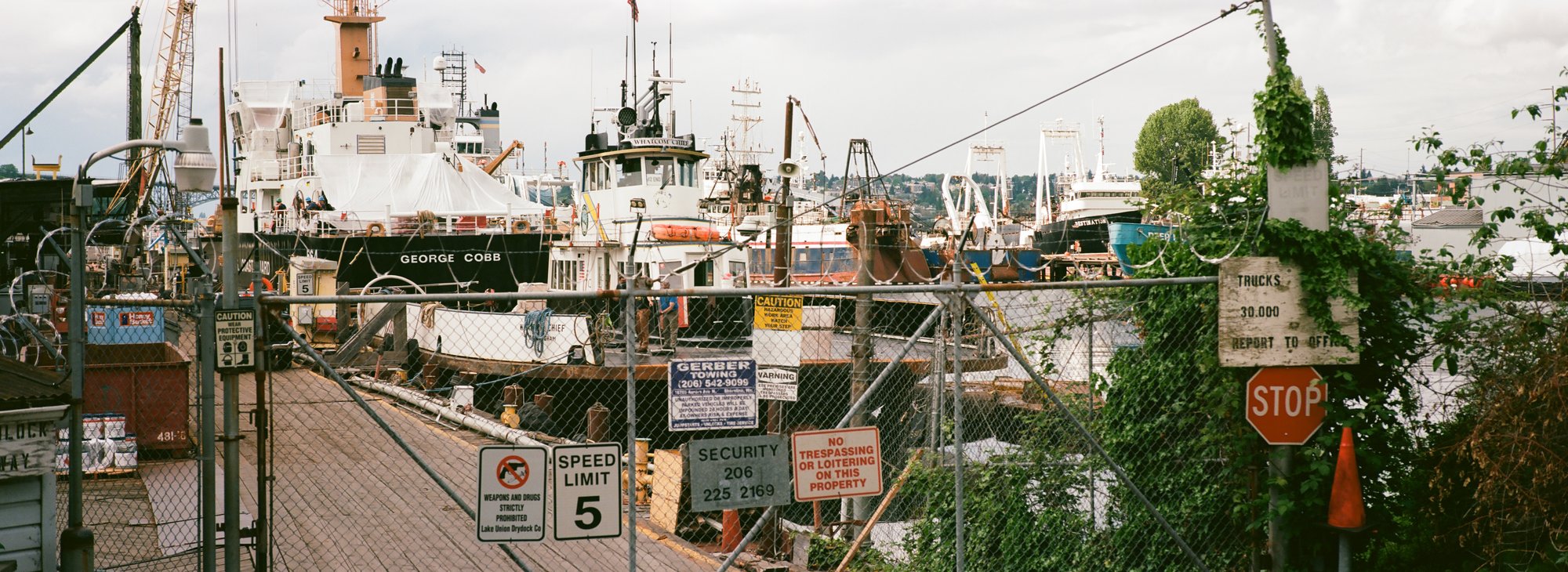
Seattle is filled with industry. The city has completely reshaped itself with regrades and land-fill since it was first “settled.” I regularly commute about 20 minutes through this industrial zone from Capitol Hill, where I live, down to Georgetown, a tiny neighborhood with no grocery stores, no schools, and barely a coffee shop, stuck right between Boeing Field, the Port of Seattle, and two freight railyards. The highway and many streets which I routinely travel offer stunning views in the morning and evening of harbor cranes, container ships, and miscellaneous industrial facilities in golden light, with the Olympics and Mount Rainier looking down at us.
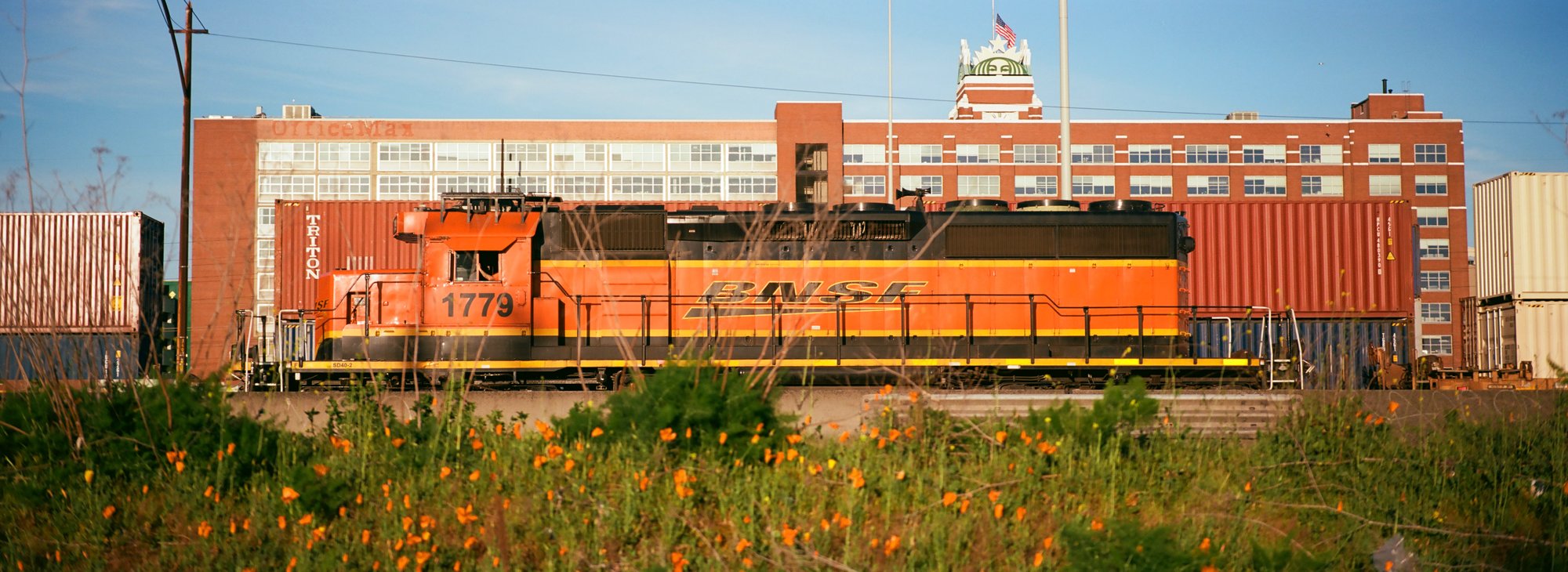
Add to that my love for motorcycling4 around the coastline of West Seattle, hopping on and off ferries, and I was spending a lot of time staring at waterside industrial land. I began to take an interest, and I started a new project. Here’s how I’ve talked about it in the past.
Maritime, Manufacturing, and Logistics (MML) is a zoning code in Seattle that I came across while doing some research earlier this year, which restricts land usage to these three industrial focuses. I started to become curious about this earlier this year as I’ve been spending an increasing amount of time in the SODO and Georgetown “neighborhoods” of the city where this zoning is especially noticable. As I started paying more attention, the shapes and colors of the harbor began to interest me, and this quickly became a captivating personal project, even as I travelled outside of Seattle to other cities on the west coast of North America.
I think it’s particularly well suited to photography with the X-Pan, since the scale of ports and industry here tends toward the wide rather than the tall. Also, it makes everything look like HEAT (1995, dir. Michael Mann) a film that I deeply love.
from my series on Glass.
In truth, I was having a difficult time finding anything in Seattle I found really beautiful. My job was deeply frustrating during that month, and I wasn’t sure what I wanted to do with myself. My neighborhood walks weren’t captivating me in the way they had the spring before, and I was searching for something a little more artistically interesting than beautiful photos of flowers from local public gardens.
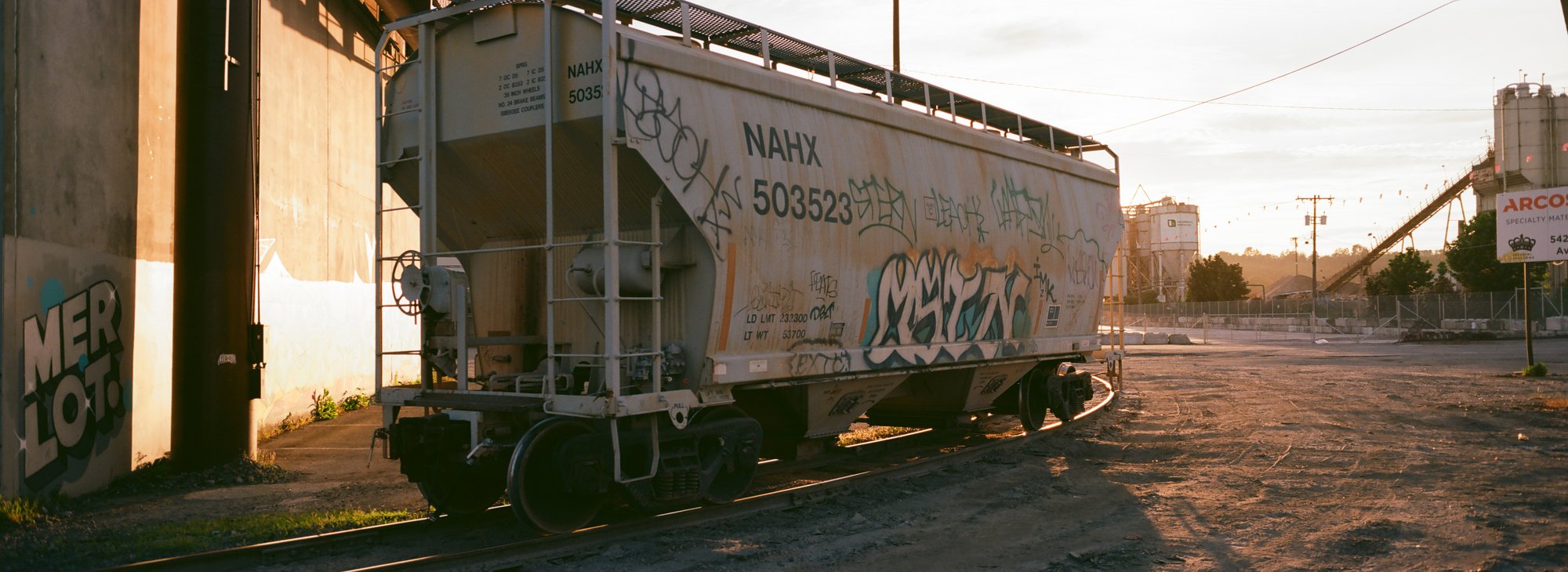
I took my camera with me every time I needed a break, letting the wind hit my chest and following every public-access road around the port I could, sometimes coming back to the same spots week after week until the light was right.
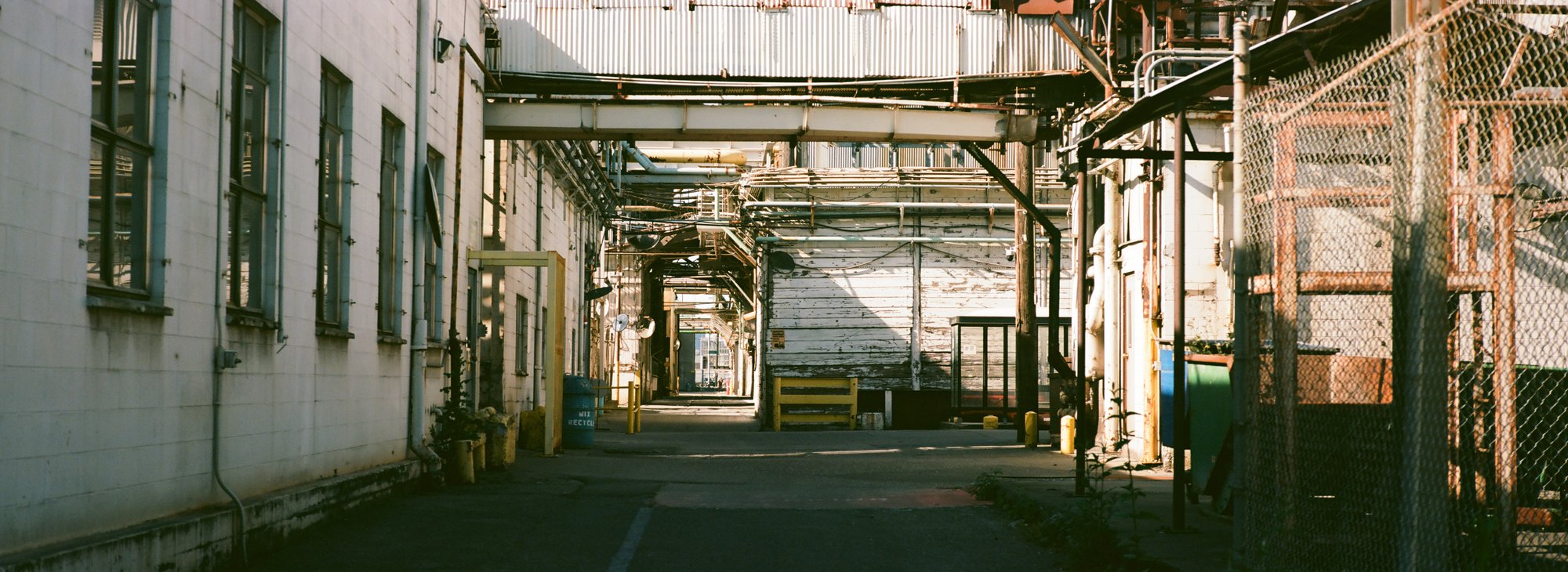
For years, I’d had in my mind that I wanted to take a photo of a particular glass recycler on East Marginal Way. I’d see it early on Sunday mornings when the clouds would finally part after weeks of winter rain, smokestacks belching huge towers of steam into the sky. It felt like a permanent fixture of that commute to me, but in December of 2024 it closed down, and all winter I sat bothered that I wasn’t going to be able to take my picture. In the spring and early summer, with this new camera, time on my hands, and an appreciation for the industrial landscape, I set to work.
I wanted to capture scenes that were dramatic, some that felt corporate, some that felt abstract and emotional, and others that felt like they belonged hanging on a breakroom wall while people drank their drip coffee. I wanted to capture the reality of my city, however I found it.
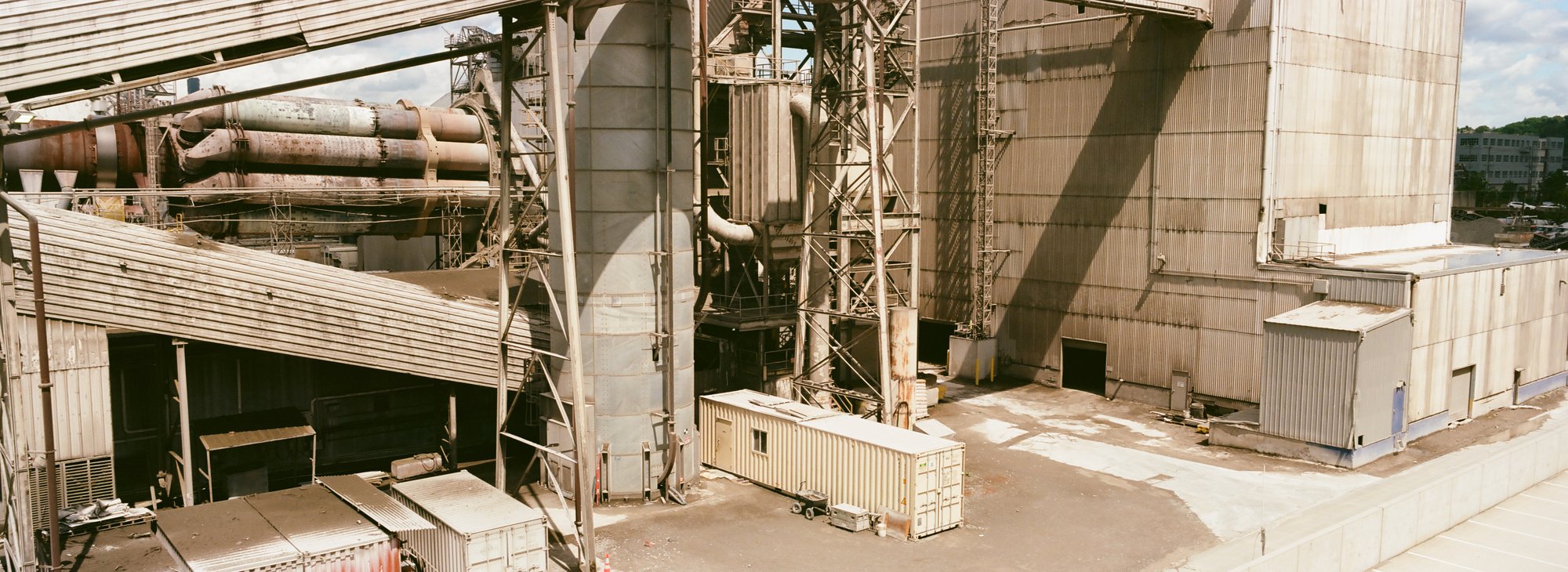
To my advantage, I found that a motorcycle seems to draw a lot of respect from people driving trucks and working security near factories. I got a lot of curt waves as I rode through, stopped a minute, and went back the way I came. I got away with a few polite talking-to’s when I ended up somewhere I shouldn’t have been, and left respectfully. I shot everything I could find, keeping meticulous lists of where I wanted to go next, and at what time of day I thought the light would be perfect.
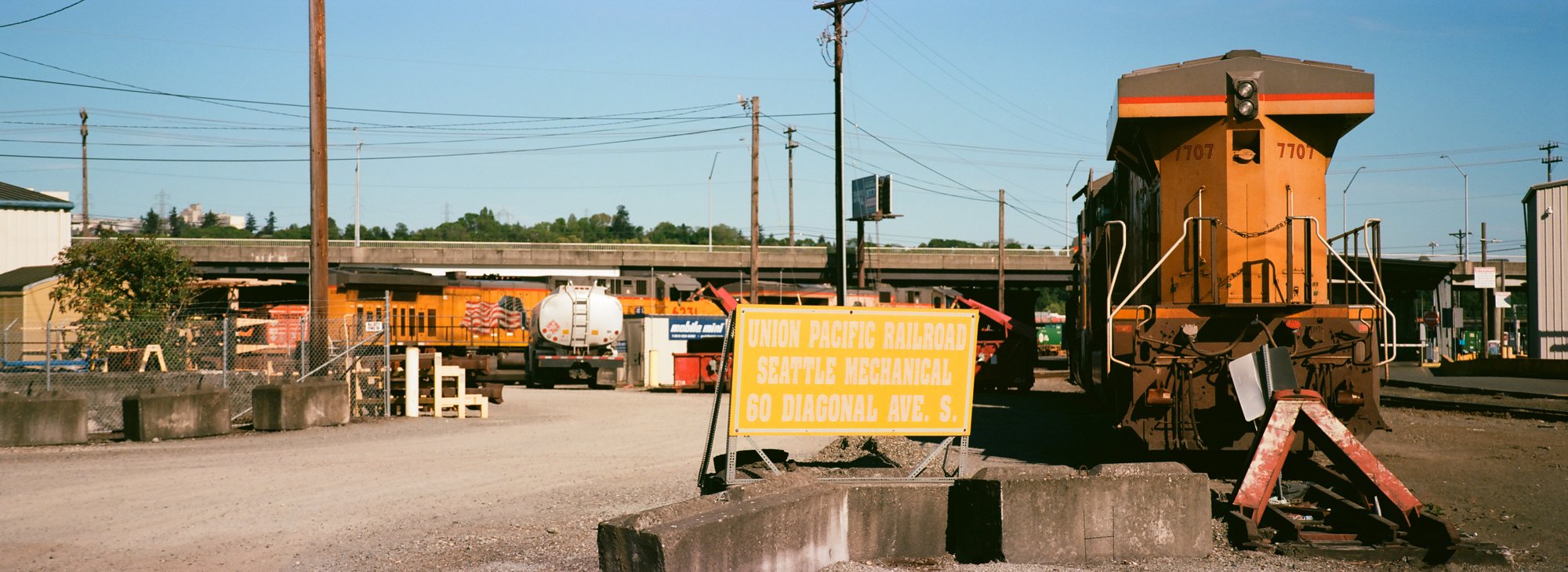
Work poured out of me creatively in a way I’d never felt before. I found myself with more images I was proud of enough to share than I knew what to do with.
Part of my motivation for writing this newsletter is as some sort of outlet for all of these accumulated works. Glass as a platform really motivated me to continue growing my skills as a photographer at a time I needed it most. New to the hobby, I needed encouragement when I succeeded, a bare-minimum of dopamine when friends liked a post to keep me coming back, to continue trying new things, and enough room to fail when a photo wasn’t all that great. I needed anything that would keep me picking up my camera week after week. Around this time, however, I started to think of Glass as a very small pond. Reliably, I’d have a good sense of if one of my panoramas would be good enough to be immediately featured on the Explore page of the app, and I was usually correct. This became my quality bar for a while, and as I got better, I grew bored of it. I stopped posting work which I loved, but which I knew wouldn’t resonate with a large audience on that platform. I wanted to attract a different, weirder audience, and ultimately, nothing happened to me as a result of me being on Glass. Some likes or ”appreciations”, an occasional thoughtful comment, and for years of being on there, one or two casual dialogues with other photographers who only exist on there. Bluesky, for all its difficulties with community and absolutely terrible image compression, brought me more of an audience for my photography than Glass has.
Return to Form
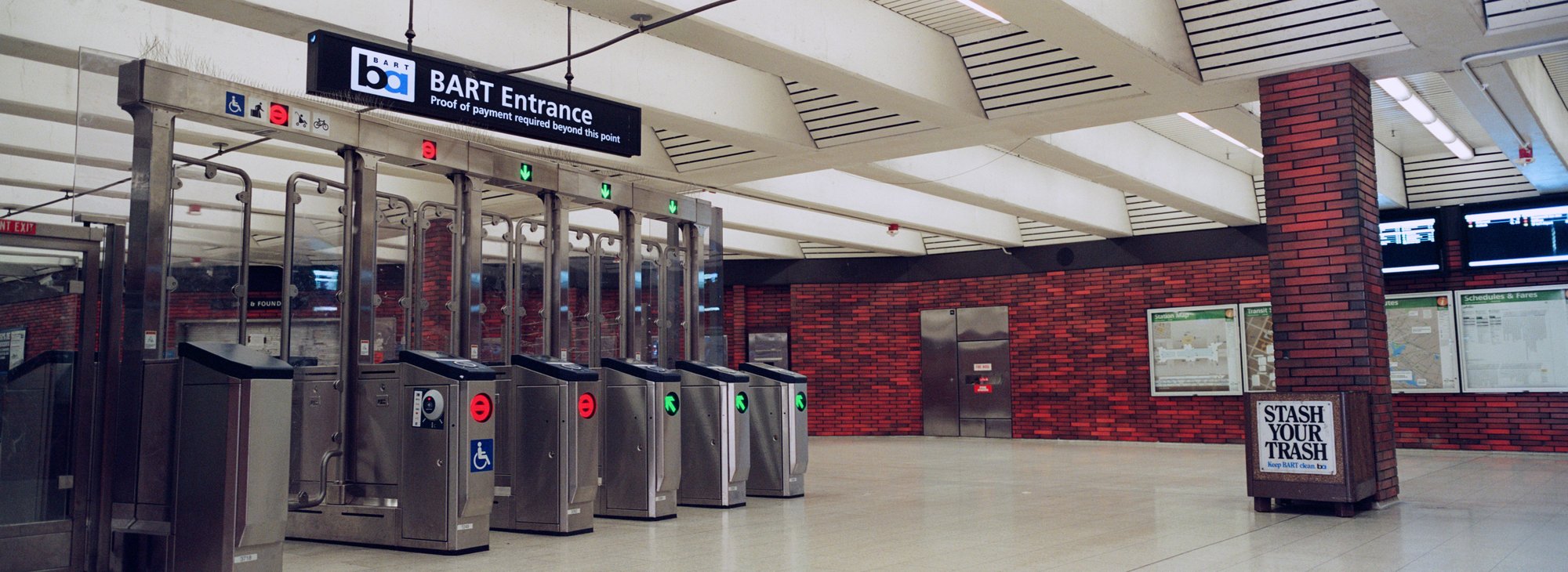
As summer passed, I found I wanted to continue my work with transit photography on the XPan. I found something captivating in those first images with the Horizon, something I feel is worth pursuing. I find such love and attachment in trains and public transport, and I know I’m not alone in it. Listen to the way a long-time New Yorker talks about their commute, or someone from the Bay Area describes growing up riding BART. There’s a reason why San Francisco is filled with thousands of tourists from Europe in the summer who all want to ride the cable car.
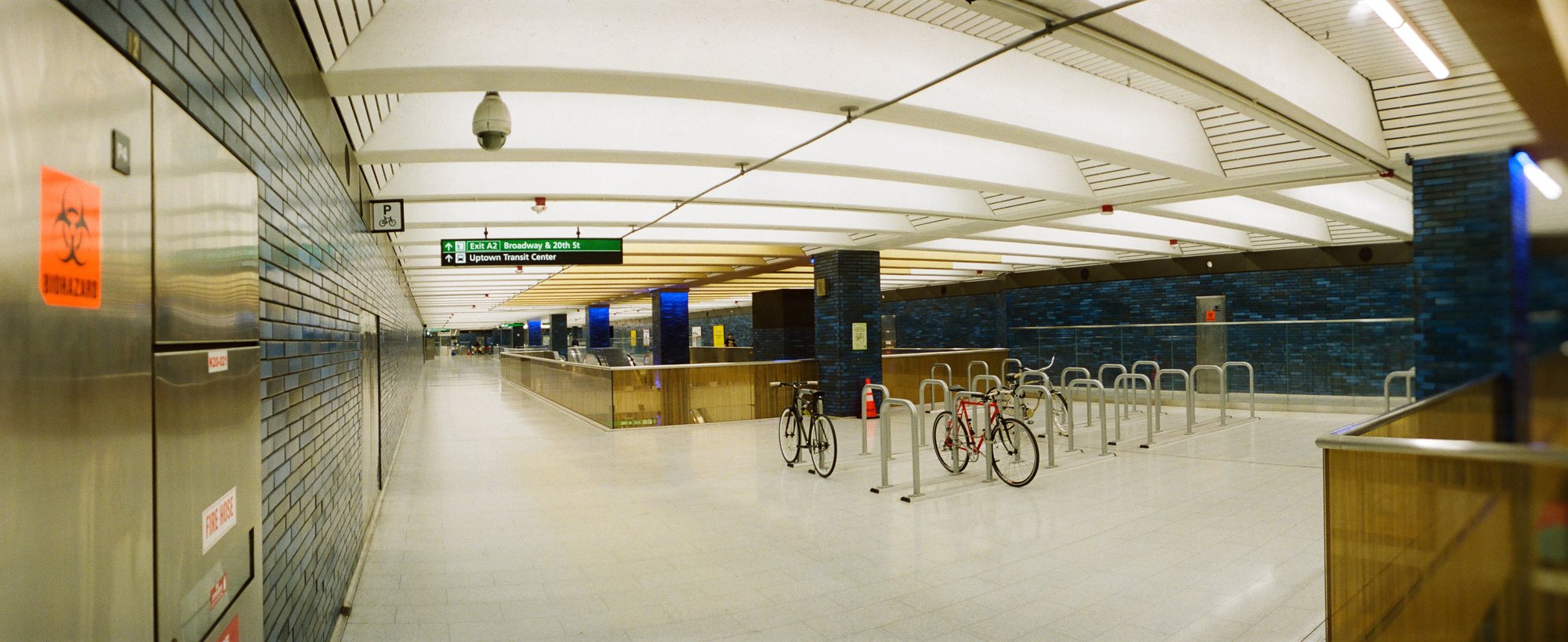
I've been a train and transit enthusiast since my childhood. I think that the feeling of movement and society they bring to the world is really beautiful, and atop that, semiotics and wayfinding are fascinating design challenges, especially under the pressure of complex, labyrinthine, loud, dark environments that must rapidly move millions of people around a city, even when they don't speak the language.
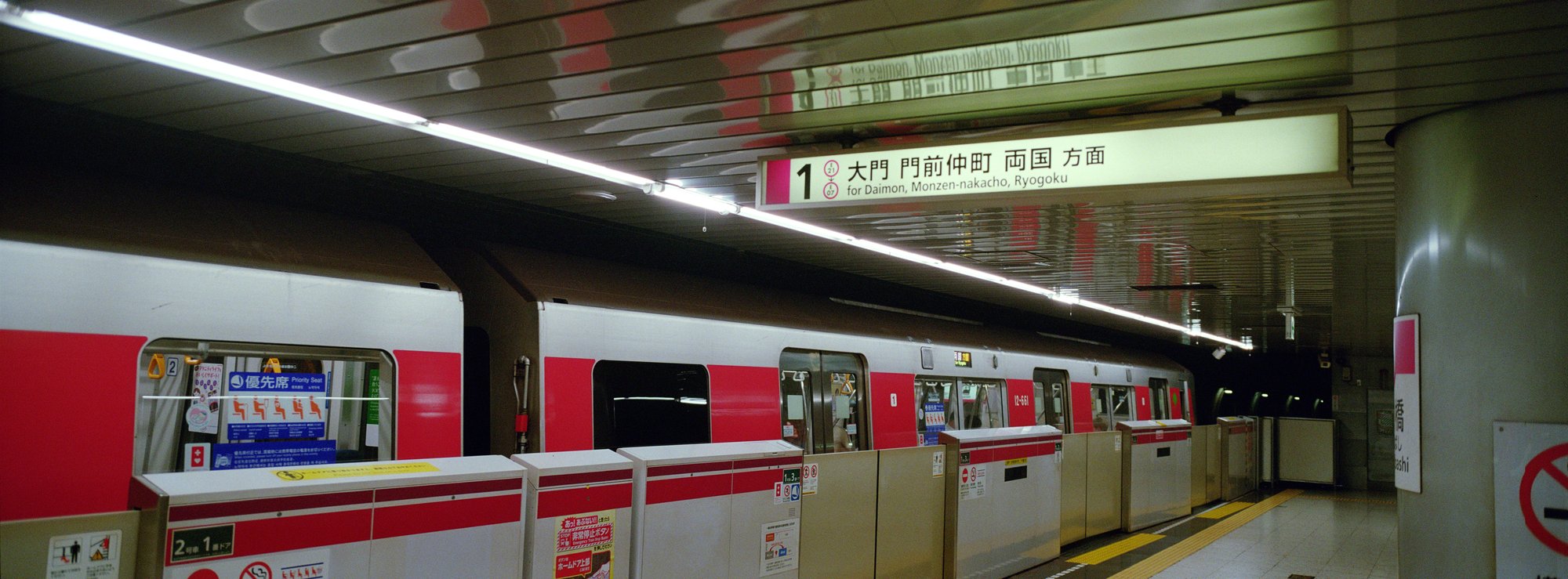
The way that panoramas open up interiors, widening spaces to be more as our eyes experience them, captures something absolutely delightful from the often crammed interiors of subway systems. As I look back through these images in order to write this, I’m frequently taken by how the stretching and compressing effects of the swing-lens Horizon add a very depersonalizing feeling to these spaces, while the flat images of the XPan create what I feel is a timeless and “honest” feeling in the same locations, appearing almost documentary, but still nostalgic. I think both moods often resonate with people. Transit and our cities aren’t a utility which transports us to a destination, we get upset when we’re late, we hide tears in the back of the bus when we’re having a terrible day, we bond with the bright colors of trains after years of companionship with them, we find our favorite seats. We are always our whole selves, we live our whole lives inside this world, and these spaces should be captured with the fullness of that experience.
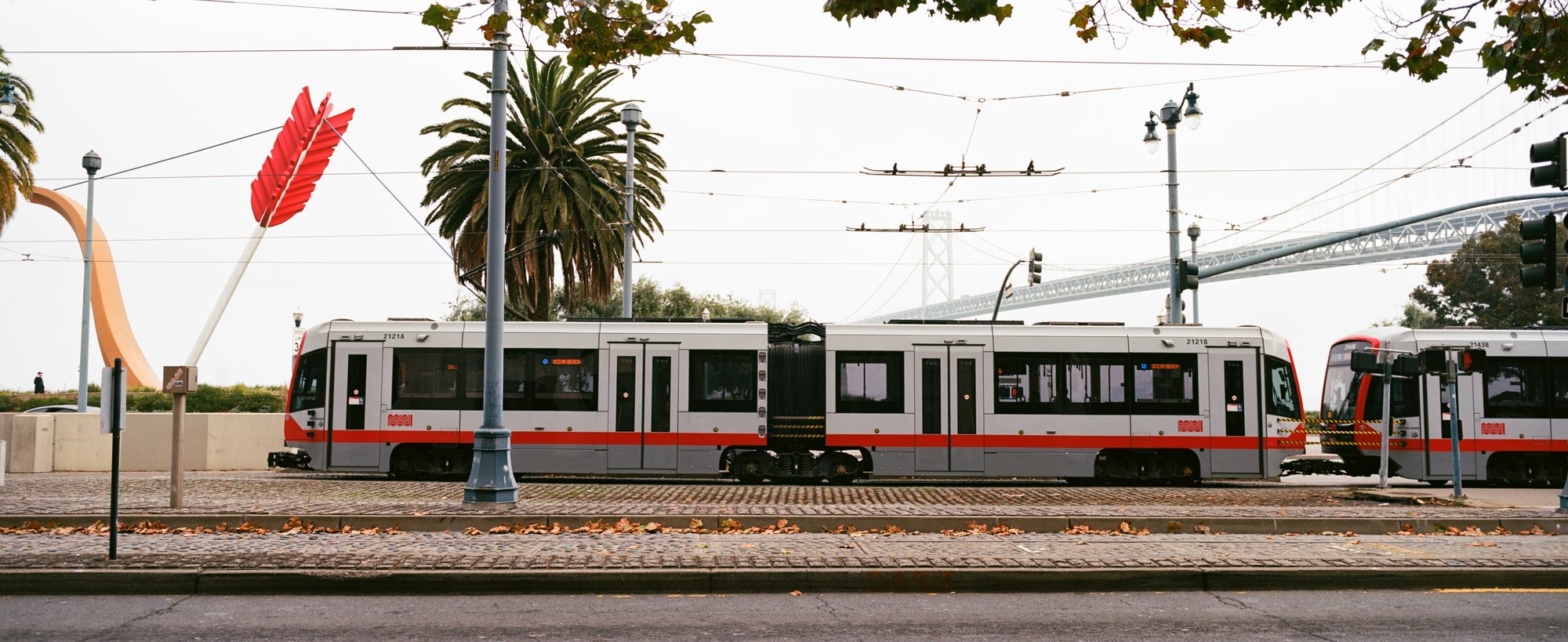
In June, I was going back to San Francisco for a work trip, and I wanted to continue my project. Around that time, I also started falling in love with a girl in New York. It seemed like I was going to get to try my hand at photographing both citys’ trains again.
XOXO, ClaireViolet
“What in the world is the XPan?”
I’ll let Hasselblad tell you in their own words.
The XPan was an extremely unique camera, providing the advantages of the 35mm format but also the ability to swiftly change to full panorama format without having to change the film. The XPan utilized a dual-format, producing both full panorama 24x65mm format in addition to conventional 24x36mm format on the exact same film. It was the first dual-format 35mm camera on the market that expanded the format instead of masking it…
The 65mm width of the full panorama images are similar to the medium format, actually making the XPan a medium format camera for 35mm film. Weighing in at only 950 grams, the camera boasted a silent shutter, a quiet and quick built-in motor drive…
The XPan had three interchangeable compact lenses, including focal lengths of 30mm, 45mm, and 90mm. The full panorama format was made possible by the large image circles of the specially designed interchangeable lenses. These lenses … were characterized by razor-sharp image quality and excellent coverage.
In short, Fujifilm designed and manufactured an incredible 35mm panoramic camera which Hasselblad re-badged in certain markets. It’s ultra-sharp lenses and unique mechanism take panoramic photographs without warping the perspective.
The Horizon 202 produces panoramic images on film by turning a lens around a center point. This is how your iPhone takes a panorama! In doing so, it bends all the horizontal lines in your image. Not always ideal.
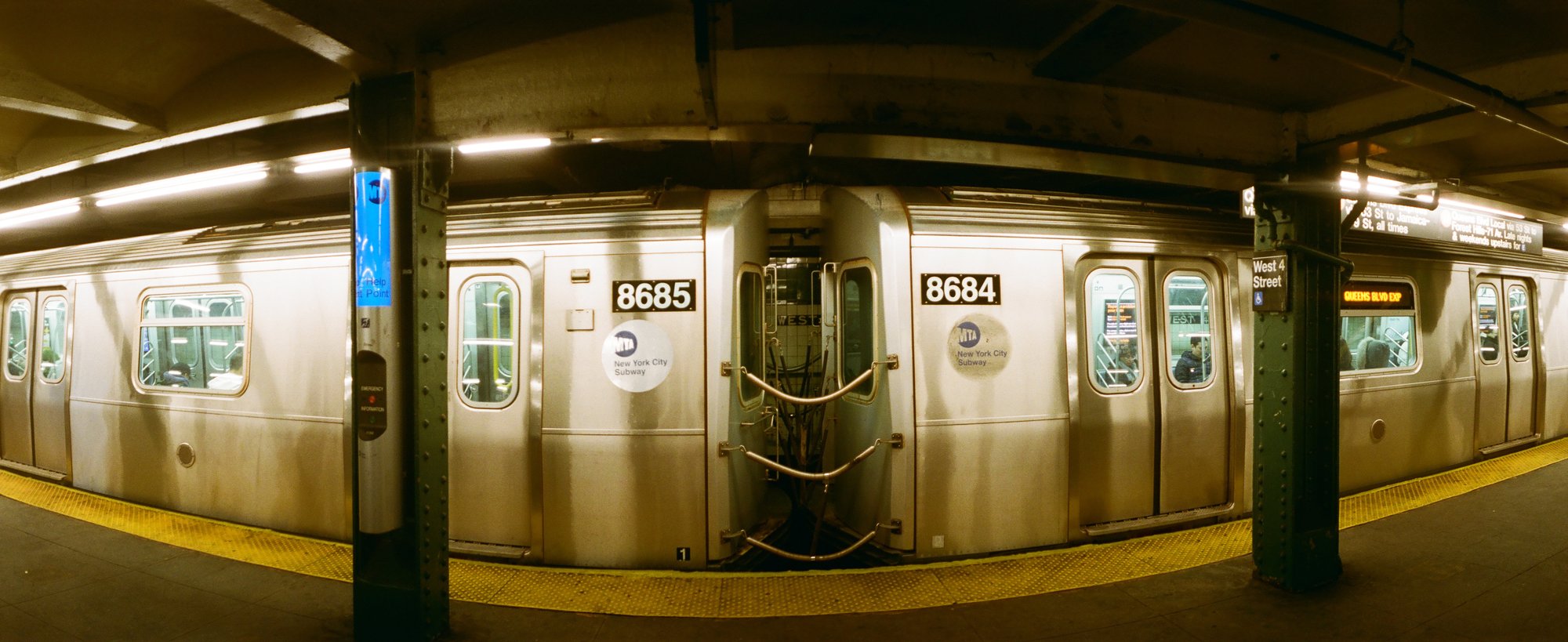
Coupled subway train cars and station platform, as taken with the Horizon202. 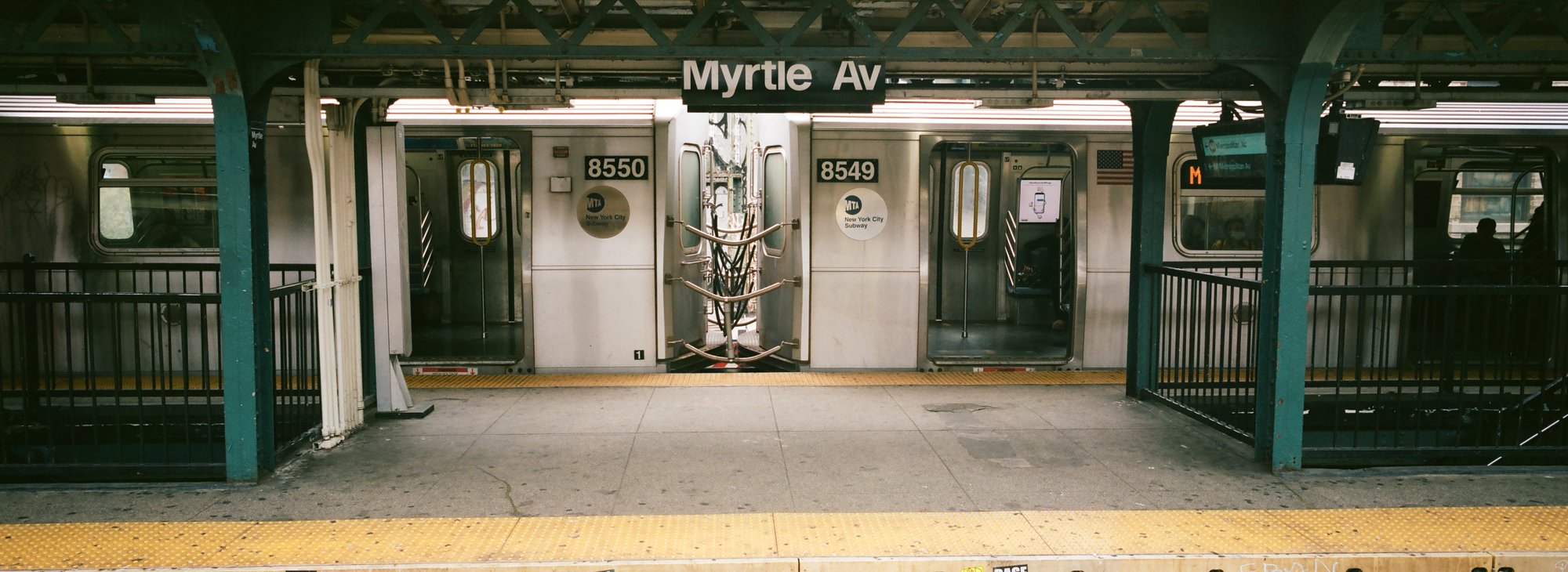
Coupled subway train cars and station platform, as taken with the Hasselblad XPan. The Hasselblad XPan does no such thing. Instead, the XPan takes a really large image, but only exposes the middle section that the lens produces to film, leaving you with a really wide image. The image isn’t compressed onto the film horizontally like you may be used to seeing in movies. It’s just a doubly wide image with every bit of delicious detail in the negative that comes along with that.
As a fun-fact, because cinema shoots 35mm film with the image oriented 90º, every XPan panorama has about 4x as much surface area as a typical movie still. That’s a lot of detail when it comes time to scan and make prints. ↩
“Dear ClaireViolet, I’m a fancy photographer and I demand to know why you don’t want a 612 or 617?”
Okay. 612, 617, and similar cameras use 120 film (medium-format) and bulky nearly large-format lenses to take panoramas in roughly the same aspect ratio as the XPan. Many professional photographers rave about them. They are, in many ways, a wet dream for me. Absolutely unparalleled image quality by nature of a huge film negative, and in the case of really fancy ones like the Linhof Technorama 617, shift movements on the lens to correct for diverging perspective lines such as when shooting upwards at tall buildings. Why don’t I use one of those?
Go back and read how I described moving around New York City. Do you see it yet? Panoramic medium format cameras are absolutely enormous. They’re heavy. My girlfriend has a Fuji GX617 and the thing is a beast which traps the lens in a crash-cage because it’s so front-loaded you could easily drop it and shatter the whole thing. Landscape photographers love to carry them around, put them on tripods, and take enormous and gorgeous images of national parks. If you were to raise it to your eye, everyone would spot it in an instant and change what they were doing. “Why are you taking a photograph of me? Go away.”
Now also try messing around with a roll of 120 paper-backed film, licking it with your tongue to seal it (admittedly quite fun), carrying around those in your backpack all day and trying to do all of this while commuters are pushing past you and you’re worried about scratching the lens. You’ve just got off work and you have 1 hour before the sun sets to take all your photos. Good luck not fucking something up.
For me, one of the most interesting features of the XPan was one I didn’t even notice until I’d already bought the thing. Again, from the Hasselblad website:
When shooting with the XPan, as the film was exposed, it was wound back frame-by-frame into the cassette, thereby protecting the exposed section in case the camera was accidentally opened. This useful feature – combined with the XPan’s extremely quiet exposure and film transport – also reduced the risk of unwanted noise, since the camera wound film when the photographer decided to load film, not at the unexpected end of a roll.
A few days ago, at my first ever gallery show, my friend Victoria cornered me on this exact issue because my business cards read “ClaireViolet is a 35mm film photographer.” Hopefully I’ve addressed why, at least for now, I feel confident with my chosen constraints. ↩
Unfortunately, yeah. If you really like my work with it, please consider emailing me about buying a custom print? ◡̈ I’d be happy to run any work that I have shared publicly on Glass or Bluesky. ↩
I ride a red-on-cream Triumph Bonneville T100. ↩


