Tangible Tuesday #14 Reach Out and Touch Someone
Touch is arguably the most human sense — and the humble button, the most misunderstood switch. A tour of touch receptors, debouncing, and a dozen ways engineers have reinvented the click.
Tangible Tuesday is a free newsletter for the upcoming book Designing the Tangible Interface. Past issues in the Archives Want to support? Just forward this email to someone who would enjoy it.
Tuesday Tune: "Baltimore to Fair Play" by KLF
> Like in a cheesy action movie, the Tactile Response Squad is activated when a situation gets out of hand. Dr. Möbius has activated his doomsday device and there is just one chance to stop his dastardly plan. > > Marchetti is doing 210 mph in the Monaco Grand Prix to place the transponder on the Möbius car. Through the steering wheel, in a language only her fingertips can read, she feels the faint, high-frequency shudder of her front tires slipping… > > Reyes caresses the dial of the Möbius vault, feeling the distinct whisper of resistance as each pin drops into place. The launch codes are just on the other side of the door, but was that a click or a tick… > > Dr. Okafor has 30 seconds to remove the brain implant on the only scientist who can disarm the device. Working in the dark is no problem for someone blind from birth; she slices delicately through the dermis, feeling the implant wire buried deep in the healthy brain tissue with the razor sharp scalpel, when…
_Detail.jpg) Michelangelo, “The Creation of Adam” (detail), Sistine Chapel, c. 1512, public domain, via Wikimedia Commons
Michelangelo, “The Creation of Adam” (detail), Sistine Chapel, c. 1512, public domain, via Wikimedia Commons
The Magic Touch
Sight is one of the most impressive engineering achievements, but touch is arguably the most human. Touch, primarily through your dexterous hands, both senses the environment and enacts your will in a recursive loop experienced as a unified whole. Imagine the driver reaching out to change the fan speed: finding the dial by touch, grasping the knob, adjusting the grip, feeling two clicks in the twist, all without looking.
Touch is widely understood to be a sense, but perhaps it is a category of senses: skin has at least four distinct types of touch receptors, three additional types of touch-related receptors, and at least 5 types of touch pain receptors:
- Pacinian corpuscles for fast vibration and deep pressure
- Meissner corpuscles for light touch and texture
- Merkel cells for sustained pressure and edges
- Ruffini endings for skin stretch and grip/position
- Heat thermoreceptors
- Cold thermoreceptors
- Pain nociceptors (at least 5 types including cutting, pinching, crushing, extreme heat or cold, irritant chemicals, histamines, and substances released by damaged tissue itself)
Seven different sensors for dozens of different jobs, each with distinct fibers and molecular channels. One fingertip could contain over 10,000 nerve cells, but this sensitivity varies widely across the body. Meissner corpuscles can be so densely packed in the fingertip to detect a difference of a couple millimeters, or so dispersed on the back that two touches need to be centimeters apart to be felt distinctly. These nerves can even be tricked; capsaicin in hot peppers activates heat thermoreceptors and menthol activates cold thermoreceptors. This sensation isn’t “like” heat; it is heat, as far as the nerve is concerned. Sichuan peppers contain a chemical that interferes with touch receptors, giving a numbing, tingling sensation unlike any other.
As with all the senses, touch is not simply a dumb “switch” that sends signals to the brain “computer.” Pain nerves can stimulate responses right from the spinal cord, activating the safety reflex before the person feels any pain. Physical memory is real memory, from sports to music. The brain devotes more real estate to a sense that is practiced. Violinists show expansion in the brain for their fretting-hand fingers, correlated with how young they started playing. Brain scans of Braille readers show enlarged finger representations. They have much better accuracy in touch, but only in their reading finger, not across their whole body.
The Button
The slogan for the Kodak camera in 1900 was: “You press the button, we do the rest.” An editorial in the Chicago Daily Tribune called it “prophetic cry of the age,” because it promised to put the consumer in immediate, effortless control of an intricate piece of machinery.1
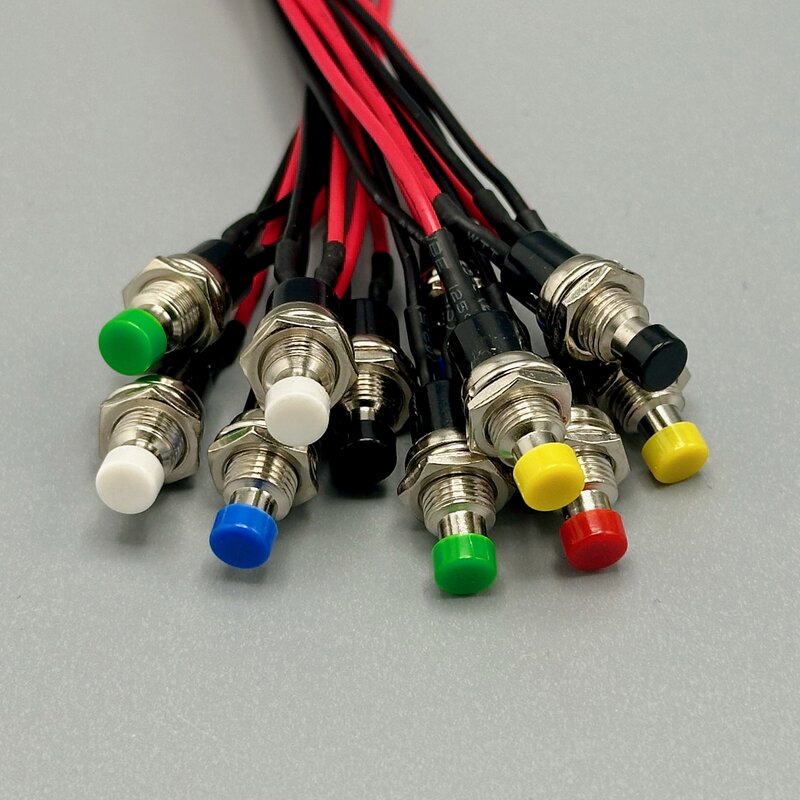
There are hundreds of switch designs, but two main types:
- Latching stays as you set it. (light switches, power buttons that click in/out)
- Momentary is active only while pressed. A spring returns it to default (doorbells, keyboard keys, most tactile switches)
Switches existed from the beginning of the electric age, but the first push-button enabled the electronic age. A switch turned a motor on or off, but the button was used to send information. The key insight was to distinguish functionality into state, or information. A power switch can physically connect the device to power, but once a device has multiple ways to do an action, for example, a power button on the device and another on the remote, the device needs to treat “on” as a state. Most modern devices are always on, at least partially, or wake up every few milliseconds to check if someone is pressing the remote button.