Review Catch-Up: March 2022
Hey folks! It’s been a minute. If you follow me on twitter, you know I’m working on a big piece about the MCU at the moment, and you should be seeing the first part of that go out in the next week or so. But in the meantime, for the sake of getting something out there, I thought I’d do another round of rapid-fire reviews of comics I’ve read recently, either from the LCS or the public library which I only just recently discovered was here in town.
Defenders Beyond- written by Al Ewing, art by Javier Rodriguez
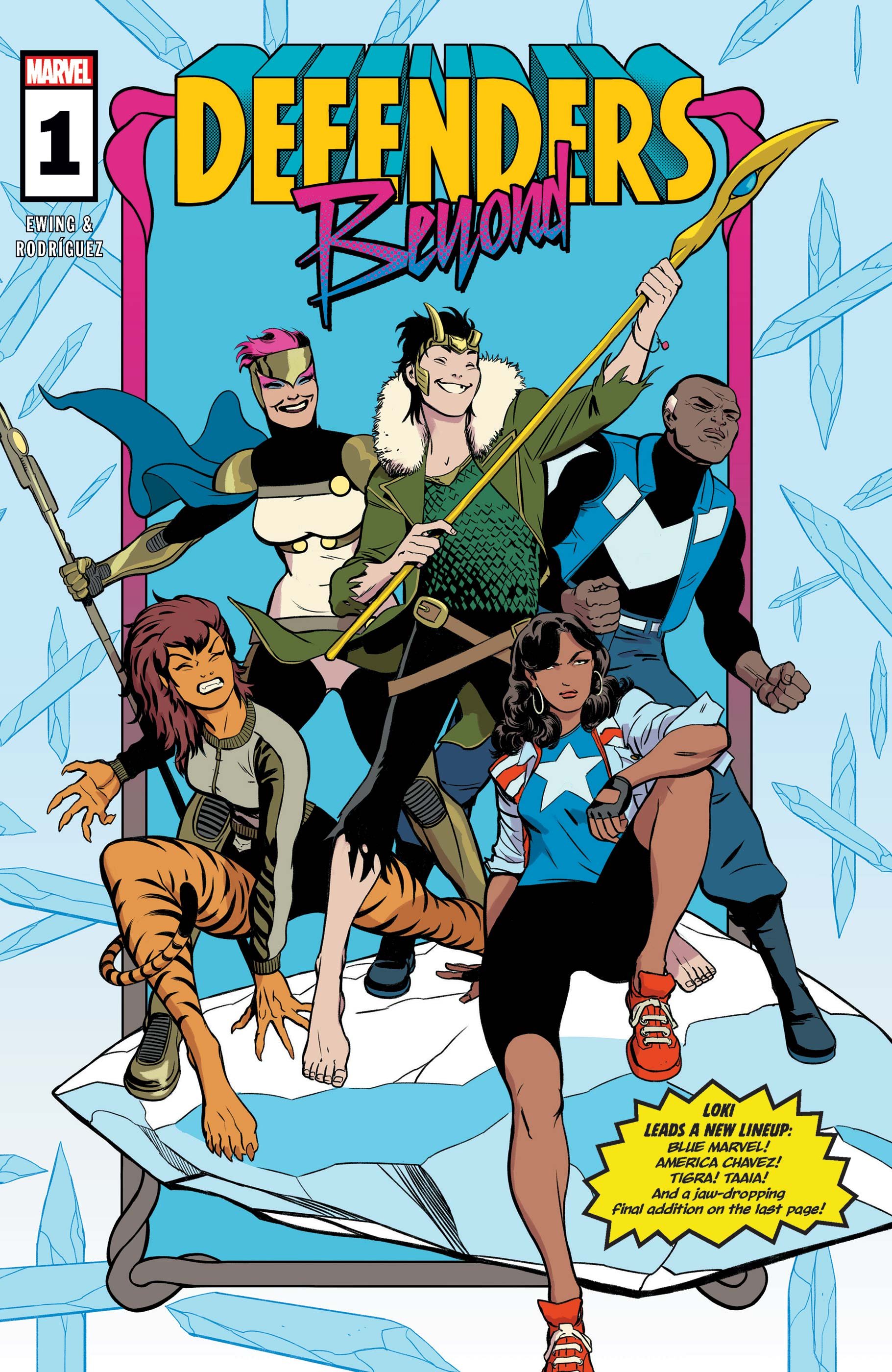
You don’t need me to tell you this rules. Ewing and Rodriguez once again take us on a visually breathtaking trip through the Marvel cosmology, weaving together smart character work with both celebration and interrogation of Marvel’s history and the superhero genre. Loki: The God of Stories is in this. That’s frankly all the recommendation you need.
Superman: Action Comics: The Warworld Saga- Warworld Revolution- written byPhilip Kennedy Johnson, art by Ricardo Federico, David Lapham, Lee Loughridge, and a whole lot of others
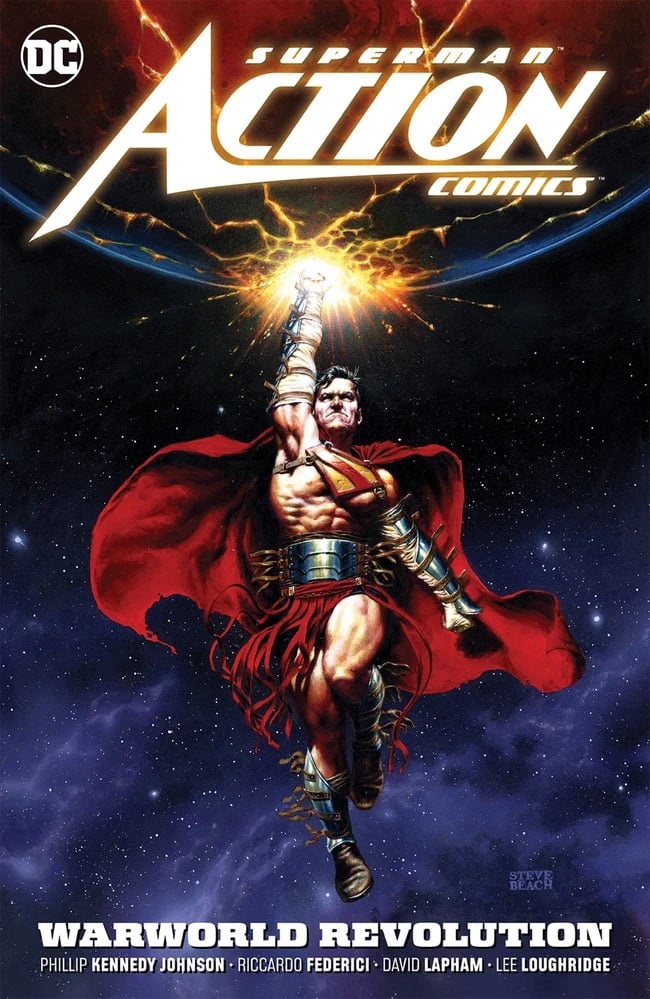
Boy, that’s a lot of subtitles. The scuttlebutt around this whole mega-arc in PKJ’s Action Comics shifted wildly while I waited for it all to come out in trade. What started out looking like the next great perennial Superman story seemed to be losing people’s interest over time, as I saw fewer and fewer discussing it month to month with each new issue. Now, with the entire Warworld Saga in front of me, I have to say- I’m a fan! Do I think it belongs in the upper echelon of Superman stories with All-Star, Birthright, Action Comics 2011, etc..? No, of course not. But I think it’s firmly in the second tier of great Superman stories told in the regular pages of the ongoing title- stuff like the Pak/Kuder Action run, or Bendis’ tenure on both Superman and Action. It’s a very straightforward hero narrative, but it’s told on such a big, epic scale that it’s hard not to get swept up in it. I think PKJ’s characterization of Clark is spot-on, I appreciate the attempt at building an inherent mythology and culture for Warworld and fleshing out Mongul as a character, I really dig the high fantasy flavor of the setting- there’s just a lot here to appreciate. There’s been some talk about whether or not this whole storyline, with Superman and the Authority shipping out to Warworld to liberate its inhabitants, is a neoconservative/colonialist text- and while I certainly see how people draw that conclusion from the broad strokes of the plot combined with the very old-school pulp fantasy aesthetic, a genre with a long history of indulging in colonialist tropes, I don’t necessarily read it that way. The fact that the Phaelosians- the group Clark seeks to free from Warworld- are a faction of Kryptonians, makes all the difference for me. It’s what keeps it from being the story of an American entering a foreign land to impose his will on the locals, and instead makes it the tale of an orphan refugee seeking to free his people from tyrants. At one point a character draws a thematic line between the Superman story and Moses, and I think that’s the kind of level this is working on, more mythic and broad than narrow allegory. I totally get why that reading is not going to land for everyone, so I think it’s something to be aware of when recommending this, but I can only speak for myself, and personally, it really worked for me.
Captain America: Sentinel of Liberty Vol. 1- written by Jackson Lanzing and Collin Kelly, art by Carmen Carnero
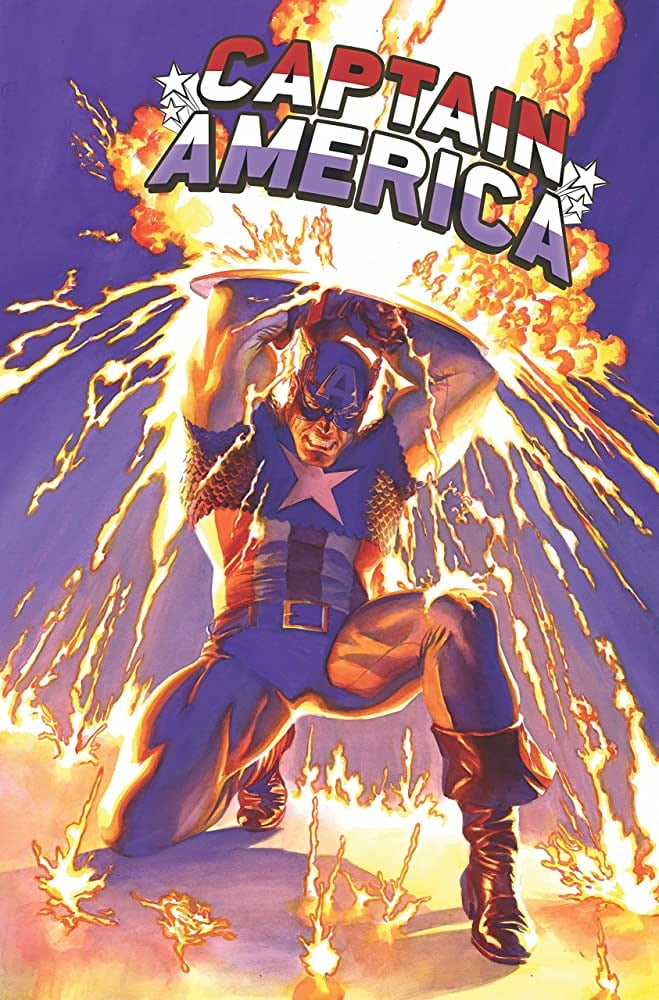
It’s been a long, long time since a Captain America book has wowed me. There’s been Captain America books I’ve liked for sure- Ta-Nehisi Coates did some interesting stuff in trying to reckon with the fallout of Secret Empire, Derek Landy and Angel Unzueta’s Captain America/Iron Man was a breezy (and very pretty) read. But Ed Brubaker’s run casts a long shadow over everything that’s come after. The first chunk of that run- from Winter Soldier up through Reborn- easily stands as one of the best books Marvel has ever published, a perfectly constructed mixture of introspective character study, historical fiction, high-concept sci-fi, and gripping spy thriller. In an era that was all about experimenting with the trappings of superhero comics, pushing the limits of what the genre could be and what forms it could take, I’d argue it was maybe the best, a brilliant updating of a character that can so easily feel corny and retrograde in the wrong hands.
All of that is to say that Captain America: Sentinel of Liberty is the first Cap book I’ve read that, at least so far, I think can stand toe to toe with the Brubaker run. It’s hard not to come off hyperbolic when talking about this book, but hot damn, this is the good shit. In some ways, this is the polar opposite of Brubaker’s approach- where that book was all about grounding Cap in a muddy, political world of moral greys and espionage, Sentinel of Liberty massively heightens the stakes, pitting him against a technologically advanced global aristocratic conspiracy, not unlike Batman’s Black Glove or Court of Owls. But on the flip side, it also emphasizes Steve Rogers’ civilian life more than any Cap book in recent memory, with Steve making an effort to distance himself from the world of SHIELD and the Avengers to get back in touch with the common man. This is a book that can swing from Captain America fighting teleporting adamantium cyborgs and armies of ninjas to taking community college art classes and breaking coded messages with his ham radio buddies, and it all feels equally fully formed and vital. Lanzing and Kelly write a pitch perfect Steve Rogers- principled, empathetic, stubborn, and a little out of touch, playing up the “Man Out of Time” aspect for both humor and drama. And the conflict here, where Steve is forced to confront the secret history and baggage of his own iconography, is a take that allows for the kind of broad social commentary that you want from a Cap book without getting so bogged down in real world specifics that it can’t be light on its feet.
And holy moly folks, Carmen Carnero on the art.
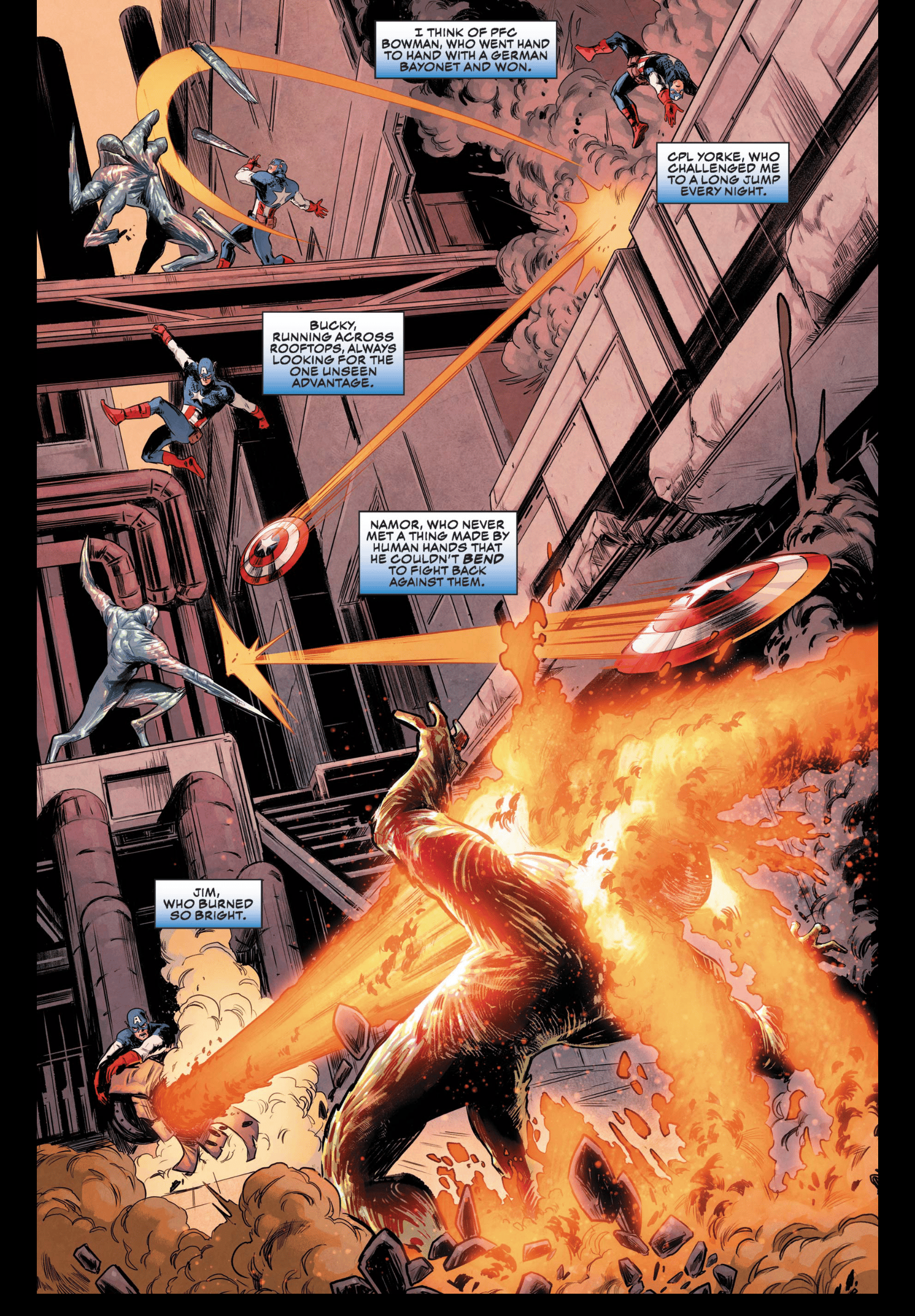
I’ve enjoyed her work on Miles Morales, but this is on a whole new level. Lanzing and Kelly know when to pull back on the dialogue and let Carnero’s art do the work, and boy does it. The character acting in the more intimate moments is subtle and well observed, and the action scenes are spectacular, often presenting fights as a full page or spread, carefully laying out each stage of the choreography as a fluid motion across the page. This is starmaking stuff. This is the kind of work that should propel someone into the comics A-list.
I have nothing but nice things to say about this creative team and this book. This is the most exciting, engaging, and just plain entertaining Captain America comic in well over a decade, and I cannot wait to see what these folks have in store for the next volume.
X Lives/X Deaths of Wolverine- written by Benjamin Percy, art by Joshua Cassara & Federico Vicentini
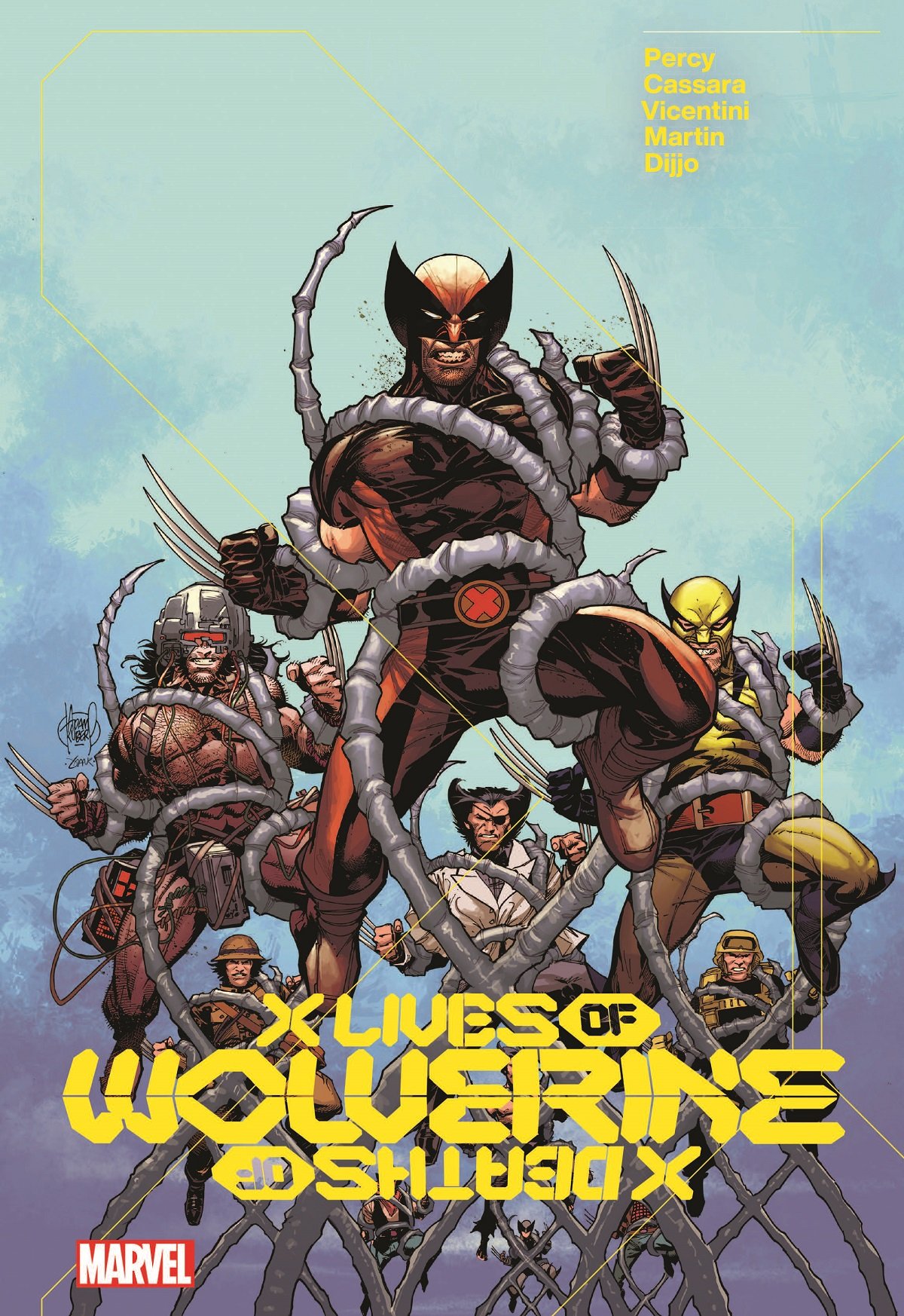
This is a book I’ve been meaning to catch up on for a while, but Marvel was asking an absurd $75 for a hardcover of these 10 issues, so I held off until I found it at the library. This thing was marketed as the next big seismic shift for the X-books, in the vein of HoX/PoX, after Hickman left the main X-Men title, and having now read it, I feel like Marvel maybe opened themselves up to some false advertising lawsuits with that one.
I might as well talk about the two miniseries contained in here individually, because this is absolutely not a HoX/PoX situation where their narratives weave together into a cohesive whole. These are two entirely separate story arcs grouped together by branding, that only coalesce at all thanks to a cursory crossover in the final issue. X Lives wraps its story up and then a character walks onscreen and tells Wolverine “hey, we’ve got this other thing going on in this other book that we need your help with.”
X Lives is the less interesting of the two to talk about. It’s a very straightforward (one might even say underwritten) Wolverine romp, in which Logan time travels across eras from throughout his history in order to prevent a time-hopping Omega Red from killing Charles Xavier before the X-Men are born. Simply put, there’s nothing here you haven’t seen before- Logan reflects on his checkered past, monologues about past regrets, and gets into a whole lot of very gruesome fights with Omega Red in various forms. It all looks great, of course- Joshua Cassara, the regular artist on Ben Percy’s X-Force, turns in some beautiful work here, so if all you’re looking for is some good-looking Wolverine action, then this will hit the spot. But I found myself disappointed by how slight the whole thing felt. There’s no new insight into Logan’s character here, there’s no deeper thematic ties to the larger Krakoa era, there’s no real twists or turns in the plot. From issue 1, you know exactly how this is going to go, and what it’s going to say, and at no point does it have any surprises up its sleeve.
X Deaths, on the other hand, is far more interesting, but not necessarily because it’s better. This follows a depowered Moira immediately after Hickman’s Inferno, as she’s on the run, trying to avoid being killed at the hands of Mystique and Destiny. It’s a decent enough setup, and feels like a logical continuation of where Inferno left the character, but it quickly starts making choices that feel very out of left field. Early on, we establish a ticking clock with the revelation that not only is Moira depowered and exiled, but has also been dying of cancer the entire time? This isn’t really framed as a reveal within the book- the way it’s delivered had me wondering if I had missed something between Inferno and this book, like maybe it was established elsewhere and Percy is just picking up the thread, but no, this is the first mention of it. It’s also implied that her Krakoan no-place habitat may have infected her and given her the cancer in the first place, which raises a lot of questions- did that happen intentionally? Weren’t Xavier and Magneto the only ones who knew she was even there until the events of Inferno? They had no reason to try and kill her, did they? Was Krakoa itself trying to poison her? What motive could the sentient island possibly have for such a thing? None of these questions are addressed here, and we’re simply left to roll with it.
spoilers for X Deaths
The truly bizarre turn here, and the one that the entire story is building to, is Moira’s sudden heel turn, joining the militant anti-mutant organization Orchis and allowing her consciousness to be transferred to a cyborg body. On some level this makes a certain amount of sense- I could buy her feeling some resentment towards the mutants for turning their backs on her, and wanting some payback after dodging attacks from Mystique for months (or however long this story is supposed to take place for). And a terminal diagnosis, along with the knowledge that she can never reincarnate again, would certainly be a valid reason for wanting to transcend her mortal coil. But when taken in context with the entirety of Moira’s thousands of years of life, where she has seen that artificial intelligence is the true enemy that neither human nor mutant has managed to defeat across the ten realities she’s lived through, a realization that was the motivation for building Krakoa as a mutant stronghold in the first place, it feels more than a little contrived that, after a rough few months, she would completely abandon everything she has spent literal lifetimes fighting for and simply say “fuck it, I’m siding with the machines now.” She has seen that future! She has literally been there! It ends with everyone and everything being absorbed into an amorphous hivemind, devoid of individual life! Even if we buy her newfound fear of death as motivation, on a long enough timeframe (which is how she’s used to seeing things), this does not actually solve that problem! The whole thing just feels ill-conceived, and her sudden cancer diagnosis ends up feeling like a contrived piece of shorthand used to justify it. And unfortunately, if you don’t buy into the heel turn, there’s not much else here for you, because that’s all this story exists to do. It’s five issues of prologue for the Evil Cyborg Moira stories that I guess we’re getting, whether we like it or not. Once again, the art is the saving grace here- Vicentini has a dynamic, slightly cartoony art style with a lot of energetic page layouts that recall some of the best of the 90s X-books. Both stories in this book are great fun to look at. But the writing, across the board, feels like wheel-spinning to me. Frankly this should never have been packaged as an event- this easily could have just been a pair of arcs in Percy’s Wolverine and X-Force runs. But I’m sure editorial wanted to give folks some assurance that there was still a big-picture “plan” for where the line was going, and a Wolverine event is always going to sell, so here we are. I can’t recommend this as a story, but hey, congrats to Cassara and Vicentini for having their stellar work in a well-designed oversized hardcover. Makes for a nice coffee-table book if nothing else.
That’s about all I have time for for this one. Like I said earlier, that piece on the MCU should start dropping soon, and I’m also going to try and get these review catch-ups out on a more regular basis. Thanks for reading, and if you haven’t, please subscribe so you’ll always know when a new entry drops!