December Review Catch-Up
December Review Catch-Up
well, it's taken a longer time than I initially planned to get this newsletter up and running, due to personal circumstances outside of my control, but luckily that's given me plenty of time to build up a backlog of material to talk about. As the description suggests, this is going to be a place where I post my thoughts on whatever I'm currently reading/watching/playing (mostly comics) that don't fit into a handful of pithy tweets on the dying hellsite. It's been a rough month for me, so of course I've mostly retreated into the comfort of Marvel and DC cape comics. I try to be selective with what I read from the Big Two, but at the same time, this stuff is very much My Bullshit and it's hard for me to resist keeping afloat of even the dumbest goings-on within their respective shared universes. So without further ado, I'm gonna do a run-down of most of the books I've read in the last month or so.
Justice League Incarnate by Joshua Williamson, Dennis Culver, Andrei Bressan, and Brandon Peterson
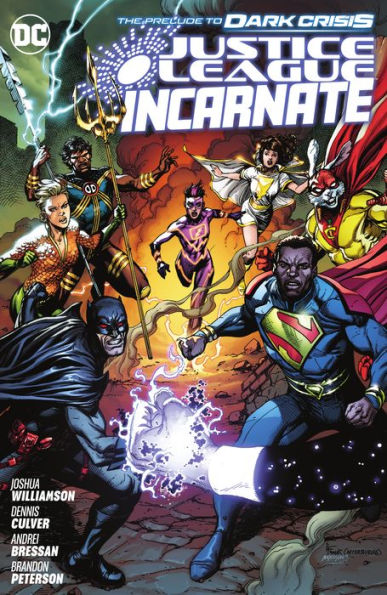
If we're talking dumb Big Two books that exist almost solely as shared universe maintenance, look no further. Justice League Incarnate is a 5 issue DC event (?) miniseries that serves as a prequel to the 2022 DC event miniseries Dark Crisis (which may or may not be on Infinite Earths, depending on when you ask) as well as a sequel to the 2021 DC event miniseries Infinite Frontier, itself a sequel to the 2020 DC event miniseries Dark Nights: Death Metal, a sequel to several dozen issues of Justice League spinning out of the 2016 DC event miniseries Dark Nights: Metal, and if reading all of that was as exhausting for you as typing it was for me, I suggest staying far away from this book. I went into JLI fully intending to give it a fair shake- against all odds, I actually liked that Infinite Frontier miniseries just fine. It wasn't the most tightly plotted thing in the world, and its obsession with DC continuity wonkery left me cold, but after the wildly bombastic and dramatically, thematically weightless action of Death Metal, I found Infinite Frontier a nice change of pace back to a more character driven mode of event storytelling, one that at least attempted to center a human perspective on all the multiversal continuity shake-ups that have defined the DCU for the past few years. Could I tell you, from memory, what exactly happened plotwise in that book? Probably not. But I appreciated that a good chunk of its focus was on the interesting sci-fi question of how the average, everyday person reacts to the concrete revelation that they exist in an infinite multiverse, one in which their own lives, their own realities, have been rebooted and altered multiple times. I liked that it asked questions about how people would respond to the idea of multiversal travel- would there be anti-immigration hardliners against multiversal visitors? What lengths would someone go to to protect their own reality from the infinite potentialities that exist beyond? It doesn't go particularly deep on these issues, but it does raise them, which I found more engaging than Death Metal's biggest concern being "how can we make it so that every generation can say the comics they read as kids still count?"
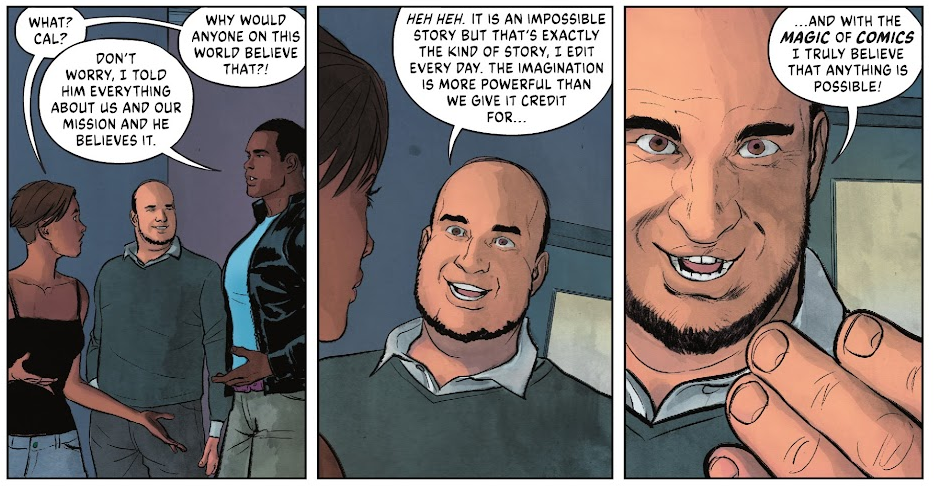
All of which is to say that basically none of those potentially heady thematic concerns carry over to Justice League Incarnate, a book so cravenly devoted to setting up another book at the expense of anything and everything else that the cover is proudly emblazoned with a "Prelude to Dark Crisis" logline featured almost as prominently as the title itself. This book is homework, and pretty crummy homework at that. The plot involves the titular Justice League team, originally created by Grant Morrison in their maxiseries The Multiversity and largely wasted since, trying to stop Darkseid from releasing some ancient evil or other that threatens to destroy the entire multiverse even harder than the last ancient evil that threatened to destroy the entire multiverse. It's about as engaging as it sounds. What I will give this book is that, in its utter sloppiness, there are moments where it hits an almost transcendent level of stupidity- the segment where the Superman of Earth-23 and Doctor Multiverse are stranded in the "real world" and have to reach out to their friends by successfully publishing a comic book at DC Comics is the camp highlight of the whole thing, but on the whole there's not much here to recommend.
Rorschach by Tom King, Jorge Fornes and Dave Stewart
Now this is more like it!
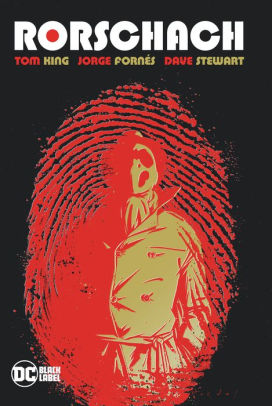
This past year has seen me go from a certified Tom King hater to an unabashed Tom King stan, flaws and all. When Rorschach was announced I totally dismissed it, considered it just another shameless attempt to cash in on Watchmen by handing it to world's biggest hack. Having now finally read the damn thing, I can say, once again, I was wrong about a Tom King comic. I'm not ashamed to say I didn't fully pick up on what this was throwing down thematically on a first reading- having some familiarity with the works of philosopher Hannah Arendt certainly helps, as I discovered from these excellent critical write-ups on the book- but even on a first run-through, it's immediately apparent that King is working on a much, much higher level than something like Doomsday Clock, taking the world of Watchmen and essentially eschewing the superhero elements altogether to tell a gripping alternate-history noir potboiler about the social mechanics of radicalization. King's work, regardless of the genre he's working, has such a strong sense of tone- he's excellent at finding the right collaborators for his projects, letting the art and prose weave together seamlessly to create a world that feels like it exists beyond the page. And Jorge Fornes is the perfect artist to bring it to life. I first became a fan of Fornes through his work on Chip Zdarsky's Daredevil- his art is similar in tone to a David Mazzuchelli or David Aja, full of heavy shadows, thick, clean lines, and figures that are realistically rendered but not overly detailed. He's excellent at creating that noir atmosphere, crafting subtle but powerful character performances with his expression work and rendering a world that feels like it's teetering between light and dark. This is all complemented by Dave Stewart's wonderful colors, which, again, lean into a more grounded tone than the four-color nightmare of the original Watchmen- the book is bathed in sepias, in pale purples and sickly greens, evoking everything from 70s neo-noir to the works of David Fincher (issue 8, in particular, has one of the coolest uses of coloring for narrative purposes that I've seen in ages). I like that the art is very consciously not aping Watchmen- this is not how Dave Gibbons would have presented this story, and it's all the better for it. It'll take a second reading to fully cement my thoughts on this, and where it falls in King's overall body of work, but it's a fantastic comic and well worth seeking out.
X-Men Epic Collections: Bishop's Crossing & X-Cutioner's Song
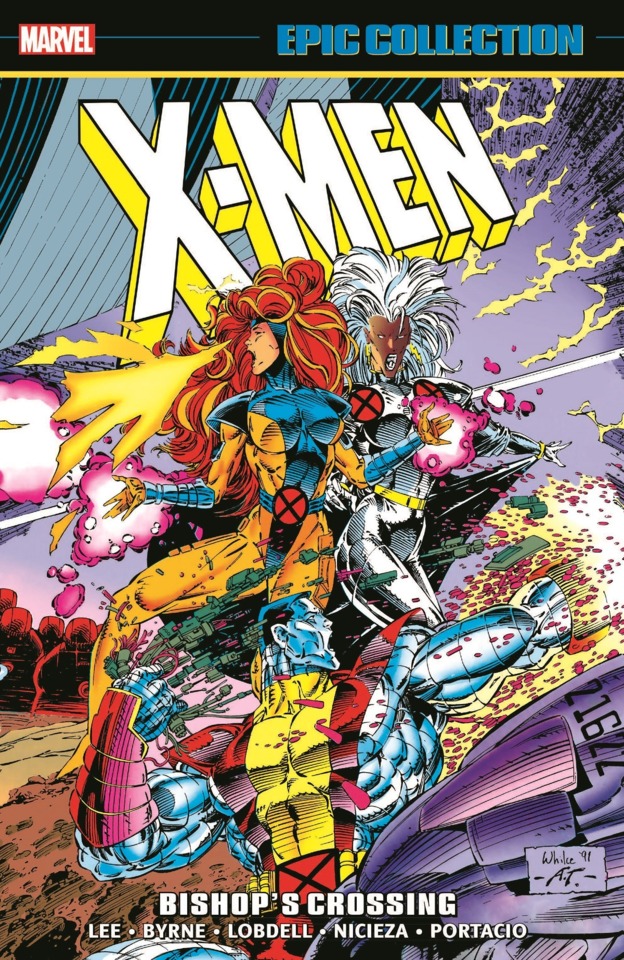
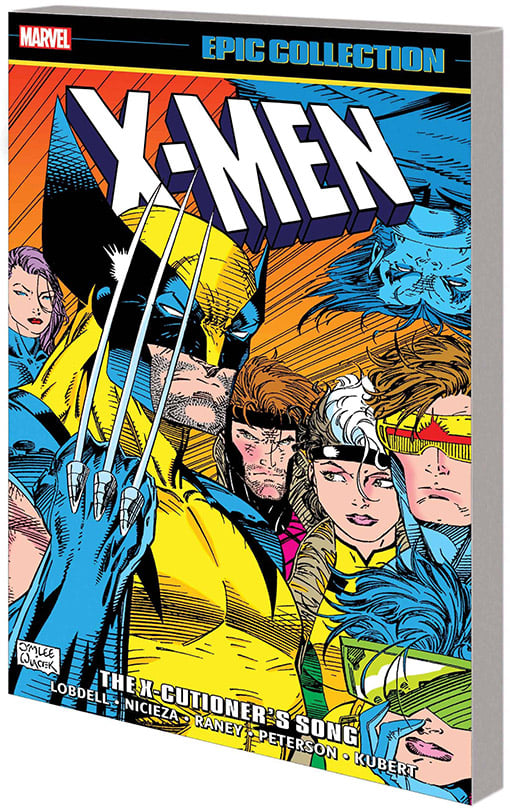
90s X-Men has become a huge guilty pleasure for me. I'm an avid collector of Marvel's Epic Collections- relatively inexpensive (though that's become a more dubious claim this year, with a price hike from $39.99 to $49.99) chunky paperback collections of classic, pre-2000s material from across their entire publishing history. They're great for filling in gaps in series that haven't been comprehensively collected in years past, but I've also increasingly used them to sample titles that I've never been exposed to prior, either because the character was never on my radar, or (more commonly) because they were simply before my time. At the beginning of this year, I picked up the X-Men Epic Collection Mutant Genesis, which collected the end of Chris Claremont's legendary run on Uncanny X-Men as well as the first three issues of the record-breaking 1991 relaunch of adjectiveless X-Men- the one that inspired the cartoon and all the toys and trading cards and what have you. Despite having basically no grounding in what was going on in the title's sweeping, convoluted melodramatic soap opera storytelling at the time, I found myself swept along by the sheer spectacle of the stuff, with artists like Whilce Portacio and Jim Lee lending the proceedings a sense of wild, kinetic energy and over-the-top bravado that was simply so much fun to look at that it was easy (for me, anyway) to overlook any narrative shortcomings. It's an era of comic book storytelling that has become near-universally hated over the years, probably with good reason, but I couldn't help but enjoy it. These two collections, continuing where that one left off, offer mostly more of the same, for better or worse. It's deeply silly stuff, but as a throwback to an era when the artists were running the show and plotting decisions were made almost exclusively based around what would create the coolest individual images, it's a fun read!
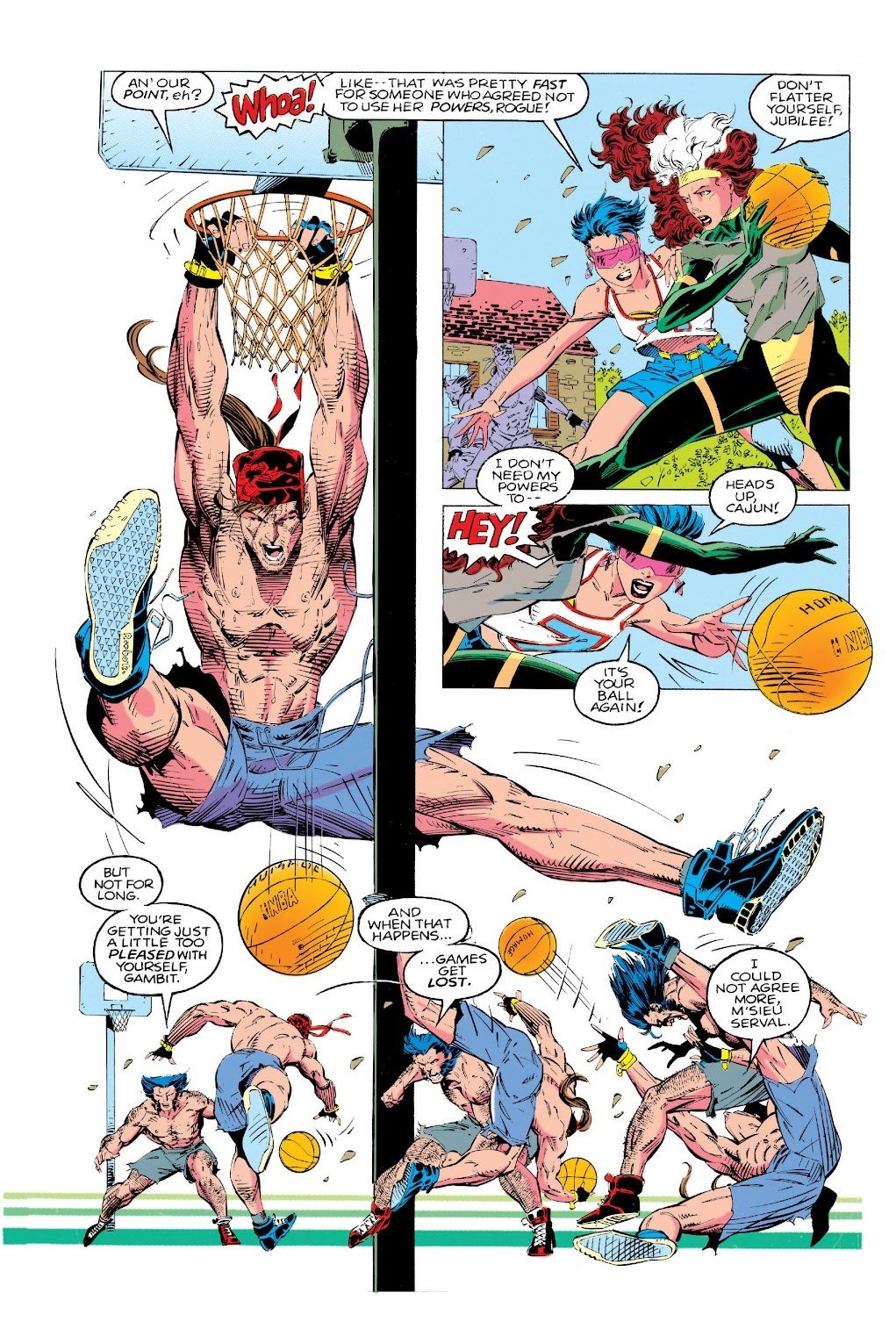
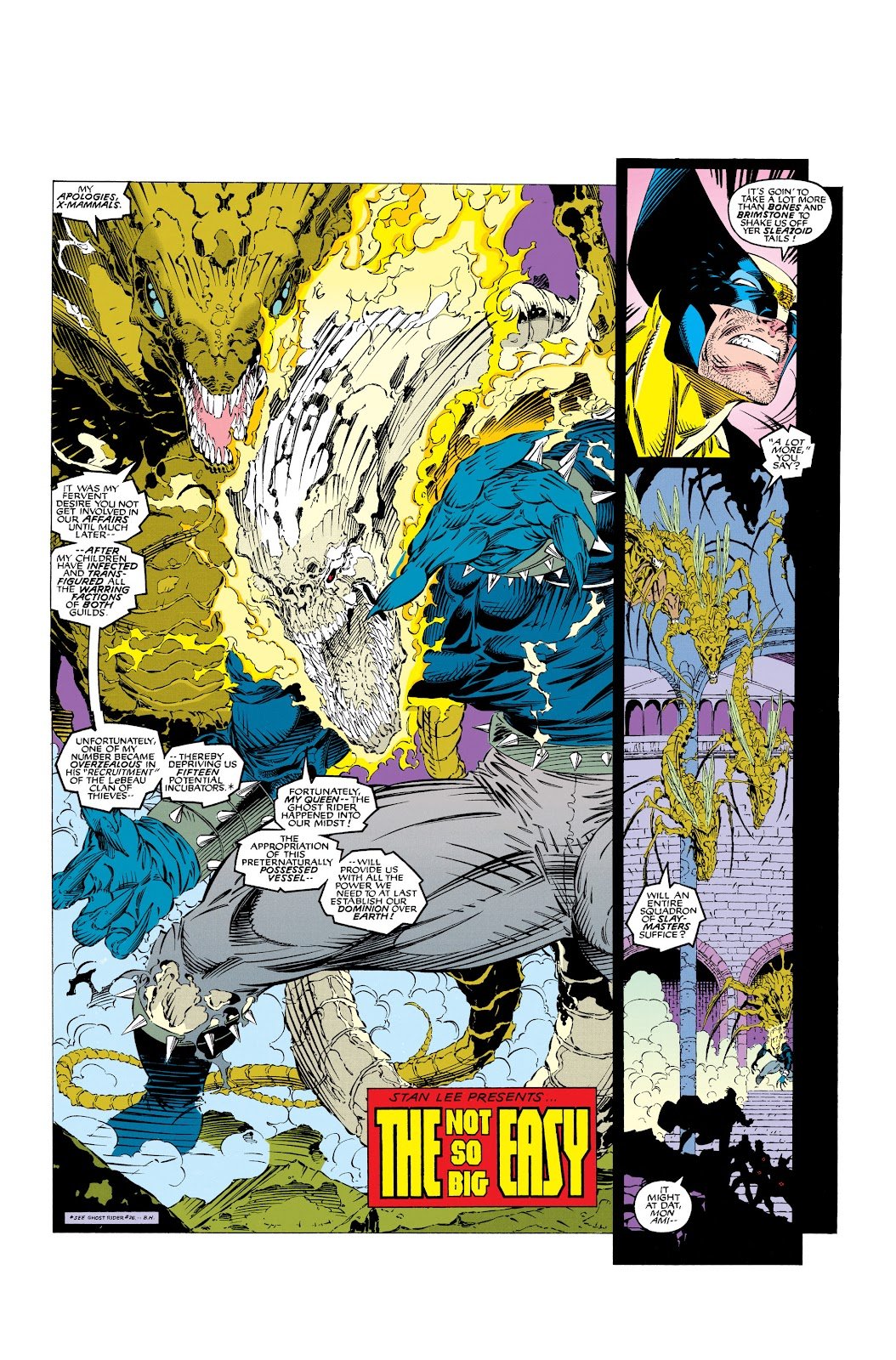
Bishop's Crossing is a grab bag of disparate storylines that have little to do with each other but all lead to some wild drawings of ludicrously toned men and women in sick costumes posing and fighting each other. Wolverine has to fight a Russian cyborg super soldier with tentacles that suck out people's life force to fight off his "death factor"! A guy named Fitzroy opens a portal to the future for some reason that brings through hundreds of superpowered Future Convicts, along with Bishop, a future cop whose power is absorbing energy and holding a very big gun! The whole team has to go through a wormhole in the middle of a foreign nation to rescue Colossus' long lost brother from another dimension! (a different dimension than the one his sister was trapped in in the 80s, that's a whole other thing.) Ghost Rider gets infected by the Brood and turns into a fuck-off massive bug dinosaur skeleton deep in the catacombs of New Orleans as the result of a gang war! This all sounds like the ramblings of an absolute lunatic!
X-Cutioner's Song, on the other hand, wraps up a few dangling plot threads from Jim Lee and Whilce Portacio's time on the books before they both bailed to help found Image Comics, before diving into the titular crossover between all the X-books at the time, driven by writers Fabian Nicieza, Scott Lobdell (yes, I know, consider that a caveat if you're thinking about buying these books) and Peter David, and drawn by a murderer's row of wildly talented artists early in their career- Jae Lee! Adam Kubert! Greg Motherfucking Capullo! This was a true wild west era for the books, pretty much all of the talent that had fostered the line for years having bailed on short notice, leaving the remaining writers and a team of newbie artists to figure out where the ship was going mid-voyage. The resulting story, X-Cutioner's Song, can only be described as a testosterone-fueled oedipal fever dream, in which the time displaced cyborg soldier son of Cyclops must battle his evil, fetish gear-adorned clone for the fate of mutantkind, while everyone else scrambles across the globe trying to figure out what, exactly, is the plot of the comic they're in. There's some moments of genuinely strong characterization here, with the militant X-Force, largely made up of former New Mutants members, under suspicion for the attempted murder of Charles Xavier, having to prove their innocence while clashing with the older generation over their rejection of Xavier's arguably naive dream of mutant acceptance obtained through non-violent means. When it's dealing with that generational, ideological conflict, it works quite well for what it is.
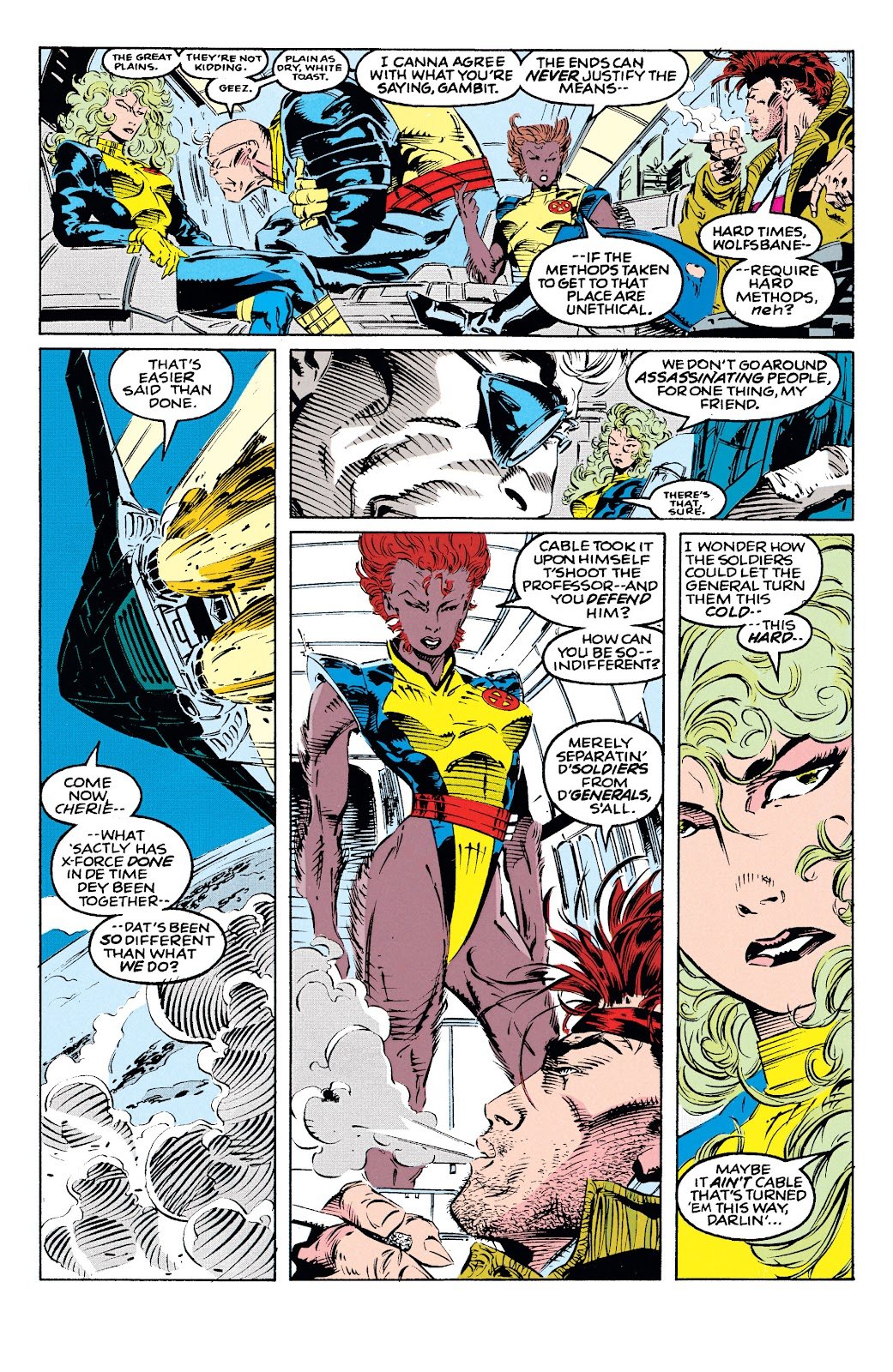
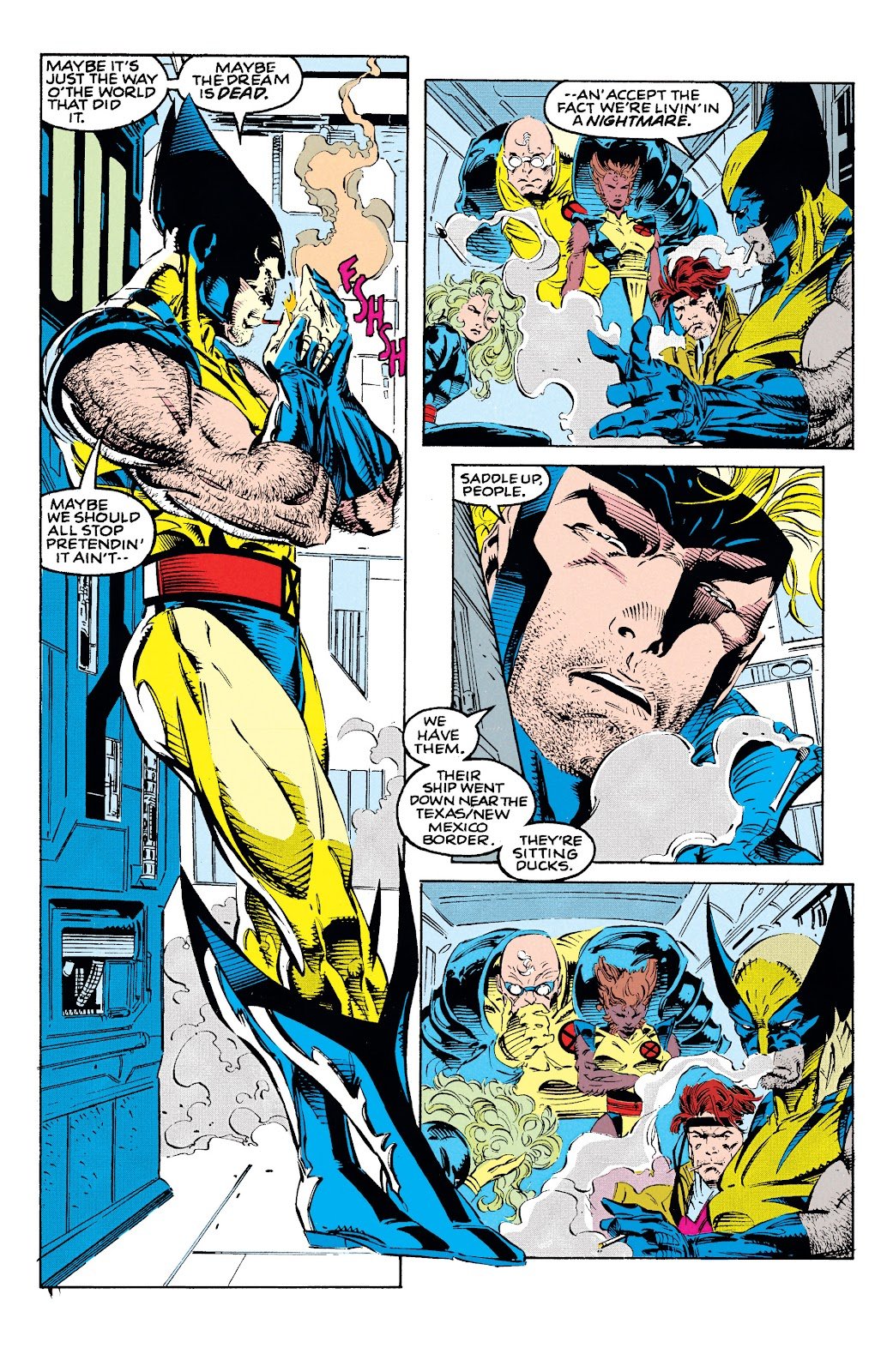
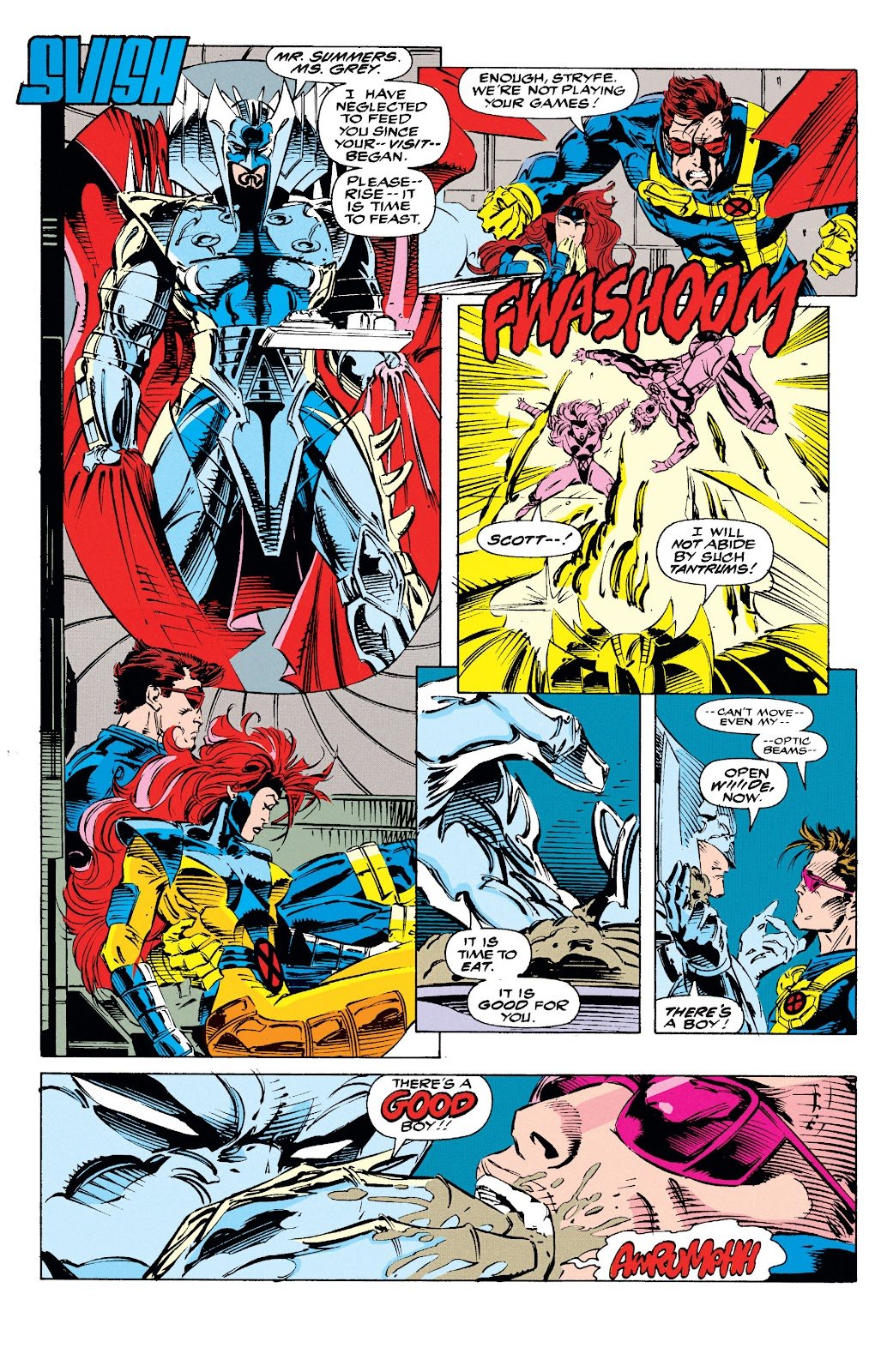
It just also happens to feature some truly off-the-wall moments of unintentional(?) camp. Stryfe is one of the most ridiculous villains in the Marvel pantheon, a fascist from the future with the most impractical costume of all time who comes back to the past to get revenge on Scott Summers and Jean Grey because he believes that he is their son that they sent away to the future in order to cure his techno-organic virus (he's not, though, Cable's the future baby and Stryfe is the clone, it's complicated and it doesn't really matter). There's these serious ideological questions being posed with X-Force and the X-Men, and meanwhile Stryfe, the guy who's orchestrating it all, is purely driven by abandonment issues and comically melodramatic hatred of his fake mommy and daddy. There's a scene where he force feeds Gerber baby food to Cyclops. That's a real thing that happens in this comic book.
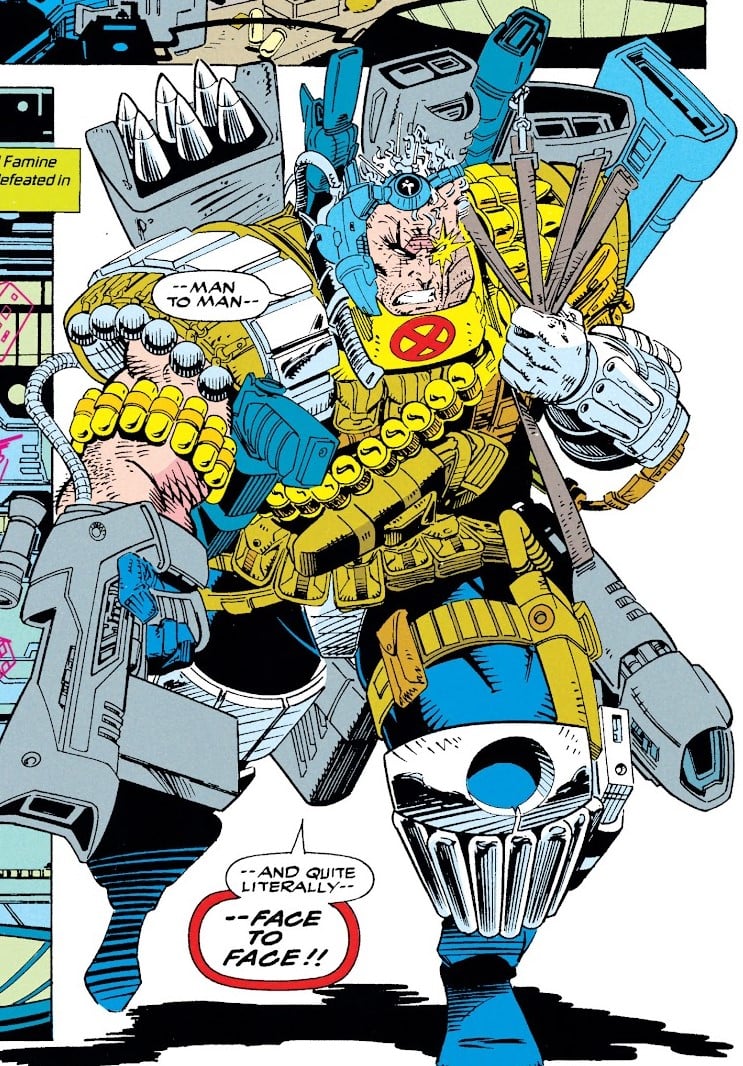
Anyway, I love these comics. Absolutely adore them. You simply do not get stuff like this played 100% straight in comics anymore. Maybe that's a good thing, that cape books have gotten more self-aware, more reflective and thoughtful as a genre, but at the same time, sometimes you just want to see a guy with 8000 pouches and a 50 pound future gun scowl angrily at the camera.
TPB Lightning Round
The last couple of reviews ran long, so now I'm gonna quickly go through a handful of other trades I read this month that I have less to say about, but still think are worth mentioning.
Amazing Spider-Man by Zeb Wells & John Romita Jr. Volumes 1 & 2
What can I say? after a decade of mediocre-to-lousy runs on ASM, this one is finally delivering the goods, and of course people are hating it. This is why we can't have nice things. Set aside the mystery box at the heart of this thing (which, if I can address for just a second- you all read Hellions, right? The other recent ongoing by Zeb Wells? You remember how good that turned out to be? Just let the man cook!)- what we're getting here is lean, mean, classic Spider-Man storytelling- Peter, down on his luck, back against the wall, facing serious threats while trying desperately to keep his life together when everything is falling apart. The character voices are spot on, the plotting is clever, JRJr. is putting in his best work in years with these action sequences, it's respectful of the character's history without being beholden to it. If you're not gonna go for a Hickman/Morrison style total genre reinvention of a character from the ground up, if you're going to continue to do ASM as your standard, meat-and-potatoes superhero comic, this is the absolute best possible version of that. Savor it while it lasts. It's only a matter of time before Marvel course corrects "Because The Fans Demanded It!" and we end up in the same narrative purgatory Flash fans have been stuck in for the last 20 years.
X-Men Red Volume 1 by Al Ewing & Stefano Caselli
It's more Ewing S.W.O.R.D., which means it's damn good. You've got your character driven, continuity minded space politics, you've got explorations of the cultural divide between Krakoa and Arrako and the ethical concerns of the two nations merging, you've got the payoff to years of character development for Magneto across the Krakoa era, and you've got my motherfucking boy Richard Rider in a book again after a year long absence (what I'd give for Ewing's Guardians of the Galaxy to come back. Please, Marvel).
Miles Morales: Spider-Man Volume 8: Empire of the Spider by Saladin Ahmed & Various Artists
Full disclosure- I read this final arc of Ahmed's Miles Morales run on Marvel Unlimited, meaning I haven't yet read the epilogue issue as it's not up on the service yet, but having read the Empire of the Spider arc in its entirety, the arc that much of the second half of this run has been spent building to, I feel pretty comfortable critiquing the story here.
So, uh... what happened with this book?
The first half of this series was exactly what I wanted out of a Spider-Man book. It was a series that cared about both the superhero and civilian time in Miles' life, devoting equal energy to high stakes action and fleshing out Miles' schoolmates, his family, his love life, making it all feel equally important and compelling. It was a book that could be genuinely funny- the early issue where Miles ditches school for a day out with his friends, only to be stuck Spider-Manning on the side is a highlight- and, when the story demanded it, it could veer into straight up horror (whatever else I think about this run, issue #8 stands as one of my favorite issues of Spider-Man in the last decade, an absolutely harrowing read that establishes The Assessor as one of the most frightening villains in the Spidey rogues' gallery). And when the plot inevitably turned to the multiverse, as it almost always will when Miles' entire backstory is inextricably tied to the concept, it was initially handled with that same deft handle on tone and characterization that made the first half of the run so great.
And then it introduced some goddamn clones and the whole thing went off the rails.
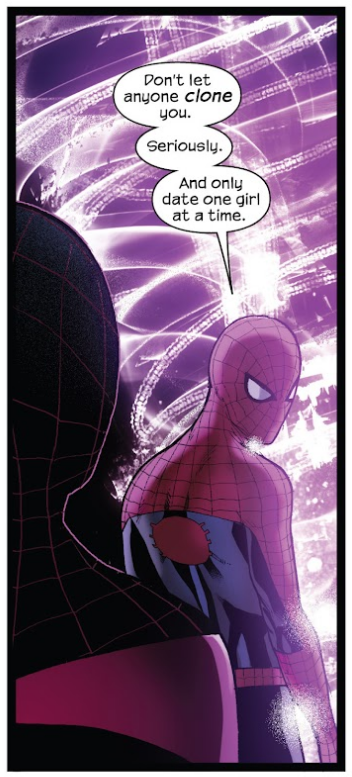
The Clone Saga (2021) was a fine story. Not one of the highlights of the book, and certainly a step down from the Ultimatum arc that preceded it, but it was fine. But it was also the point of no return for the entire run, the pivot point at which the series went from the kind of balanced slice of life superhero dramedy that you want from a Spider-Man book to a weirdly insular, empty, dreary rehash of tired old multiverse tropes and lousy characterization. Almost all of the book's supporting cast gets jettisoned in favor of Miles' new "brother," the defective shapeshifting clone named Shift.
I hate this character.
You can absolutely do a character that doesn't talk, communicates entirely through expression and inflection, and make it work. I'm a Guardians of the Galaxy fan, I would die for Groot. But Shift is not that. Shift is a walking shortcut, a character with no discernable personality beyond "nice" who we are expected to care about because Miles cares about him, and without the rest of the rich supporting cast to back him up, with only this total cipher for Miles to bounce off of, the book flounders. None of the strengths the book had are present in the second half, because it is simply too invested in this multiverse/clone shit to do anything else. And it doesn't even do anything interesting with that stuff! There's been a thread going all the way back to Brian Michael Bendis' conception of Miles that he is terrified of ending up like his Uncle Aaron. That there's an anger under the surface of his happy-go-lucky demeanor that he's constantly worried his powers will bring to the surface. It's in keeping with the early origins of Peter Parker, where he had to go from angry, angsty, selfish teenager to selfless hero. It had the potential to be a fascinating exploration of how our familial legacy shapes us, similar to Miles' arc in the Spider-Verse movie, and it was left dangling for future writers to pick up. And with the announcement of Empire of the Spider, I was sure that was what we were getting. Miles is going to go to a universe where his worst nightmare came true! Where he let his worst impulses run wild, where he truly cut loose and used his powers to force his sense of justice on others! I thought it was going to be a moment of catharsis ten years in the making, finally bringing the arc that was set up in the character's origin full circle!
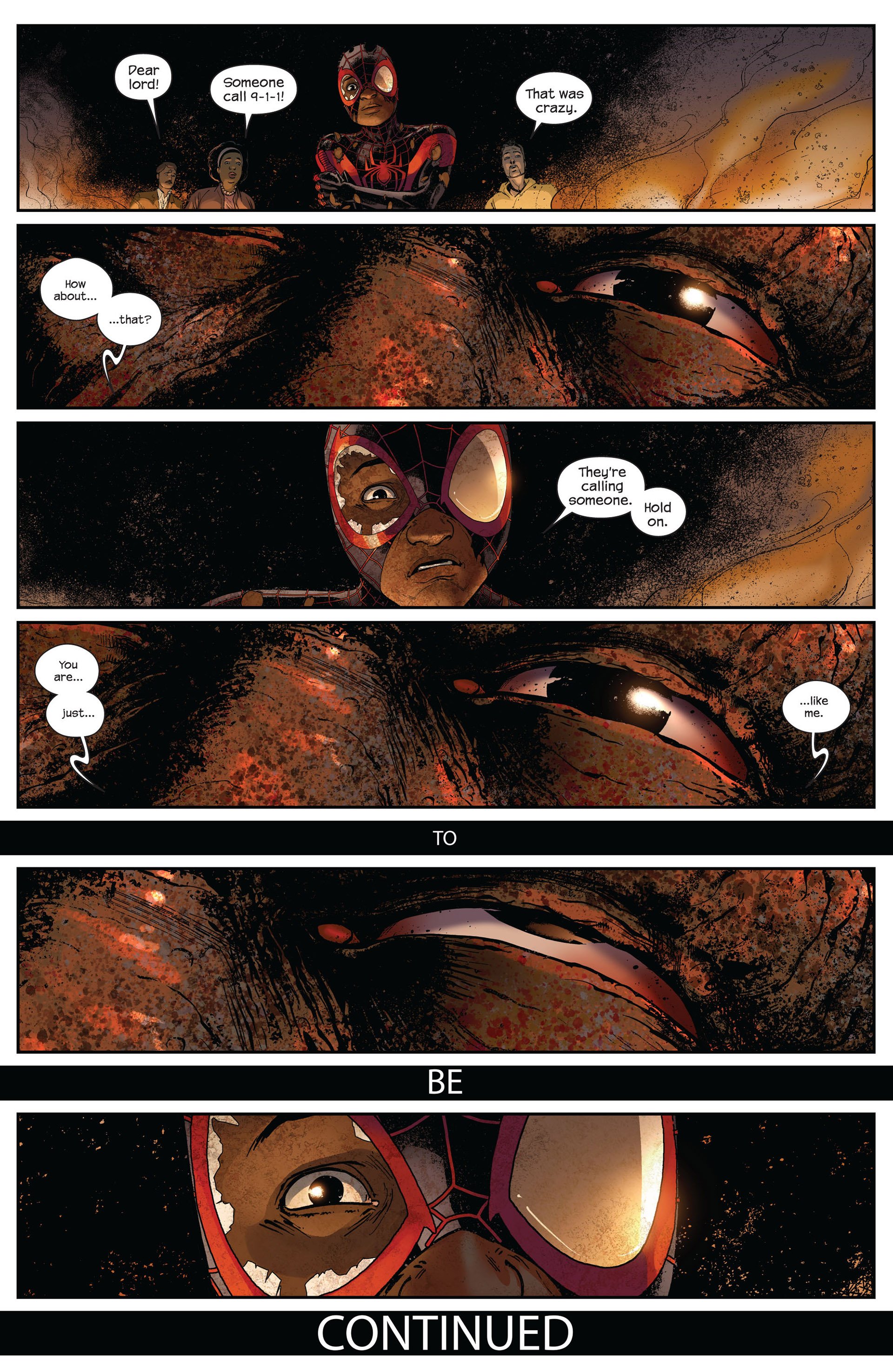
And then we get to the other universe and it's not Miles at all, it's Selim, the evil clone who was born and bred to be evil and never made any real choice to be that way, a perfect bad guy to be beaten by Miles, the perfect good guy.
How did we get here?
That this whole thing is dramatically inert is only the beginning of its problems. What does Selim want? Why does he choose not to take over the world, nor the country, nor even the state of New York, but exclusively the borough of Brooklyn? What does it say about Selim that this is where he sets his sights? What does it say about Miles? The book doesn't really seem to be concerned about any of this, which is to say nothing of the logistical questions. Why does the rest of the country, and all of its various hundreds of superheroes, allow this, despite the fact that the military we're shown isn't much more formidable than your average invading army of supervillain henchman? Where are the Avengers? We're told that Selim has been using the multiversal energy of 616 Uncle Aaron to power all of his technology for decades- but when we finally see Aaron, he's the same age he was when he disappeared just a few months ago in-universe? Where the whole first half of this series felt like it was invested in making Miles' world feel tangible and lived in, at this point its writing and worldbuilding feels like it's fully on autopilot. It reads like the Sparknotes version of itself. Nothing feels like it has any weight because none of it feels thought through. And it breaks my heart to say all this, because I loved this series early on and I was rooting for it. I think Miles, when executed right, is an important step forward for the Spider-Man mythos. I want this character to succeed, because on paper he is such a fantastic idea, and we've seen that in the right hands he can absolutely live up to that potential. But this story just doesn't, and hasn't for a while. I truly hope that whatever comes next for the character is an improvement from this.
Well... this ended up running a lot longer than I anticipated. I've still got more books to cover, but I'll save them for a future entry. If you made it this far, thanks for reading, and I hope to see you back here in the new year!