🟧 The network rebel's selection test
Joining TGS, Andreas Wassberg turned a cultural challenge into strategic opportunity
Stories from the TGS network, gathered and written by John-Paul Flintoff.
Seen a mistake? Please let me know.
—
How do accounting firms choose professional networks? Most base the decision on network capabilities and costs.
Not the partners at TGS Edlund & Partners.
They devised a selection test that would eliminate two seemingly good options in favour of one crucial insight.
Their journey started in 2020, recalls Andreas Wassberg. It would lead to an internal crisis that forced the partners to choose between principles and network membership.
The strategic need
"I was the partner asked to find a network that suits us," Andreas explains. "Something we could be part of - to give something and also receive something."
But first, the partners had to be clear about what they were looking for.
"The big networks weren't an option. They wouldn't listen to us, so we could not give anything."
The Swedish firm had specific requirements: "We like to work with SMEs. One big issue in the beginning was that we were told we couldn't do that because they wouldn't scale."
More fundamentally, they wanted intellectual partnership: "The network we joined could not be old and stiff. We didn't need compliance systems but energy and ideas. We wanted ideas for the future."
The selection test
Andreas's approach was methodical. "I started with the criteria, then I worked out that there were three networks that might work. TGS was one of them."
He reached out to each of those networks. "I thought, I will take the response as a measure."
The results were telling.
"The first network responded in ten hours, with 'this is the fee, and we work like this'. So they went in the trash."
Second was Andrew Menzies, who called Andreas to set up a meeting.
The third network also sent an email, and they seemed promising, so Andreas set up a meeting with them too.
Here's what distinguished TGS: "Andrew was polite and the discussion was never about anything except what the network could bring to us if we bring something to the network."
Andrew's message: "If you give something to the network, it will pay back. I can't guarantee that the network will give you new business."
For the Swedish partners, this was exactly right: "We wanted someone who thinks like that."
The third network Andreas approached quickly started talking about fees. "That's not about the network. So they went into the trash bin as well."
The commitment
After extensive partner discussions and due diligence, they made their decision.
"We said, OK, we join but if it's not right we quit - in a year. We all signed up for a meeting."
Partners flew to Berlin for their first TGS network gathering. "It was a struggle at first to understand what they were talking about. But after a while we realised that this is a giving game. Everyone is in the same thinking area. We thought, this will work."
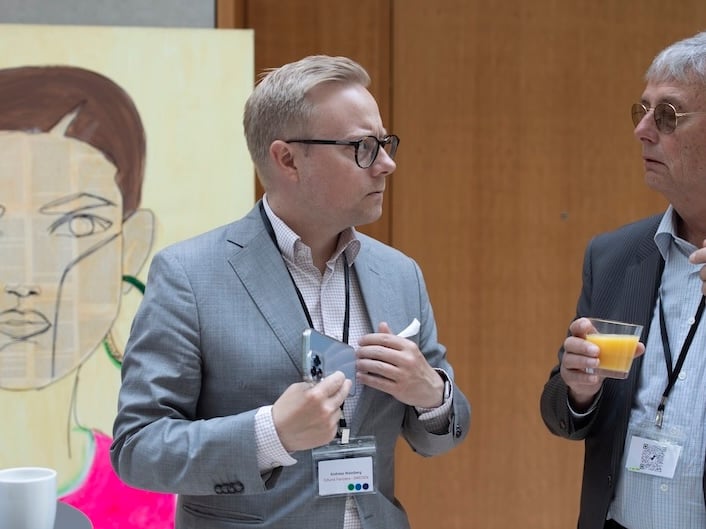
Andreas restates the fundamental principle: "A network is a giver's game, from the first day. If we don't give, we get nothing."
The crisis
But then reality hit.
"We started to struggle again," Andreas recalls. One of his partners attended the Dubai conference that same year and returned with serious concerns.
"For a while we had a discussion with female partners saying, this is not a network for us. It's all male."
Sustainability compounded the problem: "This is a network about sustainability and we were flying to Dubai. Is that correct?"
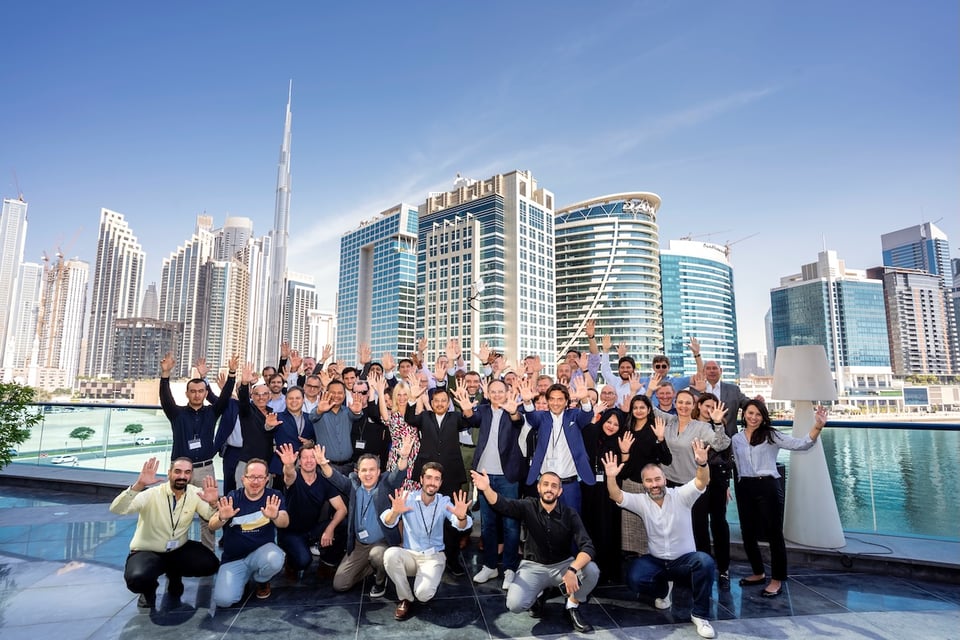
Andreas and his partners found themselves wrestling with fundamental questions about their values and their network choice.
"Do we have the time and energy?" they asked themselves. Some did want to press ahead.
But not everyone. "We lost one partner, not just because of this, but her energy wasn't there."
The moment of truth
The Swedish partners faced a choice that would define their firm's future.
They could quit TGS and find a more culturally aligned network. Or could stay quiet and accept what seemed to some to be a male-dominated status quo.
Or risk everything on a third option that most accounting firms would never consider.
"We thought, we must contribute to the network, share something that's good for the other firms and also perhaps for the world," Andreas explains.
But how? And would this principled gamble pay off, or backfire spectacularly?
Tomorrow: How the Swedish rebels turned their cultural concerns into competitive advantage - and what happened when they decided to change the network instead of just joining it.
Visit TGS Edlund & Partners
Add a comment: