
🍞 ToasterBotnet Monthly Transmission #004
Hello internet person,
Welcome to a new transmission from the ToasterBotnet.
Last month I spent way too much time on:
Building a small amateur YouTube studio
Sandboxing AI agents on Linux
Automating increasingly stupid parts of my personal life
Making my computers available basically everywhere
Discovering that cheap spray glue is, in fact, cheap for a reason
Trying to eradicate recurring problems instead of repeatedly dealing with them
And somewhere in between all of that, I apparently managed to exhaust myself a little.
So this month is also about knowing when to stop optimizing everything.
Let's begin.
🌶️ HOT TOPIC
The goal isn't to grind harder. It's to remove friction.
I've spent a lot of time thinking about productivity, automation and systems.
The tempting conclusion is always:
If technology makes things easier, I should be able to do more.
AI makes writing faster. Automation removes repetitive work. Better infrastructure removes technical friction. Better tools make creating things easier.
So naturally you start filling the newly available space with even more stuff.
This can become slightly stupid.
A better way of looking at automation is not:
"How much additional work can I squeeze into the time I just saved?"
but:
"How many recurring annoyances can I permanently remove from my life?"
That has increasingly become how I build my personal systems.
If something annoys me repeatedly, I try to kill the problem at the source.
A forgotten invoice becomes an invoice downloader.
A recurring technical failure becomes monitoring.
A repetitive process becomes a script.
Something I regularly forget becomes a reminder or Todoist automation.
Remote access becomes infrastructure that is simply always available.
None of these things individually changes your life.
But removing dozens of tiny recurring problems compounds.
The danger is turning this philosophy into another grindset where you feel obligated to optimize every remaining second of your existence.
I have apparently reached that part.
I'm a little burned out at the moment, so for the next few weeks I'm deliberately dialing things down.
The systems can do their job.
I don't have to keep building new ones every five minutes.
🎬 New Content
New Video: Mainstreaming Offloading Cognition
AI Agents and a new Literacy
Watch here:
New Shorts
Stop Guessing - Start Budgeting:
🧠 Things I Learned Recently
Sandboxing AI agents with Bubblewrap
AI coding agents are extremely useful.
They are also programs that can execute commands on your computer.
That combination deserves slightly more thought than:
"Sure, here's my entire home directory. Have fun."
So I spent some time experimenting with Bubblewrap (bwrap) on Linux.
Bubblewrap lets you create lightweight sandboxes using Linux namespaces.
That means I can give an AI agent access to the directories and tools it actually needs while keeping other parts of the system inaccessible or read-only.
It's not magic security fairy dust.
But it's a huge improvement over blindly giving an autonomous tool unrestricted access to everything.
As agents become more capable, I suspect this kind of containment will become increasingly normal.
If you want to know more, check out the HowTo on my website:
https://watchtoaster.com/ai-sandboxing-on-linux/
Acoustic treatment is an entire rabbit hole
I also built a small amateur YouTube studio.
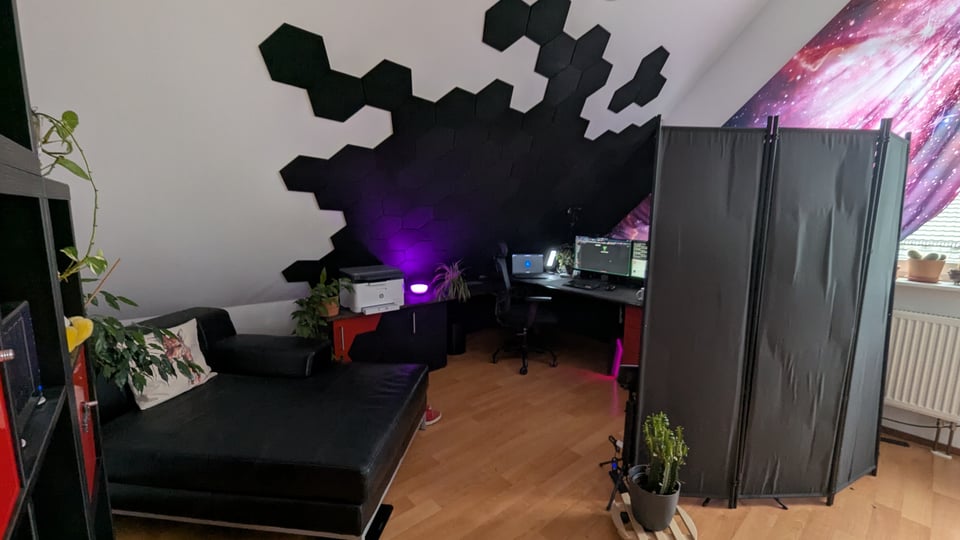
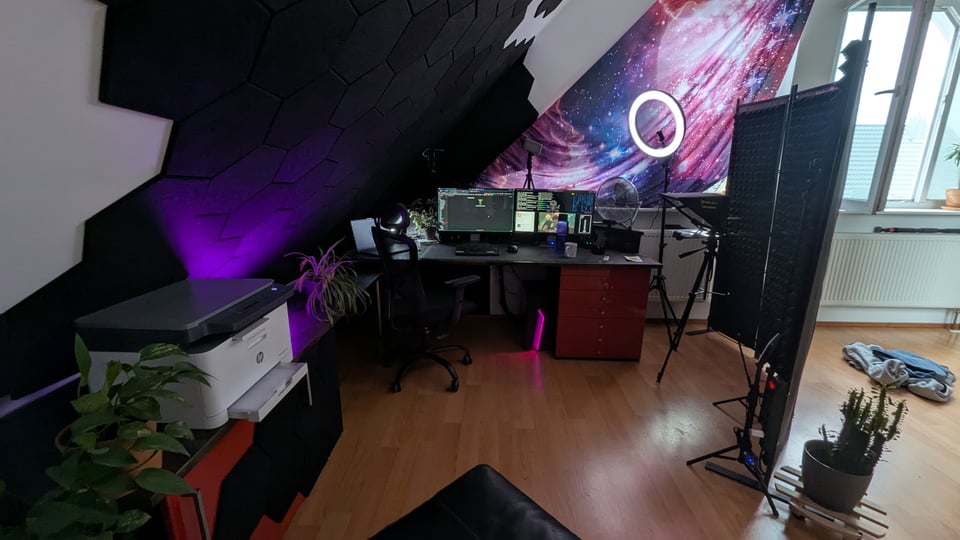
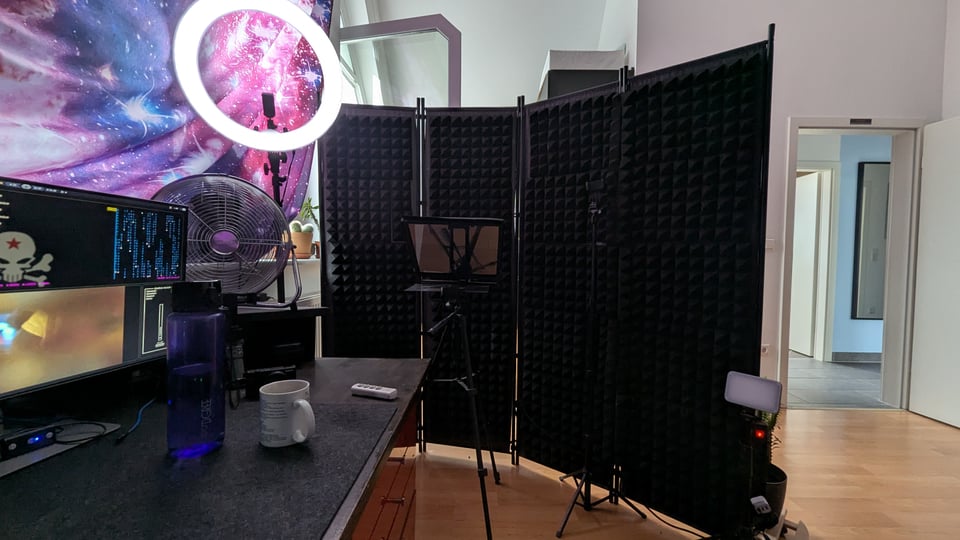
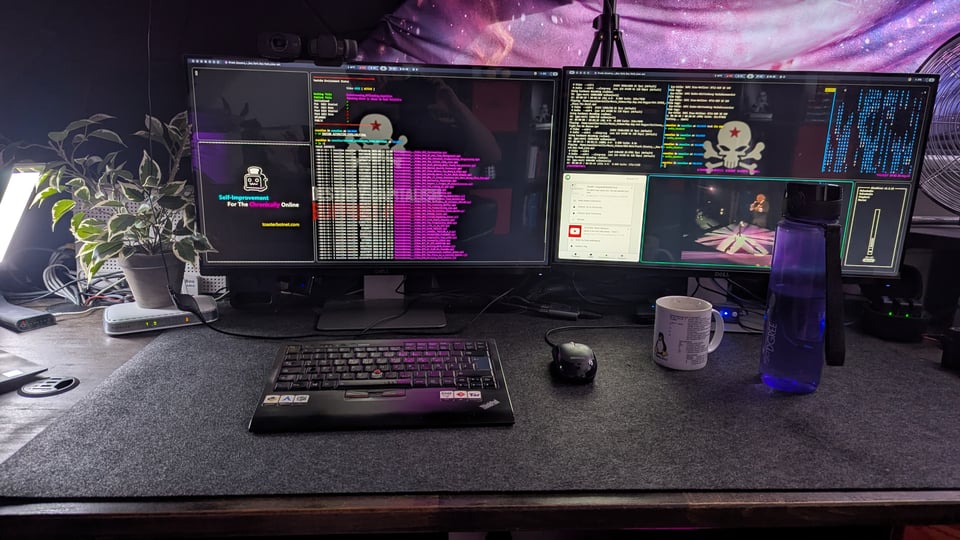
The goal wasn't Hollywood.
I mainly wanted:
more consistent audio
less room reflection
a repeatable filming setup
and a background that actually looks intentional
This resulted in a suspicious quantity of acoustic foam, hexagonal acoustic panels and experimentation.
I learned quite a bit about reflections, positioning, microphone technique and how much a room itself contributes to recorded audio.
I also learned another important lesson:
Do not trust cheap spray glue.
Something being technically described as "adhesive" does not necessarily mean it intends to continue adhering to things tomorrow.
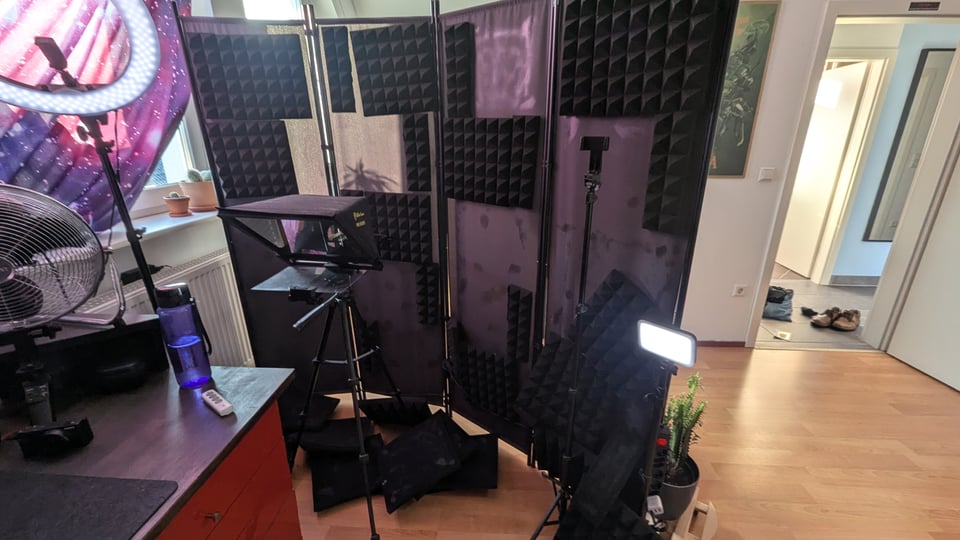
Lesson learned.
Infrastructure should eventually disappear
I've also been working on making my personal infrastructure increasingly boring.
Remote access, monitoring, backups, error handling and automation have been slowly reaching the point where I don't have to think about them very often.
Which is exactly what I want.
Good infrastructure shouldn't constantly remind you how clever your infrastructure is.
It should disappear into the background and quietly work.
🖥️ Behind The Scenes
🎬 Growing ToasterBotnet
The little ToasterBotnet studio is probably the most visible upgrade recently.
I've been improving the physical filming setup rather than just throwing more software at the production pipeline.
Better sound.
A more intentional background.
Permanent lighting and camera positions.
Less setup friction before recording.
The important part isn't making the studio look expensive.
It's making recording easy enough that I can sit down, turn things on and start talking.
Every unnecessary setup step is another opportunity to procrastinate.
🏢 Building the Business Side
The automation obsession continues.
One recent addition is my own Amazon invoice downloader and sorter.
It automatically goes through purchases, downloads available invoice PDFs, deals with invoices that aren't available yet, sorts everything and keeps copies where I need them for archival and taxes.
It is an extraordinarily boring piece of software.
Which makes it exactly the kind of software I love.
Nobody dreams about manually downloading invoices.
The computer should do that.
I've also been putting more effort into centralized error handling and monitoring so that automations tell me when something actually breaks instead of requiring me to constantly check whether they worked.
The long-term goal remains the same:
Build systems once. Let them quietly keep paying dividends.
🎥 Upcoming Videos
Production is going to be a little slower for a few weeks.
Not because I'm abandoning anything.
Quite the opposite.
I've realized that I've been pushing too many projects forward simultaneously and turning all the new capabilities AI gives me into pressure to constantly produce more.
That's unsustainable.
So I'm temporarily dialing down the grindset.
Videos will continue.
But I don't need to sprint every day just because the tools theoretically allow me to.
The objective is still to build ToasterBotnet for the long term.
That requires actually remaining functional.
⚙️ Tool Of The Month
Bubblewrap (bwrap)
Bubblewrap is a small Linux sandboxing utility originally developed for use with Flatpak.
It lets you construct isolated environments using Linux namespaces.
You can decide things like:
which directories exist inside the sandbox
which directories are writable
whether the process gets network access
which parts of the host filesystem are visible
which devices and system resources it can access
I've been using it to experiment with running AI agents and harnesses with deliberately restricted access.
The interesting part isn't Bubblewrap specifically.
It's the broader idea:
AI agents should operate with the minimum privileges necessary to do their job.
The more capable these tools become, the more important that principle gets.
If you're using Linux and experimenting with autonomous agents, bwrap is worth knowing about.
🐈 Random Internet Artifact
The Singularity SONG from 11 years ago is super relevant today and hilarious:
📬 Get in touch.
What are you working on right now?
Tell me:
Write me a DM on social media or send me an E-Mail to [email protected]
Stay weird.
Daniel


