Character Creation 101
Guess what, darlings?
I have arcs to give away!
Enter here. US only.
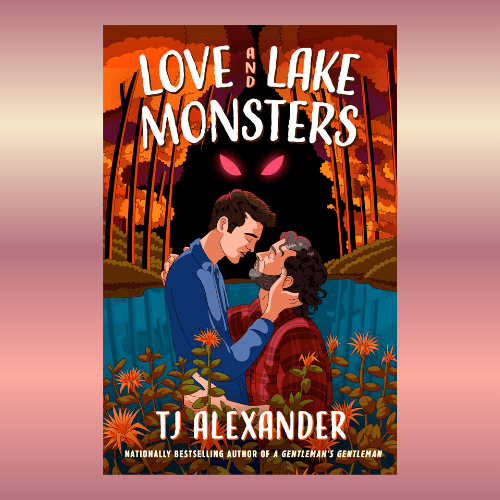
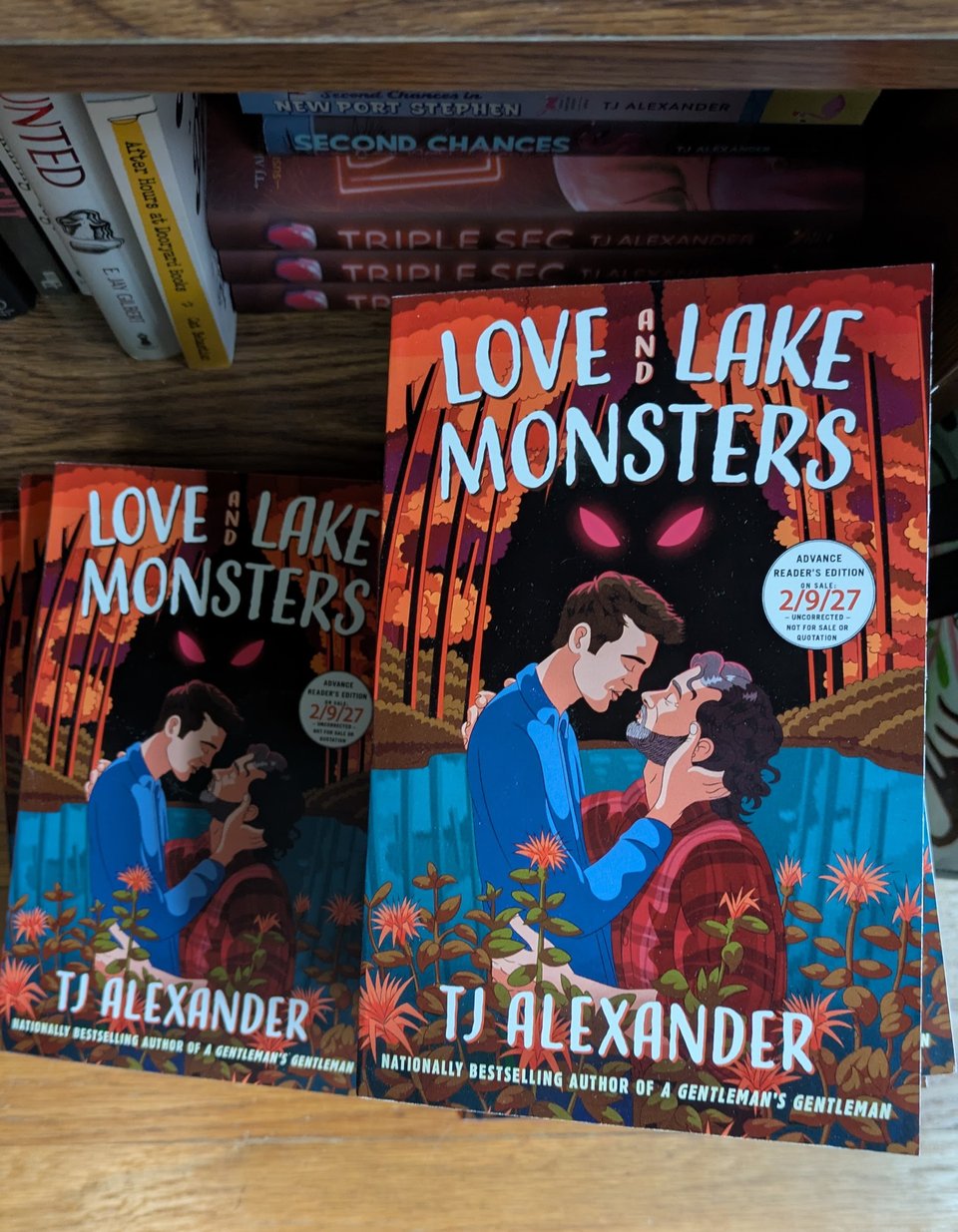
5 randomly selected winners will get an advance reader copy before Love and Lake Monsters hits shelves in February.
Love and Lake Monsters is a COVID-conscious trans romance in which a cryptid hunter searching for a mythical lake monster finds love with a grumpy skeptic. Full synopsis at my website.
Subscribe? Why not.Free online event this month! I’ll be doing a panel with Olivia Dade, Olivia Waite, Jasmine Walls, & Chuck Wendig.
Halloween Tricks-N-Treats
Oct. 25 @ 6PM EST
Now that all the self-promo is out of the way, I’d like to talk a little about character building. No, not that kind. The fictional kind.
I listen to an excellent podcast called If Books Could Kill where the hosts read and review scammy nonfiction “airport books.” In a recent episode, they discussed Surrounded By Idiots. The basic, mostly harmless premise of this book is that everyone has a different communication style and personality, and it behooves one to learn how to work alongside all those different styles and personalities. Fine. But then, like many other similar grifts, the book claims to be able to categorize all people into one of four personality types. Knowing employees’ types is supposedly critical information for businesses and managers. These types get rebranded depending on the business or test, but mostly it’s along the axes of passive/aggressive and introvert/extrovert.
Now, I know a lot of people find things like personality types and the zodiac and astrology fun and interesting. So many queer people ascribe to astrology, in fact, that I made it a core belief of Luna’s in Chef’s Choice. Personally, though, I chafe at the idea of categorizing people in neat buckets. I think it’s bullshit. (I won’t even sign on to a single gender, so what do you expect?)
Full transparency: I did create my main characters’ astrology charts with a trusted woowoo friend prior to drafting Chef’s Choice. I think it was a fun exercise that made sense if only to get into Luna’s mindset, since she sincerely believes in this stuff. I haven’t done it again because, while all the different sun/moon/star signs provide a little more variety in character traits, it’s still way too tempting to write in accordance with what fits the predetermined character instead of the story. And I think the story should always come first. I don’t want my MC to make a choice because that’s what a Capricorn would do; I want him to do it because that’s what he needs to do in the context of the plot. I don’t know if Capricorns are meant to be introverted or not, and I simply do not care.
Part of this is due to the limitation of language, right? We don’t have a word in English for “the sort of person who sometimes really enjoys being around people, but most of the time would prefer to stay at home, but then again if they don’t interact with friends on a regular basis, they get a little depressed.” We do have the words introvert and extrovert. Maybe the Germans have more, but we English-speakers can only work with what we have. So we tend to fall into dichotomies and extremes when describing personalities, even though that’s not accurate. As the hosts of the podcast explain, what little scientific research we have on personalities is very much in the realm of “I dunno, man, I think it depends.”
Take the passive/aggressive axis, for example. A person might be extremely passive, describe themself that way, and have people in their close personal life agree that word fits them. But if you put that self-proclaimed passive person in a new situation they’ve never been in before, you have no idea how they might react. They might exhibit aggressive behavior in that context. Or something might happen to them as they age that causes them to shift from passive to aggressive as a baseline. Not to mention these labels are relative. Is she “aggressive” or did she make a statement as a woman without couching it in gentle language? Is he “aggressive” or is he a Black man existing in public? Are they “aggressive” or are they a nonbinary person who rolled their eyes at you one time when you spoke nonsense?
My point is, the definitions of passivity and aggression are not carved in stone. And anyone is capable of anything given certain variables.
This is crucial to understand when crafting a character. We have all encountered a disappointing story with flat, 2-D characters. They are static; they never change; they aren’t challenged; they are assigned one or two traits and no more; nothing in the narrative gives them an excuse to show their range. Real people are not like that. When we call a character well-rounded, we mean they exhibit the three-dimensional reality like an actual person. There are not two simple axes upon which personalities and behaviors fall. There are infinite axes with infinite possible outcomes, any one of which could be a valid narrative choice.
I call this the Rule of Forked Roads. There might be some better, fancier name for it in academia that I don’t know about. Okay, look, if a character has been impacted by something, say a tragic loss at a young age, then readers might expect one of two opposing reactions: either the character becomes withdrawn and mistrustful or they become needy and dependent on others. Both are possible, but so are the millions of possibilities between those two extremes. The character can be and act like whatever the narrative demands of them so long as the author is putting in the work to lay that path along one of the many forks.
This is not to say every well-rounded character needs a dossier that’s handed to the reader detailing everything about their past. Some of the most beloved and enduring characters in English literature are complete mysteries. The Character of all time, Sherlock Holmes, gives us maddeningly little data on his background and yet he’s still getting work a century-plus after his debut. Readers don’t necessarily need to see where the path forked; they need only believe there was a reasonable one that could have produced the character before them. (And because autistic people have always existed, this one is not a stretch.) It is the specificity of his mannerisms and way of being that we cleave to. He’s a real character.
“Character” itself is a fun word in English because it means two very different things. A character can very literally be a symbol, as on a keyboard, and it can be a fleshed out fictional character that lives and breathes like a real person. I think great characters cover both definitions. As in all parts of writing, it is the specificity in the latter that will allow it to be the former. Mirrors and windows, darlings, we must always be fitting the mirrors and the windows. Meaning: There will be aspects of a good character that will allow readers to see themselves and aspects that allow readers to see into worlds they hadn’t considered before. And since you cannot know each individual reader, you have to fit as many of those damn breakables into the walls as possible.
I know a lot of people will not find this advice, such as it is, very helpful. It’s not a neat, easily taught or learned system like those personality tests falsely promise. That is because there is no one way to approach a person’s soul that will work every time in every situation. I don’t believe it’s ever possible to know any person, including yourself, inside and out. To pretend that you can is a fool’s errand. A character is no different.
If you’ve ever wondered why writers whine and complain when we start working on something new, claiming we’ve forgotten how to write, that’s because we honestly do. We have to start from scratch every time, just like in real life. Every handshake, every new person who crosses our path, every new story and character, we have to learn them anew. Sure, we can TRY to use a framework to “get” them quickly, but those systems will be surface-level at best. At the worst, it will be prejudice and stereotype coming home to roost. I almost never understand a character’s deal until I’m about 40% done with a rough draft. I gotta spend time with them if I hope to know them.
One of the best compliments a writer can receive is when a reader says, “I know someone like this.” That reader doesn’t mean “I know someone exactly like this;” they mean they can point to one thing that character said or did or believed that reminds them of a real person they know. It’s wild what small tidbits a person can latch onto when finding meaning in a character. That is to your benefit. You’ve got more than the whole ball field to play with. You have the whole universe.
There is no neat way of creating a fictional person. Why do you think we call it “fleshed out,” darlings? It’s because this art should not be bloodless. Get in there and play in the viscera.
Subscribe! It’s free.Want to support my work? Paid subscribers (aka True Believers) get an extra newsletter every month. This month, some seeeeeecret news I can’t share publicly yet.
Join Now
Boo to these links:
first piece of love and lake monsters fanart
silent hill shares a universe with kindergarten cop
