
Your Voice Matters to Us!
Here's what stood out so far among your responses to our annual audience survey
Dear Reader,
Here are a few things that I know well about The Xylom: we are not scared to take on big players, we strive to publish deeply reported stories, and we provide many talented freelance contributors an entry into international journalism.
However, there are a mammoth number of things I am dying to know: what demographic do our readers fall into? What do you like about us? What should we focus on more? Is there a story from our site that stays on your mind long after reading it?
Hence, earlier this week, we relaunched our annual audience survey. And you have stepped up: we’ve already received more responses in the first 24 hours than all of last year’s response period!
We read all of your responses and take notes as they trickle in. One reader told us that they kept coming back to The Xylom because they would “keep getting quality, under-the-radar coverage of what's really driving innovation and inclusivity in science and technology.” Another reader told us, “I want to support independent, human-made media, and [The Xylom’s] stories are always thought-provoking.”
But here is one trend that startled me: a majority of the respondents so far did not know that we are not-for-profit. This finding will help us reflect on how we communicate our identity and better strategise our fundraising efforts.
We still need at least 200 more of you to respond to the survey so we have sufficient data to conduct follow-up analyses. The anonymized survey takes 10-15 minutes to complete, and your thoughts help shape the future of The Xylom.
To thank you for your time, we will randomly select two readers who complete the survey to receive a $50 gift card! Can we count on you to take our annual audience survey by May 1st?
I’d Love to Offer My Thoughts!Warmly,
Laasya Shekhar
Managing Editor
♨️ HOT OFF THE PRESSES:
The White-Winged Duck’s Last Call
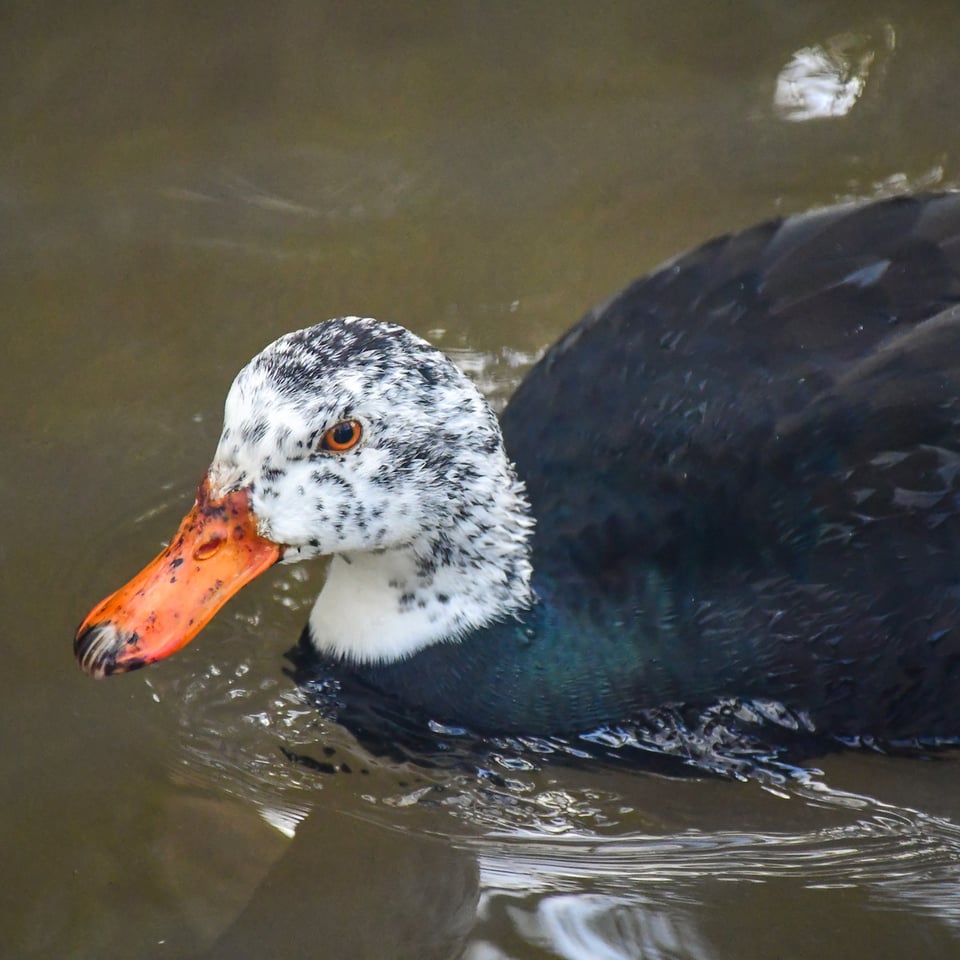
Conservation breeding is key to increasing the number of critically endangered white-winged ducks. Although India has the largest remaining population in the wild, funding for conservation efforts remains a challenge.
This story is produced by The Xylom and co-published by Scroll.In. Read more here.
Like this newsletter? Share it with a friend and subscribe below!
Subscribe now✨ NEWS BEHIND THE NEWS
🏆 The Xylom is a finalist in two categories in the 2026 Nonprofit News Awards!
Alex is a finalist in the Best Investigative Journalism Award for his series,“‘All Hell Breaks Loose’: How Big Oil Ruined a Small Texas Town.”
I am part of a team that became a finalist in the Insight Award for Visual Journalism for the two-part series “Meet the Indian Fisherwomen Adapting to a New Normal”!
Independent photographer T. Singaravelou and I contributed to the story, “Indian Women Dry Fish With the Power of the Sun, in the Palms of Their Hands,” set at the shore of the Indian Ocean
A few thousand miles north in Indian-administered Kashmir, Aliya Bashir contributed to the story “Meet the Women Stitching a Resilient Future on Dal Lake.”
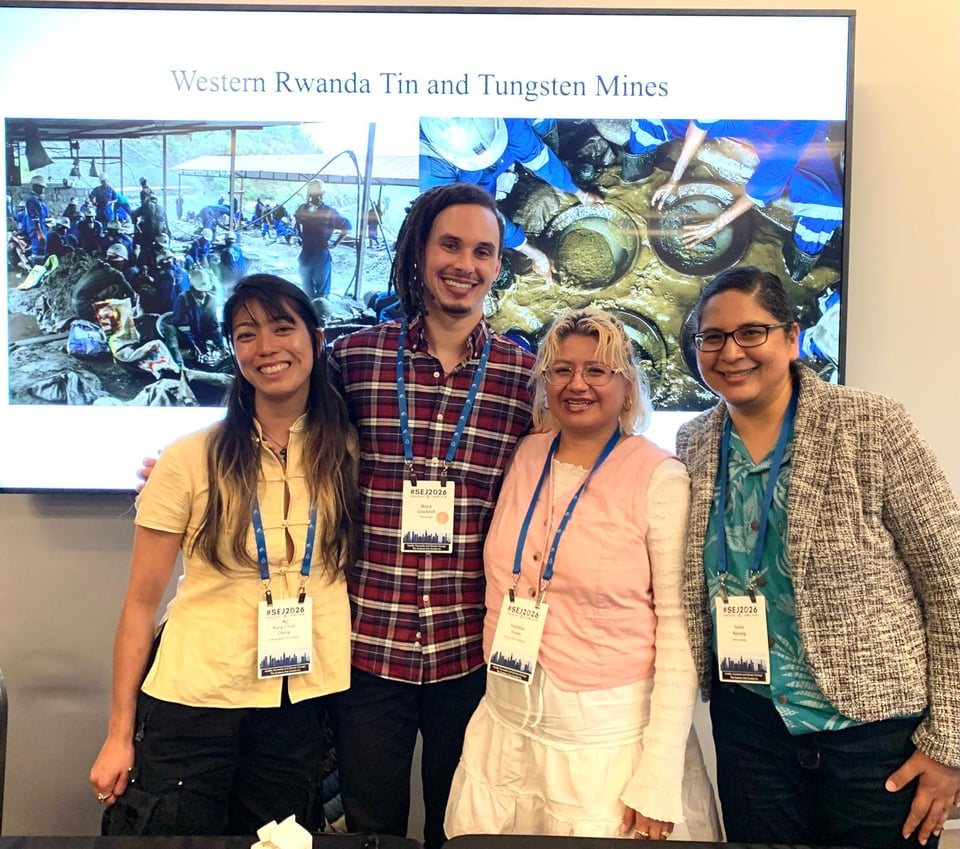
🌍 Thank you to all of you who said hi to our staff, board members, and contributors at #SEJ2026! KC will be filing a dispatch capturing the sights and sounds of the convention.
🍑 A SOUTHERN FLAIR
TEXAS — Like ‘Driving to San Francisco and Back, Every Week’: In Rural America, Cancer Patients Face Tall Hurdles To Get Care (Caleb Hellerman, CNN)
“We see a lot of delayed treatment, because people don’t get diagnosed early enough, because they’re not seeing doctors,” says Brock Slabach, chief operations officer of the National Rural Health Association.
TRAIL RIDGE, Ga. — Georgia students urge Oreo maker, others to protect Okefenokee Swamp (Mary Landers, The Current)
Hallmark has family roots in Ware County, home of the swamp. She grew up visiting her grandfather and driving the dirt roads around the Okefenokee with him. He taught her to imitate a call that baby gators make to their mothers, a kind of swallowed chirp she can still do.
“I have all these vivid memories, like visiting the swamp and him making the call, and alligators would come to the surface,” she said.
She wants companies like Mondelez to step up and respond.
WEST VIRGINIA — Federal regulators indefinitely delay rule to protect coal miners in WV, beyond from black lung (Caity Coyne, West Virginia Watch)
“This isn’t an old man’s disease anymore. When I’m sitting down and talking with patients, we’re not discussing a pawpaw who can’t play with his grandbabies anymore,” says Lisa Emery, director of the New River Health Breathing Center and Black Lung Clinic.
“I’m talking with younger men, dads in their 40s, who can’t play with their own children. We’re seeing what more silica dust exposure is doing to these people in real time and what it’s costing them.”
FLORIDA — Pollution Persists in the Florida Everglades Despite 40-Year Restoration Effort, Report Says (Amy Green, Inside Climate News)
“The takeaway is it’s clear that the responsibility for clean water is on the state of Florida, and that they have been dragged kicking and screaming the whole way,” says Tom Van Lent, senior scientist at Friends of the Everglades. “I don’t see how you can see it any other way. They have been compelled to clean up the water not of their own accord but by the courts.”
🗺️ WHAT ELSE WE'RE READING
ROBBINSVILLE, N.J.— Workers carved the largest modern Hindu temple in the west. Now, some have incurable lung disease (Kristine Villanueva, The Guardian)
“A person would prefer committing suicide rather than dying from silicosis because it’s such a painful death,” said a former Baps temple worker, who developed tuberculosis. “The breathing problem is so bad that you really pray for the person to die, so that he can be at peace.”
Aftermath: Plastics Clogged in the Persian Gulf (David Dayen, Emma Janssen, and Whitney Curry Wimbish, The American Prospect and Aftermath)
“This whole situation of the impacts of war is a very powerful reminder that plastics are a fossil fuel product, and that the supply chains are just as vulnerable, if not more so, as oil and gas,” says Beth Gardiner, an environmental reporter formerly with the Associated Press whose new book is called Plastic Inc.: The Secret History and Shocking Future of Big Oil’s Biggest Bet.
SUDAN — Who gets to be a civilian? (Eglal Hamid, Africa Is a Country)
“Across conflicts — from Syria to Ukraine — terms such as “sympathizer,” “affiliate,” or “informant” often enter public discourse long before any formal investigation or judicial process takes place. Once repeated and circulated, such labels begin to take on a life of their own,” writes Eglal Hamid.
LOVE this newsletter? The best way you can support our independent reporting is to upgrade to a newsletter membership. Join our community now:
Upgrade now


Add a comment: