
You Cannot See Everything
Dear Reader,
Happy day-after-website relaunch day! Thanks for your patience as we iron out a few kinks.
A quick heads-up: To help ensure a smooth transition, we’re sending this issue from both our old and new newsletter systems, so you should see it twice. If you don’t see the newsletter from our new system, check your spam or promotions folder and drag the email into your primary inbox.
Here are the top stories on the world’s most pressing health and environmental disparities.
Warmly,
Laasya Shekhar
Managing Editor
🌡️ NEW: Why Is Kano’s Water ‘Thick Like Coffee’?
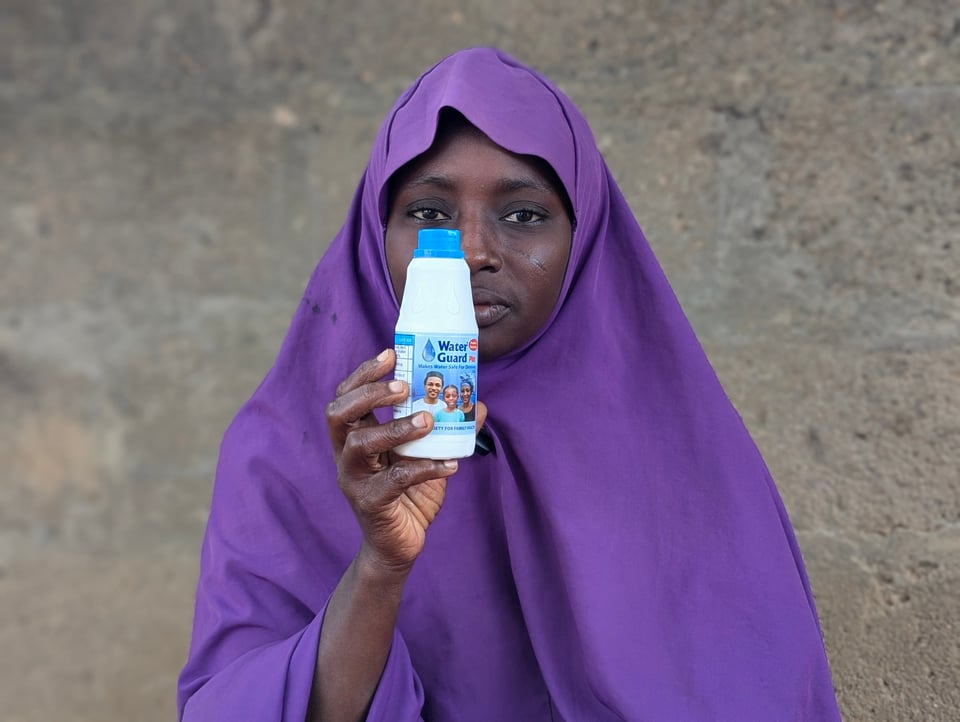
Despite billions in planned water investments and support from both USAID and the Chinese private sector, residents of Kano State in northern Nigeria face unreliable supplies, potential contamination, and serious health risks. This story is published in partnership with Nigeria Health Watch. Read more here.
🍑 A SOUTHERN FLAIR
PENSACOLA, Fla. — Late Hurricane Shows the Danger of a Warming Gulf for Black Communities (Adam Mahoney, Capital B News)
“Even with a storm that feels relatively small, there is so much Black families have to to worry about,” said Jamil Davis, a North Florida resident and community organizer.
“There is insurance, not to mention the immediate things related to work and keeping a roof over your head.”
LAWRENCEVILLE, Ga. — Black market for unapproved weight-loss drug thrives in Georgia (Danny Robbins, The Atlanta Journal-Constitution)
“I will risk my career on retatrutide. I know if I give a patient a medicine and there’s a bad effect or something happens, I’m liable. But I’m a believer in what I’m doing. I really think I’m doing the right thing.”
ASHEBORO, N.C. — Staff Cite Supply, Maintenance, and Paycheck Issues at Randolph Hospital (soft paywall) (Johanna F. Still, The Assembly)
“It’s bankruptcy for profit,” said Eileen Appelbaum, an economist and co-director of the Center for Economic and Policy Research who has studied the industry for decades. “The leverage that these vultures have is that nobody else wants to own those rural hospitals.”
EL PASO, Texas — El Paso and New Mexico spent millions on climate plans. Three new data centers could undo them. (Diego Mendoza-Moyers, El Paso Matters; visuals by Paul Ratje, for The Texas Tribune and ProPublica)
🟠 TRACKING TRUMP
RFK Jr’s ‘deities of vaccine research’ raided by police in Guinea-Bissau (Melody Schreiber, The Guardian)
Any study that would deny the vaccine to participants was “unethical and exposes newborns to serious and potentially irreversible harm”, said Tarik Jašarević, a spokesperson for the World Health Organization (WHO), calling hepatitis B vaccination at birth an “essential public health intervention”.
Read more: N.I.H. Hospital Board Rebukes Kennedy Over New Vaccine Injury Clinic (Sheryl Gay Stolberg, The New York Times)
BOSTON — As White House shifts focus toward AI and tech, U.S. science leaders defend role of the American university (Megan Molteni, STAT)
“We will go toe-to-toe with the best of them based on merit. If there are other elements that lead to being funded or not, we don’t have control of that and that concerns me,” [MIT President Sally] Kornbluth said.
“I think we just have to do our very best science and feel like that in the end will win the day, and the country needs that.”
Trump Rule Lets Alaska Hunters Lure Bears With Bacon-Greased Doughnuts (Maxine Joselow, The New York Times)
“Baiting bears with piles of doughnuts, meat scraps and dog food to lure them into shooting range and gun them down is indefensible and inexcusable as a federal policy decision,” Kitty Block, the president of Humane World for Animals, said in a statement.
MUMBAI, India — ‘Who’s U.S. blackmailing?’ asks Rahul Gandhi over timing of Epstein-Puri photo release (The Hindu)
US corporate lobbyists mounted ‘blitz’ to dilute landmark EU deforestation law, report finds (Jonathan Watts, The Guardian)
Like what you read so far? Subscribe and share it with a friend:
🎧 WHAT ELSE WE'RE READING
How Elizabeth Holmes Tricked WIRED—and Everyone Else (Adam Rogers, WIRED)
Today, every responsible tech journalist has had to don new kinds of armor to prepare for the future that WIRED helped create.
LAGOS — Nigeria Ebola case matches DR Congo strain (AFP)
"This Ebola Bundibugyo outbreak has already become the most geographically widespread Ebola outbreak in history, affecting multiple countries across three regions of Africa," said [The Africa Centres for Disease Control and Prevention's Director General Jean Kaseya], calling for urgent international action.
BRASILIA, Brazil — Brazil’s election could determine the fate of the Amazon (Clayton Aldern, Grist & Agência Pública)
“We are very serious about the risks for the Amazon if Flávio wins the election, because he is a climate denier,” said Carlos Nobre, a climate scientist currently at the University of São Paulo’s Institute for Advanced Studies.
Read more: Anatomy of a land grab: the law, likes, and legislator behind an Indigenous land invasion in Brazil (Aimee Gabay and Elisângela Mendonça, Mongabay)
Mapping Africa’s energy wealth and 560 million who remain without power (Mohamed Hussein, Al Jazeera)
In 2024, six African countries reported universal electricity access: Algeria, Egypt, Mauritius, Morocco, Seychelles and Tunisia. Together, they are home to about 215 million people, or roughly 14 percent of Africa’s population.
IPCC is under pressure to delay publication of key global climate report (Fiona Harvey, The Guardian)
Jiwoh Emmanuel Abdulai, the minister of environment for Sierra Leone, added: “The Paris agreement can only deliver on its promise if the best available science continues to guide climate change negotiations.”
Read more: I work for a major insurer. My industry is fudging the numbers in the face of the climate crisis (Anonymous, The Bureau of Investigative Journalism)
Our industry says it holds modellers’ numbers as sacrosanct, but in reality we are coming under pressure to reduce our projected losses. In the most basic terms, we are collectively fudging the numbers and taking on more risk than we should for a lower price than the expected loss demands.
AI Images Can Obscure the Reality of Factory Farms(Emily Payne, Sentient)
In a new Technology in Society paper, Sheng and co-authors analyzed 4,800 independently generated images and found that ChatGPT defaulted to pastoral imagery when prompted to depict dairy and pig farms, even when they requested more realistic images. However, when researchers disabled the underlying prompt revision, the generated images depicted more intensive livestock farming.
Read more: Concerns raised as data centres go underwater in China (Yuan Ye, Dialogue Earth)
WASHINGTON — A cleaner solution to America’s aluminum crunch is hiding in landfills (Maria Gallucci, Canary Media)


Add a comment: