
When Lightning Strikes Twice
Dear Reader,
Happy Weekend! Here are this weekend’s top stories on the world’s most pressing health and environmental disparities:
Warmly,
Laasya Shekhar
Publisher and Editor
⛈️ ICYMI: As Heat Increases Lightning Strikes in India, Mobile Alerts are Saving Lives
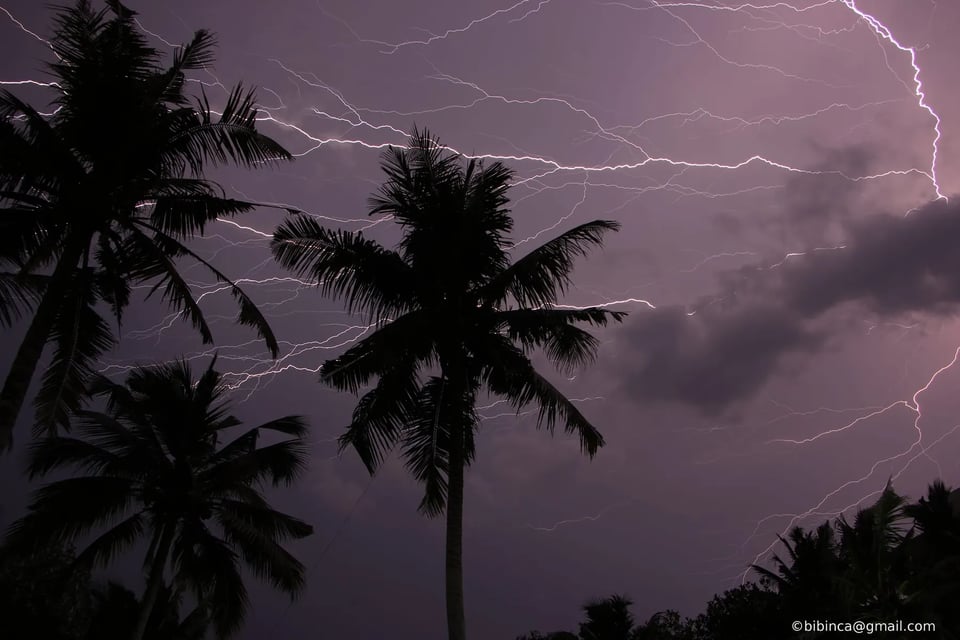
India’s early warning systems for natural disasters are making a difference, but they have yet to bridge the digital divide: experts say the current infrastructure faces accuracy and bandwidth challenges.
This story by our Managing Editor Laasya Shekhar and contributor Priyanka Thirumurthy was first published by Earth Island Journal. Read more here.
🍑 A SOUTHERN FLAIR
BECKLEY, W.Va.— On the Front Line of the Vaccine Wars (Reporting by Katherine Eban and photo illustrations by Matthew Cooley)
“It’s hard to prevent the spread of pertussis in a coal mine,” says Dr. Joshua Hess, a pediatric hematologist-oncologist at Cabell Huntington Hospital.
CORPUS CHRISTI, Texas — How a Bid to Beat Drought Drove Corpus Christi to the Brink of Disaster (Dylan Baddour and Neena Satija, Inside Climate News & The Texas Newsroom)
“They’re wanting to try to punish the industry,” said [Joe McComb, who was mayor when the city enacted the 2018 plan.] “If industry shuts down, Corpus Christi will be just a fishing village again.”
WHITTED, Fla.— In One Historically Black Florida Community, the Drinking Water Is Brown(Amy Green, Inside Climate News)
“We’re not begging or asking for something that no one else has, that is sacred to the white people,” said [resident Ann Jones]. “We deserve to have clean water. It doesn’t matter what race you are. Everybody deserves clean water, to know that they are safe in drinking their water.”
LUMPKIN, Ga. — Sewage floods cells at ICE detention center in Georgia, advocates say (Lautaro Grinspan, The Atlanta Journal-Constitution)
“People are calling us desperate for help. They are reporting raw sewage in their cells, no drinking water, and being told to clean up contaminated water without protective equipment,” [Amilcar Valencia, director of El Refugio, an immigrant-serving Stewart County nonprofit,] said in a statement released Thursday. “When the government chooses to detain people, it has a responsibility to ensure their basic health, safety, and dignity.”
ENID, Okla. — Oklahoma oil company plugs disposal well that posed threat to city’s drinking water (Nick Bowlin, The Frontier & ProPublica’s Local Reporting Network)
“This decision is, for lack of a better word, thrilling because this is such a vital issue,” said Frank Baker, an Enid city commissioner. “Our water sources have been put in danger, and for this one well to have been plugged, this is the best possible outcome.”
🟠 TRACKING TRUMP
WASHINGTON — Satellite Images Show Extent of Trump Admin’s Tree-Felling at DC Golf Course (Jake Godin, Bellingcat)
Satellite imagery obtained by Bellingcat lays bare the extent of tree-felling at a Washington DC golf course that President Trump is reportedly seeking to transform into a championship-level course, despite moves to protect the site by conservationists.
The EPA Is About to Hand Oil and Gas Companies a Huge Methane-Related Gift (Rachel Santarsiero, Mother Jones)
“Hamm has tremendous sway over Trump,” [Julia Kane, a researcher with oil and gas watchdog Fieldnotes,] told me. “If EPA’s proposal gives the agency the option to completely deregulate methane from the oil and gas industry, that’s likely Hamm’s influence.”
CAMBRIDGE, Mass. — Harvard’s Federal Research Revenue Fell 20 Percent in Fiscal Year 2026 (Megan L. Blonigen, The Harvard Crimson)
But the revenue decline understates the “contraction in activity,” Chief Financial Officer Ritu Kalra and Treasurer Timothy R. Barakett ’87 wrote in the report. Revenues from fiscal year 2025 were already deflated by the termination of grants in the spring, they wrote.
“We would like to tell you that the uncertainty of the past two years is behind us,” they wrote. “It is not.”
A federal program to restore forests after disaster has gotten too many funding requests (Vivian La, Grist)
Explainer: How does the US count measles deaths? (Nancy Lapid, Reuters)
Like what you read so far? Subscribe and share it with a friend:
🗺️ WHAT ELSE WE'RE READING
MIDDLETOWN, Conn. — Inside Connecticut's only psychiatric hospital for children: Injuries, hazards and a staffing crisis (Jacqueline Rabe Thomas and Alex Putterman, CT Insider)
“When you have a pattern of staff out because of safety concerns about patient safety, you often end up in a vicious cycle where there's a desire to assert command and control and viewing the patients as behavioral rather than really highly traumatized,” Dr. Yann Poncin, vice chair of clinical affairs at the Yale School of Medicine’s Child Study Center.
IOWA CITY, Iowa — The Family Plan (Mark Johnson, The Atavist Magazine)
Richard and Lynne ran into more disappointment during a visit to the University of Minnesota in early 1997. A specialist they consulted was blunt. “Nobody is looking at this disease,” he told them. “And barring something unforeseen, nothing will be done in the next twenty years.”
It was a four-and-a-half-hour drive back to Iowa City. In the car, Lynne brought up what the doctor had said. Maybe they would have to be that unforeseen something.
Apocalypse Now and Then (Arundhati Roy, Equator)
AI has crashed into the world of literature, leaving writers, publishers, literary agents, readers, critics, teachers and students feeling the ground give way under their feet. Professors must now look at student assignments with distrust. Publishers have to evaluate new writers like detectives inspecting a potential crime scene.
HONG KONG — Li Ka-shing empire expands oil interests, turning heads in market (Daisy Wu, South China Morning Post)
“Many of the group’s investments have always leaned towards traditional infrastructure projects with stable cash flow,” said [Kenny Tang Sing-hing, chairman] of the Hong Kong Institute of Financial Analysts and Professional Commentators.
“Although the oil industry will gradually feel the impact of clean energy in the long run, it can still bring very stable income.”
HAWAII — Long after the Maui fires, toxic metals linger in residents’ bodies (Joseph Lee, Grist)
HAVANA — Cubans turn to free community pharmacies as medicines grow scarce (Andrea Rodríguez, Associated Press)
The Israeli Private Eye at the Heart of a Climate Hacking Scandal (Karen Zraick and Gabby Sobelman, The New York Times)


Add a comment: