
These Drones Are Not Built to Kill
We are still rebuilding our $30,000 rainy day fund after recording a significant deficit last year. Our goal is to gain 15 new members this month. Will you join us?
Count me in! I’ll donate to The Xylom today.Dear Reader,
This week, I strongly encourage you to read our recently published feature, “These Drones Are Not Built to Kill”.
Our Editor-at-Large, Kang-Chun Cheng, travelled to the eastern front lines of Ukraine and reported on how civil society is using drones to map areas filled with Russian landmines and robots to remove them. Specialised combat engineers, equipped with metal detectors, enter the area only in the final stages to comb through the landscape.
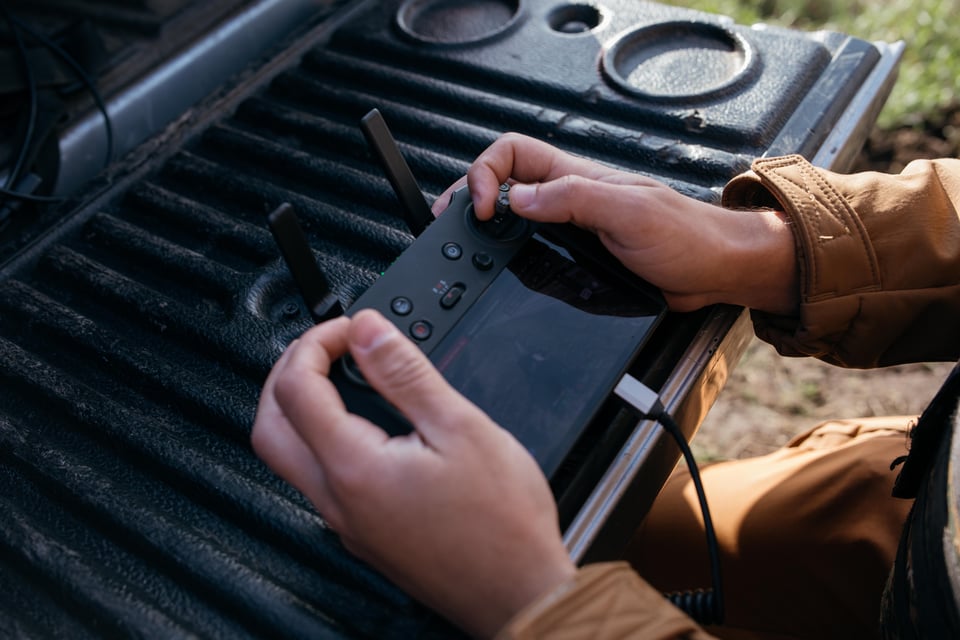
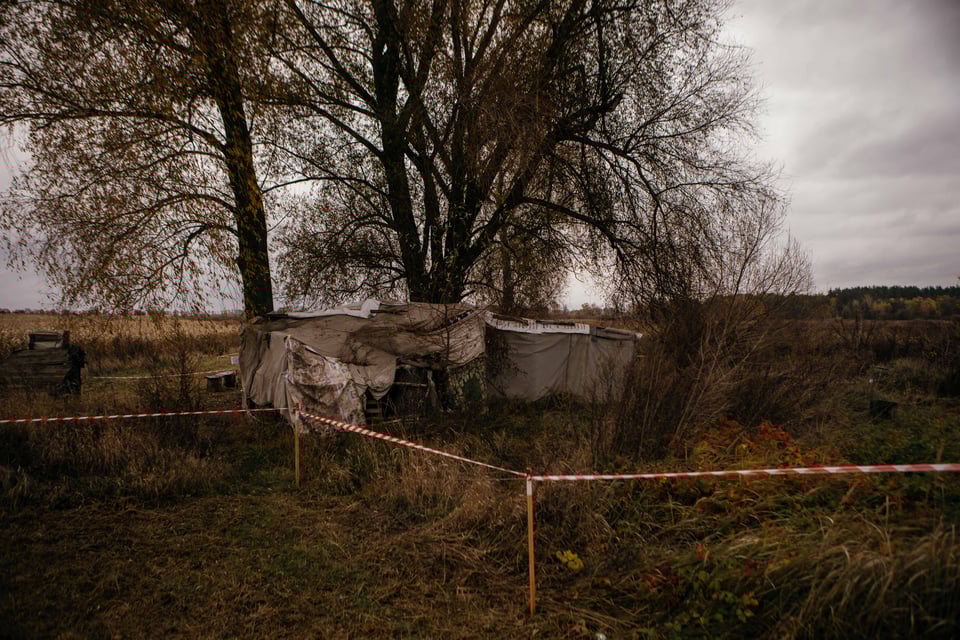
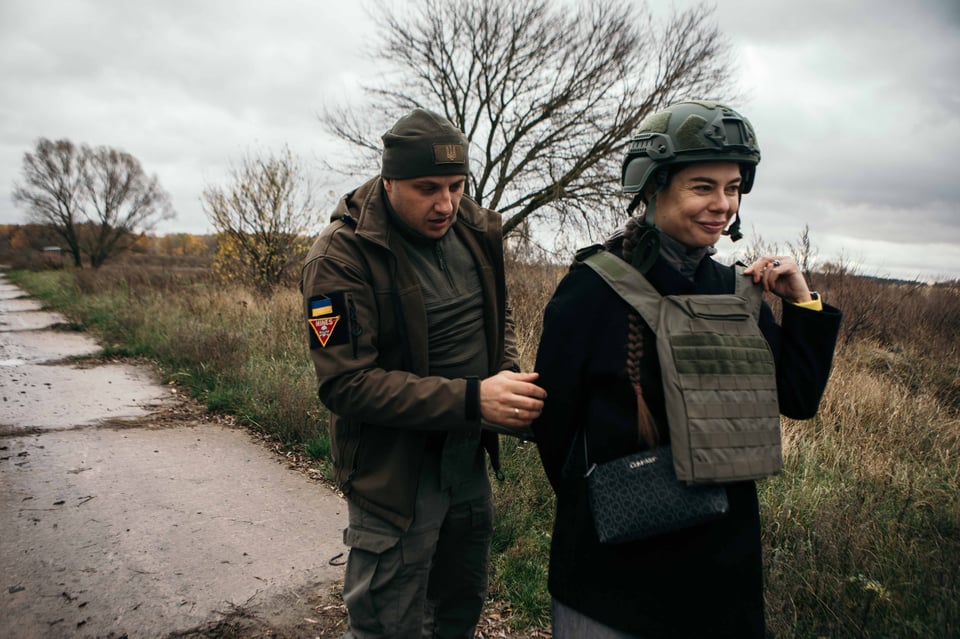
The Russian invasion accelerated the development and deployment of Ukrainian drones, especially AI-enabled unmanned aerial vehicles (UAVs). These systems have been used in intelligence gathering, surveillance, and precision strikes. Now, even the United States and various Middle Eastern countries are vying for Ukrainian drone technology in the Iran war.
This article stands out from the rest because the drones are not used to kill or destroy, but to save lives. It resonates with hope, as the cleared land has already begun to grow crops.
Warmly,
Laasya Shekhar
Managing Editor
NEW from The Xylom: India’s Popular Transport Electrification Is Still Picking Up Speed

Vehicular emissions are a major contributor to poor air quality in New Delhi, one of the most polluted cities in the world. Despite government incentives to promote electric vehicles, adoption is slow, especially in the popular transport segment, writes Julián Reingold.
Like this newsletter? Share it with a friend and subscribe below!
Subscribe now✨ NEWS BEHIND THE NEWS
🇨🇳 Check out our contributor Zoe Bekatova’s interview with MIT Knight Science Journalism Fellow Liza Lin, on China’s digital surveillance, anonymous sourcing, and the challenges of doing investigative reporting under difficult political constraints.
🌍 Our Editor-at-Large KC Cheng will be sharing her experiences reporting for us from Ukraine (see above) to South Sudan in the #SEJ2026 panel session, “Making Global Environmental Stories Matter to U.S. Audiences in the Trump Era”. If you are in Chicago between April 15th and 18th, please say hi!
📚 ICYMI: We just launched our bookshop, filled with staff picks and featured reads, as an Amazon-free alternative that gives back to local bookstores! Grab your favorite books and e-books now.
🍑 A SOUTHERN FLAIR
NEW ORLEANS, La. — As Louisiana’s Wetlands Erode, A Fishing Culture Fights to Survive (Jake Price & Olivia Shaffett, Civil Eats)
“When a storm comes, we take our boats with us,” says Charles Robin, a shrimp-boat captain. “I can lose my house, but I can’t lose that shrimping boat. That shrimping boat is my whole life.”
WATAUGA COUNTY, N.C. — Appalachia’s iconic salamander was slated for federal protection. It’s still in limbo. (Katie Myers, Grist and BPR)
“A lot of people see themselves in the story of the hellbender,” says Dalton George, the mayor of Boone, North Carolina. “Lots of folks in Boone and Appalachia feel like they’re being displaced. They feel like there’s fewer places are made for them to live.”
🗺️ WHAT ELSE WE'RE READING
IRAN — Meet three scientists who said no to Epstein (Jeffrey Mervis, Science)
“It was a 2-minute conversation, and frankly, it didn’t make much of an impression on me at the time,” says Sean Carroll, Johns Hopkins University theoretical physicist and science popularizer. “As best I can remember, we talked about the Big Bang and dark energy and things like that.”
Syngenta says it will stop making paraquat – a pesticide linked to Parkinson’s disease (Carey Gillam, The New Lede)
Michael Okun, a neurologist and executive director of the Norman Fixel Institute for Neurological Diseases at the University of Florida who has called for a ban on paraquat, called the news a “public health milestone.”
“For decades we have warned that certain pesticides increase the risk of Parkinson’s and other serious diseases. This moment proves that advocacy, data, and courage can change the trajectory of disease,” Okun said.
Hannah Fry: I used AI to rule on an argument with my partner (Rhys Blakely, The Times)
Mathematician Hannah Fry doesn’t think our species is equipped to thrive in a world full of sycophantic AI romantic partners. “We are basically hunter-gatherers who are dressed up in suits and living in a world that we are not designed for,” she says. AI companionship is “the emotional version of junk food — the sugary, hamburger version of emotional intimacy. It demands nothing from you.”
MERAFONG, South Africa — Connected, but still in the dark (Thabo Molelekwa, Oxpeckers)
Homes remain physically connected to the grid, but electricity use becomes sporadic or disappears entirely – a phenomenon researchers and civil-society groups describe as “self-disconnection”.
For some households, rising costs and prepaid metering systems have effectively turned municipal electricity into a backup source, used only when money allows, rather than a reliable, primary source of energy.


Add a comment: