
Reporting From Mauritania, Where the System Is Built to Break Journalism
Dear Reader,
Greetings from Mauritania. What should have been a 20-day assignment in this Sahelian nation has been cut short; yet, in some ways, the trip feels far longer than the nine days it actually has been.
A slew of political and bureaucratic reasons obstructed me from speaking to my sources and taking visuals from the field.
Mauritania, an oft-forgotten nation of five million people, lies on the western portion of the Sahel that connects the Atlantic Ocean with the other jihadi-ridden Sahelian nations. Here, the military exists not to defend civilians, but to uphold the government’s clandestine doings regardless of the cost.
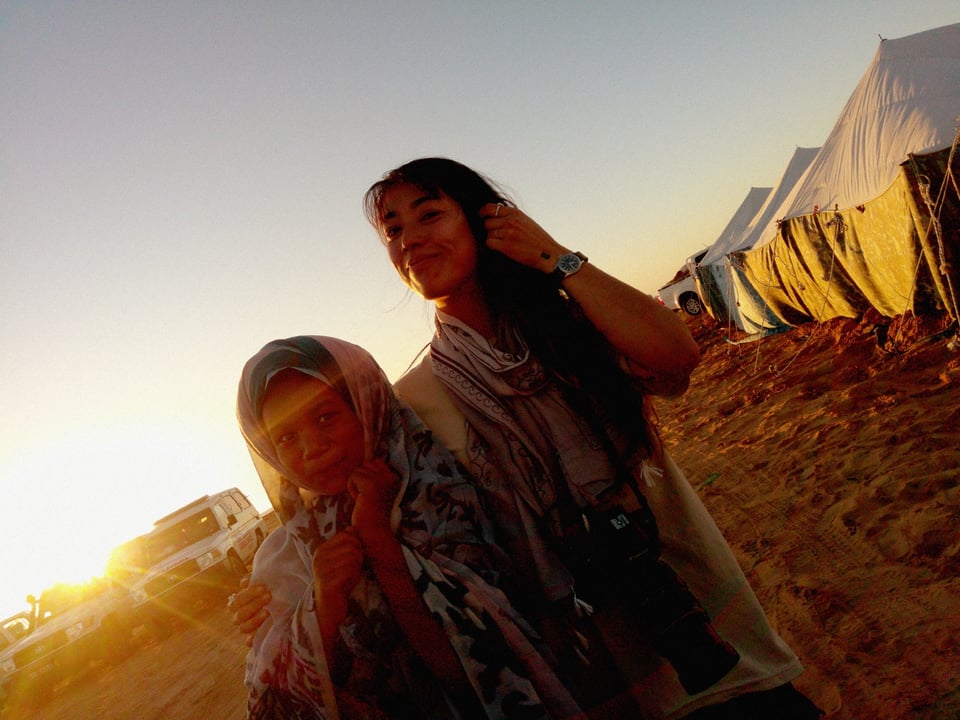
There is no accountability factor; in fact, the system here — comparable to others in the region — was created to be dysfunctional. Some may argue that colonial and neo-colonial powers destabilized and then neglected this part of the world to the point where it is embroiled in constant chaos. Relentless bureaucracy — for which I blame the legacy colonial French government — reigns as an effective repressor. It’s impossible to work in a place where those in power lie to your face, and there is absolutely no recourse.
This is a mindset that can be witnessed in most sectors of society I’ve come in contact with. Even ornithologists, those supposedly working with an interest (if not passion) in ecological ecosystems and therefore may want to advocate for the subject’s visibility in international media, have baffled me. One might think they care about the unusual behaviour of that migratory bird and that they would feel global media attention could aid them. But in reality, they are just not interested in facilitating a reporting trip.
They don’t try to hide that they don’t give a damn. Without their facilitation, access is impossible.
To a certain extent, I get it. They are living in a broken system and do not want to stick their necks out, which could invite bureaucratic questioning. But without passionate individuals willing to help reporters, stories may never see the light of day. How fair is that to journalism? I wish these sources were courageous enough to help me, even with the promise of anonymity.
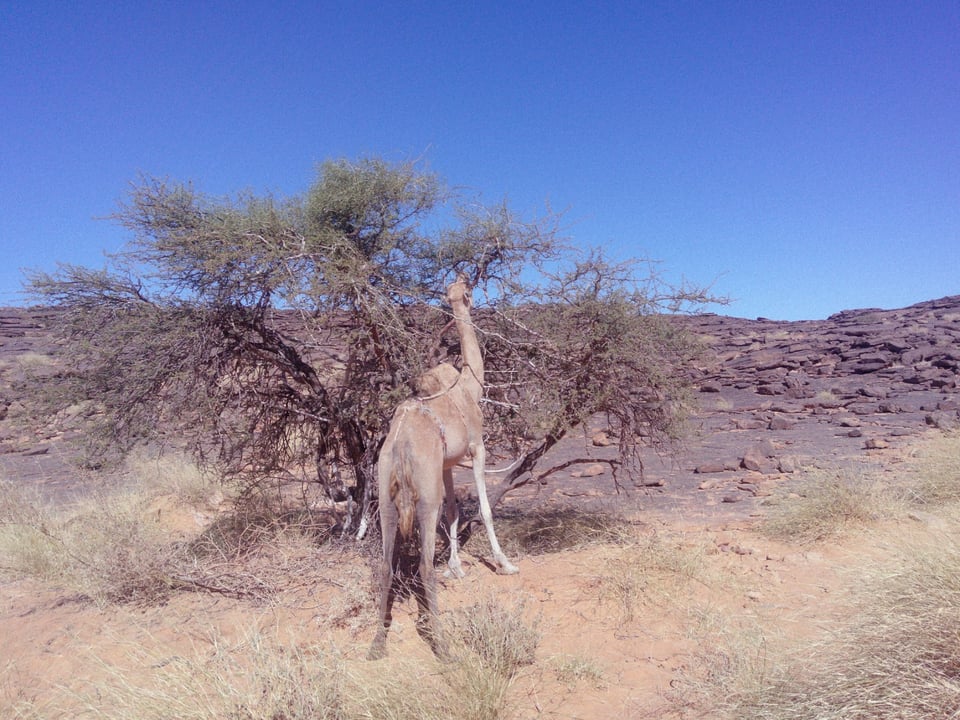
I am cosmically depressed about the state of affairs.
Driving through the Sahel under the pressures of the job —at the end of the day, I’m a freelancer, with no real fallback aside from my own problem-solving skills — I feel intensely existential.
Why am I trying so hard —trying to report from a place where freedom of the press is quashed, lacking basic infrastructure, yet still extremely costly to operate in (each day I’m there costs a minimum of $400 for the fixer, car, and driver, but you can help cover some of the reporting expenses here!) — to do something that has such a waning place in the world? Putting myself through physical and emotional turmoil, often in places so intensely biased against women… to do what? Tell some stories?
These are the same issues that have weakened institutions like The Washington Post, once held up as a model of journalistic integrity. Reporters there now work amid layoffs, leadership churn, and an ownership structure that has hollowed out editorial independence, where decisions are increasingly shaped by reputation management and risk aversion rather than public interest.
A dear friend of mine — formerly a Nairobi-based colleague I traveled with on several reporting trips — left journalism a few years ago and now works as a policy research analyst. After a decade reporting across Africa and producing award-winning work, he eventually hit the same mental wall I find myself facing now. He texted me this morning: “It’s an industry in free-fall filled with lots of idealistic folks and also narcissistic folks, largely only kept alive for influence projects and reputation laundering of oligarchs.”
“The WashPo thing is very depressing but not unexpected if you let oligarchs take over your media,” he says.
Researchers have long pointed out the enduring role of oligarchic networks in Mauritania’s economy, controlling vital sectors in mining and fishing, while maintaining intimate ties to political players and the military.
To me, the oppressiveness of the Mauritanian system and the intentional dismantling of media institutions in America have similar threads — they force us to look inwardly. Does this world only reward those who propagate the devaluation of life and care for profit? Is the future going to be filled with people with completely smoothed-over brains, an adopted, brutal inability to empathize, sapped of curiosity beyond our egos?
What we managed to accomplish in Mauritania was good – it’s one of the most viscerally beautiful places I’ve been to in a long time.
The ‘flooding the zone’ (a political strategy where someone disorients and distracts the public on what is actually real by contaminating the information ecosystem) by the Trump administration has obviously been overwhelming. But it’s also probing me to take a deeper look at what we really care about: imagine what kind of person you want to be, the future you want to have. How do we get there?
With gratitude,
Kang-Chun Cheng
Editor-at-Large
Like this newsletter? Share it with a friend and subscribe below!
✨ NEWS BEHIND THE NEWS
💸 Thanks to the six(!) new members that joined this week, including Michael Lennard! Help cover our costs to cover how Trump and friends are making the world poorer, sicker, and dirtier by becoming a monthly member.
🧑🔬 Check out our alum Claudia López Lloreda’s reporting for Undark on What the Rise of AI Scientists May Mean for Human Research.
📢 ICYMI: Join our WhatsApp channel and help reach users who stay off social media (share this with your friends and family!)
🍑 A SOUTHERN FLAIR
DALTON, Ga., and COLUMBIA, S.C. — Contaminated: The Carpet Industry’s Toxic Legacy (Staff, FRONTLINE, in partnership with The Associated Press, The Atlanta Journal-Constitution, The Post and Courier, and AL.com)
WINKLER COUNTY, Texas — A Small Oil Company Polluted Midland’s Water Reserve. The Cleanup Has Dragged on for Years. (Martha Pskowski, Inside Climate News)
“We’re putting one billion dollars toward finding new supplies of water,” says Julie Range, policy manager at Commission Shift, an organization focused on reforming the Railroad Commission. “We should be protecting every drop of water we have—that should include these operations that we know are risky.”
DILLEY, Texas — Source: Measles outbreak reported at ICE’s Dilley family detention facility (Stephanie Koithan, San Antonio Current)
One of the children, all of whom have spent a birthday in the facility, suffered from appendicitis and was told by staff to take a pain reliever. He was later rushed to the hospital to have his appendix removed after his condition had worsened.
“He nearly died,” says immigration attorney Eric Lee.
🗺️ WHAT ELSE WE'RE READING
AMSTERDAM — Amsterdam Defies Last-Minute Lobbying to Become First Capital City to Ban Fossil Fuel Ads (Ellen Ormesher, DeSmog)
“Advertising doesn’t just sell products, it grants social licence. Our network backed this ban because they know that promoting fossil fuels undermines climate action and public trust,” says Andrea Mancuso, Community Manager of Creatives for Climate.
Energy Star has emerged stronger after Trump's EPA tried to end it (Jeff Brady, NPR)
"The Energy Star program is not fully out of the woods yet," says Jeremy Symons, senior adviser at Environmental Protection Network, a group of former EPA employees. "It's one thing to keep the Energy Star program alive and fully funded, but what we really need is for the program to be fully staffed."
ROCHESTER, Minn. — Kidney recipient arrested by ICE in Rochester last week still isn't getting needed medications (Molly Castle Work & David Schaper, MPR News)
“I don't understand why the federal government is taking Minnesotans who are not criminals, who are part of our communities, and violently ripping them off the streets after running into their cars, and then denying them access to life saving medication,” says Minnesota State Representative Kim Hicks, who has been advocating for the detained man’s care.
With $48M in philanthropic backing, a division of USAID relaunches as a nonprofit (Thalia Beaty, The Associated Press)
“I don't understand why the federal government is taking Minnesotans who are not criminals, who are part of our communities, and violently ripping them off the streets after running into their cars, and then denying them access to life saving medication,” says Minnesota State Representative Kim Hicks, who has been advocating for the detained man’s care.
A RECENT STORY FROM THE XYLOM
🌸 Cigarettes for Rare Flowers: South Africa Becomes a Biopiracy Hotspot
Exploiting the rampant poverty and unemployment in South Africa, international traffickers lure local youth into stealing rare plants for sale in Asian and Arab countries. Though laws have been strengthened, a technological solution would be more effective in curbing biopiracy.


Add a comment: