
My Grandmother Was a Farmer
Our Managing Editor shares takeaways from a media workshop
Dear Reader,
When I was a kid, every summer had a rhythm. During March and April, schools functioned for half-days to cope with the heat. Afternoons were meant for naps, but I never loved them (I would die for them now as an adult, but that’s a different story).
I would instead tag along with my grandmother, who collected tamarind from old, dense trees—trees so large it would take two people to encircle their trunks. We had seven of them.
She took immense pride in harvesting the tamarind: collecting, drying, cracking the shells with wooden sticks, de-seeding, and packing. The hardest part was hammering the sticky pulp to remove the seeds.
She moved between the fields and the house without pause — tending to the cattle, cooking in the kitchen, everything in between.
Never once did she claim the money. She had always handed it to my grandfather and, after he passed away, to my father. She never spent it on herself — not even on something as small as a glass of lemon soda.
I never once heard her call herself a farmer.
Until I attended a workshop conducted by the M.S Swaminathan Research Foundation (MSSRF) last week, it never struck me as odd. Titled “Re-framing the Narrative,” I came across statistics and narratives that brought this instant realization.
With men migrating to cities, women are replacing them as farm workers, but only 13% of them own land, said Nitya Rao, a professor of gender and development at the University of East Anglia, and an MSSRF trustee.
Indian Women farmers spend the same amount of time as men working as farmers, but work an additional 30 hours a week on household chores and community work for no additional pay, an ICAR study says.
Not only are women farmers less likely to own land, but they are also paid less than men and have limited access to credit, insurance, and subsidies. Many studies from the U.S. also show how women farmers are more likely to be listed as secondary operators and defer key decisions within the farm.
Through self-help groups and farmer-producer organisations, organisations such as MSSRF are empowering women farmers. Policy can address some of these gaps.
But recognition is personal. That’s where the gap runs deepest.
My grandmother’s hunched back, stiff fingers, and frail body are a testament to her hard work as a farmer in a time when agriculture was far less mechanised. I wish I had known about the inequality nine years ago, when she was alive.
Warmly,
Laasya Shekhar
Managing Editor
♨️ HOT OFF THE PRESSES: To Survive the Lethal Cold, Pakistani Families Face A Burning Conundrum
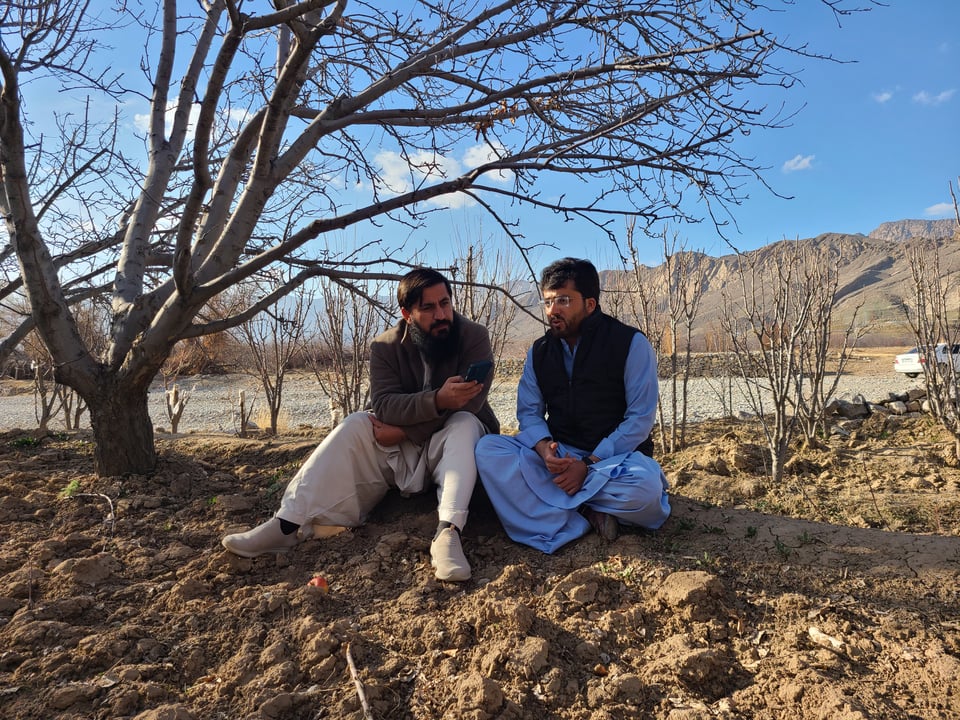
With no alternative sources of warming, residents in Balochistan, Pakistan, are resorting to cutting down rare juniper trees in a UNESCO biosphere reserve for firewood. Read more here.
Like this newsletter? Share it with a friend and subscribe below!
Subscribe now✨ NEWS BEHIND THE NEWS
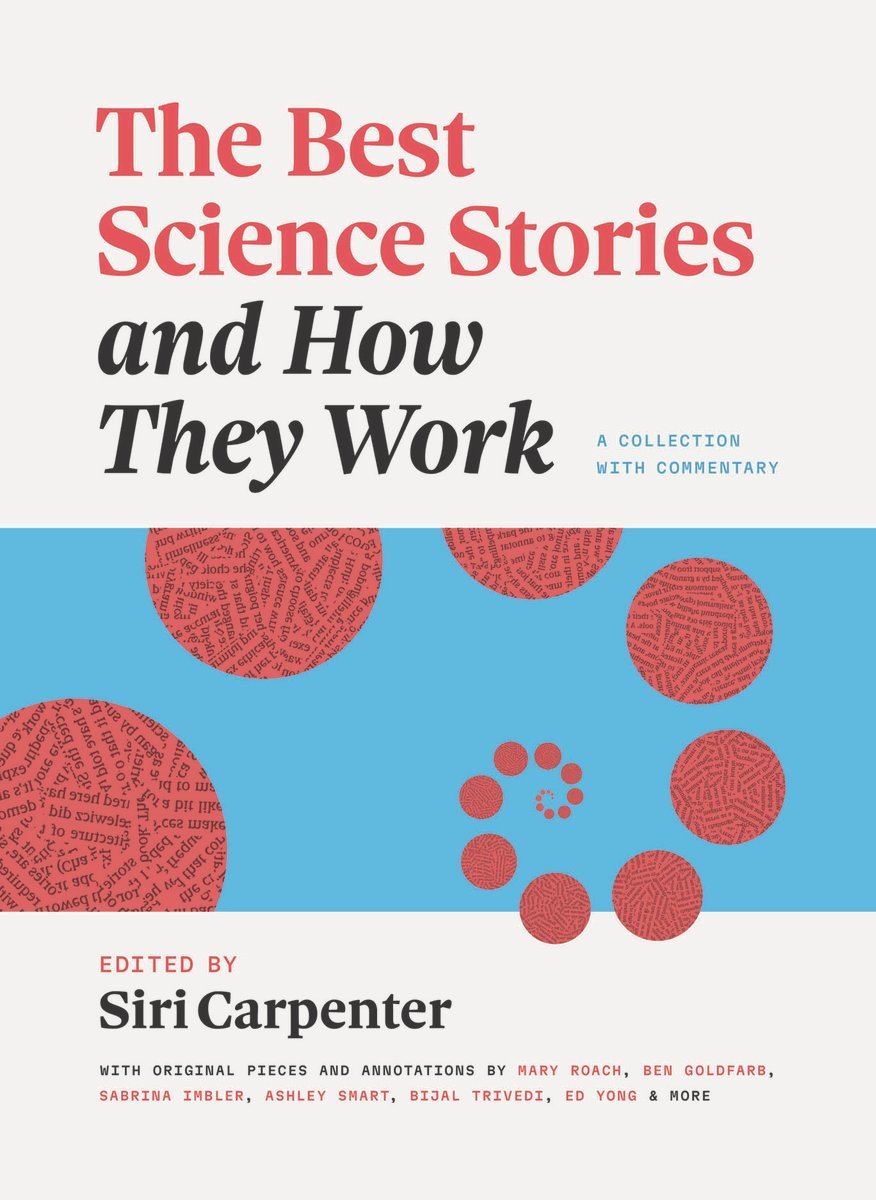
📘 Paola Rosa-Aquino, a member of The Xylom’s advisory board, is one of the contributors to the upcoming book, The Best Science Stories and How They Work. Edited by Siri Carpenter, the guide brings together eleven standout works of science journalism from a range of publications such as Scientific American, Nature, The Atlantic, and The New York Times Magazine. You can preorder the book here.
📢 ICYMI: Join our WhatsApp channel and help reach users who stay off social media (share this with your friends).
🍑 A SOUTHERN FLAIR
CHATHAM, Miss. — How White South Africans Are Reshaping the Mississippi Delta (Boyce Upholt, The New Yorker)
“So you have a cohort of people who were not exposed to crime under apartheid, who now are more exposed to it,” says Eve Fairbanks, the author of The Inheritors: An Intimate Portrait of South Africa’s Racial Reckoning.
The fact of violence alone does not imply a genocide; “it is still safer to be a white South African farmer, just purely statistically speaking, than it is to be a young Black male.”
LAREDO, Texas — Worms in food, poor medical care, lights on 24/7: Families tell of life in Texas detention center (Garance Burke, Adam Geller and Valerie Gonzalez, The Associated Press)
“Just imagine that you’re a child and you’re taken out of your surroundings,” says Philip Schrag, a Georgetown University law professor and author of “Baby Jails: The Fight to End the Incarceration of Refugee Children in America.”
Suddenly, you’re in “a completely strange environment with the doors locked and guards in uniform roaming around,”
JACKSONVILLE, Fla. — They Didn’t Want to Have C-Sections. A Judge Would Decide How They Gave Birth. (Words by Amy Yurkanin; visuals by Sarahbeth Maney, ProPublica)
“Are any of you gonna help me bathe or shower? Are you gonna help change my pad? Are you gonna help lift the baby out of the bed and put me in the bed because I can’t lift my legs? Is anyone going to help me?” asks Brianna Bennett, a mother.
LOUISIANA — Big Oil Knew It Was Wrecking Louisiana’s Coast, Records Show (Emily Sanders, DeSmog and ExxonKnews)
“There’s been lies about this [coastal damage] my entire life,” says Scott Eustis, a veteran wetland and fisheries researcher. “When the industry doesn’t want to follow your law, they buy your legislature.”
🗺️ WHAT ELSE WE'RE READING
Bridge or Border: Why Scientific Securitization Won’t Make Nations Safe (Zilan Qian, The Wire China)
“…science thrives in safety and freedom, not suspicion and surveillance; and that in a world of shared threats, from climate to conflict, the securitization of science is a cost we cannot afford,” writes Zilan Qian.
London, San Francisco and Beijing achieve ‘remarkable reductions’ in air pollution (Ajit Niranjan, The Guardian)
“Air pollution is often presented as a problem that is too difficult to solve and one that is politically unpopular,” says Dr Gary Fuller, an air pollution scientist at Imperial College London. “This report shows that bold policies can improve the air that we breathe.”
Meet the Meteorologists Leaving Broadcast Behind (Elizabeth Hewitt, Columbia Journalism Review)
“No one can beat hyperlocal information,” Laubhan said. “No national entity is ever going to do better than what’s happening right here and the way we can cover that,” says meteorologist Matt Laubhan.


Add a comment: