
Let’s Not Give Up Milk Tea
The global energy crisis is devastating oil and gas-reliant South Asian countries, affecting residents' ability to go to school and cook.
Ever since Iran gatekept the Strait of Hormuz — a narrow seaway near Oman — in retaliation for U.S. and Israeli strikes in late February, a global energy crisis has been unleashed.
Southeast Asian countries have been among the worst affected. Bangladesh shut universities to conserve electricity. A World Economic Forum analysis noted that import-reliant countries, particularly in Asia — which source a significant share of their crude oil from the Middle East — have been forced to curb fuel use and protect domestic supplies.
In India, disruptions to liquefied petroleum gas (LPG) supplies are beginning to appear in everyday life. Restaurants have started dropping gas-intensive items from their menus. I saw an ardent tea lover start a war of his own when the tea master stopped making milk tea due to the LPG crisis and switched to kettle-made black tea.
Instagram is full of jokes. Here’s one: What’s the cheapest gas available right now? Gaslighting.
It takes a crisis to trigger real behavioural change. The oil crisis may not have made people conscious of their eating habits, but they are now more concerned about saving gas and cooking only the important items. And hence, food wastage has drastically reduced.
“In households where fryums are a staple, I saw them being skipped. That was surprising,” says my friend and a social worker, Anupriya Murugesan. She also witnessed something bizarre: in the Theni district of southern Tamil Nadu, a group of women swarmed a truck carrying gas cylinders and demanded one from the driver.
LPG cylinder prices have shot up — in some places nearly four times — and booking one has become a task in itself.
A blessing in disguise is the sudden shift to cleaner options such as induction stoves (their prices are up because stocks are disappearing as fast as a drizzle on a summer day), infrared cooktops, and even biogas. Since people have already bought induction stoves, they should continue using them even after the crisis eases, given the health benefits.
Between 2015 and 2021, nearly one in ten households in Ecuador moved to induction stoves under a government programme, as mentioned in a 2023 study titled “Climate and health benefits of a transition from gas to electric cooking.”
As exposure to indoor air pollution reduced, the study found a drop in overall and respiratory-related hospitalisations, suggesting that cleaner kitchens made fewer people sick.
The current chaos also makes it timely to talk about much cleaner cooking options. Two years ago, I wrote an article for Mongabay India about how India, a tropical country with ample sunlight, missed the bus with solar cooking.
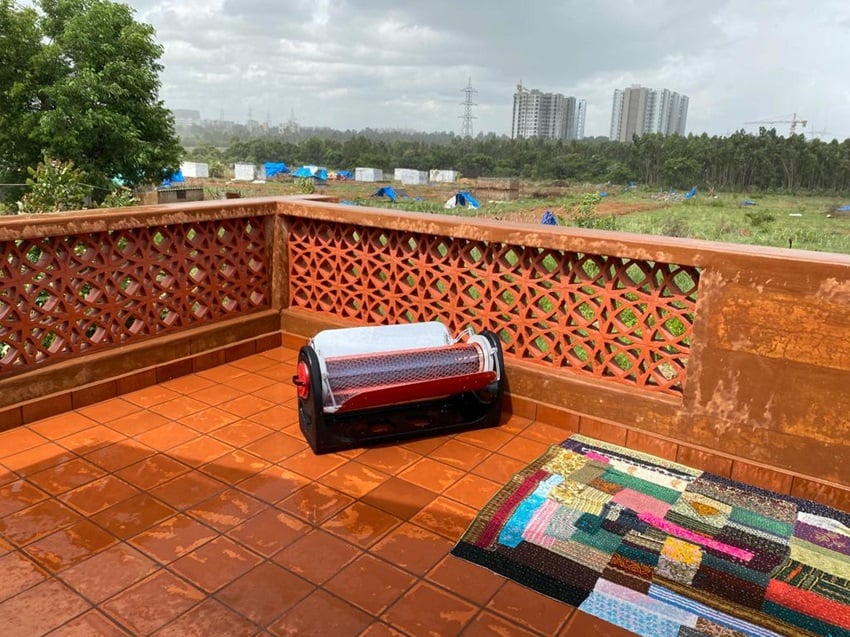
A similar global oil crisis in the ’80s, due to the Iranian Revolution and Iran–Iraq War, encouraged India to subsidise solar box cookers. People were thrilled to adopt simple insulated boxes that use sunlight to trap heat (like a greenhouse) and slowly cook food without any fuel.
In the past four decades, technology has evolved, and I spoke to many Indians who completely switched to solar cooking — a move that saves them money. There are certain limitations, such as longer cooking times and the need to cook outdoors in the sun. However, a few changes to the diet and cooking in early mornings and late evenings can make solar cooking worth a try.
Because these are minor adjustments compared to fighting for an LPG cylinder.
Warmly,
Laasya Shekhar
Managing Editor
Like this newsletter? Share it with a friend and subscribe below!
Subscribe nowLOVE this newsletter? The best way you can support our independent reporting is to upgrade to a newsletter membership. Join our community now:
Upgrade now✨ NEWS BEHIND THE NEWS
🌿🫶 Our contributor Aliya Bashir has been longlisted for the One World Media Awards 2026 — Environmental Reporting Award — for “Guardians of the Mangroves” with The Conversationalist. Huge congratulations to her!
🦇 Check out this story by our Editor-at-Large KC Cheng on The Guardian, about the secrets of bat poo in Mozambique’s Gorongosa park!
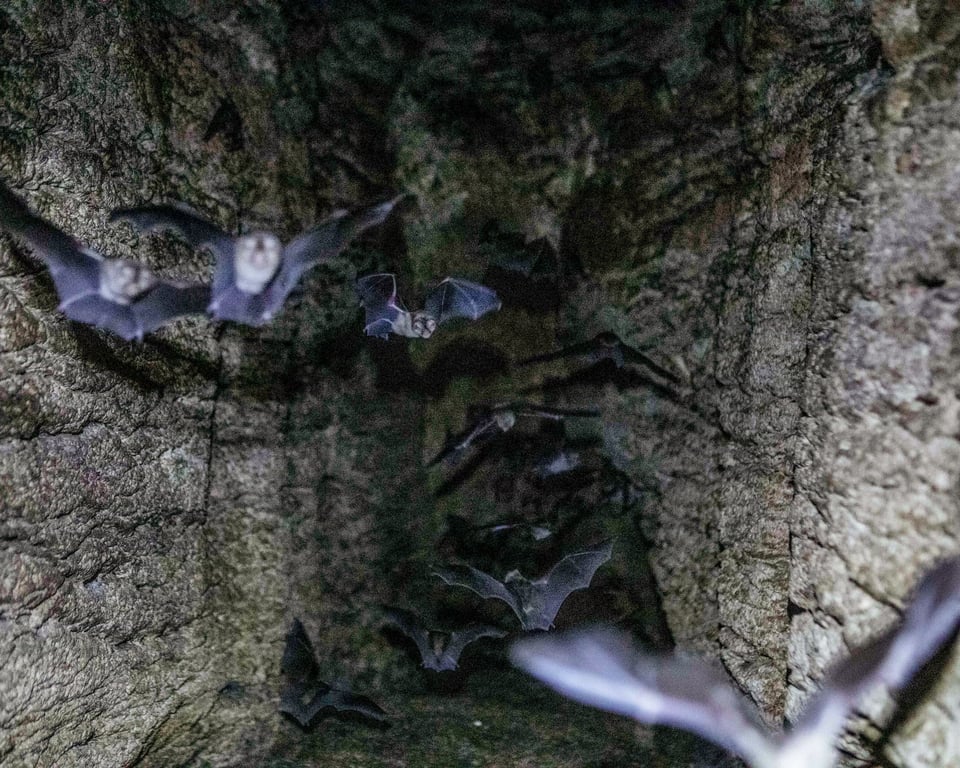
Bats fly out of a cave near Inhaminga in Mozambique. Some caves in Gorongosa park house 10,000 bats from more than 100 species. She will be sharing takeaways from her living and reporting overseas in the #SEJ2026 panel session, “Making Global Environmental Stories Matter to U.S. Audiences in the Trump Era”. If you are in Chicago between April 15th and 18th, please say hi!
📢 ICYMI: Join our WhatsApp channel and help reach users who stay off social media (share this with your friends).
🍑 A SOUTHERN FLAIR
MUSKOGEE, Okla. — A Muskogee Bitcoin mining facility that received OSHA fines is part of the data center race in Oklahoma (Mollie Bryant, Streetlight)
“Water’s a finite resource,” says Mounds resident Darren Blanchard.
“During drought-prone months, they’re asking citizens to ration water and at the same time we have data centers using millions of gallons per day. I have trouble comprehending that.”
GALVESTON, Texas — A Mobile Clinic Delivers Critical Care for Texas Shrimpers(Elizabeth Myong, Civil Eats)
“These guys, they don’t go to the hospital—even [if their] skull splits open, they won’t go!” says CucHuyen “Cecile” Roberts, who migrated from Vietnam to the U.S. in 1986, have worked for more than 20 years as community health workers and translators in Houston.
“That’s culture because it’s embarrassing, it’s shameful, to say you need something. Like, ‘Oh you can’t take care of yourself,’ ” Roberts explains.
With its new farm bill, Florida’s climate fight just hit a tractor-sized roadblock (Ayurella Horn-Muller, Grist)
The legislation “represents a troubling shift away from the state’s long-standing commitment to land conservation at a time when we should be doubling down on climate resilience,” says Javier Estevez, political and legislative director at the Florida chapter of the Sierra Club.
🗺️ WHAT ELSE WE'RE READING
HYDERABAD — India graveyard raid uncovers hidden cooking gas canisters amid shortage (Reuters)
“Just yesterday, around 2,600 raids were carried out and about 700 cylinders were seized,” Sujata Sharma, a senior official in the Ministry of Petroleum and Natural Gas, told a regular briefing on the Middle East crisis.
WASHINGTON — NASA once touted the diversity of Artemis II's astronauts. Now? Not so much (Katia Riddle, NPR)
“Language celebrating this diversity has largely disappeared from NASA's website and rhetoric since Trump took office. He signed an executive order directing federal agencies to dismantle diversity, equity and inclusion programs,” says Katia Riddle.
The UK press does not widely report on climate risks to soil health (Antal Wozniak of the University of Liverpool & Jill Hopke of DePaul University, Geography Directions)
“Following the third UK Climate Change Risk Assessment, the UK press by and large failed to make the connection between the real and deadly consequences of poor soil health and its root causes. We also found evidence of a discursive strategy political scientist Wendy Brown calls responsibilization,” write Antal Wozniak and Jill Hopke.
BREAKING: Trump Administration Orders Dismantling of the U.S. Forest Service (Jim Pattiz, More Than Just Parks)
One hundred and ninety-three million acres of your national forests. An area larger than Texas. The largest public land agency in the country. Just handed, on a silver platter, to the people who’ve spent their entire careers trying to destroy it.


Add a comment: